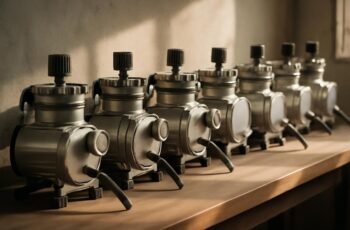
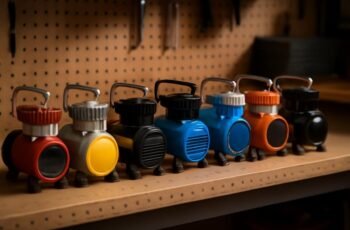
We’re looking at garage air compressors that actually crush projects, from inflating tires to powering small tools. We’ll weigh CFM at your PSI, build durability, and the versatility of accessories, whether you want cordless or corded, portable or tank-sized. Think about fittings, seals, and noise levels, plus how well hoses and gauges pair with your toolkit. Curious which models stand out for reliability and value? Let’s start with what matters most to your shop.
Key Takeaways
- Consider a compact, portable compressor with 0.9–1.5 kg weight and 6″ x 3″ x 2″ form factor for easy garage use and mobility.
- Prioritize 12V or cordless models for quick inflate tasks on bikes and cars, with reasonable runtime and fast recharges.
- Ensure high CFM at target PSI to sustain continuous tools while shopping for tanks 2–6 gallons for light detailing and 20–60 gallons for larger jobs.
- Check max working pressure around 150–200 PSI, durable alloy/stainless construction, and 1/4″ NPT fittings for broad accessory compatibility.
- Look for noise-reducing design, robust seals, and leak-prevention accessories to keep garage workflows efficient and quiet.
Dapetz Air Duster with 80mm Nozzle for DIY
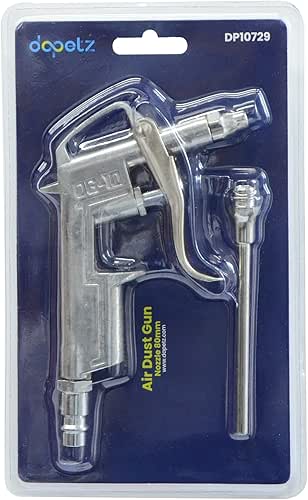

If you need a compact, easy-to-handle cleaner for quick garage tasks, the Dapetz Air Duster with an 80mm nozzle is a top pick—its pistol-grip design fits naturally in our hands and the extended 80mm nozzle reaches tight spaces. We value quality, so this precision-made tool uses durable alloy and stainless steel. With an ergonomic grip and air-powered operation, it’s ready for garage workshops, metal work, car mechanics, and DIY projects. The included air dust gun suits diverse tasks, and its 12 x 2 x 20 cm frame weighs just 120 g. Backed by a 30-day return policy and solid 4.1 stars.
Best For: DIY enthusiasts, garage workshop professionals, and anyone needing a compact, ergonomic air duster for tight spaces and quick cleaning tasks.
Pros:
- Ergonomic pistol-grip design for comfortable extended use
- 80mm extended nozzle reaches tight or awkward spaces
- Durable construction using alloy and stainless steel for longevity
Cons:
- Air-powered tool requires a compatible air compressor
- Lightweight build (120 g) may feel less sturdy for heavy-duty, prolonged use
- 30-day return window may be limiting for some buyers
WYNNsky Air Line Kit 49-Pcs Garage Accessories
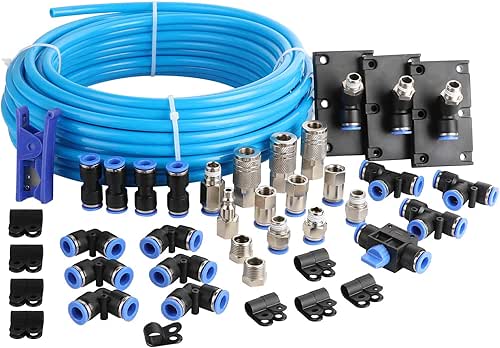
The WYNNsky Air Line Kit is ideal for DIYers who want a ready-to-go, durable air plumbing setup. We designed this 49-piece kit to cover core needs: 60 feet of 3/8 inch nylon tubing, plus T-connectors, unions, elbows, a shut-off valve, wall outlets, a check valve, and 1/4 inch NPT fittings. It’s noncorrosive, ageing-resistant, with a mirror-smooth finish, and rated for up to 800 PSI bursting (200 PSI working). Installation emphasizes leak-free connections and proper sealing tape on metal threads. With clamps, a tubing cutter, and flexible configurations, you’ll tailor the system to your workshop and projects. Warranty aligns with Amazon returns.
Best For: DIY enthusiasts and home workshops seeking a ready-to-install, durable 49-piece air line kit with flexible configurations and reliable 800 PSI bursting pressure.
Pros:
- Comprehensive 49-piece kit includes tubing, connectors, clamps, and a cutter for a complete setup
- High pressure rating (up to 800 PSI bursting, 200 PSI working) for versatile pneumatic tasks
- Noncorrosive, ageing-resistant nylon tubing with mirror-smooth finish for longevity
Cons:
- Requires careful assembly with seal tape on metal threads to prevent leaks
- Installation can be time-consuming to ensure leak-free connections
- Some users may find the 60-foot length unnecessary for small setups
Cordless Portable Tire Inflator, 3150 PSI, Compact
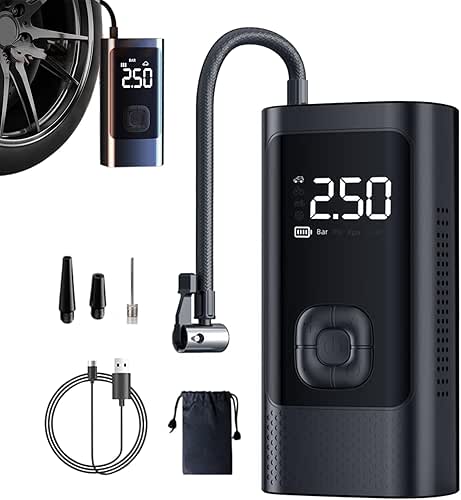
This cordless tire inflator pumps up to 3,150 PSI with no cords, making it perfect for on-the-go emergencies. We value its portable, lightweight design (about 1.5 pounds) and compact dimensions (6.10 x 3.08 x 2.24 inches), which fit easily in a backpack, car trunk, or motorcycle compartment. With a built-in rechargeable battery, it runs cordless and includes a bright LED light for visibility in dark conditions. It covers 3 to 150 PSI, suitable for motorcycles, cars, bikes, and sports inflatables. Trust this Générique inflator for roadside boosts, nighttime tire work, and quick, versatile inflation needs.
Best For: This cordless tire inflator is best for drivers and outdoor enthusiasts who need a portable, cord-free solution for inflating vehicle tires, motorcycles, bikes, and sports inflatables on the go.
Pros:
- Cordless, lightweight, and compact for easy carry and storage
- Wide pressure range (3–150 PSI) with built-in rechargeable battery
- Integrated LED light enhances visibility in dark or roadside situations
Cons:
- Maximum rating up to 150 PSI may limit use for high-pressure vehicle tires (e.g., some truck tires)
- Small form factor may require longer pumping time on larger inflatables or tires
- Battery life and charging time not specified; repeated use could require frequent recharges
EQUIP EAC004 Car Tyre Air Compressor 150psi
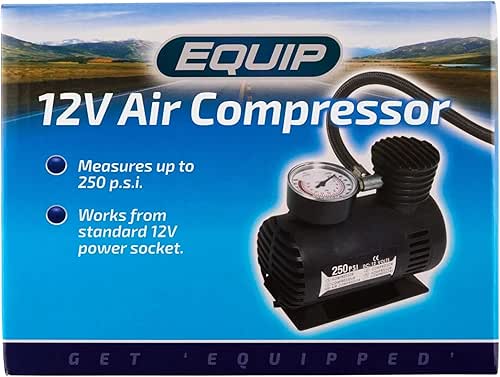
Equipped with a 150 psi rating, the EQUIP EAC004 is our go-to portable option for quick tyre inflation on the go. We value its compact size (16.5 x 8.5 x 12.6 cm) and light weight (510 g) for easy storage in boots or footwells. This 12-volt inflator plugs into a car cigarette lighter, delivering straightforward, easy-to-read pressure readings up to 150 psi. It supports cars, vans, and bicycles, making it versatile for maintenance and emergencies. While practical for on-the-road use, remember it’s backed by the Amazon return policy, helping you shop with confidence. Reliability meets portability in a compact, user-friendly package.
Best For: Car owners and on-the-go drivers who need a compact, 12-volt tyre inflator to quickly top up pressures and handle emergencies.
Pros:
- Compact and lightweight, easy to store in boot or footwell
- Simple 12V operation with an easy-to-read gauge up to 150 psi
- Versatile for cars, vans, and bicycles; portable emergency/maintenance tool
Cons:
- Limited to 12V car power; may be slower for large inflations
- 150 psi max may be insufficient for high-pressure tasks beyond typical tyres
- Dependency on car cigarette lighter outlet; not suitable for home/shop use without power source
MEANLIN Lever-Type Blow Gun with Rubber Tip (2)

Looking for precise cleanup in tight spots? We’ve got the MEANLIN MEASURE Lever Type Blow Gun With Rubber Tip, model XJ-306, in a convenient 2-pack. Built from aluminum alloy with copper alloy fittings, it delivers a powerful, tapered airflow for high-volume blow-off while remaining durable and anti-break. The rubber tip protects delicate surfaces and prevents scratches, making it ideal for machine interiors, gaps, and hard-to-reach corners. It features an adjustable flow nozzle for control, a front metal hook for storage, and improved seals for reliability. Use it at home, in a shop, or a store—industrial or household cleanup.
Best For: Home and shop cleanup in tight spaces, including machine interiors, narrow gaps, and hard-to-reach corners.
Pros:
- High-volume, tapered airflow for efficient blow-off
- Durable aluminum alloy construction with anti-break design
- Rubber tip protects delicate surfaces from scratches
Cons:
- May require frequent nozzle adjustments for very tight spots
- 2-pack refers to quantity; single-pack options may be available separately
- Requires an air compressor or pressurized air source to operate
Factors to Consider When Choosing Air Compressors for Garage
We’re breaking down the key choices that shape a garage compressor, from Air Pressure Range to CFM and PSI. Think about tank size, portability, and weight, since workflow and space matter as much as power. We’ll also weigh power source options and how CFM/PSI needs align with the tools you’ll run.
Air Pressure Range
What air pressure range do you actually need in your garage? We look for a range that covers common tasks—from inflating tires to powering spray guns and air tools. A wider range, say 3–150 PSI, gives you versatility without swapping units, so you won’t be held back by limited pressures. Remember, maximum PSI is the ceiling, but working pressure—the typical operating range—drives real-world performance and tool compatibility. Some compact cordless models cap around 150 PSI, trading raw power for portability and battery convenience on light-duty jobs. When choosing, align the unit’s working pressure with your most-used tools to avoid under- or over-specification. By targeting the right range, you’ll tackle more projects with fewer compromises.
Tank Size Considerations
Tank size directly affects how long you can run air tools before the compressor refills, so bigger tanks mean steadier pressure and less cycling. We weigh tank size because it affects runtime, footprint, and space planning in a compact garage. For small inflators and light detailing, 2–6 gallon tanks can handle the task, while 20–60 gallon tanks enable continuous use with impact wrenches or spray guns. A larger tank increases weight and footprint, so consider your shop layout and available space. The tank’s psig and CFM at full pressure determine how quickly it recharges and how much air sits between cycles. For portable setups, smaller tanks under 10 gallons paired with higher CFM reduce recharges during use without sacrificing performance.
Portability And Weight
Portability and weight matter more than you might think when picking a garage compressor. We weigh options from 0.9 kg (2 lb) to 1.5 kg (3.3 lb) for compact cordless models, balancing transport ease with performance. Dimensions matter for storage: compact units around 6″ x 3″ x 2″ fit in a backpack or trunk, while larger portable inflators need more space. Cordless design boosts portability by removing cords, letting you work anywhere, but it may cut runtime and extend recharge time. Lighter weight improves hand-held use but can limit tank size and sustained airflow for longer tasks. Integrated carrying features and durable bodies, like aluminum alloy, directly influence how easily you transport and rely on the unit over time.
Power Source Type
When choosing a garage compressor, your power source matters as much as output. We weigh corded versus cordless setups, noting cordless units rely on built-in rechargeable batteries for true mobility, while corded models stay strong with a steady wall outlet. For quick, on-the-go inflation, 12-volt car cigarette lighter pumps are handy, offering low-output performance without a outlet. In garages and with air line kits, we require sufficient CFM to maintain steady tool operation. Some models are built for continuous workshop use, but portable units prioritize light weight and compact size. Battery-powered units often have limited runtime per charge, shaping their suitability for larger or frequent tasks. Choose a setup that matches your task mix and workspace needs.
CFM And PSI Matters
CFM and PSI matter because both define a compressor’s real-world performance. In our garages, you’ll want enough CFM to sustain continuous tools and enough PSI to start and finish high-pressure tasks. A higher CFM is essential for tools that run nonstop, while PSI governs the ability to handle inflation, impact wrenches, and other high-pressure jobs. When tools demand more air, pick a compressor that maintains adequate CFM at the required operating PSI to prevent drops in performance. For small, intermittent tasks, a lower CFM with solid PSI can work, but sanding, spraying, or jackhammering demand sustained higher CFM at the target PSI. Compare rated CFM at given PSI and check the duty cycle to ensure steady garage performance under typical workloads.
Noise Levels
Noise isn’t just a comfort issue—it affects how you use a compressor in a garage. When comparing models, we look at decibels (dB) to judge suitability for enclosed spaces, with quieter options around 60–70 dB. Higher CFM units can run louder because they cycle the motor more often, so you’ll balance noise with the performance you need for tasks like blowing dust or powering pneumatic tools. Inverter or direct-drive designs often outperform traditional belt-driven ones, delivering smoother power and less vibration. Enclosures, sound-damping housings, and anti-vibration pads are common upgrades that cut noise further. Some models add variable-speed or low-noise modes to lower speed during light tasks, preserving quiet without sacrificing responsiveness.
Maintenance And Durability
Maintenance and durability go hand in hand when choosing a garage compressor. We look for durable construction and corrosion-resistant materials, like alloy and stainless steel components, to stand up to frequent garage use. We prioritize engines or pumps with robust seals and reliable fittings to minimize air leaks and reduce ongoing maintenance. Easy-access filters and clear maintenance intervals help us simplify routine upkeep. We favor low wear-prone parts, such as non-corrosive tubing and reinforced hoses, to extend service life in dirty workshop environments. Spare parts availability and a clear warranty policy, including options like 30-day returns, support long-term durability and upkeep. In short, lasting performance comes from resilient build, smart design, and transparent support options.
Accessory Compatibility
Accessory compatibility matters because the right fittings, hoses, and adapters let you use all your tools without leaks or reconfiguring setups mid-project. We start by confirming the kit includes compatible fittings and connectors (for example, 1/4″ NPT threads and clamps) to match your hoses and tools. Next, we check the hose material and maximum working pressure (around 200 PSI working, with 800 PSI bursting) to ensure safe operation with every accessory. We also verify tubing length (about 60 feet) and inner diameter to reach work areas without frequent tweaks. Look for included adapters, tees, and valves (shut-off and check valves) for versatile, leak-free multi-point setups. Finally, confirm sealant recommendations (seal tape on metal threads) suit the accessory materials to prevent air leaks.
Frequently Asked Questions
How Often Should I Service My Garage Air Compressor?
We service our garage air compressor every 3–6 months, depending on use. We check oil (if oil-lubed), drain condensate, inspect hoses, tighten fittings, and replace filters, so you stay protected and ready for every project.
Do Compressors Require a Dedicated Circuit in a Home Garage?
Yes, compressors often require a dedicated circuit in home garages. We estimate a 15–20 amp circuit with a 110–120V outlet for smaller units, and heavier-duty 20–30 amp circuits for larger models to avoid tripping. Trust our guidance.
Can I Run Multiple Tools From a Single Compressor Simultaneously?
We can’t run multiple tools from a single compressor simultaneously without risking overload; use separate circuits or a larger system with adequate CFM/PSI, and plan staging or dedicated regulators to keep performance steady for each tool.
What Noise Level Is Acceptable for a Home Garage?
A reasonable noise level for a home garage is around 60–70 dB at the operator’s ear. We’ll recommend models with low CFM and a quiet design, use enclosed housings, and run compressions during daytime hours to minimize disruption.
Is Oil-Filled Vs Oil-Free Maintenance-Free Better Long-Term?
We think oil-free generally lasts longer with less mess, but oil-filled tends to run cooler and quieter, offering smoother performance; we’ll guide you to balance maintenance, cost, and durability for your garage needs.
Conclusion
We’ve explored practical picks—from compact inflators to full-size tanks—that cover tire inflation, blow guns, and line kits, all designed for garage versatility. One interesting stat: the U.S. demand for portable air compressors grew nearly 25% year over year in 2023 as DIY projects surged. With this guide, you can match CFM at your PSI, durability, and included accessories to your specific tasks, keeping noise, leaks, and safety in check while crushing every project.