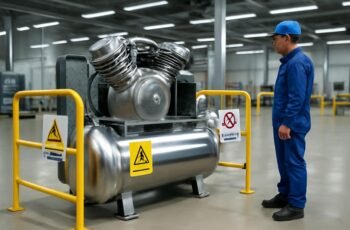
Ensuring safety when operating an air compressor is critical to preventing accidents and injuries. We understand the importance of following strict protocols, from proper setup to regular inspections, because neglect can lead to serious consequences. Every step must be done with caution and precision. To avoid hazards and maintain equipment reliability, it’s essential to adhere to comprehensive safety measures. Let’s explore the key practices that keep your workspace safe and your compressor functioning properly.
Key Takeaways
- Always wear appropriate safety gear, including eye protection and hearing protection, during compressor operation.
- Regularly inspect safety valves, hoses, and connections for wear, leaks, or damage.
- Ensure proper setup with adequate clearance and stable positioning to prevent vibration and accidents.
- Follow manufacturer guidelines for pressure relief and shutdown procedures during emergencies.
- Perform routine maintenance, including filter cleaning and component checks, to ensure safe and reliable operation.
How Do Air Compressors Work and Why Safety Matters
Understanding how air compressors operate is essential for ensuring safe use and preventing accidents. These machines work by drawing in ambient air, compressing it using specific air compressor materials, and storing it under pressure for various applications. The materials used in construction, such as cast iron or aluminum, impact durability and noise reduction capabilities. Proper knowledge of the internal components helps us recognize potential hazards like overheating or pressure buildup. Noise reduction is crucial, as high noise levels can cause hearing loss or distraction, increasing safety risks. Handling an air compressor without understanding its operation or neglecting noise mitigation measures can lead to serious injuries. Therefore, comprehending how these units function and the importance of noise reduction is vital for safe, effective operation.
Essential Safety Gear to Wear When Operating an Air Compressor
Have you ever considered the essential safety gear required to operate an air compressor effectively and without injury? Safety eyewear is paramount; it protects your eyes from flying debris, dust, or accidental spray, which can cause serious damage. Always wear high-quality safety glasses or goggles designed for industrial use. Hearing protection is equally critical, as compressors generate noise levels that can damage your hearing over time. Use earplugs or earmuffs specifically rated for loud environments to safeguard your auditory health. These safety items are non-negotiable; neglecting them increases the risk of injury. Proper gear minimizes hazards and ensures you can operate the compressor confidently and safely. Never compromise on protective equipment—your safety depends on it.
How to Properly Set Up and Inspect Your Air Compressor
To ensure safe operation, we must regularly check safety valves for proper function and signs of wear. We also need to confirm the compressor is securely positioned to prevent movement during use and thoroughly inspect hoses and connections for leaks or damage. These steps are essential to prevent accidents and maintain reliable performance.
Check Safety Valves Regularly
How often should we check safety valves to guarantee our air compressors operate safely? Regular inspection is essential to ensure the pressure relief mechanism functions correctly and prevents over-pressurization. We should check safety valves at least once a month, especially before heavy use periods. During the inspection, verify the valve’s responsiveness by manually lifting it to ensure it releases pressure smoothly. Look for signs of corrosion, debris, or damage that could impair operation. Never ignore a faulty pressure relief valve; failure to check safety valves can lead to dangerous pressure build-up, risking equipment failure or injury. Properly maintained safety valves are crucial for safe, reliable compressor operation, so thorough, cautious, and consistent checks are non-negotiable.
Secure Proper Placement
When setting up your air compressor, ensuring proper placement is critical to safe and efficient operation. Effective placement planning minimizes vibration and prevents instability. To achieve this, consider these key steps:
- Choose a level, sturdy surface that can support the compressor’s weight and vibrations.
- Maintain adequate clearance around the unit for ventilation and easy maintenance access.
- Position the compressor away from heat sources, moisture, and high-traffic areas to reduce hazards and noise.
Proper placement reduces vibration transfer, prolonging equipment life and enhancing safety. Regularly inspect the area for signs of instability or uneven surfaces, and adjust as needed. Prioritizing these measures safeguards your operation and ensures reliable, safe performance.
Inspect Hoses and Connections
Ensuring all hoses and connections are properly set up and in good condition is essential for safe and efficient compressor operation. We must carefully inspect hoses for signs of wear, cracks, or leaks, as damaged hoses can lead to dangerous failures. Checking connections involves verifying that fittings are tight and secure, preventing accidental disconnections under pressure. When inspecting hoses, look for abrasions, bulges, or any deformities that could compromise integrity. Tighten or replace any faulty fittings immediately. Never neglect to check all connections before powering up the compressor, as loose fittings can cause sudden disconnections or air leaks. Regular inspection and diligent checking of hoses and connections are crucial for maintaining a safe working environment and ensuring optimal equipment performance.
Key Operating Practices to Prevent Accidents and Injuries
To prevent accidents and injuries, we must prioritize regular equipment inspections to identify potential issues before they escalate. Proper safety gear is essential, ensuring we protect ourselves from unexpected hazards during operation. Additionally, adhering strictly to the compressor’s operating limits is crucial to maintain safe and reliable performance at all times.
Regular Equipment Inspections
How often do we truly scrutinize our air compressor equipment to ensure safety and optimal performance? Regular inspections are critical for identifying issues before they cause accidents or equipment failure. We must establish a strict inspections frequency, checking components at least weekly for signs of wear and tear. This proactive approach helps prevent unexpected breakdowns and costly repairs. During inspections, pay close attention to:
- Hoses and fittings – look for leaks, cracks, or corrosion.
- Pressure gauges and safety valves – verify proper operation and calibration.
- Motor and belts – check for unusual noise, overheating, or signs of component wear.
Consistent, detailed inspections safeguard personnel and extend equipment lifespan, making safety an uncompromising priority.
Proper Safety Gear Use
Regular equipment inspections help identify potential hazards before they lead to accidents, but even with well-maintained machinery, proper safety gear remains essential. We must wear the correct personal protective equipment (PPE), including safety goggles, ear protection, and gloves. Equally important is avoiding improper footwear, such as loose or ill-fitting shoes, which can lead to slips or trips. Loose clothing poses serious hazards, as it can get caught in moving parts, causing severe injuries. We should ensure all clothing fits snugly and avoid jewelry or dangling accessories. Consistent use of appropriate safety gear demonstrates a cautious approach and minimizes risks. By prioritizing proper PPE use, we significantly reduce the chance of accidents, maintaining a safer work environment around air compressors.
Adhere to Operating Limits
Why is it essential to adhere to the operating limits of an air compressor? Operating beyond specified limits risks catastrophic failure, injuries, and equipment damage. Properly maintaining pressure testing ensures the compressor functions within safe parameters, preventing over-pressurization. It also aids in noise reduction, minimizing workplace hazards. To stay within safe bounds, we focus on:
- Monitoring pressure gauges constantly to avoid exceeding maximum pressure ratings.
- Conducting regular pressure testing to validate system integrity and safety.
- Respecting manufacturer guidelines on noise reduction measures, safeguarding workers’ hearing and reducing fatigue.
Ignoring these limits compromises safety and efficiency. Staying vigilant helps prevent accidents, prolongs equipment lifespan, and maintains a safe working environment. Adherence isn’t optional; it’s a critical safety practice.
What to Do During an Air Compressor Emergency or Malfunction?
In the event of an air compressor emergency or malfunction, immediate and decisive action is essential to prevent injury and equipment damage. First, initiate an emergency shutdown by switching off the power supply and disconnecting the compressor from its source. This halts all operations and minimizes further risk. Next, perform pressure relief checks to ensure the system’s pressure has safely dissipated, preventing sudden releases that could cause injury. Never attempt to repair or inspect the compressor while it’s still pressurized; wait until all pressure has been safely released. Stay alert for unusual noises, vibrations, or temperature spikes, which indicate a malfunction. Always follow manufacturer guidelines and safety protocols to respond effectively and prevent escalation during emergencies.
Regular Maintenance Tips to Keep Your Air Compressor Safe and Reliable
Maintaining your air compressor properly is essential to guarantee it operates safely and reliably over time. Regular maintenance scheduling ensures all components function optimally, preventing unexpected failures. To enhance safety and efficiency, we recommend these key steps:
- Inspect and Replace Filters Regularly: Clean or replace air filters to reduce contaminants and maintain optimal airflow, which also contributes to noise reduction.
- Lubricate Moving Parts: Consistent lubrication minimizes wear and tear, lowering the risk of mechanical breakdowns and ensuring quieter operation.
- Monitor for Unusual Noises and Vibrations: Early detection of abnormal sounds can indicate issues needing immediate attention, safeguarding both safety and reliability.
Implementing these practices diligently keeps your compressor running smoothly, reduces noise, and extends its lifespan.
Frequently Asked Questions
How Loud Can an Air Compressor Be During Operation?
An air compressor can be very loud, often exceeding 85 decibels, which can cause excessive noise and potential hearing damage. We emphasize proper lubrication to prevent issues that exacerbate noise and guarantee safe, efficient operation.
What Are Common Signs of Air Compressor Wear and Tear?
We monitor signs of wear like abnormal vibrations, overheating, and motor noise; check for rust, leaks, and filter clogs; inspect belts, hoses, and gauges; and address wiring damage, seal leaks, and safety valve trips promptly to ensure safe, reliable operation.
Can I Operate an Air Compressor in Cold Weather?
Like a fragile icicle, cold weather can challenge your compressor’s performance; we recommend cautious cold weather operation, especially with oil-free compressors. Ensure proper insulation and warm-up to prevent damage and maintain safe, efficient functioning.
How Long Does an Air Compressor Typically Last With Proper Maintenance?
With proper maintenance frequency, we find that an air compressor typically lasts 10-15 years, depending on usage and care. Prioritizing regular inspections and timely repairs ensures its long-term durability and optimal performance.
Are There Specific Safety Concerns for Portable Versus Stationary Compressors?
Think of portable compressors as agile explorers needing careful maintenance on the go, while stationary units are steadfast guardians requiring secure mounting. Both demand vigilant safety checks, but portable models challenge us with mobility risks, demanding extra caution.
Conclusion
In summary, staying safe with air compressors demands diligent diligence, detailed inspections, and disciplined practices. By embracing essential safety gear, establishing secure setups, and executing expert inspections, we protect ourselves from preventable perils. Prioritizing precaution and persistent maintenance not only preserves equipment but also prevents perilous accidents. Let’s lead with caution, remain committed to compliance, and consistently cultivate a culture of carefulness—because safety isn’t just a step; it’s a steadfast standard.