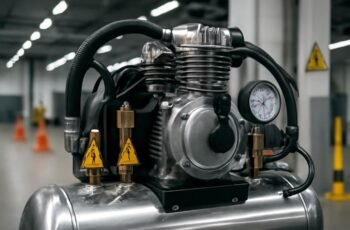
Imagine a maintenance technician experiencing an unexpected electrical shock due to a worn insulation on a compressor’s power cord—such incidents highlight the critical importance of proper electrical safety protocols. Ensure safe operation involves more than routine inspections; it requires adherence to precise installation standards, regular maintenance, and the use of appropriate protective equipment. By understanding these safety measures, you can significantly reduce risks and ensure reliable, safe compressor operation. Here’s what you need to know.
Key Takeaways
- Regularly inspect electrical wiring, insulation, and grounding to prevent shocks and equipment failure.
- Use UL-listed or CSA-approved electrical components and properly rated circuit breakers and fuses.
- Always disconnect power and unplug the compressor before troubleshooting or maintenance.
- Ensure proper grounding using grounding rods and conductors to minimize shock risks.
- Wear appropriate PPE, including gloves and eye protection, during electrical inspections and repairs.
Understanding Electrical Hazards in Air Compressors
Have you ever considered the specific electrical hazards associated with air compressors? These systems pose significant risks, primarily electric shock and arc flash. Electric shock occurs when contact is made with exposed wiring or faulty insulation, potentially leading to serious injury or death. Arc flash results from a sudden release of electrical energy, creating a high-temperature flash that can cause severe burns and blindness. Both hazards are exacerbated by improper grounding, damaged cables, or poor maintenance. Understanding these risks is essential for implementing effective safety protocols. Proper inspection, insulation, and equipment grounding are critical to mitigating these hazards. Recognizing the potential for electric shock and arc flash ensures that safety measures are prioritized, minimizing the likelihood of electrical incidents during compressor operation.
Choosing the Right Electrical Components for Safety
What criteria should we prioritize when selecting electrical components to ensure safety in air compressor systems? First, efficient motor selection is critical; choosing a motor rated for the specific load ensures optimal performance and reduces overheating risks. Additionally, voltage compatibility is essential—components must match the system’s voltage to prevent electrical faults or damage. We also need to select UL-listed or CSA-approved parts, confirming they meet strict safety standards. Proper circuit breakers and fuses should be incorporated to automatically disconnect power during faults, minimizing fire and shock hazards. Finally, wiring must be appropriately rated for current and environmental conditions, ensuring durability and safety. Prioritizing these criteria guarantees that electrical components contribute effectively to a safe, reliable air compressor system.
Properly Installing and Grounding Your Air Compressor
How we install and ground an air compressor directly impacts its safety and operational reliability. Proper grounding prevents ground faults, which can cause electrical shocks or equipment damage. To ensure safe installation, connect the compressor to a grounded outlet with a dedicated circuit. Use proper grounding rods and grounding conductors to minimize risks from insulation failure. Below is a diagram illustrating critical grounding components:
| Component | Description | Purpose |
|---|---|---|
| Grounding Rod | Metal rod driven into the earth | Provides a low-resistance path |
| Grounding Wire | Copper wire connecting compressor to rod | Conducts electrical faults safely |
| Circuit Breaker | Protects against overloads and faults | Shuts off power during faults |
| Insulation Covering | Insulates electrical contacts | Prevents insulation failure risks |
| Bonding Connections | Metal links between parts | Ensures electrical continuity |
Proper installation and grounding are essential to prevent ground faults and mitigate insulation failure risks.
Regular Inspection and Maintenance for Electrical Safety
Regularly inspecting and maintaining your air compressor’s electrical components is essential for ensuring safety and optimal performance. Consistent inspection helps identify potential issues before they escalate, reducing risk of electrical failures. Maintain detailed maintenance records to track inspections, repairs, and component replacements, ensuring compliance and accountability. Regularly verify safety signage to confirm that warning labels remain visible and accurate, reinforcing safety protocols. Grounding checks are critical; confirm that grounding connections are intact and functioning properly to prevent electrical shock hazards. Incorporate a systematic approach that includes visual inspections, testing electrical connections, and verifying safety signage. Adhering to these practices minimizes downtime, enhances safety, and prolongs equipment lifespan by ensuring electrical systems operate within safe parameters.
Using Correct Circuit Breakers and Fuses to Prevent Overloads
Selecting the appropriate circuit breaker and fuse ratings is essential to prevent electrical overloads in air compressors. Using devices with correct ratings ensures the system can handle startup and operational currents safely. Proper circuit selection safeguards both equipment and personnel by maintaining electrical integrity under normal and fault conditions.
Proper Circuit Selection
Choosing the correct circuit breakers and fuses is essential to prevent overloads that can damage the air compressor or cause electrical hazards. Proper circuit selection ensures the electrical system can handle the compressor’s startup and running currents without tripping or failure. Misapplication of irrelevant topics, such as unrelated concept, can lead to circuit overloads or equipment damage. To optimize safety, consider these key points:
- Match breaker and fuse ratings precisely to the compressor’s electrical requirements
- Ensure wiring gauges are appropriate for the load to prevent overheating
- Verify that circuits are dedicated to the compressor, avoiding shared loads that could cause overloads
Correct circuit selection is a fundamental aspect of electrical safety, preventing equipment failure and safeguarding personnel.
Correct Fuse Ratings
How can we guarantee the electrical safety of an air compressor? By ensuring correct fuse ratings and proper fuse coordination, we prevent overloads that could cause equipment damage or fire hazards. Selecting the appropriate fuse rating involves matching the fuse’s amperage with the compressor’s electrical load. Proper fuse coordination ensures that when an overload occurs, only the affected circuit is disconnected, avoiding unnecessary shutdowns. Below is a guide:
| Fuse Rating (A) | Circuit Load (A) | Functionality Outcome |
|---|---|---|
| 15 | Up to 15 | Protects circuit, prevents overload |
| 20 | Up to 20 | Handles startup surges, maintains safety |
| 30 | Up to 30 | For high-capacity compressors |
Correct fuse ratings and fuse coordination are essential for reliable, safe operation.
Safe Handling and Storage of Electrical Cords and Connectors
Proper inspection of electrical cords ensures early detection of damage that could lead to electrical hazards. We must also follow safe storage practices to prevent damage and maintain cord integrity over time. Addressing these points is essential for maintaining a safe working environment around air compressors.
Proper Cord Inspection Procedures
Have you ever considered how critical regular inspection of electrical cords is for ensuring safety when operating air compressors? Proper cord inspection involves more than visual checks; it requires systematic evaluation of the cord’s integrity, plug testing, and identification of potential hazards.
Key steps include:
- Visual Inspection: Check for cuts, frays, or exposed wires that compromise insulation.
- Plug Testing: Ensure plugs fit securely and are free of damage, preventing loose connections that could cause arcing.
- Flexibility and Strain Relief: Confirm cords remain flexible without cracking or kinking, reducing stress on connections.
Adhering to these procedures minimizes electrical hazards, reduces downtime, and enhances overall safety. Regular cord inspection is an essential component of responsible air compressor operation, ensuring all electrical connections remain safe and reliable.
Safe Storage Practices
Did you know that safe handling and storage of electrical cords and connectors are essential for preventing damage and maintaining operational safety? Proper storage practices, including the use of designated storage racking, minimize physical stress and prevent accidental damage. Ensuring moisture control is crucial; exposure to moisture can cause corrosion and electrical faults. When storing cords, avoid tight coils that strain conductors, and keep connectors dry and protected. Using appropriate storage racking helps organize cords and reduces clutter, while moisture barriers prevent humidity-related issues.
| Storage Racking | Moisture Control |
|---|---|
| Keeps cords organized | Prevents corrosion |
| Reduces physical stress | Maintains insulation integrity |
| Ensures easy access | Enhances safety |
The Importance of Using Personal Protective Equipment (PPE)
Personal protective equipment (PPE) is essential for safeguarding workers from the hazards associated with air compressor operation. PPE awareness ensures that all personnel understand the significance of proper gear to prevent injuries. Protective gloves are vital for handling pressurized components and preventing cuts or abrasions. Additionally, eye protection shields against flying debris and potential oil sprays, while hearing protection reduces noise-induced hearing loss in loud environments. Proper PPE use minimizes exposure to electrical sparks, hot surfaces, and compressed air hazards. Regular training reinforces the importance of consistent PPE application, emphasizing that safety is a shared responsibility. By maintaining strict PPE protocols, we reduce injury risks and promote a safe work environment during air compressor operation.
Proper PPE use during air compressor operation is vital for safety and injury prevention.
- Use protective gloves when handling pressure components or lubricants
- Wear safety goggles or face shields to prevent eye injuries
- Employ hearing protection in noisy compressor areas
Troubleshooting Common Electrical Problems Safely
Why is it essential to approach electrical troubleshooting in air compressors with caution? Electrical issues can pose serious safety hazards, including shock or fire risks, if handled improperly. Before troubleshooting, ensure the compressor is powered down and unplugged, and that any necessary oil changes are completed to prevent leaks that could complicate repairs. Proper fuel management is also critical; avoid working on units with residual fuel vapors that could ignite. Use insulated tools and verify grounding connections to prevent electrical shock. Always consult the manufacturer’s guidelines and avoid shortcuts. If uncertain, seek professional assistance. Safe troubleshooting preserves equipment integrity and personal safety, minimizing downtime and preventing damage that could result from neglecting essential maintenance like oil changes or fuel management.
Training and Safety Procedures for Operating Electric Air Compressors
Have we fully understood the critical safety procedures necessary for operating electric air compressors? Proper training protocols are essential to ensure safe operation and prevent accidents. This includes comprehensive hazard communication, so operators recognize potential electrical and mechanical hazards. Proper training should cover startup and shutdown procedures, emergency responses, and maintenance protocols. Regular refresher courses keep safety at the forefront and reinforce compliance with standards. Additionally, clear hazard communication ensures all team members are aware of risks associated with electrical components and high-pressure systems. Adhering to these protocols minimizes the risk of electrical shock, equipment failure, and injury. Consistent training and effective hazard communication are vital to maintaining a safe working environment when operating electric air compressors.
Frequently Asked Questions
How Often Should Electrical Safety Checks Be Performed on Air Compressors?
We recommend performing electrical safety checks on air compressors at least annually, focusing on electrical torque and insulation aging, to ensure optimal performance and safety. Regular inspections help identify potential issues before they lead to failures or hazards.
What Are the Signs of Electrical Component Wear or Damage?
Signs of electrical component wear include frayed insulation, unusual heat, or visible damage—wear indicators often show cracks or discoloration, while insulation failure may cause frequent trips or inconsistent operation, signaling urgent maintenance needs.
Can I Modify the Electrical System of My Air Compressor Myself?
We advise against modifying the electrical system of your air compressor yourself, as DIY repairs can compromise safety and compliance. Always consult a qualified technician for any electrical modifications, ensuring adherence to safety standards and manufacturer specifications.
What Safety Precautions Are Needed During Electrical Repairs?
Think of safety as your shield; during electrical repairs, we ensure disconnecting power, inspecting for unsafe wiring, and confirming proper grounding. We prioritize wearing PPE and using insulated tools to prevent accidents and avoid hazards like unsafe wiring.
Are There Specific Safety Standards for Industrial Air Compressor Electrical Systems?
We ensure compliance with industry standards like NFPA 70 and OSHA for industrial air compressor electrical systems, emphasizing proper standard compliance and installation within electrical enclosures, which are essential for safety and reliable operation in demanding environments.
Conclusion
By following these electrical safety tips, we can guarantee our air compressors operate like well-tuned engines—powerful, reliable, and safe. Just as a single misaligned gear can cause a breakdown, neglecting safety procedures can lead to serious hazards. Staying vigilant with inspections, using the right components, and practicing proper handling keeps our systems running smoothly. Remember, safety isn’t just a step—it’s the foundation that keeps our work environment secure and efficient.