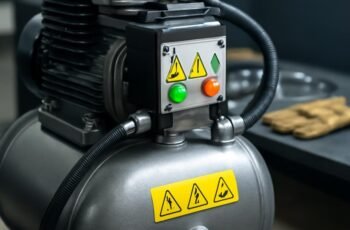
Did you know that improper maintenance causes nearly 80% of compressor tank failures? Ensuring safety requires strict adherence to inspection, pressure management, and repair protocols. Without proper procedures, risks like over-pressurization, corrosion, or leaks can escalate rapidly. Understanding these safety rules is essential to prevent accidents and prolong equipment life. Let’s explore the critical steps involved in maintaining, operating, and repairing compressor tanks safely and effectively.
Key Takeaways
- Regularly inspect for corrosion, leaks, and damage to ensure structural integrity.
- Maintain pressure within manufacturer-specified limits and use calibrated gauges during filling.
- Depressurize the tank before maintenance or repairs to prevent sudden releases.
- Ensure safety relief valves are functioning correctly and are not blocked or damaged.
- Use proper personal protective equipment (PPE) and follow safety protocols during operation and repairs.
What Are the Key Safety Risks of Air Compressor Tanks?
What are the primary safety risks associated with air compressor tanks? The main hazards stem from over-pressurization, which can cause tank rupture or explosion if pressure exceeds design limits. Corrosion and fatigue weaken the tank’s structural integrity over time, increasing failure risk. Improper maintenance or neglecting pressure relief valves can lead to dangerous pressure buildup. A related, unrelated topic might seem like an off-topic discussion, but understanding proper safety protocols is essential to avoid accidents. Failure to follow safety rules can result in severe injury or property damage. Additionally, improper handling during installation or repair can introduce vulnerabilities. Recognizing these risks emphasizes the importance of strict adherence to safety standards, regular inspections, and maintenance to prevent catastrophic failures.
How to Perform Regular Inspections and Maintenance
Regular inspections involve systematic visual checks of the tank’s exterior and connections for signs of corrosion, leaks, or damage. Routine maintenance tasks include draining moisture, checking pressure relief valves, and verifying safety features. Consistent adherence to these procedures ensures the tank’s integrity and operational safety.
Visual Inspection Procedures
How can we guarantee the integrity of an air compressor tank through visual inspection? Regularly examining the tank exterior is essential for early detection of damage or corrosion. We recommend a systematic approach:
- Inspect for surface corrosion, rust, or pitting that could weaken the tank structure.
- Check weld seams for cracks, blisters, or other signs of failure.
- Look for paint deterioration, which may indicate underlying corrosion.
- Ensure that all fittings, vents, and safety devices are free of leaks and securely attached.
Performing these visual inspections with precision allows us to identify potential hazards before they escalate. Consistent evaluation of the tank exterior ensures ongoing safety and compliance with operational standards.
Routine Maintenance Tasks
Routine maintenance tasks for air compressor tanks involve systematic inspections and timely interventions to ensure continued safety and optimal performance. We recommend checking for corrosion, leaks, and unusual noises during regular inspections. Drain moisture from the tank to prevent rust and pressure issues, and verify pressure relief valves function correctly. It’s essential to document each inspection and maintenance activity for compliance and future reference. While performing routine tasks, avoid unrelated topics or off-topic discussions that could distract from critical safety procedures. Proper maintenance also includes replacing worn components and tightening fittings as needed. Consistent adherence to these tasks prevents potential failures and extends the compressor’s lifespan. Remember, safety is paramount, and neglecting routine maintenance can lead to hazardous situations, risking injury or equipment damage.
Proper Filling and Pressure Management Techniques
Have you ensured that your air compressor tank is filled correctly and maintained at safe pressure levels? Proper filling techniques and pressure management are essential for safety and efficiency. To achieve this, follow these steps:
- Verify that the compressor is off and depressurized before filling.
- Use a calibrated pressure gauge to monitor tank pressure during filling.
- Fill the tank gradually, avoiding rapid increases to prevent stress on the tank walls.
- Keep pressure within manufacturer-specified limits, typically 125 psi, to prevent over-pressurization.
Consistent pressure management prevents tank damage and potential failures. Always consult the manufacturer’s specifications for optimal pressure ranges and adhere strictly to these guidelines. Accurate filling techniques ensure safe operation and prolong the lifespan of your compressor.
Safety Precautions During Operation and Repairs
During operation and repairs, proper equipment handling is essential to prevent accidents and equipment damage. We must follow strict safety procedures when performing repairs to avoid exposure to high-pressure hazards. Ensuring that all repair activities are conducted with the correct tools and safety protocols minimizes risk and maintains system integrity.
Proper Equipment Handling
How can we ensure safe handling of air compressor tanks during operation and repairs? Proper equipment handling involves strict adherence to safety signage and noise reduction protocols. We must:
- Verify pressure release before maintenance to prevent sudden release hazards.
- Use appropriate personal protective equipment, including hearing protection to manage noise levels.
- Clearly mark all operational zones with safety signage to alert personnel of potential risks.
- Follow manufacturer instructions precisely, ensuring tools and connections are secure before use.
Safe Repair Procedures
Ensuring safety during repairs of air compressor tanks requires strict adherence to specific procedures to prevent accidents and equipment damage. Before beginning repairs, depressurize the tank completely and verify residual pressure is zero using a calibrated gauge. Isolate the tank from the power supply and release stored energy through proper venting. Use appropriate personal protective equipment, such as gloves and eye protection, to mitigate risks from residual dust or debris. Conduct a thorough inspection for cracks, corrosion, or compromised fittings, avoiding unrelated discussions that could lead to oversight. Employ non-redundant tools designed for tank repair, and follow manufacturer guidelines strictly. Maintaining a controlled environment and documenting repair steps are essential for safety and future reference, reducing the risk of failure during operation.
How to Handle and Store Compressor Tanks Safely
Have you ever considered the importance of proper handling and storage procedures for compressor tanks? Adhering to strict storage guidelines and labeling requirements is essential to guarantee safety. First, always store tanks in a well-ventilated, dry area away from heat sources and direct sunlight. Second, secure tanks upright on stable, level surfaces to prevent tipping. Third, apply clear labels indicating pressure ratings, contents, and hazard warnings, complying with labeling requirements. Fourth, avoid stacking tanks unless specifically designed for such storage, and ensure they are separated to prevent damage. Proper handling includes using appropriate lifting techniques and personal protective equipment. Following these steps minimizes risks, maintains tank integrity, and ensures safe operation throughout their service life.
What to Do in Case of a Leak or Emergency
In the event of a leak or emergency involving a compressor tank, immediate action is critical to prevent injury or equipment damage. Accurate leak identification is essential; listen for hissing sounds, observe hissing or bubbling at fittings, and inspect for visible damage or corrosion. Once a leak is confirmed, initiate emergency response by shutting down the compressor, venting the tank slowly if necessary, and disconnecting power sources. Evacuate the area to minimize exposure to compressed air or hazardous substances. Do not attempt to repair leaks while the system is pressurized, and avoid tampering with safety devices. Promptly notify maintenance personnel or emergency services if the situation escalates. Rapid, precise response ensures safety and minimizes potential hazards.
Frequently Asked Questions
How Often Should I Replace the Safety Relief Valve?
We recommend replacing the safety relief valve annually during routine maintenance intervals to guarantee proper function. Always check warranty considerations, as some manufacturers specify replacement timelines; adhering to these helps maintain safety and equipment compliance.
Can I Paint or Modify My Compressor Tank?
We advise against painting or modifying your compressor tank, as it can compromise paint safety and increase electrical hazards. Always follow manufacturer guidelines and consult professionals to ensure modifications do not void safety certifications or introduce risks.
What Are the Signs of a Weakened Tank Structure?
We look for signs of corrosion, fatigue fractures, or blistering on the tank’s surface, which indicate weakening. Any bulges or cracks suggest structural compromise, and regular inspections are crucial for early detection and safety maintenance.
Is It Safe to Operate a Compressor Tank in Cold Weather?
Cold weather operation can be safe if the tank material is free from fatigue and properly maintained. We recommend inspecting for cracks or weaknesses before use, ensuring the tank’s integrity, and following manufacturer guidelines to prevent failure.
How Do I Dispose of an Old or Damaged Compressor Tank?
Think of disposal as closing a chapter; we recommend draining residual pressure, then taking old or damaged tanks to recycling facilities or authorized disposal options, ensuring environmental safety and compliance with local regulations.
Conclusion
By following these safety rules, we can keep our compressor tanks secure and reliable, preventing disasters before they happen. Regular inspections, proper pressure management, and vigilant operation are the backbone of safe practices—like a finely tuned machine that runs smoothly without surprises. Staying proactive and attentive turns potential hazards into controlled, manageable risks, ensuring safety isn’t just a goal but a built-in feature of our maintenance routine.