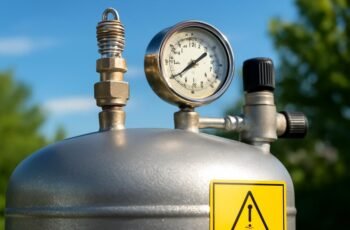
When working with air compressors, safety should always come first. Understanding the main risks and knowing the proper inspection and operation procedures can prevent accidents and injuries. If you overlook safety rules, you might face serious consequences that could easily be avoided. Ensuring you follow best practices is essential for your safety and the longevity of your equipment. Keep going to learn the critical steps you should take to stay safe while using an air compressor.
What Are the Main Safety Risks of Air Compressors?
Air compressors are powerful tools that can pose serious safety risks if not handled properly. The main hazards include high-pressure releases, which can cause severe injuries or equipment damage if valves or hoses fail.
You might also encounter flying debris or hose whips if hoses disconnect under pressure. Burns are common from hot surfaces or compressed air escaping unexpectedly. Noise levels can damage your hearing over time if you don’t wear ear protection.
Additionally, improper handling or maintenance can lead to fires or explosions. Always watch for leaks, worn hoses, and damaged parts, and never ignore unusual sounds or malfunctions.
Being aware of these risks helps you stay safe and prevents accidents when working with air compressors.
How to Inspect Your Air Compressor Before Use
Before operating your air compressor, it’s important to thoroughly inspect it to ensure safe and efficient performance.
Start by checking the power cord and plug for any signs of damage or fraying.
Make sure the pressure relief valve is functioning properly by pulling it to see if it releases air smoothly.
Examine the air filters and clean or replace them if they’re dirty or clogged.
Inspect hoses and connections for leaks, cracks, or damage, and tighten fittings as needed.
Look over the compressor’s tank for rust, dents, or other corrosion.
Also, ensure all safety guards are in place and secure.
Performing this quick inspection helps prevent accidents, prolongs your compressor’s lifespan, and guarantees optimal operation before you start working.
What PPE Do You Need for Safe Operation?
To operate an air compressor safely, you need to wear the appropriate personal protective equipment (PPE) to protect yourself from potential hazards. Always wear safety goggles or a face shield to guard your eyes and face from flying debris or compressed air blasts.
Hearing protection, like earplugs or earmuffs, is essential to prevent hearing damage from loud compressor noise. Use gloves when handling parts or performing maintenance to protect your hands from sharp edges, hot surfaces, or chemicals.
Steel-toed boots offer foot protection if you drop heavy tools or parts. Additionally, wearing long sleeves and pants can shield your skin from accidental sprays or contact with hot surfaces.
Proper PPE minimizes risks and keeps you safe during compressor operation.
How to Operate an Air Compressor Safely
Operating an air compressor safely begins with understanding its controls and following proper startup procedures. Before turning it on, inspect the equipment for any damage, leaks, or obstructions. Make sure the compressor is on a stable, level surface. Connect hoses securely, checking for wear or cracks.
Turn on the compressor gradually, monitoring pressure gauges to avoid overloading. Always set the pressure regulator to the recommended level for your tool or project. Keep hands, clothing, and loose objects away from moving parts.
Never bypass safety devices or operate at pressures beyond the manufacturer’s limit. Stay alert and attentive during use, and listen for any abnormal sounds or vibrations.
When shutting down, release pressure safely and disconnect power before servicing or storing.
Common Mistakes That Cause Accidents and How to Avoid Them
Many accidents with air compressors happen because users overlook simple safety mistakes. One common mistake is neglecting to inspect hoses and fittings before use, which can lead to leaks or bursts. Always check for signs of wear, cracks, or damage, and replace faulty parts immediately.
Another mistake is ignoring pressure limits; exceeding the recommended PSI can cause equipment failure or explosions. Never bypass safety devices like pressure relief valves—they’re essential for preventing overpressure incidents.
Additionally, operating without proper protective gear, such as eye protection and hearing guards, increases injury risk. Always follow manufacturer instructions closely, and don’t rush or take shortcuts.
Staying vigilant about these simple safety practices helps prevent accidents and keeps you safe while working with air compressors.
Tips for Maintaining Your Air Compressor Safely
Regular maintenance is essential to keep your air compressor running safely and efficiently. Start by inspecting hoses and fittings regularly for leaks, cracks, or damage, and replace any worn parts immediately.
Keep the air filter clean and replace it as needed to prevent dirt and debris from entering the system.
Drain moisture from the tank daily to prevent rust and corrosion, which can cause safety hazards.
Check the pressure relief valve to ensure it functions properly—this prevents over-pressurization.
Lubricate moving parts according to the manufacturer’s instructions to reduce wear and overheating.
Keep the area around the compressor clean and free of clutter to avoid accidents.
Following these maintenance tips helps ensure your compressor operates safely and lasts longer.
What to Do During an Air Compressor Emergency
If you notice any signs of trouble, such as strange noises, leaks, or a sudden drop in pressure, it’s important to act quickly.
Turn off the compressor immediately to prevent further damage or potential hazards. Disconnect the power supply to eliminate the risk of electrical shock or accidental restart.
If there’s a leak or fluid escape, avoid trying to fix it while the compressor is still pressurized. Vent the system safely according to the manufacturer’s instructions.
Don’t attempt to handle or repair major issues yourself unless you’re trained. Instead, call a qualified technician to inspect and repair the equipment.
Staying calm and acting promptly can minimize damage and reduce the risk of injury during an emergency.
Conclusion
By following these safety rules, you protect yourself and others from potential hazards. Always inspect your compressor, use the right PPE, and operate it correctly. Regular maintenance and staying alert during use are key to preventing accidents. Remember, safety isn’t just about compliance—it’s about ensuring everyone stays safe and injuries are avoided. Stay vigilant, follow guidelines, and handle your air compressor responsibly for a safer work environment.