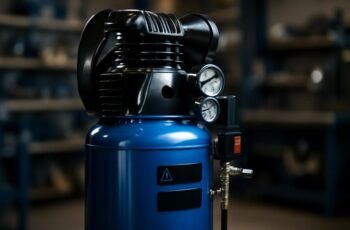
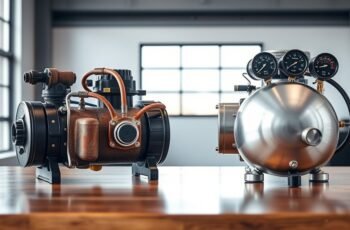
When selecting a portable air compressor, it’s vital we consider the specific technical requirements of our intended tasks, from capacity and power to key features like noise level and durability. Balancing these factors with your environment and budget can be complex, especially given the variety of models available. Understanding the nuances of each type and feature is essential for making an informed choice that guarantees reliable performance—so, let’s examine the options and criteria in detail.
Key Takeaways
- Determine your tool’s airflow (CFM) and pressure needs to select the right compressor size.
- Choose between oil-lubricated or oil-free models based on durability, maintenance, and noise preferences.
- Consider portability features like weight, handle design, and size for easy transportation.
- Assess key features such as noise level, adjustable pressure, and durability for versatile use.
- Balance budget and long-term reliability by comparing brand reputation, warranty, and build quality.
What Types of Portable Air Compressors Are Available?
When selecting a portable air compressor, understanding the available types is essential, as each design caters to specific use cases and performance requirements. Oil-lubricated compressors utilize oil to reduce friction and wear, often providing longer lifespan and consistent performance, but they tend to generate higher noise levels. Oil-free models, on the other hand, operate without oil, resulting in quieter operation and lower maintenance, though they may experience reduced durability over time. The choice between these depends on the application—industrial or DIY—and the importance of noise management. Compressors with oil lubrication generally deliver smoother operation with stable pressure, but noise levels can be a significant factor in environments requiring minimal disruption. Evaluating these differences helps in selecting the most suitable compressor for your specific needs.
How to Choose the Right Size and Power for Your Needs
Choosing the appropriate size and power for a portable air compressor requires a clear understanding of the demands of your specific applications. Air compressor capacity, typically measured in CFM (cubic feet per minute), must match the airflow needs of your tools or tasks. Insufficient capacity leads to inadequate performance, while excessive capacity results in unnecessary weight and power consumption. Power requirements, often specified in wattage or voltage, directly influence portability and compatibility with power sources. Selecting a compressor with the right balance between capacity and power ensures efficient operation without overload. To determine ideal size, evaluate the maximum airflow and pressure your applications demand, then choose a model that provides consistent performance within those parameters, ensuring reliability and energy efficiency.
Key Features to Look for in a Portable Air Compressor
Selecting a portable air compressor that meets your needs involves evaluating specific features that impact performance, durability, and usability. Key among these is noise level; a quieter air compressor enhances safety and comfort, especially in confined spaces. When examining options, consider the air compressor noise ratings—lower decibel levels indicate less disruption. Durability is another critical factor, with reputable portable air compressor brands offering robust construction, often with oil-free pumps for maintenance ease. Additionally, look for features like adjustable pressure controls, portability features such as weight and handle design, and compatibility with accessories. These elements guarantee consistent performance, ease of transport, and versatility, making your investment more reliable over time. Prioritizing these key features allows for a more informed, technical approach to selecting the right portable air compressor.
Tips for Maintaining and Using Your Portable Air Compressor Safely
To guarantee peak performance and safety, proper maintenance and safe operation of your portable air compressor are essential. Implementing clear safety precautions minimizes risk of injury and equipment damage. Always verify the compressor is disconnected from power before performing maintenance. Regularly inspect hoses and fittings for wear or leaks, replacing damaged components promptly. Maintenance tips include checking oil levels if applicable, cleaning air filters, and draining moisture from tanks to prevent corrosion. Adhering to manufacturer guidelines for operation and maintenance prolongs compressor lifespan and ensures safe use. Prioritize safety precautions such as wearing protective gear and operating in well-ventilated areas. Consistent maintenance and vigilance in safety practices optimize functionality and reduce the likelihood of accidents or equipment failure.
Budget-Friendly vs. Premium Models: Which Is Right for You?
When evaluating different portable air compressor options, understanding the distinctions between budget-friendly and premium models helps guarantee you make an informed investment.
- Brand reputation influences product reliability; established brands often deliver consistent quality and better customer support.
- Warranty coverage varies considerably, with premium models typically offering longer, more extensive warranties, protecting your investment.
- Build quality and features tend to be superior in premium models, providing enhanced durability and advanced functionalities.
- Cost-effectiveness requires balancing initial price against long-term benefits like fewer repairs and better performance.
Choosing between budget-friendly and premium models depends on your specific needs, usage frequency, and willingness to invest in reliability and support. Consider these factors carefully for ideal value.
Frequently Asked Questions
How Long Does a Portable Air Compressor Typically Last?
A portable air compressor typically lasts 5-10 years, depending on durability factors and maintenance tips. Regular upkeep, proper use, and quality components extend its lifespan, ensuring reliable performance over time.
Can I Use a Portable Air Compressor for Painting Projects?
Yes, you can use a portable air compressor for painting projects, especially with paint sprayers and airbrush tools, as long as it provides consistent, adjustable pressure and sufficient airflow to guarantee smooth, professional finishes.
What Is the Noise Level of Most Portable Air Compressors?
Most portable air compressors have noise levels between 70-90 decibels, which can be loud. Noise reduction features like insulated casings and sound-dampening materials considerably lower sound levels, making operation more manageable and less disruptive.
Are Portable Air Compressors Suitable for Automotive Tire Repairs?
Like a trusty steed, our portable air compressors are highly suitable for automotive compatibility, ensuring tire inflation efficiency. We find them reliable for quick repairs, blending modern tech with old-school dependability, making them essential for roadside emergencies.
How Do I Store My Portable Air Compressor Properly?
We store our portable air compressor in a cool, dry place, following proper storage tips to prevent rust and damage. Regular maintenance routines, like checking for leaks and cleaning filters, guarantee ideal performance and longevity during storage.
Conclusion
Ultimately, selecting the right portable air compressor hinges on understanding your specific needs and balancing quality with budget. By carefully evaluating size, power, features, and maintenance, we can guarantee efficient performance and longevity. As the saying goes, “You get what you pay for,” but with thoughtful analysis, we can find a model that offers the best value and reliability. Making an informed choice leads to ideal results and long-term satisfaction.