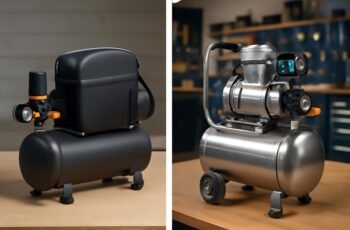
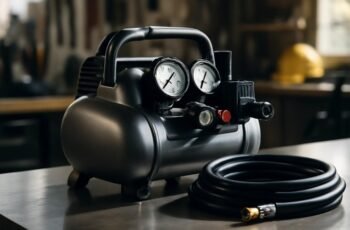
Imagine a compact vertical compressor quietly humming in a corner, conserving space yet delivering reliable power. Choosing the right model involves understanding key features like capacity, durability, and efficiency—factors that directly impact performance and maintenance. Navigating these choices can be complex, but making informed decisions ensures optimal value and longevity. To truly optimize your investment, it’s essential to explore what distinguishes the best options for your specific workload.
Key Takeaways
- Consider the compressor’s vertical design for space-saving and stable operation.
- Match capacity (CFM and PSI) with your specific tool and application requirements.
- Prioritize portability features like handles, wheels, and compact size for ease of transport.
- Evaluate maintenance needs and durability features such as corrosion resistance and robust construction.
- Compare models based on power, efficiency, warranty, and overall value rather than just price.
What Are the Key Features of a Vertical Air Compressor?
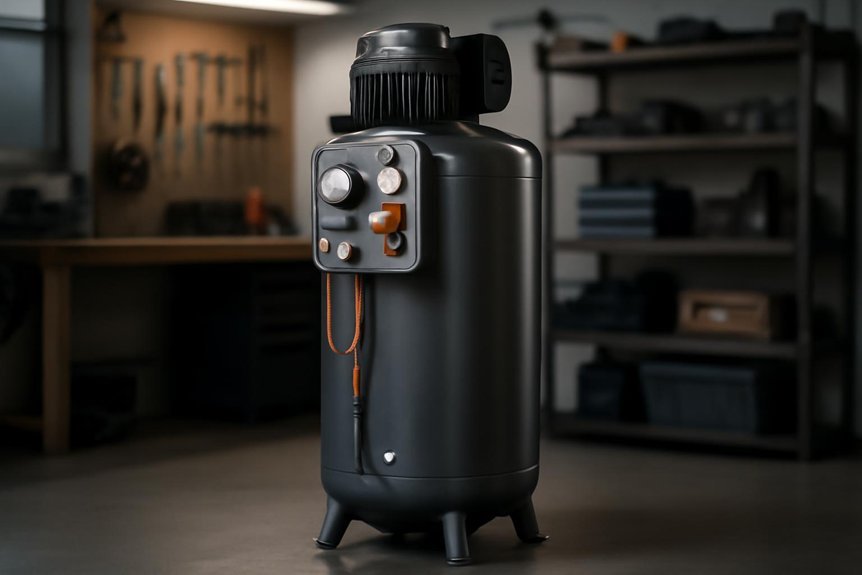
What are the key features that distinguish a vertical air compressor from other designs? Primarily, it’s the vertical design, which optimizes space efficiency and stability, making it ideal for limited areas. This orientation also facilitates easier maintenance access to internal components. The compressor’s core component, the compression pump, can be either oil free or oil-lubricated, each with distinct advantages. Oil free pumps offer cleaner air output and are preferable in applications requiring high purity, while oil-lubricated pumps generally provide better durability and efficiency. The vertical configuration supports improved heat dissipation and reduces footprint, but the choice between oil free and compression pump depends on specific operational requirements. These features collectively define the vertical air compressor’s suitability for diverse industrial and commercial uses.
How Do You Choose the Right Capacity and Power for Your Needs?
Selecting the appropriate capacity and power for a vertical air compressor requires careful assessment of the intended applications and operational demands. We must evaluate the required airflow (CFM) and pressure (PSI) to ensure size compatibility with your tools and tasks. For high-demand operations, choose a compressor with higher horsepower and larger tank capacity to maintain consistent performance. Conversely, for lighter tasks, a smaller unit suffices. Noise considerations are also crucial; higher-capacity models often generate more sound, so selecting a unit with noise reduction features can improve workplace comfort. Precise matching of capacity and power ensures optimal efficiency, minimizes energy consumption, and prevents over or underperformance. Always align compressor specifications with your specific operational needs for safe, reliable, and effective use.
What Factors Affect the Space Efficiency and Portability of Vertical Compressors?
Have you ever considered how design features influence the space efficiency and portability of vertical air compressors? These factors directly impact their usability in confined or mobile environments. Key elements include:
- Compact Dimensions – Smaller footprints optimize space efficiency, enabling placement in tight areas.
- Handle and Wheel Integration – Strategically placed handles and sturdy wheels enhance portability without sacrificing power.
- Vertical Orientation of Components – Aligning tanks and motors vertically reduces overall footprint, balancing space efficiency with operational capacity.
- Built-in Storage – Integrated accessory compartments minimize additional space requirements, improving overall portability.
While increased power often correlates with larger size, thoughtful design choices allow for maintaining space efficiency and portability without compromising performance. These considerations are crucial when selecting a vertical compressor suited for mobility and limited space.
What Maintenance and Durability Considerations Should You Keep in Mind?
Considering the demanding environments in which vertical air compressors operate, prioritizing maintenance and durability is essential for long-term performance. Regular maintenance scheduling ensures optimal functionality, minimizes downtime, and extends durability longevity. Components such as filters, belts, and valves require routine inspection and timely replacement to prevent failures. Durability considerations include selecting models with corrosion-resistant materials and robust construction to withstand harsh conditions. Additionally, understanding wear patterns helps optimize maintenance intervals, reducing operational costs.
| Maintenance Aspect | Durability Focus |
|---|---|
| Filter replacement | Corrosion-resistant materials |
| Belt and valve checks | Robust construction for longevity |
| Lubrication schedules | Wear pattern analysis for efficiency |
| Inspection frequency | Minimizing unexpected failures |
How Do You Compare Different Models and Find the Best Value?
- Power output and pressure capacity, ensuring it meets your workload demands.
- Energy efficiency ratings, reducing operational costs.
- Durability of components, like tanks and motors, for longevity.
- Warranty length and coverage, providing assurance against defects and failures.
Frequently Asked Questions
What Safety Features Should I Look for in a Vertical Air Compressor?
We look for safety certifications like OSHA compliance and features such as automatic shutoff and pressure relief valves. Regular maintenance scheduling ensures optimal operation, reduces risks, and guarantees safety, making the compressor reliable and compliant with industry standards.
How Noisy Are Different Vertical Air Compressor Models?
Like whispers in a storm, noise levels and vibration specs vary; quieter models feature advanced startup methods and lower power requirements. We find that understanding these technical details helps us choose compressors that balance performance with minimal disturbance.
Can Vertical Compressors Be Used for Continuous Industrial Operations?
Vertical compressors can support continuous industrial operations if we consider continuous operation considerations, such as proper cooling and airflow, along with regular maintenance scheduling. This ensures reliability and prevents overheating or mechanical failures during extended use.
What Are the Environmental Impacts of Various Vertical Compressor Models?
Like a finely tuned engine, vertical compressors impact the environment through their lifecycle and energy efficiency. We find that newer models reduce emissions and energy consumption, minimizing ecological footprints across manufacturing, operation, and disposal stages.
Are There Any Accessories or Add-Ons Recommended for Vertical Air Compressors?
We recommend accessories like extra storage tanks for increased capacity and noise reduction features to ensure quiet operation. These add-ons optimize performance, improve efficiency, and enhance safety, making your vertical air compressor more versatile and user-friendly.
Conclusion
Choosing the right vertical air compressor is like selecting a finely tuned engine—precision matters. By evaluating key features, capacity, portability, and maintenance needs, we guarantee optimal performance and longevity. Comparing models based on efficiency and total ownership cost helps us avoid costly mistakes. Ultimately, a well-chosen compressor becomes the backbone of our operations, quietly powering productivity with the reliability of a precision instrument, transforming complex tasks into seamless workflows.