Approximately 65% of industrial food processing facilities rely on compressed air systems for hot dog filling and sealing, underscoring the importance of choosing the right compressor. Selecting an appropriate model requires a detailed understanding of technical specifications like power, PSI, and duty cycle, as well as evaluating factors such as portability and noise levels. To guarantee ideal performance and long-term value, we need to examine these elements critically and consider how they align with your specific production needs.
Key Takeaways
- Consider power capacity and PSI to ensure the compressor meets hot dog filling and sealing requirements.
- Choose a compact, portable model with suitable size and weight for your workspace and on-site use.
- Prioritize low noise and vibration features for a safer, more comfortable working environment.
- Match airflow (CFM) and pressure ratings with your tools for optimal efficiency and performance.
- Select reputable brands and perform regular maintenance to ensure reliability, durability, and safety.
What Is a Hot Dog Air Compressor and How Does It Work?
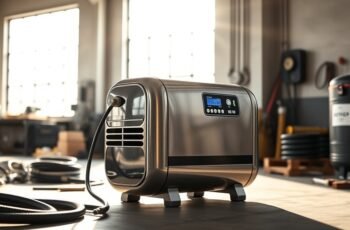
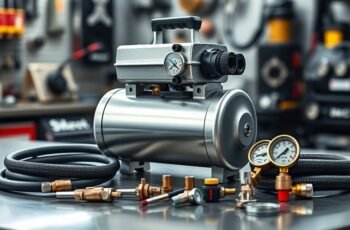
Have you ever wondered what distinguishes a hot dog air compressor from other types? Essentially, a hot dog air compressor is a compact, portable device designed to deliver compressed air efficiently for specific applications. Its core function involves converting electrical energy into kinetic energy through a piston or rotary mechanism, which compresses ambient air. This compressed air is stored in a tank for immediate use or directed through hoses. The term “hot dog” typically refers to its small, elongated shape, making it ideal for light-duty tasks. Unlike industrial compressors, a hot dog air compressor emphasizes portability and quick responsiveness. Its precise operation depends on components such as valves, pistons, and pressure regulators, ensuring consistent air pressure for tasks like inflating tires or powering small pneumatic tools.
Key Factors to Consider When Buying a Hot Dog Air Compressor
When selecting a hot dog air compressor, we focus on power and pressure levels to guarantee it meets operational demands. Portability and size are critical for ease of transport and workspace constraints, while noise and vibration levels affect user comfort and safety. Evaluating these key factors enables an informed choice aligned with specific application requirements.
Power and Pressure Levels
Understanding the power and pressure levels of an air compressor is essential for selecting the right model for hot dog production. Power capacity determines how efficiently the compressor can sustain consistent airflow, which directly impacts productivity. Pressure regulation ensures precise control over airflow, preventing over-pressurization that could damage equipment or compromise product quality. When evaluating options, consider:
- The compressor’s maximum PSI to meet hot dog filling and sealing requirements
- The duty cycle, which indicates continuous operation capability without overheating
- The stability of pressure regulation to maintain consistent performance during extended use
A compressor with appropriate power capacity and reliable pressure regulation guarantees peak performance, minimizes downtime, and ensures consistent hot dog quality.
Portability and Size
Selecting an air compressor for hot dog production requires careful consideration of its portability and size to guarantee seamless integration into your workflow. A compact design minimizes spatial footprint, facilitating easy maneuverability within constrained workspaces or mobile setups. Weight considerations are equally critical; lighter units enhance portability, allowing for effortless transportation and repositioning as needed. When evaluating size, balance compactness with capacity to ensure the compressor meets operational demands without sacrificing mobility. Heavy models may offer higher performance but can hinder flexibility and increase setup time. Conversely, lighter, smaller compressors streamline deployment but must still deliver reliable airflow. Ultimately, an ideal balance between compact design and manageable weight ensures efficient operation, minimal setup complications, and adaptability to various production environments.
Noise and Vibration Levels
Noise and vibration levels are critical factors that directly influence the operational environment and worker comfort in hot dog production facilities. Excessive sound can impair communication and cause fatigue, while high vibrations may lead to equipment wear and safety hazards. To mitigate these issues, selecting compressors with effective sound insulation is essential, as it minimizes noise emission. Additionally, vibration reduction features help stabilize operation, reducing mechanical stress and noise transmission.
- Optimize sound insulation to meet workplace noise regulations and improve overall comfort.
- Prioritize vibration reduction technologies to enhance equipment longevity and safety.
- Conduct regular maintenance to sustain low noise and vibration levels, ensuring consistent performance.
How Much Power Do You Need for Your Projects?
Determining the appropriate power level for your air compressor depends on the specific requirements of your projects, including the tools you’ll operate and workload demands. Accurate power assessment guarantees ideal performance while maintaining air quality standards vital for precision tasks. Higher power compressors typically produce more consistent airflow, improving tool efficiency and reducing fluctuations that can compromise air quality. Additionally, selecting a compressor with suitable power capacity enhances energy efficiency by avoiding unnecessary energy consumption during operation, which lowers operational costs. It’s essential to match the compressor’s horsepower and CFM (cubic feet per minute) ratings to your tools’ specifications. This assures sufficient airflow without excess power, supporting both precise work and energy conservation, ultimately maximizing your project outcomes and operational sustainability.
Portable vs. Stationary Compressors: Which Is Right for You?
When choosing between portable and stationary air compressors, it’s essential to assess how each type aligns with your specific application and workspace constraints. Portable compressors excel in mobility, making them suitable for on-site tasks and variable job sites, though they may compromise fuel efficiency and environmental impact due to smaller capacity and higher operational demands. Stationary units offer increased efficiency, better fuel economy, and reduced environmental footprint for extensive or continuous use, but lack mobility.
Choosing between portable and stationary compressors depends on your workspace needs and sustainability priorities.
- Portable compressors prioritize flexibility but often have higher emissions relative to their capacity.
- Stationary models tend to operate more efficiently, lowering overall environmental impact.
- Selecting the right type depends on balancing operational needs with considerations of fuel efficiency and environmental sustainability.
Noise Levels and Efficiency: What Should You Look For?
As we evaluate air compressors, understanding their noise levels and efficiency becomes crucial for selecting a model that balances performance with operational considerations. Sound insulation plays a critical role in minimizing noise emissions, especially in shared or noise-sensitive environments, enhancing user comfort and compliance with regulations. Energy efficiency is equally important, as it directly impacts operational costs; models with optimized motor design and reduced air leaks consume less power. Look for compressors with noise ratings in decibels (dB) that match your environment, and prioritize units featuring sound-insulated enclosures. Additionally, assess their energy consumption relative to output—higher efficiency units provide long-term savings. Overall, selecting a compressor with superior sound insulation and energy efficiency ensures quieter operation and reduced energy costs, supporting sustainable and productive workflows.
Best Features and Attachments for Hot Dog Air Compressors
Choosing the right features and attachments for hot dog air compressors is essential to maximize their versatility and efficiency in various applications. Key hot dog accessories, such as specialized nozzles and quick-connect fittings, enhance operational flexibility. Attachments like air blow guns and inflators expand utility, enabling tasks from cleaning to inflation. Prioritizing safety features, including pressure relief valves and automatic shutoff mechanisms, guarantees air compressor safety during use.
- Compatibility with a range of hot dog accessories broadens application scope
- Incorporating safety features reduces operational risks
- High-quality attachments improve precision and efficiency in tasks
How to Set a Realistic Budget for Your Purchase
Establishing a realistic budget is a fundamental step in purchasing a hot dog air compressor, especially given the range of features and attachments available. To determine an appropriate financial plan, we analyze pricing strategies and brand reputation. Lower-cost models (under $200) may lack durability, while premium options ($500+) often provide enhanced reliability and advanced features. Consider the trade-off between initial investment and long-term performance.
| Price Range | Key Consideration | Typical Brand Reputation |
|---|---|---|
| Under $200 | Basic functions, less durable | Emerging or less-established brands |
| $200–$500 | Balance of quality and affordability | Mid-tier, reputable brands |
| Over $500 | Advanced features, durability | Established, high-reputation brands |
Top Brands and Models in the Hot Dog Air Compressor Market
Several brands dominate the hot dog air compressor market, each distinguished by specific strengths and market positioning. Historical trends and market analysis reveal that these brands have consistently adapted to technological advances and consumer demands, maintaining competitive edges. Notable brands like PowerAir, CompressPro, and AirMaster have established reputations through innovation, durability, and efficiency.
- PowerAir: Known for high-performance models tailored for industrial applications, reflecting a focus on durability and power.
- CompressPro: Emphasizes compact design and energy efficiency, aligning with rising eco-conscious trends.
- AirMaster: Offers advanced control systems and reliability, often leading in market share due to consistent quality.
Understanding these brands’ historical trends helps identify market leaders and emerging models that satisfy specific needs through targeted market analysis.
Tips for Maintaining and Extending the Life of Your Compressor
Proper maintenance involves conducting regular inspection and calibration to guarantee peak performance. Adhering to correct lubrication practices minimizes wear and prevents component failure, while following safe operating procedures reduces the risk of damage and extends equipment lifespan. Implementing these strategies systematically enhances reliability and maximizes the compressor’s operational efficiency.
Regular Maintenance Checks
Regular maintenance checks are essential to guarantee your air compressor operates efficiently and reliably over its lifespan. Consistent inspections help identify issues early, preventing costly repairs and downtime. Focus on air filter maintenance to assure maximum airflow and reduce strain on the system. Regularly inspect hoses for cracks, leaks, or wear, as compromised hoses can impact pressure stability and safety. Additionally, monitor compressor temperature and pressure gauges to detect irregularities that may signal underlying problems.
- Verify and replace air filters as needed to maintain airflow efficiency
- Conduct thorough hose inspection to prevent leaks and pressure drops
- Document maintenance activities for trend analysis and early fault detection
Proper Lubrication Practices
Maintaining correct lubrication practices is essential for maximizing compressor performance and preventing premature wear. Adhering to strict lubrication schedules ensures that moving parts receive consistent oil coverage, reducing friction and heat buildup. Selecting the appropriate oil types—such as synthetic or mineral oils—depends on the compressor’s specifications and operating conditions, ensuring ideal viscosity and stability. Regularly checking oil levels and quality prevents contamination and degradation, which can impair function. We recommend establishing a maintenance routine that aligns with manufacturer guidelines, including periodic oil changes and filter inspections. Proper lubrication not only extends the compressor’s lifespan but also enhances efficiency and reduces downtime. Precise adherence to lubrication schedules and correct oil selection are critical for reliable, long-term operation.
Safe Operating Procedures
Implementing safe operating procedures is vital for prolonging the lifespan of your air compressor and ensuring consistent performance. Adhering to strict operating procedures minimizes risk and reduces wear on critical components. Proper use of safety gear, such as eye protection and hearing safeguards, is essential during operation and maintenance. Regularly inspecting safety devices, like pressure relief valves, guarantees functionality under load. Additionally, establishing a routine for system checks helps identify leaks, temperature deviations, or unusual noises early. Maintaining a clean work environment prevents dust and debris from compromising internal parts. By following these safety gear protocols and operating procedures, we extend your compressor’s longevity, optimize efficiency, and maintain a safe workspace.
Frequently Asked Questions
Can a Hot Dog Air Compressor Handle Heavy-Duty Industrial Tasks?
Hot dog air compressors generally lack the heavy-duty performance required for industrial applications; they’re designed for light tasks. For industrial use, we recommend specialized, high-capacity compressors engineered for durability and consistent heavy-duty performance under demanding conditions.
What Safety Precautions Should I Take When Operating a Hot Dog Air Compressor?
When operating a hot dog air compressor, we prioritize safety gear like eye and ear protection, guarantee adherence to operating procedures, conduct regular maintenance, and follow manufacturer guidelines to prevent accidents and ensure peak performance.
How Do I Troubleshoot Common Issues With Hot Dog Air Compressors?
We troubleshoot common issues with hot dog air compressors by following precise maintenance tips, systematically applying troubleshooting steps like checking pressure gauges, inspecting hoses, and verifying power supply, ensuring reliable operation and preventing costly repairs.
Are There Eco-Friendly or Energy-Efficient Hot Dog Air Compressors Available?
Yes, eco-friendly innovations and energy-efficient models are available, utilizing advanced motor designs and smart controls that reduce power consumption, lower emissions, and improve overall efficiency, making them suitable for environmentally conscious and cost-sensitive applications.
What Accessories or Upgrades Can Improve My Hot Dog Air Compressor’s Performance?
Like engineers optimizing a machine, we upgrade with an efficient air filter and pressure regulator, enhancing performance, reducing wear, and ensuring precise pressure control, ultimately maximizing your hot dog air compressor’s operational efficiency and lifespan.
Conclusion
In summary, selecting the right hot dog air compressor requires careful analysis of your specific needs and the features that guarantee peak performance. By balancing power, portability, noise, and durability, we can avoid putting all our eggs in one basket. A well-chosen compressor is an investment that pays off through consistent airflow, safety, and long-term reliability—making certain you’re not chasing shadows but making a decision that stands the test of time.