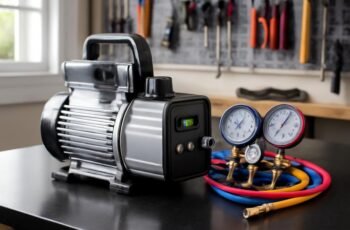
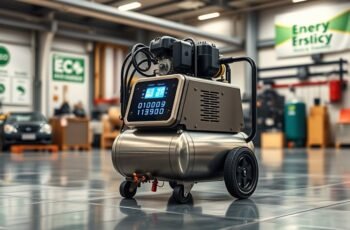
When selecting a high pressure air compressor, understanding the technical nuances and application-specific requirements is essential for making an informed decision. We recognize that factors like PSI, CFM, build quality, and maintenance influence long-term reliability and performance. It’s critical to match the compressor’s specifications to your actual needs to avoid costly mismatches. Let’s explore the key features, applications, and maintenance practices that guarantee you choose a durable, efficient solution tailored to your operational demands.
Key Takeaways
- Assess required pressure (PSI) and airflow (CFM) to match compressor capabilities with application needs.
- Choose between portable and stationary models based on mobility and capacity requirements.
- Check build quality, durability, and maintenance features like filters and cooling systems for long-term reliability.
- Consider power ratings (HP or kW) and duty cycle to ensure continuous performance and efficiency.
- Prioritize safety features and ease of maintenance to extend compressor lifespan and prevent operational issues.
What Are High Pressure Air Compressors and How Do They Work?
High pressure air compressors are specialized devices designed to compress air to considerably higher pressures than standard models, typically exceeding 300 PSI. They operate through a series of compression stages, increasing air pressure incrementally. Effective compressor lubrication is vital, as it minimizes wear on moving parts, reduces friction, and guarantees consistent performance under high stress. Proper lubrication also plays a role in noise reduction, helping dampen operational sound levels. These compressors often incorporate advanced sealing and cooling systems to maintain peak functioning and prevent overheating. The design emphasizes durability and efficiency, with attention to reducing vibration and noise. Overall, high pressure air compressors combine precise engineering with maintenance strategies like lubrication to deliver reliable, high-pressure output while managing noise levels effectively.
Key Features to Consider When Choosing a High Pressure Air Compressor
When selecting a high pressure air compressor, it’s essential to evaluate its power and pressure ratings to guarantee it meets your specific operational demands. Portability and size influence ease of use and installation, while maintenance requirements and build quality directly impact long-term reliability. Examining these key features allows us to identify a unit optimized for performance, efficiency, and durability.
Power and Pressure Ratings
Evaluating the power and pressure ratings of an air compressor is essential to guarantee it meets the specific demands of your application. Proper assessment ensures ideal industrial safety and energy efficiency. Consider these key factors:
- Horsepower (HP): Higher HP indicates increased power, enabling faster operation and higher throughput.
- Maximum Pressure (PSI): Ensure the compressor exceeds your required operating pressure to prevent performance issues.
- Flow Rate (CFM): Adequate cubic feet per minute guarantees consistent air supply, critical for continuous tasks.
- Duty Cycle: A higher duty cycle allows longer operation without overheating, enhancing safety and efficiency.
Matching these ratings with your workload ensures energy-efficient operation, reduces downtime, and maintains safety standards.
Portability and Size
Portability and size are critical considerations that directly impact the practical usability of a high pressure air compressor. A compact design enhances maneuverability and storage, making portable units ideal for fieldwork or limited space environments. When evaluating size, consider the weight and dimensions, as these factors influence ease of transportation and setup. Smaller, lightweight units facilitate quick deployment and reduce operational fatigue. Conversely, larger models may offer higher capacity but compromise portability. For users prioritizing mobility, selecting a compressor with a well-engineered compact design ensures efficiency without sacrificing performance. Ultimately, balancing size with power output allows for maximum functionality tailored to specific application needs, ensuring the compressor remains practical in diverse operational contexts.
Maintenance and Durability
Maintenance and durability are essential factors that directly influence the long-term performance and cost-effectiveness of a high pressure air compressor. To optimize lifespan, consider these key aspects:
- Lubrication Frequency: Regular lubrication reduces wear and prevents overheating, ensuring components operate smoothly over time.
- Corrosion Prevention: Use corrosion-resistant materials and protective coatings, especially in humid environments, to extend compressor lifespan.
- Component Quality: High-quality, durable parts minimize breakdowns and reduce maintenance needs, offering better long-term reliability.
- Ease of Maintenance: Designs that facilitate quick access to critical parts streamline routine checks, lubrications, and repairs, enhancing overall durability.
Focusing on these features helps maintain consistent performance and reduces operational costs, safeguarding your investment.
Which Applications Benefit Most From High Pressure Air Compressors?
High pressure air compressors are essential in applications requiring precise, high-volume airflow at elevated pressures. In industrial applications, they enable tasks such as pneumatic tooling, spray painting, and process automation, where consistent, high-pressure air guarantees operational efficiency and accuracy. These compressors are critical for manufacturing, construction, and mining operations that demand reliable, high-capacity performance under demanding conditions. For hobbyist uses, high pressure air compressors facilitate activities like paintball, airbrushing, and small-scale pneumatic projects, providing the control and power needed for detailed work. Their ability to deliver sustained high-pressure airflow makes them invaluable across diverse fields, supporting both large-scale industrial processes and precision-oriented recreational endeavors. This versatility underscores their importance in any setting requiring elevated pressure air supply.
How to Determine the Right Capacity and Power for Your Needs
Selecting the appropriate capacity and power for a high pressure air compressor requires careful analysis of your specific operational demands. To do this effectively, focus on key factors like capacity calculation and power comparison. First, assess your required airflow in SCFM (standard cubic feet per minute). Second, determine the maximum pressure needed for your application. Third, evaluate the duty cycle to ensure the compressor can operate continuously if necessary. Fourth, compare power ratings in kilowatts or HP to match energy efficiency with capacity. These steps enable precise matching of compressor specifications to your workload, preventing over-specification or underperformance. Accurate capacity calculation and power comparison are essential for optimizing operational efficiency and ensuring reliable performance tailored to your needs.
Top Types of High Pressure Air Compressors: Pros and Cons
Understanding the different types of high pressure air compressors is essential for making an informed purchasing decision, as each design offers distinct advantages and limitations suited to specific applications. Reciprocating compressors are known for high pressure output and durability but tend to generate significant compressor noise and can be less energy efficient due to mechanical friction. Rotary screw compressors provide higher energy efficiency and quieter operation, making them suitable for continuous use, though they often involve higher initial costs. Centrifugal compressors deliver rapid air delivery with minimal noise, but their size and complexity limit their application scope. Ultimately, selecting the right type depends on balancing compressor noise levels, energy efficiency, and operational demands specific to your tasks.
Tips for Maintaining and Troubleshooting Your High Pressure Air Compressor
Proper maintenance and troubleshooting are critical to ensuring your high pressure air compressor operates efficiently and reliably over its lifespan. Prioritize correct lubrication techniques to reduce wear and prevent overheating. Regularly inspect oil levels and change filters to maintain peak performance. When troubleshooting, focus on identifying unusual noises or pressure drops, which may indicate component failure.
Key tips include:
- Follow manufacturer-recommended lubrication schedules, ensuring proper oil type and quantity.
- Conduct routine safety precautions, such as disconnecting power before maintenance.
- Check for leaks or blockages in intake and discharge lines.
- Keep the compressor clean and free of dust or debris to prevent overheating.
Adhering to these practices minimizes downtime and extends equipment longevity.
Frequently Asked Questions
What Safety Precautions Should I Follow When Operating a High Pressure Air Compressor?
We recommend always wearing safety gear, including goggles and gloves, and ensuring an emergency shutdown procedure is clear. Regularly inspect equipment, avoid over-pressurization, and follow manufacturer guidelines to maintain safe operation of high pressure air compressors.
How Long Do High Pressure Air Compressors Typically Last?
High pressure air compressors typically last 8 to 15 years with proper maintenance. Regular inspections, oil changes, and part replacements extend compressor lifespan, ensuring reliable operation and preventing costly downtime. Proper upkeep is essential for longevity.
Are There Eco-Friendly or Energy-Efficient High Pressure Air Compressors Available?
Yes, eco-friendly options and energy-efficient models are available, featuring advanced motor technology and smart controls that reduce power consumption. These models help lower environmental impact while maintaining ideal performance, making them a sustainable choice for various applications.
What Are Common Signs of a Failing High Pressure Air Compressor?
Signs of a failing compressor often include reduced output, unusual noises, or excessive heat. Regular maintenance tips and troubleshooting techniques help identify issues early, ensuring peak performance and preventing costly repairs through proactive monitoring and diagnostics.
Can High Pressure Air Compressors Be Used for Home DIY Projects?
Yes, high pressure air compressors are suitable for DIY projects and home renovation, providing precise and powerful airflow essential for tasks like spray painting or pneumatic tools, but selecting models with appropriate pressure ratings and safety features is vital for effective, safe use.
Conclusion
In conclusion, selecting the right high pressure air compressor requires a keen understanding of your specific needs, much like a ship’s navigator charts a course through treacherous waters. By carefully evaluating features, capacity, and maintenance practices, we can guarantee reliable performance and longevity. Embracing modern advancements while respecting fundamental principles guarantees a robust investment. Like a well-tuned alchemy, the right compressor transforms your operations—delivering efficiency that stands the test of time.