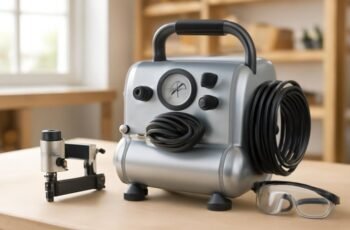
Imagine a device capable of releasing a powerful burst of air with precision and control, yet selecting the right high pressure air compressor involves intricate considerations. As professionals, we recognize that making an informed choice requires analyzing pressure ratings, tank capacity, and safety features, all while aligning with specific application needs. With so many options available, understanding these technical nuances becomes essential to guarantee efficiency, safety, and long-term reliability—factors that can greatly influence your investment’s success.
Key Takeaways
- Determine the required pressure and tank capacity based on your specific application needs.
- Choose the appropriate power source (electric, gas, or hybrid) for portability and efficiency.
- Prioritize safety features like pressure regulation, safety valves, and noise levels for safe operation.
- Select a compressor type (reciprocating, rotary screw, centrifugal) based on workload and maintenance preferences.
- Consider durability, maintenance requirements, and overall cost-effectiveness for long-term reliability.
What Are High Pressure Air Compressors and How Do They Work?
High pressure air compressors are specialized devices designed to generate and store compressed air at considerably higher pressures than standard models, typically exceeding 300 psi. These units utilize advanced air compression techniques to achieve elevated pressure levels efficiently. They operate by compressing atmospheric air through a series of pistons or rotary elements, increasing the air’s pressure for specific industrial applications. Precise pressure regulation is vital, as high-pressure systems require accurate control to guarantee safety and performance. Pressure regulation mechanisms maintain consistent output, preventing over-pressurization that could damage equipment or compromise safety. Overall, high pressure air compressors are engineered for demanding environments where reliable air compression at elevated pressures is essential for operational effectiveness.
Key Factors to Consider When Choosing a High Pressure Air Compressor
When selecting a high-pressure air compressor, it’s essential to evaluate several critical factors that directly impact performance, safety, and efficiency. Air quality is paramount; contaminants like oil, moisture, or particulates can compromise tool longevity and safety. Look for units with effective filtration and moisture control systems to guarantee clean, dry air output. Noise levels are equally important, especially for prolonged operation or indoor use. Excessive noise can cause fatigue and require additional soundproofing measures. Consequently, consider compressors with noise-reduction features or quieter motor designs. Additionally, assess the compressor’s ability to maintain consistent airflow under load without excessive vibrations. Balancing these factors helps ensure the compressor operates reliably, safely, and efficiently, aligning with your specific application requirements.
Understanding Pressure Ratings and Why They Matter
Understanding pressure ratings is fundamental to selecting the right high-pressure air compressor because these ratings directly determine the device’s capacity to deliver the required airflow at specific operational conditions. Accurate knowledge of pressure ratings guarantees compatibility with your application and adherence to safety standards. Consider these aspects:
- Maximum pressure indicates the highest pressure the compressor can safely generate, impacting performance.
- Working pressure reflects the operating range, essential for matching compressor output to your needs.
- Pressure stability ensures consistent airflow, critical for precision tasks.
- Compliance with safety standards guarantees that pressure ratings meet regulatory requirements, minimizing risks.
Selecting the Right Tank Capacity for Your Projects
Choosing the appropriate tank capacity requires an accurate assessment of your project’s air demand and available storage space. Oversized tanks may lead to unnecessary costs, while undersized ones can hinder operational efficiency. We’ll analyze these factors to help you determine the most suitable capacity for your specific application.
Project Air Demand
How do you determine the appropriate tank capacity to meet your project’s air demand? We analyze factors like required airflow, operational duration, and compressor duty cycle. Larger tanks provide a buffer, smoothing out fluctuations in air demand, but may impact noise levels and air quality if not properly maintained. To optimize performance, consider these key points:
- Air consumption rate — match tank capacity to the continuous airflow needs.
- Project duration — longer projects may require larger tanks for consistent air supply.
- Operational peaks — buffer capacity helps handle sudden demand spikes.
- Noise and air quality considerations — larger tanks can reduce compressor cycling, lowering noise levels and improving air quality.
Storage Space Considerations
Selecting the appropriate tank capacity requires a careful assessment of available storage space and how it aligns with your project’s specific air demands. In garage organization, maximizing space efficiency is vital, so choosing a tank that fits within your designated area prevents clutter and maintains workflow. Larger tanks provide a buffer for continuous operation, reducing compressor cycling and noise, which contributes to noise reduction. Conversely, smaller tanks save space but may require more frequent compressor activation, increasing operational noise and impacting garage acoustics. Evaluating your project’s air consumption patterns alongside available storage space guarantees an ideal balance. Properly sized tanks not only streamline garage organization but also enhance noise control, making your workspace safer and more comfortable.
Power Sources and Energy Efficiency Tips for High Pressure Compressors
Selecting an appropriate power source is critical for optimizing compressor performance and operational costs. We must consider options like electric motors, gas engines, or alternative energy sources, evaluating their efficiency and suitability for specific applications. Implementing energy-saving techniques, such as variable speed drives and proper maintenance, can substantially reduce power consumption and enhance overall system efficiency.
Power Source Options
Choosing the right power source for a high-pressure air compressor is essential to ensuring ideal performance and energy efficiency. The selected power source impacts air quality, noise levels, and operational stability.
- Electric motors offer cleaner operation with minimal air contamination, lower noise levels, and consistent air quality, making them suitable for indoor use.
- Gas engines provide portability and independence from electrical grids but tend to produce higher noise levels and emissions, affecting air quality.
- Hydraulic systems deliver high power density but require fluid management, potentially introducing contaminants affecting air purity.
- Hybrid configurations combine multiple sources, optimizing energy efficiency but increasing system complexity and maintenance needs.
Understanding these options helps balance performance with environmental impact, noise constraints, and operational requirements.
Energy Saving Techniques
Optimizing energy efficiency in high-pressure air compressor systems involves strategic decisions about power sources and operational practices. Selecting energy-efficient power options, such as variable frequency drives (VFDs), allows for precise control, reducing unnecessary energy consumption. Incorporating appropriate air compressor accessories, like advanced moisture separators and filters, minimizes system strain and maintains peak efficiency. Noise reduction measures, including sound enclosures and vibration isolators, not only improve workplace comfort but also signal better operational tuning, indirectly conserving energy. Regular maintenance ensures components operate at ideal efficiency, preventing energy waste. Overall, combining intelligent power source choices with targeted noise reduction and accessory upgrades creates a leaner, more cost-effective system that maximizes energy savings in high-pressure applications.
Portability and Mobility Options for Different Work Environments
When evaluating portable air compressors, understanding their mobility features is essential for guaranteeing suitability across various work environments. For industrial applications, mobility determines ease of deployment and operational efficiency. Noise reduction is also critical, especially in confined or sensitive settings. Key considerations include:
- Size and Weight: Lighter units enhance portability, facilitating quick relocation within job sites.
- Wheeled Designs: Integrated wheels support smooth movement across uneven surfaces, crucial for industrial environments.
- Power Source Compatibility: Battery-powered options increase mobility where power outlets are limited.
- Transport Handles: Ergonomic handles improve maneuverability, especially in confined spaces or outdoor settings.
Assessing these features guarantees the compressor aligns with specific work site demands, balancing industrial needs with operational flexibility.
Maintenance and Durability: Ensuring Long-Term Reliability
Ensuring long-term reliability of high-pressure air compressors hinges on diligent maintenance practices and the robustness of their construction. Proper oil lubrication reduces wear, prevents overheating, and maintains optimal compression efficiency. Regular inspection of oil levels and quality is essential, as degraded oil can increase noise levels and diminish performance. Durable components, such as reinforced cylinders and sturdy valves, also contribute to longevity. The table below highlights key aspects influencing durability:
| Maintenance Aspect | Impact on Reliability | Key Consideration |
|---|---|---|
| Oil lubrication | Reduces component wear | Use recommended oils |
| Noise levels | Indicates mechanical health | Monitor and address abnormal sounds |
| Structural robustness | Ensures component longevity | Select high-quality materials |
Consistent maintenance ensures efficiency and extends operational lifespan, safeguarding your investment.
Comparing Different Types of High Pressure Air Compressors
Different types of high-pressure air compressors are designed to meet specific operational requirements, and understanding their distinctions is essential for making an informed purchase.
- Reciprocating compressors offer high pressure with precise control but tend to generate higher noise levels and require effective air compressor lubrication for peak performance.
- Rotary screw compressors operate smoothly with lower noise levels and continuous airflow, often favored in industrial settings, with lubrication systems that minimize maintenance.
- Centrifugal compressors provide large volume flows at high pressures, featuring quieter operation but complex lubrication systems that need careful monitoring.
- Piston compressors are portable with straightforward lubrication, suitable for short-term high-pressure needs but often louder during operation.
Each type balances air compressor lubrication needs and noise levels differently, influencing application suitability.
How to Determine the Best Budget and Value for Your Investment
To determine the best value, we must evaluate equipment durability alongside projected long-term costs. Balancing key features with upfront price guarantees an informed investment that meets operational needs without overspending. Analyzing these factors allows us to identify options that optimize both performance and cost-efficiency.
Assess Equipment Durability
Evaluating equipment durability requires a focus on the materials and construction quality that directly influence a compressor’s lifespan and reliability. To assess these factors effectively, consider the following:
- Material Strength: Confirm key components are made from high-grade materials like cast iron or stainless steel, which resist wear and corrosion.
- Construction Quality: Look for sturdy welds, tight fittings, and reinforced frames, indicating a robust build that withstands continuous use.
- Component Longevity: Check for durable seals, valves, and pistons designed for long-term operation without frequent replacements.
- Corrosion Resistance: Opt for coatings or materials that resist rust, extending the equipment’s lifespan in harsh environments.
These elements collectively determine the compressor’s long-term value and operational reliability.
Compare Long-Term Costs
How can we accurately determine the long-term cost-effectiveness of a high-pressure air compressor? We must analyze operational expenses, focusing on maintenance aspects like air compressor lubrication, which impacts both efficiency and longevity. Regular lubrication reduces wear, preventing costly repairs and downtime. Additionally, noise level considerations are essential, as quieter units may involve higher upfront costs but reduce workplace disruption and potential regulatory fines over time. Comparing energy consumption is critical; more efficient models lower electricity bills. We should also evaluate the durability of components to minimize replacement costs. Ultimately, a thorough cost analysis balances initial purchase price against these ongoing expenses, ensuring we select a compressor that offers the best value without sacrificing performance or operational costs over its lifespan.
Balance Features and Price
Balancing features and price requires a systematic approach that prioritizes essential specifications while considering overall value. To do this effectively, we must evaluate not only initial costs but also related factors like air compressor accessories and safety precautions.
- Identify core features necessary for your application, avoiding unnecessary extras that inflate costs.
- Compare the durability and efficiency of different units, ensuring long-term reliability.
- Factor in the availability and cost of air compressor accessories such as filters or safety valves to prevent future expenses.
- Assess safety features and precautions included, as neglecting these can lead to costly accidents or damages.
Common Mistakes to Avoid When Buying a High Pressure Air Compressor
When purchasing a high-pressure air compressor, it’s crucial to avoid common pitfalls that can compromise performance or lead to costly mistakes. One critical error is neglecting safety precautions, such as guaranteeing proper pressure regulation and reliable safety valves, which prevent over-pressurization and potential failures. Additionally, overlooking noise levels can result in operational issues and safety concerns, especially in environments requiring minimal sound disruption. Failing to assess the compressor’s noise output may lead to discomfort or violations of workplace regulations. Another mistake is not understanding the long-term maintenance implications, which can affect safety and efficiency. By thoroughly evaluating safety features and noise specifications upfront, we can guarantee the compressor meets operational demands while minimizing risk and ensuring longevity.
Frequently Asked Questions
What Safety Precautions Should I Follow When Operating a High Pressure Air Compressor?
We follow strict safety protocols, including wearing protective gear and regularly inspecting equipment. We also establish emergency procedures, ensuring quick response to potential hazards, and always operate within recommended pressure limits to prevent accidents or equipment failure.
How Do I Troubleshoot Common Issues With High Pressure Air Compressors?
We troubleshoot high pressure air compressors by inspecting the air filter for clogs and diagnosing oil leakage, ensuring all connections are tight, checking pressure settings, and monitoring for abnormal noises or temperature fluctuations to pinpoint issues precisely.
Can High Pressure Air Compressors Be Used for Medical or Food-Grade Applications?
Ironically, our high-pressure air compressors, with proper filtration and certification, can meet medical and food-grade standards, enabling safe use in medical applications and food processing, provided they adhere to strict industry regulations and maintenance protocols.
What Accessories or Attachments Are Compatible With High Pressure Air Compressors?
We find that nozzle attachments and pressure gauges are highly compatible accessories for high pressure air compressors, enabling precise control and versatile application. These attachments improve functionality, safety, and accuracy in various industrial and specialized tasks.
How Often Should I Schedule Maintenance for Optimal Compressor Performance?
We recommend scheduling maintenance every 250 hours of operation or quarterly, whichever comes first, to guarantee performance optimization. For example, a manufacturing plant saw a 15% efficiency boost by adhering to this maintenance frequency.
Conclusion
Choosing the right high-pressure air compressor isn’t just about specs; it’s about anticipating future demands and potential challenges. As we’ve seen, factors like pressure ratings, durability, and safety features play critical roles. But the true test lies ahead—will your chosen model stand the test of time and workload? Our guidance aims to prepare you for that decision. Stay vigilant, because the right compressor can transform your projects—if you select with precision and foresight.