Choosing the right home air compressor is like selecting the backbone of a precision machine—each component impacts performance and reliability. We recognize that exploring the options requires careful consideration of technical specifications and features. From determining suitable airflow and pressure to evaluating portability and noise levels, every detail matters. To guarantee you make an informed decision that balances efficiency and cost, let’s explore the critical factors that will guide you toward the ideal compressor for your needs.
Key Takeaways
- Determine your tools’ airflow (CFM) and pressure (PSI) requirements, adding a safety margin for future needs.
- Choose the compressor type (reciprocating, rotary screw, scroll) based on usage frequency and workload.
- Consider size, portability, noise level, and energy efficiency to match your workspace and environmental preferences.
- Evaluate key features like filters, gauges, and accessories to ensure ease of maintenance and safety.
- Balance initial cost with long-term operational expenses, including energy consumption and maintenance requirements.
What Are the Different Types of Home Air Compressors?
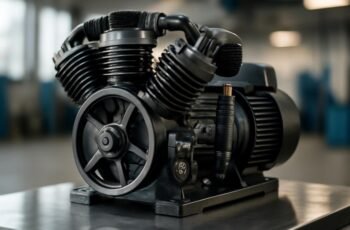
When selecting a home air compressor, understanding the different types available is essential, as each offers distinct performance characteristics suited to specific tasks. Compressor types vary primarily among reciprocating, rotary screw, and scroll models. Reciprocating compressors are piston-based, ideal for intermittent, low-volume tasks like inflation or powering small air tools. Rotary screw compressors use rotors to generate continuous airflow, suitable for more demanding applications such as spray painting or pneumatic tools. Scroll compressors operate quietly and efficiently, making them suitable for silent environments or light-duty use. Each type’s design influences usage scenarios, with reciprocating units favored for occasional, low-demand tasks, while rotary screw and scroll models are better suited for consistent, higher-volume needs. Selecting the right compressor type depends on matching these characteristics to your specific usage scenarios.
How Do You Determine the Right CFM and PSI for Your Projects?
To select the appropriate compressor, we first need to accurately assess the air requirements of your specific projects. Next, we compare these demands with the compressor’s specifications for CFM and PSI to guarantee compatibility. This process ensures peak performance and prevents equipment under- or over-specification.
Assess Project Air Requirements
Determining the appropriate CFM and PSI for your project requires a clear understanding of the specific tools and applications involved. Accurate assessment guarantees ideal air quality and energy efficiency, preventing under- or over-pressurization. Start by listing all tools to identify their maximum CFM and PSI needs, then add a safety margin of 20-25% to account for simultaneous use and future expansion. Consider airflow stability, as consistent pressure improves tool performance and reduces energy waste. High CFM ratings are essential for tools demanding continuous airflow, while PSI should match the maximum pressure requirements of your applications. Analyzing these parameters guarantees efficient compressor operation, minimizes energy consumption, and maintains air quality standards for safe, reliable performance.
Match Compressor Specifications
Matching compressor specifications to your project requirements involves accurately evaluating the airflow (CFM) and pressure (PSI) demands of your tools and applications. To do this effectively, consider the following:
- Confirm the CFM requirements of your most demanding tool.
- Guarantee the PSI exceeds the maximum pressure needed for your tasks.
- Review air compressor brands known for reliability and performance.
- Factor in the compressor’s duty cycle to match your work frequency.
- Plan for regular maintenance schedules to sustain ideal performance and prevent downtime.
Which Features and Accessories Should You Look For?
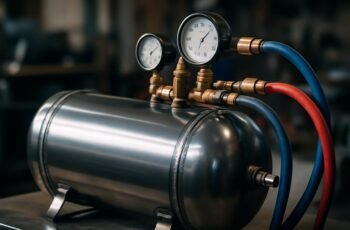
When selecting a home air compressor, evaluating the features and accessories that enhance its functionality and longevity is vital. An effective air filter is necessary for preventing dust and debris from contaminating the compressed air, thereby protecting both the compressor and connected tools. A reliable pressure gauge provides real-time monitoring, guaranteeing ideal operation and preventing over-pressurization. Look for compressors with easily accessible air filters for maintenance ease and clear, accurate pressure gauges for precise control. Additional accessories like quick-connect fittings, thermal overload protection, and adjustable pressure regulators can improve usability and safety. Prioritizing these features ensures the compressor performs efficiently, maintains durability, and meets your specific application needs without unnecessary complications.
How Much Should You Spend on a Home Air Compressor?
Determining the appropriate budget for a home air compressor requires balancing initial purchase price with long-term operational costs. We consider how different price points correlate with features, durability, and energy efficiency. By analyzing these factors, you can identify a cost-effective option that meets your specific needs.
Budget Considerations and Pricing
Establishing a realistic budget is essential for selecting an appropriate home air compressor that meets your needs without overspending. Pricing varies based on features like airflow capacity, motor power, and energy efficiency, which directly impact air quality and operational costs. To maximize your investment, consider these factors:
- Initial purchase price aligned with your project scope
- Energy efficiency ratings to reduce long-term electricity costs
- Air quality controls for cleaner output in sensitive applications
- Maintenance costs associated with different models
- Size and portability relative to your workspace constraints
Balancing upfront costs with operational savings ensures you choose a compressor that provides top performance within your budget, while also maintaining energy efficiency and air quality standards.
Long-Term Cost Factors
Investing in a home air compressor requires careful consideration of long-term costs, which often surpass initial purchase price. Energy efficiency is a crucial factor, as more efficient models reduce ongoing electricity expenses, considerably impacting total cost of ownership. Higher efficiency units typically have advanced motors and optimized designs that consume less power during operation. Additionally, warranty coverage plays an essential role in managing future expenses; detailed warranties mitigate repair and replacement costs, ensuring reliability over time. When selecting a compressor, it’s important to balance upfront costs with these long-term factors to avoid hidden expenses. Prioritizing energy-efficient models with robust warranty coverage can lead to substantial savings, making the investment more cost-effective over the compressor’s lifespan.
What Factors Affect the Compressor’s Size, Portability, and Noise Level?
The size, portability, and noise level of an air compressor are primarily influenced by its design specifications and intended application. These factors directly affect energy efficiency and environmental impact, as compact units typically consume less power and generate fewer emissions. Key considerations include:
- Motor power: Higher wattage increases size but enhances performance.
- Tank capacity: Larger tanks improve runtime but add bulk and weight.
- Cooling system design: Efficient cooling reduces noise and energy consumption.
- Housing materials: Lightweight materials improve portability and reduce environmental impact.
- Sound insulation: Incorporating noise-reducing features minimizes noise levels, aiding in quieter operations.
These elements determine how suitable a compressor is for specific tasks, balancing energy efficiency, environmental impact, and user convenience.
How Do You Maintain and Troubleshoot Your Air Compressor?
Regular maintenance and troubleshooting are essential to guarantee your air compressor operates efficiently and reliably. Regularly inspect and replace the air filter to prevent dust and debris from impairing performance or causing damage. Clean or replace the filter as needed, typically every 1-3 months, depending on usage. Proper oil lubrication is critical; check oil levels regularly and change the oil according to the manufacturer’s schedule to reduce friction and wear on internal components. During troubleshooting, listen for unusual noises, which may indicate loose belts or worn bearings, and check for air leaks around fittings and valves. Monitoring pressure gauges and inspecting safety relief valves can prevent over-pressurization. Adhering to these maintenance steps ensures peak performance and longevity of your air compressor.
Frequently Asked Questions
How Energy-Efficient Are Different Types of Home Air Compressors?
Different types of home air compressors vary in energy consumption, with inverter models showing higher efficiency ratings due to variable speed control. We find that selecting energy-efficient units reduces power usage, optimizing overall performance and lowering long-term operational costs.
Can I Use a Home Air Compressor for Painting Projects?
Absolutely, you can use a home air compressor for painting projects, especially with paint sprayers suited for DIY tasks. Just make sure the compressor provides consistent pressure and airflow to maintain precision and quality in your finishes.
What Safety Precautions Should I Follow When Operating an Air Compressor?
When operating an air compressor, we always wear safety gear like goggles and gloves, guarantee an emergency shutdown is accessible, and regularly inspect hoses for leaks. These precautions prevent injuries and ensure safe, efficient operation.
How Long Do Typical Home Air Compressors Last?
We find that typical home air compressors last around 8-10 years with proper maintenance tips like regular oil changes, filter cleaning, and noise reduction measures, ensuring peak performance and longevity while avoiding the dreaded “noisy neighbor” syndrome.
Are There Eco-Friendly or Low-Emission Compressor Options Available?
Yes, eco-friendly options and low-emission models are available, utilizing energy-efficient motors and advanced exhaust systems. We recommend researching certified models that meet environmental standards, ensuring reduced carbon footprint without compromising performance.
Conclusion
In choosing the right home air compressor, we prioritize precision, efficiency, and reliability. We assess your needs, evaluate features, and balance costs to guarantee peak performance. We consider size, portability, and noise levels to match your workspace. We commit to proper maintenance and troubleshooting to extend your compressor’s lifespan. Ultimately, our goal is to empower you with a tool that delivers consistent power, enhances productivity, and supports your projects with confidence and clarity.