When it comes to choosing the right air compressor, the stakes are higher than they seem at first glance. We recognize that selecting a unit involves balancing technical specifications with practical application, ensuring efficiency without unnecessary expense. With so many types and features to consider, the decision can become complex. To make an informed choice that aligns with your operational needs, it’s essential to analyze key factors that influence performance and longevity, prompting a closer look at what truly matters in your selection process.
Key Takeaways
- Identify the type of compressor (rotary screw, reciprocating, centrifugal) that best suits your application demands.
- Determine required flow rate (CFM) and pressure (PSI) to match tools and workload.
- Consider size, portability, and duty cycle to ensure compatibility with workspace and usage frequency.
- Balance budget with features; higher-end models offer durability and efficiency for frequent or heavy-duty use.
- Prioritize maintenance ease, warranty, and accurate specifications to ensure long-term performance and avoid buying mistakes.
Understanding Different Types of Air Compressors
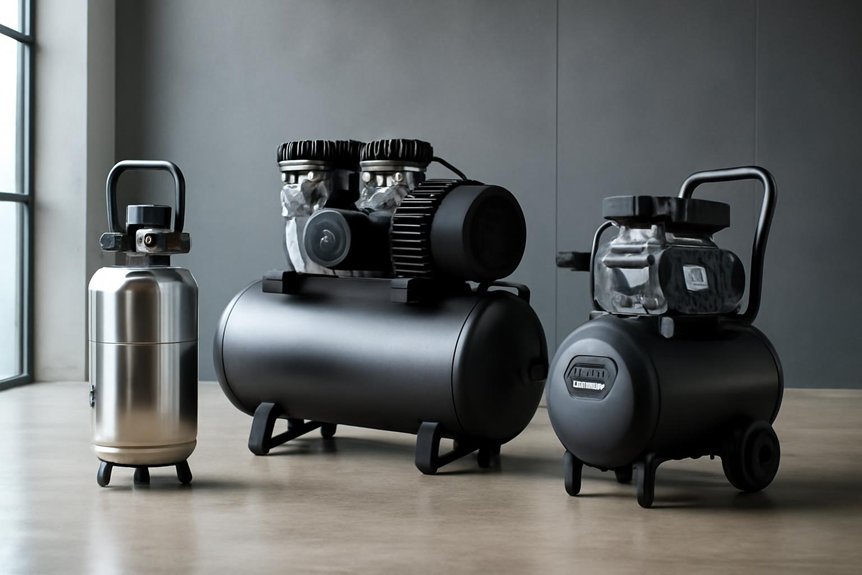
Have you ever wondered how to determine the best air compressor for your specific needs? Understanding different types of air compressors is essential, especially for specialized applications like aircraft compressors and marine applications. Rotary screw compressors, known for continuous operation and high efficiency, are often preferred in aircraft systems requiring reliable, steady airflow. Reciprocating compressors, with their precise pressure control, suit marine applications needing transient yet high-pressure output. Centrifugal compressors, offering high-volume airflow, are ideal for large-scale marine or aerospace environments. Each type differs in design, operational principles, and suitability for specific conditions. By analyzing these core differences, you can identify which compressor type aligns best with your application’s demands, ensuring optimal performance, durability, and safety.
Key Features to Consider for Your Needs
When selecting an air compressor, we focus on power and performance to ensure it meets your workload demands efficiently. Portability and size are equally critical, as they influence maneuverability and space requirements in your workspace. By analyzing these key features, we can identify the most suitable model for your specific applications.
Power and Performance
How do we determine the right power and performance specifications to meet specific operational demands? We start by analyzing the required airflow, measured in CFM (cubic feet per minute), and pressure, in PSI, essential for the tasks at hand. Draft ideas for optimal compressor capacity must consider peak and continuous loads, ensuring efficiency without over-specifying, which often leads to unnecessary costs. Although some may compare compressor performance to unrelated topics, like engine horsepower, the focus remains on consistent output tailored to application needs. Precision in selecting motor horsepower and duty cycle ensures reliable operation. Ultimately, matching compressor power to operational demands prevents equipment strain, minimizes downtime, and optimizes performance, making this evaluation critical for informed purchasing decisions.
Portability and Size
Determining the appropriate portability and size of an air compressor requires careful assessment of the operational environment and mobility needs. Portable weight directly impacts ease of transport and setup, especially for job sites requiring frequent relocation. Compact units with lower portable weight are ideal for tight spaces or mobile applications. Noise levels are also critical; smaller compressors tend to operate more quietly, which benefits environments sensitive to sound. Additionally, size influences storage and workspace requirements, with smaller models facilitating efficient use in confined areas. Balancing portability with power capacity ensures optimal performance without sacrificing convenience. Ultimately, selecting a compressor with suitable size, manageable portable weight, and acceptable noise levels aligns operational demands with user mobility and workspace constraints.
How to Determine the Right Size and Capacity
Selecting the appropriate size and capacity for an air compressor requires a thorough assessment of your specific operational demands. To optimize cost efficiency and control noise levels, consider the following:
- Flow Rate (CFM): Calculate the required cubic feet per minute for your tools to ensure efficient operation without over-specifying.
- Tank Size: Larger tanks provide steady pressure and reduce compressor cycling, improving noise management and energy consumption.
- Power and Pressure Ratings: Match compressor PSI and horsepower to your workload; undersized units hinder productivity, while oversized models increase initial costs and noise.
Budget-Friendly Options vs. High-End Models
When evaluating air compressor options, balancing budget constraints with performance needs becomes a key factor. Budget-friendly models typically feature simplified components, lower power output, and basic durability, making them suitable for light-duty tasks and occasional use. These options often provide excellent value for users with limited budgets, though they may lack the longevity and efficiency of high-end models. High-end models, by contrast, incorporate advanced materials, enhanced cooling systems, and higher horsepower, ensuring superior performance, durability, and energy efficiency over time. While high-end options demand a larger initial investment, they often result in lower maintenance costs and longer service life. Ultimately, selecting between budget-friendly and high-end models depends on application scope, frequency of use, and long-term performance expectations.
Tips for Maintenance and Longevity
Ever wondered how to maximize your air compressor’s lifespan and ensure reliable performance? Proper maintenance schedules and storage best practices are essential for longevity. First, adhere to manufacturer-recommended maintenance intervals, including regular oil changes, filter replacements, and drain valve checks to prevent moisture buildup. Second, implement a consistent inspection routine to identify wear or leaks early, minimizing downtime. Third, store the compressor in a controlled environment—away from excessive moisture, dust, and temperature fluctuations—to prevent corrosion and component degradation. These measures optimize operational efficiency, reduce unexpected failures, and extend service life. Maintaining detailed records of maintenance activities enables proactive management, ensuring your compressor remains dependable over time. Proper care, aligned with precise schedules and storage practices, is key to maximizing performance and durability.
Common Mistakes to Avoid When Buying an Air Compressor
Are you aware of the common pitfalls that can undermine your investment in an air compressor? Many buyers fall prey to misleading advertisements that exaggerate capabilities or specifications. Additionally, warranty loopholes can leave you unprotected if issues arise post-purchase, especially if the fine print limits coverage. To avoid these mistakes, verify technical specs against your needs and scrutinize warranty terms thoroughly.
| Mistake | Consequence |
|---|---|
| Falling for misleading ads | Overestimating product performance |
| Ignoring warranty details | Facing costly repairs or replacements |
| Not researching specifications | Purchasing an incompatible or underpowered unit |
Being vigilant ensures you make a well-informed, durable investment.
Frequently Asked Questions
Which Air Compressor Brands Are the Most Reliable?
We find that reliable brands like Honda, Quincy, and Ingersoll Rand meet industry reliability benchmarks, demonstrating extensive brand longevity through consistent performance, advanced engineering, and solid customer feedback, making them top choices for durable, high-performing air compressors.
How Loud Are Different Types of Air Compressors?
Some compressors are as loud as a jet engine, reaching 90+ decibels, while quieter models hover around 70 decibels. Noise levels depend on design and duty cycles, with piston types generally louder than rotary screw compressors.
Can I Use an Air Compressor for Painting Projects?
Yes, we can use an air compressor for painting projects, provided it offers consistent pressure, suitable airbrush compatibility, and is compatible with solvent-based paints to ensure optimal atomization and finish quality.
What Safety Precautions Should I Follow With Air Compressors?
We recommend wearing safety gear, including eye and ear protection, and always checking the pressure relief valve before operation. Regularly inspect hoses and fittings, ensuring proper pressure settings and adherence to safety protocols to prevent accidents.
Are Portable Air Compressors Suitable for All Tools?
Like a Swiss Army knife, portable air compressors are versatile, but their tool compatibility varies. They work well with most small to medium tools, yet may lack sufficient pressure or airflow for high-demand equipment, requiring careful assessment.
Conclusion
Just as a master craftsman selects the right tools for precision and durability, choosing the perfect air compressor requires careful analysis of your specific needs. By understanding the types, features, and maintenance considerations, we ensure optimal performance and longevity—avoiding costly mistakes. Think of this decision as assembling a finely tuned engine: each component must align perfectly to deliver reliable power, efficiency, and safety, propelling your projects forward with confidence and precision.