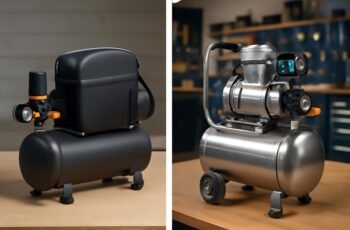
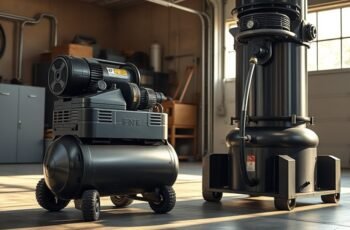
Did you know that choosing the right reciprocating air compressor can improve efficiency by up to 30% and extend equipment lifespan? With so many models and specifications available, making an informed decision requires careful analysis of power, capacity, and application needs. We understand that selecting the ideal unit isn’t straightforward, which is why a structured approach can ensure you match the compressor’s features to your workload—something you’ll want to consider before making your purchase.
Key Takeaways
- Determine required pressure (PSI) and flow rate (CFM) to match specific tool or application demands.
- Choose between single-stage or two-stage models based on efficiency and maximum pressure needs.
- Assess size, portability, and workspace constraints to ensure proper fit and mobility.
- Evaluate maintenance needs and durability features for long-term reliability and cost-effectiveness.
- Consider budget, warranty, and application-specific features to select the best balance of performance and value.
What Is a Reciprocating Air Compressor and How Does It Work?
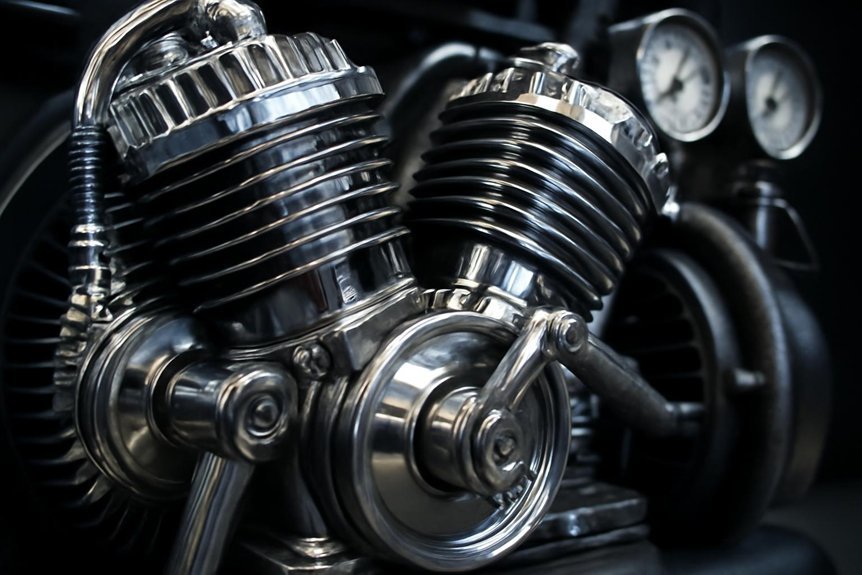
A reciprocating air compressor is a device that uses a piston driven by a crankshaft to compress air, converting mechanical energy into stored pneumatic energy. This process involves a detailed air compression cycle where the piston moves within a cylinder, drawing in ambient air during the intake stroke. The reciprocating explanation highlights how the piston’s movement compresses the air, increasing its pressure before it’s delivered through discharge valves. These compressors typically operate in a series of reciprocating strokes—intake, compression, and exhaust—making them efficient for various industrial applications. Understanding the mechanics behind air compression is essential for selecting the right unit. Their ability to generate high-pressure airflow through a straightforward reciprocating mechanism underscores their reliability and versatility in many operational settings.
Key Factors to Consider When Choosing a Reciprocating Air Compressor
When selecting a reciprocating air compressor, we must carefully evaluate power output and pressure requirements to ensure it meets operational demands. Size and portability are critical for integration into existing workflows, while maintenance and durability influence long-term reliability and cost-effectiveness. Analyzing these factors systematically helps optimize performance and operational efficiency.
Power and Pressure Needs
Understanding the specific power and pressure requirements of your applications is critical for selecting an effective reciprocating air compressor. Accurate assessment ensures optimal performance and cost efficiency, avoiding unnecessary expenditure. When evaluating options, consider:
- Required pressure (PSI): Match compressor pressure output to your tools’ demands to prevent over-specification.
- Flow rate (CFM): Ensure the compressor delivers sufficient airflow for continuous operation.
- Motor power: Larger motors offer higher power, but increase initial costs and energy consumption.
- Warranty and durability: Prioritize units with solid warranties to mitigate long-term maintenance costs, which influences overall cost analysis.
Balancing these factors guarantees capacity and reliability aligned with your budget while minimizing potential warranty concerns.
Size and Portability
How does the size and portability of a reciprocating air compressor influence its suitability for your specific applications? Size directly impacts operational flexibility, with smaller units ideal for mobile or on-site tasks, while larger models suit fixed installations. Portability affects setup time and ease of transport, which are critical considerations in dynamic work environments. When evaluating topic ideas, consider whether the compressor’s dimensions align with your workspace constraints and mobility needs. Additionally, a compact, portable compressor reduces the maintenance focus by minimizing handling and storage complexity. Larger units may demand more robust setup and increased maintenance efforts, but they often deliver higher capacity. Ultimately, balancing size and portability ensures optimal performance tailored to your operational demands, streamlining maintenance and maximizing efficiency.
Maintenance and Durability
Maintenance and durability are critical considerations that directly influence the long-term performance and cost-effectiveness of a reciprocating air compressor. Reliable operation depends on robust components and consistent upkeep. Key factors include:
- Material quality—high-grade pistons and cylinders resist wear better.
- Ease of maintenance—designs that simplify filter changes and oil servicing reduce downtime.
- Corrosion resistance—coatings and alloy choices prevent degradation in harsh environments.
- Component lifespan—knowing the expected durability of valves, seals, and motor parts helps avoid unexpected failures.
While maintenance routines may seem unrelated to the compressor’s core function, neglecting them leads to costly repairs. Off topic discussions about unrelated topics often divert focus, but prioritizing durability ensures the compressor withstands demanding applications and reduces long-term costs.
Different Types of Reciprocating Air Compressors Explained
Understanding the distinctions between single-stage and two-stage compressors reveals how compression efficiency and output capacity vary for different applications. Comparing reciprocating and rotary types highlights differences in design complexity, maintenance, and performance characteristics. Additionally, choosing between portable and stationary models depends on mobility needs and operational scale.
Single-Stage vs. Two-Stage
When choosing between single-stage and two-stage reciprocating air compressors, it’s essential to understand their fundamental differences in operation and performance. In a single stage, air is compressed in one piston cycle, which limits maximum pressure and efficiency. Conversely, a two-stage compressor compresses air twice, with an intercooler reducing temperature and improving capacity. Consider these key distinctions:
- Efficiency: Two-stage compressors generally consume less energy for higher outputs.
- Pressure: Single-stage models typically reach up to 150 psi, while two-stage units exceed this.
- Temperature Management: Two-stage systems better control heat, prolonging component lifespan.
- Cost and Complexity: Single-stage compressors are simpler and more affordable but less capable under heavy loads.
Choosing between the two depends on application needs, with two-stage offering superior performance for demanding tasks.
Reciprocating vs. Rotary
Reciprocating air compressors can be broadly categorized into two main types: reciprocating and rotary. Understanding the reciprocating differences is vital for making an informed choice, as each type exhibits distinct operational characteristics. The reciprocating compressor uses pistons driven by a crankshaft, resulting in a high-pressure output suitable for intermittent, high-demand applications. In contrast, rotary compressors operate via rotating elements like screws or lobes, providing continuous airflow with lower pulsation. The rotary comparison reveals advantages in efficiency and maintenance for rotary types, but reciprocating models excel in pressure versatility. The table below highlights key distinctions:
| Feature | Reciprocating | Rotary |
|---|---|---|
| Operation | Piston-based, reciprocating motion | Rotating screws or lobes |
| Suitable for | High-pressure, intermittent use | Continuous, lower-pressure use |
| Maintenance | Generally higher due to complexity | Lower, due to fewer moving parts |
Portable vs. Stationary
Portable and stationary reciprocating air compressors serve distinct operational needs, and selecting between them hinges on application requirements and mobility considerations. Portable compressors are designed for flexibility, often featuring a portable grid for easy transport and setup. They excel in temporary or mobile operations where quick deployment is essential. In contrast, stationary compressors are built for continuous use, typically installed in fixed locations with reduced stationary noise levels for a quieter environment. Key distinctions include:
- Mobility: Portable units offer ease of transport; stationary units prioritize stability.
- Noise Levels: Stationary compressors generally operate with lower stationary noise.
- Power Capacity: Stationary models often provide higher throughput.
- Infrastructure: Portable compressors require minimal setup; stationary models rely on fixed infrastructure.
Understanding these differences ensures optimal compressor selection aligned with specific operational demands.
How to Determine the Right Capacity and Power for Your Needs
Determining the appropriate capacity and power for a reciprocating air compressor requires a precise assessment of your operational demands. We evaluate your required airflow, measured in CFM (cubic feet per minute), and pressure, in PSI, to match compressor specifications with workload. Overestimating capacity can lead to unnecessary costs, while underestimating hampers productivity. Consider your application’s peak demand to select the appropriate size. Additionally, your pricing strategy influences the choice—higher-capacity units often come with better warranties, offering extended warranty coverage that protects your investment. This balance ensures optimal performance without overspending. By analyzing these parameters critically, you ensure efficient operation and a reliable compressor tailored to your specific needs, ultimately optimizing both upfront costs and long-term operational expenses.
Portability and Size: Finding a Compressor That Fits Your Workspace
How do you guarantee your compressor seamlessly integrates into your workspace without sacrificing efficiency? First, assess the physical footprint to match available space, considering dimensions and weight. Second, evaluate portability features like wheels or handles, especially for mobile setups. Third, factor in noise levels; quieter models minimize disruption. Fourth, incorporate your budget considerations by balancing size and noise against cost constraints. Smaller compressors often reduce footprint but may compromise airflow capacity, so ensure size doesn’t limit performance. Conversely, larger units might increase noise and occupy more space, affecting workflow. Prioritizing these factors ensures a compressor that aligns with workspace constraints, maintains operational efficiency, and adheres to budget considerations without excessive noise, ultimately optimizing your setup’s functionality.
Maintenance Tips to Keep Your Reciprocating Air Compressor Running Smoothly
Regular maintenance is essential for ensuring that your reciprocating air compressor operates efficiently and reliably over time. Establishing a strict maintenance schedule helps identify wear and prevent component failure. Key to this is monitoring lubrication frequency; regular oil checks and timely oil changes reduce friction and heat buildup in the piston and cylinder, prolonging component lifespan. We recommend inspecting oil levels daily and adhering to manufacturer-recommended intervals for oil replacement. Additionally, inspecting air filters, valves, and drain valves regularly prevents contamination and moisture buildup, which can impair performance. Implementing these practices minimizes downtime and maintains optimal compressor performance. Consistent adherence to a well-defined maintenance schedule ensures reliable operation while reducing long-term repair costs.
Common Applications and Best Use Cases for Reciprocating Compressors
Reciprocating air compressors are highly versatile and are commonly employed across various industries due to their ability to deliver high-pressure air in a compact and reliable form. They excel in applications where precise control and high air quality are essential. For example:
Reciprocating air compressors provide high-pressure, reliable airflow for precise industrial and commercial applications.
- Manufacturing: Powering pneumatic tools and automation systems.
- Automotive: Operating spray guns and tire inflation stations.
- Hobby Projects: Providing consistent airflow for model building and airbrushing.
- Medical and Laboratory: Ensuring clean, dry air for sensitive equipment.
Their durability and ability to generate significant pressure make them ideal for these use cases. They are especially suitable where maintaining air quality and consistent airflow are critical, ensuring optimal performance and safety across various tasks.
Budgeting for Your Purchase: Cost, Quality, and Long-Term Value
When selecting a reciprocating air compressor, balancing initial cost with long-term value becomes a key consideration. While lower-priced models may seem attractive, they often compromise composites durability, risking increased wear and potential downtime. Investing in higher-quality components typically enhances durability and reduces maintenance costs over time. Warranty coverage is also critical; comprehensive warranties protect against unexpected repairs and reflect manufacturer confidence in product longevity. Although premium models may have higher upfront costs, their superior materials and extended warranty coverage often translate into better long-term value. By analyzing these factors—initial investment, composites durability, and warranty coverage—we ensure a cost-effective choice that minimizes lifecycle expenses and maximizes operational reliability.
Questions to Ask Before Buying a Reciprocating Air Compressor
What critical questions should we ask before investing in a reciprocating air compressor to ensure it meets our operational needs? First, we must evaluate the compressor’s capacity relative to our workload, focusing on CFM and PSI specifications. Second, we need to consider energy efficiency and operational costs over the long term. Third, it’s essential to assess maintenance requirements and component durability. Fourth, we should clarify the compressor’s control system and safety features. An off topic discussion might explore unrelated topics like noise levels or portability, but these are secondary to core technical functionalities. These questions help prevent mismatched equipment and ensure reliable performance. Asking these questions ensures our investment aligns with operational demands, avoiding costly mistakes and unnecessary equipment upgrades later.
Frequently Asked Questions
What Safety Precautions Should I Follow With Reciprocating Air Compressors?
We prioritize safety by always wearing appropriate gear, regularly inspecting oil levels, and maintaining proper lubrication. Ensuring all safety devices are functional and adhering to manufacturer guidelines minimizes risks, keeping operations secure and efficient with reciprocating air compressors.
How Long Do Reciprocating Air Compressors Typically Last?
Reciprocating air compressors typically last 10-15 years, debunking longevity myths through diligent maintenance routines; regular inspections, oil changes, and part replacements prolong lifespan, ensuring optimal performance and minimizing costly repairs over their operational life.
Can Reciprocating Compressors Handle Continuous Operation?
Reciprocating compressors can handle continuous operation with proper maintenance, but they generate significant noise, so implementing noise reduction measures is essential for sustained efficiency and operator safety during extended use.
What Accessories or Attachments Are Compatible With Reciprocating Compressors?
Like a well-oiled machine, reciprocating compressors work best with compatible hose adapters, proper oil, and routine maintenance. They support continuous operation questions, ensuring reliable performance when paired with appropriate attachments and adhering to scheduled upkeep.
How Do I Troubleshoot Common Issues With Reciprocating Air Compressors?
We troubleshoot common reciprocating air compressor issues by diagnosing temperature fluctuations and troubleshooting noise sources, inspecting valves and pistons, and checking for wear or leaks, ensuring optimal performance and preventing further mechanical failure through precise analysis.
Conclusion
In conclusion, selecting the right reciprocating air compressor is crucial to optimizing your operations, like fine-tuning a complex machine for peak performance. By carefully analyzing capacity, pressure, size, and long-term costs, we ensure a purchase that delivers unmatched reliability and efficiency. Remember, the right compressor can revolutionize your workflow, turning everyday tasks into seamless, powerhouse processes—making it a decision that’s anything but ordinary.