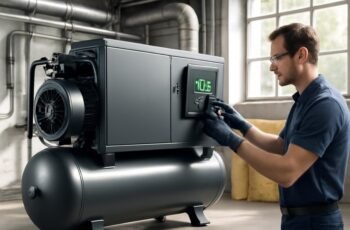
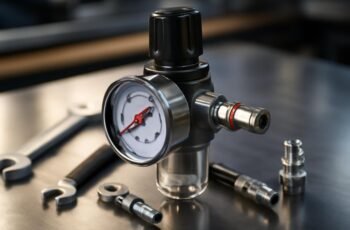
Few realize that a rotary screw air compressor’s efficiency hinges on the precise interaction of its intermeshing screws, which maintain continuous airflow and reduce pulsation. Understanding this mechanism is essential for selecting a system that balances performance with energy use. As we explore the key factors—like capacity, power options, and durability—we can better determine the best fit for your application, ensuring long-term reliability and cost savings.
Key Takeaways
- Assess your airflow (CFM) and pressure (PSI) needs to select appropriately sized models to optimize efficiency and performance.
- Consider energy-saving features like variable speed drives and advanced controls to reduce long-term operational costs.
- Evaluate initial purchase cost, maintenance expenses, warranty coverage, and support services for overall value.
- Choose the right power option (electric, diesel, hydraulic) based on mobility, availability, and application demands.
- Prioritize durability, noise levels, cooling methods, and customization options to ensure reliable, compliant, and environment-friendly operation.
What Is a Rotary Screw Air Compressor and How Does It Work?
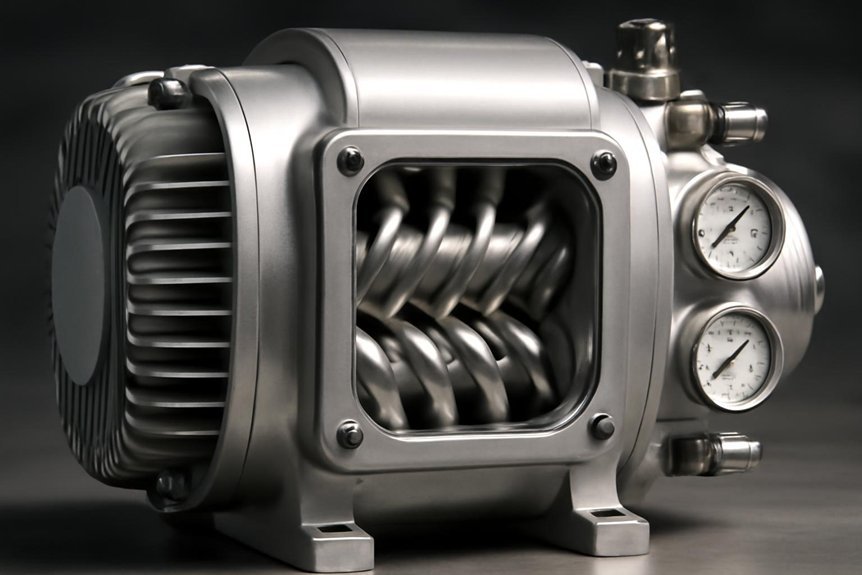
A rotary screw air compressor is a type of positive displacement machine that utilizes two intermeshing helical screws to compress air efficiently. Its design ensures continuous, smooth airflow with minimal pulsation, making it suitable for high-demand applications. The enclosed compression chamber helps with noise reduction, which is essential in environments requiring lower sound levels, such as workshops or paint coating facilities. Additionally, the compressor’s stable operation reduces vibrations that could affect sensitive processes. Precise air delivery ensures consistent quality in paint coating applications, where uniform spray patterns are essential. The advanced engineering of rotary screw compressors allows for reliable, energy-efficient performance, which is indispensable for industrial and manufacturing settings. Overall, their technical architecture supports both noise mitigation and high-quality air output.
Key Factors to Consider When Choosing a Rotary Screw Compressor
When selecting a rotary screw compressor, we must evaluate power and capacity requirements to guarantee the unit meets operational demands without excess. Energy efficiency features are critical for minimizing long-term operating costs, while maintenance and durability influence the compressor’s reliability and lifespan. Analyzing these factors enables us to make informed decisions tailored to specific industrial applications.
Power and Capacity Needs
How do you determine the appropriate power and capacity for a rotary screw compressor? First, analyze your application’s demand to identify the required airflow (CFM) and pressure (PSI). Oversizing can lead to unnecessary energy consumption, while undersizing hampers efficiency. Consider peak versus average load conditions to select a compressor that balances capacity with operational stability. When evaluating sound quality, note that marketing claims about quieter operation may be exaggerated; actual noise levels depend on proper sizing and installation. Power ratings should align with your workload to ensure optimal performance without excess energy use. Precise assessment of your needs ensures that the compressor provides reliable capacity, sound operation, and accurate performance metrics, avoiding misleading marketing claims that can skew decision-making.
Energy Efficiency Features
Are you aware of the key energy efficiency features that notably reduce operating costs in rotary screw compressors? These features optimize performance by adjusting compression processes based on demand, such as variable speed drives (VSDs) that modulate motor speed to match load requirements precisely. VSDs considerably lower energy consumption during partial loads, directly impacting operating expenses. Additionally, advanced control systems enable precise regulation of airflow and temperature, preventing unnecessary energy expenditure. Incorporating high-efficiency motor designs and optimized heat recovery systems further enhances overall efficiency. While unrelated topics like filler content can sometimes distract, focusing on these core features ensures a technically sound selection process. Prioritizing energy efficiency not only reduces costs but also aligns with sustainable practices and long-term operational stability.
Maintenance and Durability
Have we sufficiently considered the maintenance demands and durability features essential for reliable rotary screw compressor operation? Durability hinges on high-quality components, robust construction, and effective noise reduction mechanisms that minimize operational wear. Regular maintenance, including filter changes and oil analysis, extends lifespan and ensures optimal performance. Noise reduction not only improves workplace conditions but also indicates better design resilience. Additionally, selecting units with customizable color options can facilitate easier integration into existing environments and maintenance routines. Reliable compressors should feature durable materials and accessible service points to reduce downtime. Ultimately, balancing maintenance needs with durability considerations ensures long-term efficiency, lowers operational costs, and enhances equipment longevity, making these factors critical when evaluating a rotary screw compressor’s suitability for demanding industrial applications.
How to Determine the Right Capacity and CFM for Your Needs
Determining the appropriate capacity and CFM (cubic feet per minute) for your rotary screw air compressor requires a precise understanding of your operational demands. Analyzing your maximum airflow requirements ensures the compressor can meet peak loads without excessive energy consumption, reducing environmental impact. Oversizing can lead to unnecessary energy use and compromised warranty coverage, as some manufacturers limit warranty claims if the compressor operates outside optimal parameters. Conversely, undersizing risks insufficient airflow, resulting in equipment strain and potential downtime. It’s essential to accurately calculate your average and peak CFM needs based on your tools and processes. This precise assessment promotes efficient performance, minimizes environmental footprint, and aligns with warranty requirements, ultimately optimizing your compressor investment and operational reliability.
Understanding Power Options and Energy Efficiency Features
Understanding the various power sources and energy efficiency features of rotary screw compressors is essential for optimizing operational costs. We analyze how different power options, such as electric or gas-driven systems, impact performance and flexibility, while energy-saving technologies like variable speed drives reduce power consumption. Evaluating operating cost factors allows us to select solutions that balance initial investment with long-term efficiency gains.
Power Source Variations
What are the key differences among power source options for rotary screw air compressors, and how do these variations impact energy efficiency? Electric motors are the most common, offering high efficiency and consistent performance, but their energy savings depend on the motor’s design and control systems. Diesel or gas-powered units provide portability and are suited for remote locations, yet they typically have lower efficiency and higher operational costs. Hydraulic-powered compressors can leverage existing machinery but often involve complex supply chains that increase initial prices and maintenance complexity. These pricing models influence total cost of ownership, with electric options often benefiting from favorable supply chain logistics and rebates. Ultimately, the choice of power source directly affects operational efficiency, affecting both energy consumption and long-term expenses.
Energy Saving Technologies
Have you considered how energy-saving technologies enhance the efficiency of different power options in rotary screw air compressors? These features optimize energy use while maintaining reliability benchmarks. Variable speed drives (VSDs), for example, adapt motor speed to demand, reducing energy waste. Advanced control systems optimize compressor operation, further improving efficiency. Warranty coverage often reflects these innovations, offering better support for energy-saving features. Below is a comparison highlighting key aspects:
| Technology | Benefits |
|---|---|
| Variable Speed Drives | Reduced energy consumption, increased lifespan |
| Intelligent Controls | Precise operation, energy optimization |
| Heat Recovery Systems | Lower overall energy costs |
| Variable Frequency Drives | Enhanced efficiency during load fluctuations |
| Extended Warranty Coverage | Ensures reliability of energy-saving features |
Operating Cost Factors
When selecting a rotary screw air compressor, evaluating the operating cost factors associated with different power options is essential for optimizing long-term expenses. A thorough cost comparison should consider initial purchase price, energy consumption, and maintenance costs, including factors like variable speed drives versus fixed-speed models. Energy efficiency features, such as advanced control systems, can significantly reduce operational expenses over time. Additionally, warranty coverage plays a crucial role; comprehensive warranties minimize unexpected repair costs and downtime, further influencing total ownership costs. By analyzing these factors, we ensure informed decisions that balance upfront investment with ongoing operational savings, ultimately enhancing system reliability and cost-effectiveness. Understanding these operational cost factors helps select a compressor aligned with both budget constraints and long-term performance goals.
The Importance of Durability, Maintenance, and Reliability
Ensuring durability, ease of maintenance, and reliable performance is essential when selecting a rotary screw air compressor, as these factors directly influence operational efficiency and total cost of ownership. Durability concerns often relate to the compressor’s ability to withstand continuous operation under demanding conditions, minimizing downtime. A robust design reduces the frequency of replacements and repairs, extending the lifespan of key components. Maintenance intervals are critical; compressors with longer intervals require less frequent service, lowering operational costs and optimizing productivity. Reliable units maintain consistent output, preventing pressure drops and unexpected failures. By prioritizing durability and maintenance-friendly features, users can achieve a more predictable, cost-effective operation, safeguarding against costly repairs and ensuring steady airflow essential for industrial processes.
Comparing Fixed-Speed Versus Variable-Speed Rotary Screw Compressors
What are the key differences between fixed-speed and variable-speed rotary screw compressors, and how do these differences impact operational efficiency? Fixed-speed units operate at a constant RPM, providing straightforward performance but often consuming more energy during low demand periods. Conversely, variable-speed compressors adjust motor speed to match demand, optimizing energy use, and reducing operational costs. This flexibility enhances efficiency, especially in fluctuating workload environments. Additionally, variable-speed models often come with branding incentives such as energy savings and extended warranty coverage, which can offset higher initial costs. When comparing the two, consider how demand variability affects your facility’s energy consumption and maintenance schedules. Both types have distinct advantages, but understanding these technical differences helps in selecting the most cost-effective and reliable solution for specific operational needs.
Additional Features to Look For: Noise Levels, Cooling, and Controls
Have you considered how noise levels, cooling efficiency, and control systems influence the overall performance and operational costs of a rotary screw air compressor? Noise policy and sound attenuation features directly impact workplace safety and compliance, while cooling strategies determine compressor longevity and efficiency. Effective cooling methods—such as air or water cooling—reduce thermal stress and energy consumption, lowering maintenance costs. Advanced control systems, including integrated sensors and automation, optimize compressor operation, enhance reliability, and enable real-time monitoring. These additional features assure the compressor operates within specified noise and temperature parameters, minimizing downtime and energy waste. Evaluating noise levels, cooling options, and control capabilities helps identify models that balance operational efficiency with compliance, ultimately reducing long-term expenses and improving overall system performance.
How to Budget for Your Rotary Screw Air Compressor Investment
Determining an appropriate budget for a rotary screw air compressor requires a detailed understanding of both initial acquisition costs and ongoing operational expenses. Proper planning involves considering factors such as buying timing, which affects pricing and availability, and integration costs for compatible software systems. To create an effective budget, visualize:
- The upfront purchase price, including installation and setup
- Long-term savings from energy-efficient models and maintenance requirements
- Potential costs of software integration for remote monitoring and control, enhancing operational efficiency
Analyzing these components helps ensure financial preparedness and prevents unexpected expenses. Accurate budgeting aligns your investment with your operational needs, supporting optimal performance and longevity. This strategic approach enables informed decision-making, balancing immediate costs with future savings.
Tips for Finding the Best Brands and Getting Support After Purchase
Selecting reputable brands and ensuring reliable support post-purchase are crucial steps in optimizing your rotary screw air compressor investment. We recommend evaluating manufacturer reputation through industry reviews and customer feedback, focusing on consistent quality and durability. It’s vital to verify the availability of comprehensive after-sales support, including service centers and technical assistance, to minimize downtime. Avoid unrelated topic distractions, such as irrelevant discussion about unrelated equipment, which can obscure core decision-making factors. When assessing brands, consider warranty terms, maintenance programs, and parts availability to ensure long-term reliability. By prioritizing established brands with proven support networks, you reduce operational risks and ensure consistent compressor performance, ultimately safeguarding your investment and operational efficiency over time.
Frequently Asked Questions
What Are the Common Troubleshooting Issues With Rotary Screw Air Compressors?
We often encounter common startup issues like overheating or pressure fluctuations, which stem from improper maintenance scheduling. Regularly inspecting components and adhering to maintenance protocols helps prevent these problems, ensuring reliable compressor operation and minimizing downtime.
How Does Altitude Affect Compressor Performance and Selection?
Altitude impact reduces compressor efficiency due to lower air density, leading to potential performance trade-offs. We recommend adjusting control parameters or choosing models designed for high-altitude operation to maintain optimal performance and prevent undue wear.
What Safety Features Should I Look for in a Rotary Screw Compressor?
We look for safety features like safety interlocks to prevent accidental operation and fault indicators that alert us to issues promptly, ensuring safe, reliable operation. These features help us maintain equipment integrity and protect personnel effectively.
Can Rotary Screw Compressors Be Used for Specific Industrial Applications?
Rotary screw compressors excel in various industrial applications due to their reliability and efficiency. Their industrial suitability spans manufacturing, automotive, and food processing sectors, where continuous, high-volume air supply is critical for operational performance and process consistency.
How Do I Properly Size a Compressor for Future Expansion Needs?
We size compressors for future expansion by considering current load demands, potential growth, and system efficiency, ensuring proper size planning and future budgeting. This approach minimizes downtime and costs, supporting scalable, reliable operations.
Conclusion
In the end, selecting the perfect rotary screw air compressor isn’t just about initial costs; it’s about understanding the true value of efficiency, durability, and support. Ironically, some might prioritize upfront savings only to face higher energy bills and maintenance costs later. By thoroughly analyzing performance features and long-term benefits, we assure our investment isn’t just a purchase—it’s a strategic move toward operational excellence. After all, smarter choices today prevent costly surprises tomorrow.