When selecting accessories for your air compressor, we recognize the importance of understanding compatibility, durability, and cost-efficiency to optimize performance and lifespan. Our approach emphasizes a detailed analysis of operational needs, matching components precisely, and considering long-term maintenance. With so many options and technical considerations, it’s crucial to avoid common pitfalls and make informed choices—an essential process that can significantly impact your system’s reliability and total ownership costs.
Key Takeaways
- Analyze operational requirements, compatibility, and durability to select suitable accessories for your air compressor system.
- Compare brands based on build quality, customer reviews, warranty, and airflow consistency for long-term reliability.
- Verify size, fitting compatibility, and material quality to prevent leaks, inefficiencies, and safety hazards.
- Consider technical specifications like pressure, flow ratings, and noise levels to match accessory performance with tasks.
- Adopt a strategic purchasing approach, leveraging bulk discounts and timing to maximize value and cost efficiency.
How to Choose the Right Air Compressor Accessories for Your Needs
How do you determine which air compressor accessories best suit your specific applications? We analyze factors like operational requirements, compatibility, and durability. Cost efficiency is critical; selecting accessories that optimize performance without inflating expenses ensures long-term savings. When comparing brands, focus on build quality, customer reviews, and warranty offerings to gauge reliability and value. A thorough brand comparison helps identify models that deliver consistent airflow, minimal maintenance, and energy efficiency—key for reducing operational costs. Additionally, compatibility with your existing compressor system prevents costly modifications or replacements. By scrutinizing these factors, you can make informed decisions that balance upfront investment with ongoing operational expenses, ensuring the accessories you choose enhance productivity while maintaining cost efficiency.
Essential Air Compressor Attachments and Their Uses
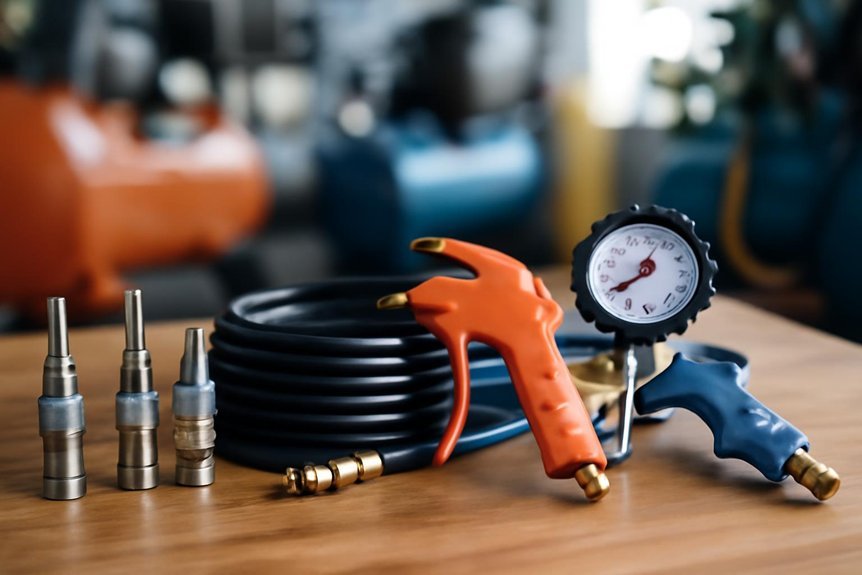
Selecting the appropriate attachments for your air compressor hinges on understanding the specific functions they perform and how they integrate with your operational needs. Essential air attachments are designed to optimize performance across various tasks, such as inflating tires, powering pneumatic tools, or spray painting. Each attachment has distinct uses; for example, blow guns are ideal for cleaning debris, while impact wrenches deliver high torque for loosening bolts. Recognizing the attachments uses ensures efficient workflow and minimizes equipment downtime. By analyzing the technical specifications—air flow rate, pressure requirements, and compatibility—we can select attachments that maximize the essential air’s potential. Precise matching of attachments to tasks guarantees reliable operation and extends the lifespan of your air compressor system.
Factors to Consider When Buying Air Compressor Accessories
What critical factors should we evaluate when purchasing air compressor accessories to ensure compatibility and optimal performance? First, we must verify the size and fitting compatibility, ensuring it matches our compressor’s specifications to prevent leaks or inefficiencies. Second, assess material quality and durability, especially for high-pressure applications, to avoid premature failure. Third, consider pressure and flow ratings, confirming the accessory can handle our operational demands without risking overload. Ignoring these factors is akin to discussing an unrelated topic or irrelevant discussion—useless and counterproductive. Ensuring these technical details align prevents compatibility issues, enhances efficiency, and avoids unnecessary returns. By focusing on these core aspects, we optimize performance and longevity, making informed decisions that stand the test of time.
How to Properly Install and Maintain Your Accessories
Have you ever wondered if your air compressor accessories are installed correctly to maximize safety and efficiency? Proper installation hinges on compatibility considerations, ensuring accessories fit both physically and functionally with your compressor. Confirm that fittings, hoses, and gauges meet manufacturer specifications. Regular maintenance routines are essential for optimal performance; this includes inspecting for leaks, cleaning filters, and lubricating moving parts. Improper installation or neglecting maintenance can lead to reduced lifespan and safety hazards. The following table summarizes critical steps:
| Step | Focus Area |
|---|---|
| Verify compatibility | Ensure accessories match specs |
| Secure connections | Tighten fittings properly |
| Routine inspections | Check for wear or leaks |
| Scheduled maintenance | Follow manufacturer guidelines |
Adhering to these practices guarantees durability and safe operation.
Common Mistakes to Avoid When Selecting Accessories
When selecting air compressor accessories, we need to carefully consider compatibility to prevent system failures or damage. Overlooking quality standards can lead to premature wear or safety hazards, so verifying certifications and specifications is essential. Additionally, neglecting proper maintenance practices can compromise accessory performance and longevity, making ongoing upkeep a critical factor in decision-making.
Ignoring Compatibility Requirements
Why is ignoring compatibility requirements one of the most critical errors to avoid when selecting air compressor accessories? Because incompatible accessories can lead to improper function, damage, or safety hazards—classic examples of accessory misuse. Ignoring compatibility often results in:
- Mismatched fittings that cause leaks or pressure loss, undermining efficiency.
- Incorrect voltage or connection standards that damage electrical components.
- Incompatible size or threading, preventing secure attachment and risking detachment during operation.
This oversight can compromise system integrity, reducing longevity and risking costly repairs. Ensuring compatibility requires detailed review of specifications, including thread types, pressure ratings, and voltage standards. Failing to do so makes accessory misuse more likely, ultimately undermining performance and safety.
Overlooking Quality Standards
Are we fully considering the importance of quality standards when selecting air compressor accessories? Ignoring quality can lead to equipment failure, safety risks, and increased operational costs. Subpar accessories may seem economical initially but often compromise performance and durability, affecting productivity. Additionally, neglecting quality standards has a social impact, as poorly manufactured components can cause accidents or environmental harm.
| Aspect | Implication |
|---|---|
| Material Integrity | Low-quality materials can fail under pressure, risking safety |
| Manufacturing Standards | Poorly manufactured parts increase downtime and repair costs |
| Compliance & Certification | Non-compliant accessories may void warranties and violate regulations |
Neglecting Proper Maintenance
Neglecting proper maintenance when selecting air compressor accessories can lead to premature equipment failure and increased operational costs. Specifically, ignoring routine checks promotes issues like improper lubrication, which accelerates component wear. To prevent this, consider these critical steps:
- Regularly inspect and replace filters to avoid clogging and pressure drops.
- Schedule lubrication intervals to ensure proper lubrication, reducing friction and heat buildup.
- Perform system diagnostics to identify early signs of wear or inefficient performance.
Failure to follow these practices results in unnecessary strain on accessories, reducing lifespan and increasing downtime. Proper maintenance practices should guide accessory selection, ensuring compatibility and durability. Neglecting maintenance ultimately compromises system efficiency and leads to costly repairs, emphasizing the importance of proactive upkeep.
Comparing Popular Accessories for Different Applications
When selecting the right accessories for your air compressor, understanding how each tool performs across various applications is essential. For example, air filtration accessories are critical in environments requiring contaminant removal, ensuring cleaner compressed air for sensitive tools or processes. Noise reduction attachments, such as silencers or mufflers, are vital in noise-sensitive settings, minimizing sound levels without compromising performance. Comparing these accessories involves analyzing their suitability for specific tasks—air filtration accessories must match the required filtration grade, while noise reduction tools should effectively dampen sound without restricting airflow. Both accessories influence system efficiency and operational safety. Precise selection depends on application demands, balancing performance, environmental considerations, and maintenance requirements for optimal compressor operation.
Tips to Save Money and Get the Best Value on Air Compressor Accessories
To maximize the value of your investment in air compressor accessories, it’s important to approach purchasing with a strategic mindset focused on cost saving tips and value optimization. First, compare brands and specifications thoroughly—select accessories with durable materials and efficient design to minimize replacement costs. Second, buy in bulk or during sales to reduce unit prices and take advantage of volume discounts. Third, prioritize compatibility and multi-functionality to avoid unnecessary purchases, ensuring each accessory serves multiple applications. By focusing on these areas, you enhance long-term performance while controlling expenses. Careful research, strategic purchasing timing, and selecting versatile, high-quality accessories enable you to optimize value and achieve significant cost savings over time.
Frequently Asked Questions
Are There Universal Accessories Compatible With All Air Compressors?
We find that universal compatibility is rare among air compressor accessories, as many are designed for specific models, affecting their accessory lifecycle. Always verify compatibility to guarantee optimal performance and longevity of your tools and accessories.
How Do I Troubleshoot Accessory Malfunctions or Performance Issues?
When troubleshooting accessory malfunctions, we check for airflow issues caused by seal degradation, like in a case where reduced pressure indicated leaks. Inspect connections, replace worn seals, and ensure proper fitting to restore optimal performance.
What Safety Precautions Should I Follow With Various Air Compressor Attachments?
We follow strict safety training protocols and PPE requirements, ensuring proper handling and secure attachment of air compressor accessories. We double-check connections, operate in well-ventilated areas, and always wear protective gear to mitigate risks during use.
Can Accessories Be Used With Different Types of Air Compressors?
Accessories can often be used with different types of air compressors, provided they meet universal compatibility standards, but we always recommend verifying connection sizes and maintaining accessories regularly to ensure optimal performance and safety across varying compressor models.
How Often Should I Replace or Upgrade My Air Compressor Accessories?
We recommend replacing or upgrading accessories annually, balancing reliability versus cost, and ensuring compatibility with tools. Regular checks reveal wear or inefficiency, helping us optimize performance and avoid costly downtimes, preserving the compressor’s longevity and efficiency.
Conclusion
In our journey through selecting air compressor accessories, we’ve navigated the intricate circuitry of compatibility, durability, and cost-efficiency—like engineers fine-tuning a complex machine. By understanding the symbiotic relationship between components, we optimize performance and extend system longevity. Just as precision tools shape a flawless outcome, our informed choices ensure seamless operation, minimal downtime, and maximum value. Ultimately, meticulous selection transforms your compressor from a mere tool into a symphony of engineered efficiency.