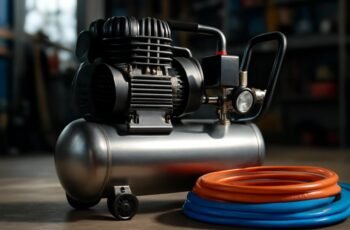
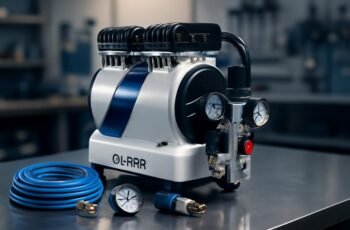
It’s a coincidence that many users overlook the critical role an air compressor regulator plays in maintaining consistent tool performance, which can significantly impact project outcomes. Understanding the technical nuances of regulators—such as pressure stability, material durability, and compatibility—becomes essential for optimizing system efficiency. Recognizing these factors may seem straightforward, but selecting the right unit requires a detailed approach that balances functionality with long-term reliability. Exploring these considerations can help you make informed decisions that prevent common pitfalls.
Key Takeaways
- Determine your project’s pressure requirements and ensure the regulator’s maximum pressure matches system needs.
- Prioritize regulators with accurate, responsive control mechanisms and clear pressure gauges.
- Choose durable materials like brass or stainless steel for longevity and corrosion resistance.
- Verify compatibility of fittings and connections with your compressor system specifications.
- Consider user-friendly features such as intuitive adjustment knobs and modular design for easier installation.
What Is an Air Compressor Regulator and Why Does It Matter?
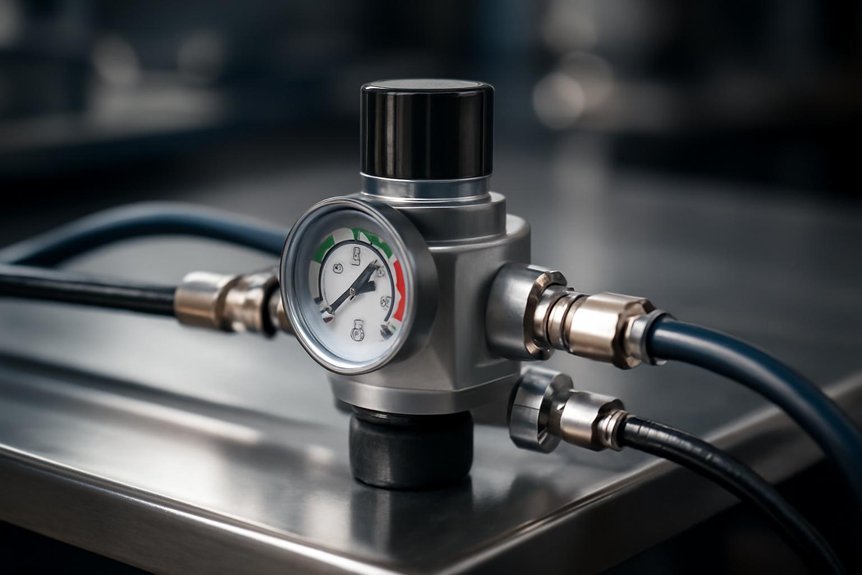
Have you ever wondered how consistent airflow is maintained in an air compressor system? An air compressor regulator plays a crucial role by controlling pressure levels, ensuring steady output regardless of demand fluctuations. This regulation is vital in applications like automotive paint, where precise airflow prevents defects and ensures a smooth finish. Similar principles apply in gas turbines, where maintaining stable airflow enhances efficiency and performance. The regulator acts as a safeguard, preventing pressure surges that could damage equipment or compromise product quality. Without it, inconsistent pressure could lead to inefficient operation or surface imperfections. In essence, an air compressor regulator is indispensable for guaranteeing reliable, precise airflow management, which is fundamental across industries that demand high-quality results, such as automotive painting and power generation.
Key Features to Look for in an Air Compressor Regulator
When selecting an air compressor regulator, precise pressure control is essential for maintaining consistent performance and safety. We also prioritize durable construction materials to ensure long-term reliability under demanding conditions. Understanding these key features helps optimize your equipment’s efficiency and lifespan.
Accurate Pressure Control
How can you ensure precise pressure regulation in your air compressor? The key is selecting a regulator with accurate control mechanisms that respond consistently to demand fluctuations. High-quality regulators feature sensitive pressure gauges and finely tuned adjustment knobs, enabling precise setting adjustments. Insufficient lubrication within the regulator can impair its responsiveness, leading to unstable pressure output. Additionally, a well-designed regulator minimizes noise, which often signals internal inefficiencies or excessive friction. Noise reduction is crucial for maintaining stable operation and prolonging component life. To achieve accurate pressure control, look for regulators with integrated feedback systems and reliable internal components. These features help maintain consistent output, reduce unnecessary wear, and ensure your air compressor performs efficiently under varying load conditions.
Durable Construction Materials
Selecting a regulator built from durable construction materials is fundamental to ensuring long-term reliability and consistent performance. High-quality regulators utilize durable materials such as brass, stainless steel, or reinforced composites, which are essential for withstanding operational stresses. These materials offer superior corrosion resistance, protecting against moisture and environmental exposure that can degrade the internal components over time. Corrosion resistance is especially critical in humid or corrosive environments, where metal degradation can impair pressure regulation accuracy and cause failure. Additionally, durable materials reduce the need for frequent maintenance and replacement, ensuring stable operation over extended periods. By prioritizing regulators with robust construction materials, users can achieve dependable performance, minimize downtime, and extend the lifespan of their air systems.
How to Determine the Right Pressure Range for Your Projects
To determine the appropriate pressure range, we first evaluate the specific requirements of each project, considering factors like tool specifications and material compatibility. Next, we compare these needs with the compressor’s maximum and minimum pressure capabilities to ensure proper match. This approach guarantees optimal performance and prevents equipment damage or inefficiency.
Assess Project Requirements
Understanding the specific pressure requirements of your projects is essential for selecting the appropriate air compressor regulator. To accurately assess these needs, we analyze the pressure ranges for various tasks, avoiding unrelated topics like miscellaneous chatter. Consider the following table, which illustrates typical project requirements:
| Project Type | Required Pressure (PSI) | Typical Usage |
|---|---|---|
| Pneumatic Tools | 90-120 | Nail guns, impact wrenches |
| Spray Painting | 40-70 | Automotive, furniture |
| Inflation Devices | 30-50 | Tires, sporting equipment |
| Industrial Machinery | 100-150 | Heavy-duty manufacturing |
| Hobby Projects | 20-40 | Modeling, small repairs |
Matching these ranges with your project’s demands ensures optimal performance and avoids unnecessary regulator adjustments.
Match Compressor Specifications
How can you accurately determine the appropriate pressure range for your projects? First, review the operational requirements of your tools, focusing on their specified pressure ranges. Selecting a regulator that aligns with these parameters minimizes the risk of irreversible wear caused by excessive pressure fluctuations. Operating outside the recommended range accelerates tool degradation and increases noise, complicating noise reduction efforts. It’s essential to consider the compressor’s maximum PSI and ensure the regulator can precisely control pressure within that spectrum. Precise matching helps maintain consistent performance and prolongs equipment lifespan. By understanding your tools’ specifications and compressor limits, you optimize efficiency, reduce the likelihood of damage, and facilitate effective noise management. This analytical approach ensures your system functions reliably and sustainably.
Compatibility Considerations: Connecting Regulators to Your Compressor
Have you considered whether your chosen regulator is compatible with your compressor’s fittings and pressure specifications? Compatibility issues often arise from mismatched connector standards or inadequate pressure ratings, which can compromise system integrity. Ensure that the regulator’s inlet and outlet connections adhere to standard sizes and threading types compatible with your compressor fittings. Checking pressure compatibility is equally critical; the regulator must support your system’s maximum pressure to prevent leaks or failures. Failing to verify these aspects can lead to leaks, reduced efficiency, or equipment damage. By thoroughly assessing connector standards and pressure ratings, you can ensure seamless integration and optimal performance. Proper compatibility not only enhances safety but also minimizes maintenance costs over the long term.
Durability and Material Quality: Ensuring Long-Term Performance
Ever wonder why some air compressor regulators maintain consistent performance over years while others fail prematurely? It often comes down to durability and material quality. High-quality regulators undergo rigorous durability testing to simulate long-term use, revealing potential failure points. Material grade significantly impacts longevity; regulators crafted from corrosion-resistant metals or high-grade plastics withstand environmental stressors better, reducing wear and tear. Components like diaphragms, seals, and pressure valves must meet strict standards to ensure reliable operation over time. Poor material choices can lead to fatigue, leaks, or complete failure, compromising system performance. Therefore, investing in regulators made from superior materials and subjected to thorough durability testing ensures you get a resilient product that maintains optimal function, reducing maintenance costs and downtime over the long term.
Ease of Installation and Adjustment: Simplifying Your Setup
Streamlining the installation and adjustment process is essential for optimizing efficiency and minimizing setup time when working with air compressor regulators. Ease of setup reduces operator error and downtime, ensuring consistent performance. Features such as intuitive adjustment knobs, clear pressure gauges, and straightforward mounting options facilitate rapid calibration.
| Feature | Benefit |
|---|---|
| Quick-connect fittings | Simplifies attachment and removal |
| Clear calibration markings | Ensures precise adjustments |
| Modular design | Eases integration into existing systems |
An unrelated topic, like irrelevant discussion, can distract from key considerations during installation. Prioritizing user-friendly design minimizes the need for extensive technical knowledge, streamlining the process and reducing mistakes. Ultimately, ease of installation directly impacts operational efficiency and long-term regulator reliability.
Common Mistakes to Avoid When Choosing an Air Regulator
Choosing the right air regulator requires careful attention to avoid common pitfalls that can compromise system performance and safety. A key mistake is focusing on irrelevant topics, like aesthetic features or unrelated accessories, rather than technical specifications such as maximum pressure, flow rate, and material quality. Selecting a regulator based on a random idea, like brand reputation alone, can lead to mismatched capacity or durability issues. Overlooking compatibility with your compressor’s output or ignoring necessary adjustments increases risk of pressure fluctuations and equipment damage. Failing to verify the regulator’s precise control range can result in inconsistent operation. Avoid these errors by prioritizing technical compatibility over superficial factors, ensuring the regulator meets your specific application requirements for optimal system reliability and safety.
How to Maintain and Troubleshoot Your Air Compressor Regulator
Maintaining and troubleshooting your air compressor regulator requires a systematic approach to ensure consistent performance and prevent failures. We recommend following a detailed maintenance checklist, which includes inspecting for leaks, corrosion, or dirt buildup, and verifying that all connections are secure. Regularly check the regulator’s dial and pressure gauges for accuracy, especially in systems employing two stage regulation, where precise control is critical. When troubleshooting, isolate the regulator and test it under controlled conditions, observing for abnormal pressure fluctuations or inconsistent regulation. Clean or replace filters as necessary, and verify that the internal components are functioning correctly. Addressing issues promptly prevents more extensive damage, prolongs lifespan, and maintains optimal performance of your compressor system.
Frequently Asked Questions
Can an Air Regulator Improve Overall Compressor Efficiency?
Yes, an air regulator enhances compressor efficiency by maintaining optimal air quality and pressure, reducing unnecessary energy consumption, and noise levels, which ultimately prolongs equipment lifespan and improves overall operational performance through precise pressure control.
What Safety Features Should I Look for in an Air Regulator?
Did you know that 30% of compressor accidents involve pressure mismanagement? We recommend safety relief features and clear pressure gauge visibility, ensuring precise control and preventing over-pressurization, ultimately safeguarding both equipment and operators effectively.
How Often Should I Calibrate or Check My Regulator’s Accuracy?
We recommend calibrating your air compressor regulator every 6 to 12 months, depending on usage intensity, and performing regular accuracy checks to ensure precise pressure control, preventing system inefficiencies and safety hazards.
Are Digital or Analog Regulators Better for Specific Applications?
In critical calibration scenarios, digital regulators excel due to precise readings, while analog regulators suit simpler tasks. We find digital’s accuracy advantageous for calibration, but analog’s durability makes it preferable in harsh environments, depending on specific application needs.
Can I Use a Single Regulator for Multiple Tools?
You can use one regulator for multiple tools if it’s rated to handle their combined airflow and pressure demands. However, this may cause fluctuations, so we recommend individual regulators for precise control and safety when switching between tools.
Conclusion
In summary, selecting the right air compressor regulator is crucial for optimal tool performance and system longevity. Properly calibrated regulators can improve efficiency by up to 20%, highlighting their importance in workflow precision. By focusing on key features like durability, compatibility, and ease of use, we ensure reliable operation and minimize downtime. Making informed choices based on these technical considerations ultimately enhances project quality and operational efficiency, reinforcing why careful selection is essential for any compressed air system.