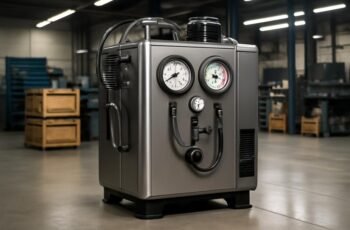
Studies show that over 60% of DIYers and hobbyists find that choosing the right air compressor is crucial to project success and safety. For beginners, grasping the technical specifications and features that distinguish a suitable model from more advanced options is vital. With so many choices available, knowing which units balance portability, power, and ease of use can be complex—yet, making an informed decision now can streamline your projects and avoid costly mistakes later.
Key Takeaways
- Choose a lightweight, portable model with intuitive controls for easy operation and maneuverability.
- Opt for oil-free compressors to simplify maintenance and ensure cleaner, quieter operation.
- Match compressor capacity (CFM and PSI) to your specific project needs for reliable performance.
- Prioritize models with safety features, low noise levels, and accessible parts for user-friendly experience.
- Consider budget-friendly options with good warranties and durable build quality suitable for beginner tasks.
What Features Make a Beginner-Friendly Air Compressor?
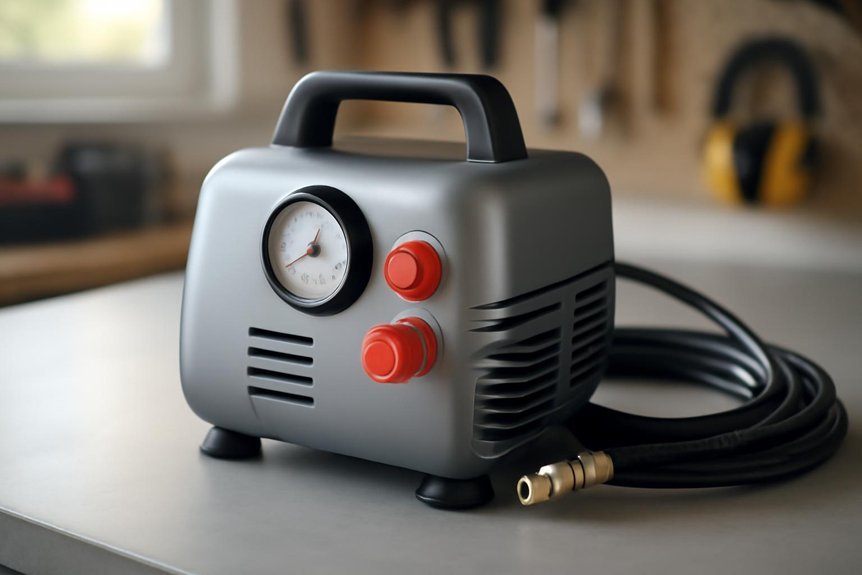
What features distinguish a beginner-friendly air compressor from more advanced models? Primarily, it’s the focus on beginner friendly ergonomics—design elements that ensure ease of use, portability, and straightforward operation. These compressors typically feature intuitive controls and lightweight construction, reducing user fatigue and enhancing safety. Noise reduction is another critical factor; quieter models minimize disturbance and create a more comfortable working environment, especially for those new to pneumatic tools. Additionally, simplified maintenance and clear, accessible parts contribute to a more user-centric experience. These features help beginners develop confidence without being overwhelmed by complex controls or excessive noise. Overall, the combination of ergonomic design and noise reduction makes a compressor more approachable and suitable for novice users.
How to Choose the Right Size and Power for Your Projects?
To select the appropriate size and power, we need to analyze your project’s specific air requirements in terms of CFM and PSI, ensuring the compressor can sustain those levels. Matching the compressor’s CFM and PSI ratings to your tools guarantees consistent performance without overloading the unit. Additionally, considering portability and available space helps optimize your setup for efficiency and convenience.
Determine Project Air Requirements
Determining the appropriate air compressor size and power for your projects requires a precise assessment of your airflow demands. To determine project air requirements, we analyze the specific tools and tasks you plan to perform, focusing on their CFM (cubic feet per minute) and PSI (pounds per square inch) needs. Accurate measurement of these parameters ensures the compressor can sustain continuous operation without excessive pressure drops or power surges. We consider the peak air consumption during high-demand tasks, selecting a compressor with a capacity that exceeds this value for reliable performance. By thoroughly evaluating your tools’ air requirements, we can select an ideal compressor size and power rating, avoiding underperformance or unnecessary expense. This analytical approach guarantees efficiency and longevity for your compressed air system.
Match Compressor CFM & PSI
How do we ensure our compressor matches the specific demands of our projects? Matching CFM (cubic feet per minute) and PSI (pounds per square inch) ensures optimal performance and efficiency. An undersized compressor struggles with sustained tasks, while oversizing adds unnecessary noise and costs. To select the right specifications, analyze your tool requirements and project duration. Consider warranty coverage for durability, and noise reduction features for quieter operation. Here’s a quick comparison:
| CFM Range | PSI Range | Suitable for |
|---|---|---|
| 2-4 | 90-120 | Small finishing tools |
| 4-6 | 90-150 | Automotive and light framing |
| 6-10 | 150-175 | Heavy-duty tasks |
| 10+ | 175+ | Industrial applications |
Choosing the right match avoids performance issues and extends compressor lifespan.
Consider Portability & Space
Selecting the right compressor size and power involves evaluating the physical constraints of your workspace and mobility requirements. When considering portability considerations and space optimization, focus on these factors:
- Size and weight: Smaller, portable units are ideal for limited spaces and frequent transport.
- Design: Vertical or compact models minimize footprint, maximizing workspace efficiency.
- Power source: Portable compressors with battery options reduce cord clutter and enhance mobility.
- Storage needs: Assess whether integrated storage for accessories impacts size, balancing convenience and space constraints.
Best Types of Air Compressors for Beginners and Their Advantages
For beginners, selecting air compressors with portable and compact designs offers ease of use and mobility for various tasks. Oil-free models provide maintenance advantages and cleaner operation, making them ideal for small projects. Understanding these types helps optimize performance based on project scope and convenience.
Portable and Compact Designs
Why are portable and compact air compressors particularly well-suited for beginners? Their portable design and compact weight enable easy transport and storage, making them ideal for small workshops or DIY projects. The lightweight structure minimizes user fatigue and simplifies handling. Key advantages include:
- Ease of Movement: Small size allows quick relocation between work sites.
- Space Efficiency: Fits comfortably in tight storage areas.
- User-Friendly Operation: Reduced complexity benefits beginners learning basic functions.
- Versatility: Compatible with various tools and applications due to portability.
These features ensure beginners can operate the compressor confidently without heavy lifting or space constraints. Overall, the combination of portable design and compact weight enhances usability, making these models accessible and practical for those just starting out.
Oil-Free Operation Benefits
The choice of an oil-free air compressor offers significant advantages for beginners by simplifying maintenance and reducing operational complexity. Oil-free efficiency ensures consistent air quality, which is essential for applications sensitive to contaminants. These compressors typically require less routine upkeep since they lack oil reservoirs and filters that need frequent replacement, streamlining operational procedures. However, there are maintenance tradeoffs; oil-free units often experience increased wear and potentially shorter lifespans compared to oil-lubricated models, due to higher internal friction and less effective cooling. Despite these drawbacks, the ease of maintenance and cleaner output make oil-free compressors an attractive option for beginners seeking reliable, straightforward operation without the added burden of oil management.
Suitable for Small Projects
Are small-scale projects ideal for beginner air compressor users? Yes, because they align with beginner budgeting constraints and often require less power, making them more manageable. When selecting compressors for small projects, consider:
- Size and Portability – Compact units facilitate easy storage and mobility.
- Noise Reduction – Quieter models minimize disruption, essential for home or shared spaces.
- Power Capacity – Lower PSI and CFM ratings are sufficient for tasks like inflating tires or spray painting.
- Cost Efficiency – Budget-friendly options provide reliable performance without overspending.
These factors ensure the compressor meets the specific demands of small projects while maintaining affordability and comfort, making them ideal for beginners seeking practical, noise-reduced solutions.
Essential Safety Tips When Using Your First Air Compressor
Have you considered the critical safety measures necessary when operating your first air compressor? Proper safety protocols are essential to prevent accidents and equipment damage, especially for beginners. Before use, inspect hoses and connections for leaks, as high-pressure air can cause injury or damage antiques beer collections or gardening tools. Always wear eye protection and hearing safeguards, understanding that compressed air can propel debris at high velocity. Maintain a clean, clutter-free workspace to avoid tripping hazards. Additionally, ensure the compressor is grounded to prevent electrical faults. Regularly check pressure relief valves and drain moisture from tanks to avoid over-pressurization. These safety tips help us operate confidently, much like astronomers handle sensitive equipment or gardeners manage delicate plants—precision and care are paramount.
Top Budget-Friendly Air Compressors for Beginners in 2023
Considering the wide range of options available, selecting an affordable air compressor that meets beginner needs requires careful analysis of key features such as PSI, CFM, size, and durability. For those on a tight beginner budgeting, models like the Bostitch BTFP02012 and Porter-Cable C2002 are notable for their value. These units often include reliable compressor warranties, ensuring long-term operational security. When evaluating budget-friendly options, focus on:
Choosing an affordable air compressor? Prioritize PSI, CFM, size, durability, and warranty for reliable, budget-friendly performance.
- PSI and CFM ratings aligned with intended tasks
- Compact size for portability and storage
- Build quality and durability for frequent use
- Warranty coverage to safeguard investment
Prioritizing these factors helps balance initial cost with overall performance, making these models suitable for beginners seeking reliable, budget-conscious options.
How to Maintain Your Air Compressor for Longevity and Performance
Maintaining your air compressor properly is essential for ensuring consistent performance and extending its lifespan. A disciplined maintenance schedule, including regular inspections and oil changes, helps prevent component failure. Monitoring pressure levels and draining moisture from the tank reduces corrosion risks. Gasket replacement is a critical maintenance task; over time, gaskets degrade, leading to leaks and decreased efficiency. By replacing gaskets proactively, you prevent air loss and maintain optimal pressure. Keeping the compressor clean and checking for wear on belts and hoses also enhances durability. Consistent maintenance not only improves performance but also minimizes costly repairs. Adhering to a structured schedule based on manufacturer guidelines ensures you address issues early, maximizing your compressor’s operational life.
Frequently Asked Questions
How Loud Are Beginner Air Compressors During Operation?
Beginner air compressors typically produce noise levels around 70-85 decibels during operation, which is moderately loud but manageable. We find that noise varies based on design, with quieter models ideal for indoor use and minimizing disturbance.
Can I Use a Beginner Air Compressor for Automotive Repairs?
Yes, a beginner-focused durability compressor with excellent portability can handle automotive repairs, but only for small tasks; for heavy-duty work, a more powerful, industrial-grade compressor is necessary to ensure safety and efficiency.
What Accessories Are Essential for First-Time Users?
We recommend essential safety gear, like goggles and ear protection, along with noise reduction accessories to minimize sound levels. These additions ensure safe, efficient operation for first-time users, enhancing overall safety and comfort during compressor use.
How Long Does It Typically Take to Fill the Tank?
Filling the tank depends on its size and compressor speed versus efficiency; smaller tanks fill quickly, often within minutes, while larger tanks, balancing speed and efficiency, may take 10-15 minutes, requiring patience for optimal performance.
Are There Portable Options Suitable for Outdoor Projects?
Yes, there are portable options suitable for outdoor projects, featuring lightweight design, battery or corded power, and compact size, making them ideal for mobility, efficiency, and ease of use in diverse outdoor settings.
Conclusion
In essence, selecting the ideal beginner air compressor is like choosing a dependable companion for your projects—balancing size, power, and ease of use. By focusing on user-friendly features, appropriate capacity, and straightforward maintenance, we can ensure long-lasting performance. A well-chosen compressor becomes an unobtrusive yet vital tool, seamlessly supporting your craftsmanship while quietly upholding safety and reliability. With careful selection, you’ll cultivate a foundation for successful, efficient work that stands the test of time.