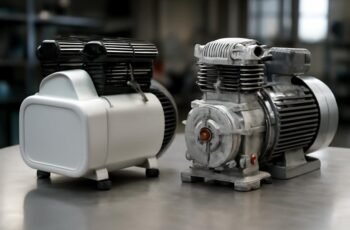
Vertical and horizontal air compressor tanks differ in design, size, and application, each offering unique advantages and limitations. They impact space utilization, maintenance accessibility, and overall performance in distinct ways. Understanding these differences is essential for selecting the optimal tank orientation for your facility. As we explore the technical nuances, you’ll gain insights into which configuration best aligns with your operational needs and workspace constraints.
Key Takeaways
- Vertical tanks are more space-efficient, ideal for limited floor areas, while horizontal tanks offer greater stability and capacity in larger spaces.
- Vertical tanks provide easier maintenance access due to their compact footprint; horizontal tanks may require more planning for servicing.
- Horizontal tanks typically cost less initially but may need more floor space, impacting long-term facility layout.
- Vertical tanks generally produce less noise and are better suited for noise-sensitive environments.
- The choice depends on space constraints, operational demand, stability needs, and budget considerations.
What Are Vertical and Horizontal Air Compressor Tanks?
Vertical and horizontal air compressor tanks are two primary orientations used to store compressed air, each designed to accommodate specific space and capacity requirements. Vertical tanks are characterized by increased vertical height, which allows for a compact footprint in limited floor space. This orientation is advantageous in environments with ceiling height constraints, optimizing vertical space utilization. Conversely, horizontal tanks have a broader horizontal footprint, making them suitable for installation in spacious areas where floor space is less restricted. The horizontal configuration typically offers easier access for maintenance and inspection. Both orientations serve distinct operational needs, with vertical tanks minimizing floor space through increased height and horizontal tanks maximizing accessibility and stability based on available layout.
Key Differences in Design and Size for Vertical vs. Horizontal Tanks
How do the design and size specifications of vertical and horizontal air compressor tanks differ? Vertical tanks are taller and more compact, optimizing space and facilitating tank mounting in limited areas. Horizontal tanks are broader and lower, providing stability and easier installation on flat surfaces. The vertical orientation typically allows for higher pressure ratings due to its design, while horizontal tanks often feature larger capacities for continuous operation. Noise reduction is influenced by tank placement and mounting; vertical tanks often minimize noise transfer through strategic mounting. Conversely, horizontal tanks can be positioned to dampen vibrations more effectively. Key differences include:
- Vertical tanks emphasize height and compactness for space efficiency
- Horizontal tanks prioritize width and stability for larger capacity
- Tank mounting options vary based on orientation and space constraints
- Size specifications directly impact pressure and volume capabilities
- Design influences noise reduction and vibration management
Which Tank Orientation Saves More Space?
When evaluating space efficiency, vertical tanks often occupy a smaller footprint compared to horizontal tanks, making them ideal for confined or limited areas. Their upright design allows for a taller, more compact installation, which minimizes horizontal space usage. This orientation also simplifies integration into tight environments without sacrificing capacity. Additionally, vertical tanks facilitate reliable insulation due to their upright structure, enhancing temperature stability and energy efficiency. Noise reduction can be more effectively managed with vertical tanks, as their design allows for easier placement of soundproofing materials around the tank’s perimeter. Overall, vertical tanks provide a more space-conscious solution, especially when combined with features like reliable insulation and noise mitigation, making them preferable in environments where space is at a premium.
Portability and Mobility: Vertical vs. Horizontal Tanks
Vertical tanks generally offer superior space efficiency and are easier to transport due to their compact footprint. Horizontal tanks provide better stability and simplified placement in fixed setups, making mobility more dependent on movement requirements. By examining these factors, we can determine which orientation best supports specific operational needs.
Space Efficiency Advantages
Because space constraints often influence compressor selection, the orientation of an air tank considerably impacts its portability and mobility. Vertical tanks generally occupy less floor space, making them ideal for tight environments, while horizontal tanks provide a broader base, enhancing stability in fixed setups. In terms of space efficiency:
- Vertical tanks optimize vertical footprint, freeing up workspace
- Horizontal tanks distribute weight evenly, reducing vibration
- Vertical orientation simplifies integration with existing layouts
- Horizontal tanks facilitate easier maintenance access
- Both orientations can improve air quality by reducing turbulence and noise, leading to noise reduction benefits
Choosing the appropriate tank orientation enhances overall space management, supports better air quality, and minimizes noise, optimizing operational efficiency in confined or sensitive environments.
Ease of Transportability
Have you considered how tank orientation influences ease of transportability? Vertical tanks are generally more compact, making them easier to move through tight spaces and reducing transportation complexity. Their vertical design often requires less horizontal footprint, which simplifies handling with forklifts or dollies. Horizontal tanks, while potentially offering better stability during transit, tend to be bulkier and more challenging to maneuver, especially in confined environments. Both orientations benefit from features like compact insulation, which minimizes overall size and weight, and noise reduction elements that make transportation less disruptive. Ultimately, vertical tanks offer superior portability due to their streamlined shape, while horizontal tanks may require additional handling equipment. Selecting the appropriate orientation depends on logistical needs and operational constraints.
Stability and Placement
The stability of air compressor tanks during operation and placement markedly influences their overall safety and functionality. Stability considerations are critical for preventing tipping or movement during use, especially in dynamic environments. Horizontal tanks typically offer enhanced stability due to their low center of gravity but can pose placement challenges in confined spaces. Vertical tanks, while more space-efficient, may require secure anchoring to mitigate tipping risks. Factors impacting stability include base design, weight distribution, and mounting options. Proper placement involves evaluating floor strength, proximity to power sources, and accessibility. Addressing these stability considerations ensures safe operation and minimizes hazards. Carefully assessing placement challenges associated with tank orientation helps optimize system performance and safety compliance.
Maintenance and Accessibility Considerations for Both Types
How do maintenance procedures and accessibility differ between vertical and horizontal air compressor tanks? Vertical tanks typically facilitate easier maintenance scheduling due to their compact footprint, which allows for straightforward access to valves and drain points. Their upright orientation minimizes space constraints, aiding in routine inspections and repairs. Horizontal tanks, however, often require more careful planning for maintenance access, especially in confined spaces, since their length can hinder reachability. Noise considerations also influence accessibility; vertical tanks tend to operate with less vibration, reducing noise levels near maintenance areas. Overall, vertical tanks generally allow for more efficient maintenance and better accessibility, while horizontal tanks may necessitate additional planning to ensure safety and operational efficiency during servicing.
Cost Implications and Which Offers Better Value
When assessing cost implications, we consider construction and material expenses alongside space efficiency to determine long-term value. Vertical tanks often incur higher initial costs but can save space and reduce facility modifications, impacting overall investment. Comparing these factors helps identify which tank type offers better financial efficiency over its lifespan.
Construction and Material Costs
Are vertical and horizontal air compressor tanks equally cost-effective when considering construction and material expenses? Generally, vertical tanks tend to have higher initial costs due to increased material volume and manufacturing complexity, but this can vary based on design and supplier. Horizontal tanks often benefit from simpler construction, resulting in lower short-term depreciation and installation costs. Material quality impacts long-term wear, with thicker gauge steel reducing maintenance needs over time. The choice influences total lifecycle costs, especially when factoring in corrosion resistance and reinforcement.
- Vertical tanks require more material, increasing upfront costs but may optimize space.
- Horizontal tanks often cost less initially, with easier manufacturing processes.
- Material quality affects long-term durability and maintenance expenses.
- Design complexity influences short-term depreciation.
- Both styles’ costs are impacted by manufacturing standards and material selection.
Space Efficiency and Long-Term Savings
Vertical tanks typically offer superior space efficiency, especially in facilities with limited footprint areas, because their height allows for a smaller horizontal footprint. This vertical growth minimizes floor space usage, making them ideal for constrained environments. In contrast, horizontal alignment requires more extensive floor space, impacting long-term facility layout flexibility. Vertical tanks often contribute to reduced noise considerations due to less surface area exposure, aiding in quieter operation environments. Additionally, their design facilitates easier installation of filtration options, enhancing air quality and system longevity. While initial costs may vary, the long-term savings are notable, as vertical tanks optimize space utilization and maintenance access. Overall, vertical tanks provide better value by combining space efficiency with lower operational and noise-related costs over time.
Choosing the Right Tank Based on Your Workspace and Needs
How do you determine the appropriate air compressor tank type for your workspace and specific needs? First, assess available space and consider space optimization, choosing a tank that fits efficiently without cluttering. Next, evaluate noise levels; horizontal tanks often produce less noise, aiding noise reduction efforts. Consider your workload: high-demand operations may require larger or multiple tanks, influencing tank orientation. Additionally, check for ease of maintenance and accessibility. Finally, analyze your workspace layout—vertical tanks save floor space, ideal for limited areas, while horizontal tanks offer stability on uneven surfaces. By understanding these factors, you can select a tank that enhances operational efficiency and minimizes disruption, ensuring you meet both space constraints and noise reduction goals effectively.
Common Use Cases and Recommendations for Vertical and Horizontal Tanks
Understanding the common use cases for different tank orientations helps optimize air compressor performance for specific applications. Vertical tanks are ideal in limited spaces, offering easier installation and better cost comparison for small-scale or stationary setups. They typically produce less noise, making them suitable for environments where noise reduction is essential. Horizontal tanks, on the other hand, provide greater stability and larger volume options for continuous, high-demand operations, though they may involve higher initial costs. Noise considerations also favor vertical tanks in noise-sensitive areas, as their design can minimize sound levels during operation. Ultimately, selecting between vertical and horizontal tanks depends on space constraints, operational volume, and budget, with each orientation tailored to specific use cases for efficiency and performance.
Frequently Asked Questions
How Do Vertical and Horizontal Tanks Impact Air Quality?
Vertical tanks enhance vertical efficiency by minimizing moisture buildup, while horizontal tanks simplify horizontal maintenance, both positively impacting air quality. Proper design and upkeep of either tank type ensure cleaner, more reliable compressed air output for your system.
Are There Specific Safety Concerns for Vertical Versus Horizontal Tanks?
We recognize that safety concerns vary with tank orientation; vertical tanks pose stability and overpressure risks, while horizontal tanks require secure installation considerations. Proper maintenance and adherence to safety standards are essential to mitigate risks regardless of orientation.
Can Vertical Tanks Be Installed Outdoors More Easily Than Horizontal Tanks?
Ever wondered if vertical tanks are easier to install outdoors? They generally offer simpler outdoor installation due to their compact design, making vertical vs. horizontal choices essential for space efficiency and environmental exposure considerations in outdoor settings.
What Are the Environmental Impacts of Each Tank Orientation?
We find vertical tanks less prone to air leakage and corrosion due to better drainage and fewer seams, reducing environmental impact. Horizontal tanks may accumulate moisture, increasing corrosion risks and potential leaks, thereby affecting their sustainability over time.
How Do Tank Orientations Affect Compressor Lifespan and Performance?
Vertical tanks generally enhance tank durability by reducing stress on seams, while horizontal tanks may require more frequent maintenance due to increased exposure. Both orientations affect performance, but proper installation and maintenance optimize lifespan regardless of tank orientation.
Conclusion
In summary, selecting between vertical and horizontal tanks depends on your space, maintenance needs, and workload. Vertical tanks save up to 30% floor space, making them ideal for compact facilities, while horizontal tanks offer greater stability for larger volumes. Interestingly, studies show that facilities with optimized tank orientation experience 15% lower maintenance costs over five years. By carefully evaluating your operational parameters, you can choose the most efficient, cost-effective tank type to enhance your compressed air system’s performance.