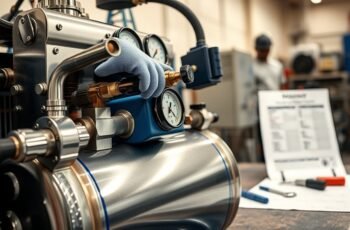
Maintaining an air compressor requires a disciplined, systematic approach to guarantee it operates efficiently and safely over its lifespan. Regular inspections and timely replacements prevent costly failures and downtime. We understand the significance of a thorough checklist, but knowing which procedures to prioritize can be complex. To optimize your equipment’s performance and extend its service life, it’s vital to follow detailed maintenance protocols—let’s explore the critical steps involved.
Key Takeaways
- Regularly inspect and clean or replace air intake filters, hoses, fittings, and condensate tanks to prevent contamination and leaks.
- Monitor and maintain oil levels and quality, scheduling oil changes to reduce wear and extend compressor lifespan.
- Verify and test pressure and safety valves, ensuring gauges are accurate and safety features function properly.
- Conduct routine checks for unusual noises, vibrations, or pressure fluctuations to identify early signs of equipment issues.
- Record operational hours, environmental conditions, and maintenance activities to optimize routines and ensure compliance.
Why Regular Maintenance Is Essential for Your Air Compressor
Regular maintenance is essential to guarantee the best performance and longevity of your air compressor. Consistent upkeep ensures peak air quality by preventing contamination and moisture buildup, which can impair system efficiency and damage internal components. Proper maintenance also plays a critical role in noise reduction, as worn or misaligned parts can generate excessive sound levels. By routinely inspecting and servicing key components, we minimize operational disturbances and sustain the compressor’s efficiency. Additionally, regular maintenance helps identify potential issues early, reducing the risk of costly breakdowns and downtime. Maintaining air quality and noise levels through scheduled upkeep not only prolongs the equipment’s operational life but also ensures compliance with safety standards and enhances overall workplace productivity.
How to Inspect and Clean Air Intake Filters
To maintain ideal performance, inspecting and cleaning air intake filters must be incorporated into your routine maintenance. Proper care guarantees maximum airflow and prevents contaminants from entering the compressor. First, visually examine the air intake for dust, debris, or damage to the filter element. Next, remove the filter carefully, avoiding dislodging dirt into the intake system. Clean the filter using compressed air, blowing from the inside out to remove accumulated particles. Replace the filter if it shows signs of excessive wear or damage, or if cleaning doesn’t restore proper airflow. Regular inspection and cleaning of the air intake, along with timely filter replacement, prolongs compressor lifespan and maintains efficiency. This process is critical for preventing contamination and ensuring reliable operation.
Checking and Replacing Compressor Oil and Lubricants
Maintaining ideal compressor performance requires monitoring and managing the oil and lubricants diligently. We regularly check compressor oil levels using the sight glass or dipstick, ensuring they stay within manufacturer-recommended ranges. When topping off, use the appropriate lubricant types specified for your compressor, such as synthetic, mineral, or semi-synthetic oils, depending on operating conditions. We also inspect oil quality for contamination or degradation, replacing it when it appears dark, dirty, or has a burnt odor. Draining and replacing compressor oil at scheduled intervals prevents wear and maintains best lubrication. Proper selection and timely replacement of lubricants are critical to reducing friction, heat, and wear, ultimately extending the compressor’s lifespan and ensuring reliable, efficient operation.
Monitoring Pressure Levels and Safety Valves
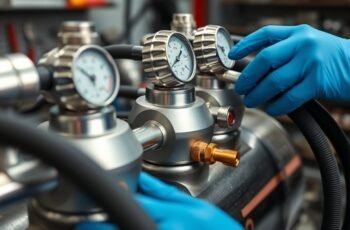
Monitoring pressure levels and safety valves is essential for guaranteeing the compressor operates within safe and ideal parameters. Proper pressure regulation prevents overloading and maintains system efficiency. Regular valve inspection ensures safety valves function correctly, releasing excess pressure to prevent equipment failure.
Key steps include:
- Verify pressure gauges for accuracy and consistent readings during operation.
- Test safety valves periodically by manually lifting them to ensure they open at the designated set pressure.
- Adjust pressure regulation settings as needed to maintain excellent operating pressure, ensuring valves respond appropriately to pressure fluctuations.
Consistent monitoring helps identify potential issues early, reducing risk of failure or accidents caused by malfunctioning safety devices or improper pressure regulation.
Inspecting Hoses, Fittings, and Connections for Leaks
Inspecting hoses, fittings, and connections for leaks is a critical step in ensuring the compressor’s reliable operation and safety. We focus on evaluating hose durability by examining for signs of cracking, wear, or softening that could compromise performance. Connection stability is equally essential; we check for loose fittings, ensuring they are properly tightened without over-tightening, which can damage threads. Leaks often manifest as hissing sounds or visible moisture around fittings or along hoses. Using a soap solution can help identify small leaks by producing bubbles at the leak points. Regular inspection prevents unexpected failures, maintains ideal airflow, and reduces the risk of pressure loss. Properly maintained hoses and secure fittings extend the lifespan of components and enhance overall system safety.
Cleaning and Draining the Condensate Tank
Regularly cleaning and draining the condensate tank is essential to prevent moisture buildup that can lead to corrosion and system inefficiencies. Proper condensate disposal ensures contaminants are safely removed, maintaining compressor performance. During tank inspection, check for signs of rust, corrosion, or sediment accumulation.
Key steps include:
- Drain the tank completely to remove accumulated moisture, preventing corrosion.
- Flush the tank with clean water or an appropriate cleaning solution to remove sludge or deposits.
- Inspect for damage or leaks around fittings and the tank body, ensuring all components are secure and functional.
Implementing these steps reduces the risk of system failure, prolongs compressor lifespan, and optimizes operation efficiency.
Testing and Calibrating Control Systems and Sensors
We need to verify sensor accuracy to guarantee reliable operation of the control systems. Precise calibration of control components is crucial for maintaining ideal compressor performance. Regular testing helps identify discrepancies early, preventing potential system failures.
Sensor Accuracy Verification
How can we guarantee that the sensors and control systems of an air compressor operate with maximum accuracy? The key is rigorous sensor accuracy verification through systematic accuracy testing and sensor calibration. Regular accuracy testing identifies deviations from expected readings, ensuring sensor outputs remain reliable. To enhance sensor calibration, we follow these steps:
- Compare sensor readings against a known reference standard under controlled conditions.
- Record deviations and adjust calibration settings to align sensor outputs with reference values.
- Document calibration results and schedule subsequent verification intervals based on observed drift.
Implementing these procedures ensures sensors provide precise data, preventing control system errors and maintaining ideal compressor performance. Consistent accuracy testing and calibration are essential for reliable operation and long-term equipment health.
Control System Calibration
To guarantee control systems and sensors operate with peak accuracy, systematic calibration and testing are essential components of maintenance. Control system calibration involves verifying and adjusting the settings to confirm sensor accuracy aligns with manufacturer specifications. Accurate sensors provide reliable data for system regulation, preventing overpressure or system inefficiencies. During calibration, we utilize reference standards and diagnostic tools to identify deviations and correct them accordingly. Regular calibration also helps detect sensor drift or malfunction, enabling timely repairs. Precise calibration procedures improve overall compressor performance, safety, and energy efficiency. We recommend establishing a routine calibration schedule, especially after maintenance or system modifications. Consistent control system calibration assures sensors deliver accurate data, maintaining ideal compressor operation and prolonging equipment lifespan.
Developing a Maintenance Schedule Based on Usage and Manufacturer Recommendations
Establishing a maintenance schedule that aligns with both usage patterns and manufacturer guidelines is essential for ensuring ideal compressor performance and longevity. Regularly evaluating operational hours, load cycles, and environmental conditions helps optimize maintenance intervals. This approach minimizes unnecessary wear, preserves air compressor accessories, and reduces environmental impact through efficient operation. To develop an effective schedule:
- Record usage metrics regularly to determine appropriate maintenance frequency.
- Consult manufacturer recommendations for specific tasks, such as filter replacements and lubrication schedules.
- Adjust maintenance routines based on environmental factors, including dust levels and ambient temperature, which can accelerate wear.
Troubleshooting Common Air Compressor Issues During Maintenance
During maintenance, we focus on identifying unusual noises, monitoring pressure fluctuations, and checking for air leaks, as these indicators often signal underlying issues. Recognizing abnormal sounds helps pinpoint bearing or valve problems, while pressure inconsistencies can reveal control system malfunctions. Detecting air leaks early prevents efficiency losses and reduces system downtime.
Identifying Unusual Noises
Have you ever noticed an unusual noise coming from your air compressor during operation? Recognizing these sounds is essential for early troubleshooting. Unusual noises often indicate underlying issues, such as excessive compressor vibration or component wear. To diagnose, focus on these key signs:
- Grinding or Screeching Sounds: Usually signal bearing failure or misaligned components, requiring immediate inspection.
- Hissing or Air Leaks: Indicate damaged seals or fittings, leading to pressure loss and inefficiency.
- Rattling or Vibrating Noises: Suggest loose parts or imbalance, which can cause further damage if ignored.
Monitoring these noises helps prevent escalation of problems and maintains compressor performance accuracy. Proper identification ensures timely maintenance and reduces downtime.
Monitoring Pressure Fluctuations
Monitoring pressure fluctuations is a critical component of diagnosing air compressor performance issues, as irregular pressure readings often signal underlying problems. Consistent pressure stability indicates proper compressor function, while fluctuations can reveal issues such as inlet restrictions, valve malfunctions, or control system errors. To accurately assess pressure stability, we track pressure gauges during operation, noting any irregular spikes or drops. Fluctuation causes may include dirty filters, worn piston rings, or faulty pressure sensors. By systematically observing pressure patterns, we can identify early signs of component wear or control system faults. Addressing these fluctuations promptly helps prevent major failures, ensuring *ideal* compressor efficiency and longevity. Precise monitoring enables us to troubleshoot effectively and maintain reliable, stable operation.
Checking for Air Leaks
How can we effectively identify air leaks that compromise compressor performance? We begin with systematic air leak detection, focusing on listening for hissing sounds, using soapy water to detect bubble formation on fittings, and employing ultrasonic leak detectors for pinpoint accuracy. Once identified, leak repair techniques should be precise:
- Tighten or replace loose fittings and connectors.
- Seal small cracks with appropriate gasket or sealant materials.
- Replace worn or damaged hoses and valves immediately.
Accurate leak detection requires methodical inspection, while effective leak repair ensures optimal compressor efficiency. Addressing leaks promptly minimizes pressure drops and prevents further system degradation, maintaining reliable operation and reducing energy consumption.
Frequently Asked Questions
How Often Should I Replace Air Compressor Filters?
We suggest replacing air compressor filters during routine maintenance scheduling, typically every 1,000 to 2,000 hours of operation or annually, whichever comes first, to guarantee peak performance and prevent contamination issues through timely filter replacement.
What Are the Signs of a Failing Compressor Motor?
We observe that signs of a failing compressor motor include motor overheating and unusual vibrations, which indicate mechanical stress or electrical issues. Promptly inspecting these symptoms can prevent catastrophic failure and guarantee reliable operation.
How Do I Identify Unsafe Pressure Levels?
We identify unsafe pressure levels by checking pressure gauge calibration regularly and ensuring the safety valve inspection is up-to-date; if pressure exceeds recommended limits or safety valves don’t release properly, it’s a clear warning sign.
Can I Perform Maintenance Tasks Myself or Hire a Professional?
We believe maintenance is a delicate dance on a tightrope, so we recommend consulting detailed DIY tutorials for routine tasks and trusting professional inspections for complex issues, ensuring safety and ideal performance without risking a costly fall.
What Safety Precautions Should I Follow During Maintenance?
We prioritize safety by always wearing personal protective equipment, including gloves and eye protection, during maintenance. We guarantee an emergency shutdown is accessible and understood, minimizing risks of injury or equipment damage during troubleshooting or repairs.
Conclusion
Regular maintenance is like tuning a finely crafted engine—small adjustments prevent costly breakdowns and keep everything running smoothly. We’ve seen compressors operate efficiently for years when routine checks were diligently performed. Think of it as a health regimen for your equipment; neglect results in failure, while proper care ensures longevity and peak performance. By following this checklist, you’re investing in your compressor’s health, productivity, and safety—transforming routine upkeep into a strategic advantage.