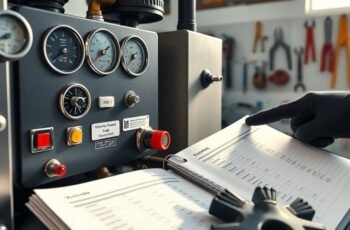
Maintaining ideal performance of an air compressor requires a systematic approach to preventive care. Regular inspections, proper lubrication, and timely component checks are essential to avoid unexpected failures and costly downtime. Identifying potential issues early can markedly extend equipment life and ensure efficiency. Yet, understanding the specific maintenance practices that yield the best results remains critical—let’s explore the key strategies that can help you keep your compressor running reliably.
Key Takeaways
- Conduct regular inspections and monitoring of vibration, noise, and pressure to detect early signs of wear or faults.
- Maintain air filters and drain moisture from tanks frequently to prevent corrosion and ensure efficient operation.
- Follow proper lubrication schedules, using compatible oils, and check oil levels to reduce friction and extend component life.
- Schedule routine maintenance tasks and keep detailed records to optimize equipment lifespan and performance.
- Address common issues promptly, including checking connections, calibrating sensors, and troubleshooting abnormal noises.
How Regular Inspections Prevent Compressor Failures
Regular inspections are essential for identifying potential issues before they escalate into major failures. Vibration analysis during routine checks helps detect imbalances or misalignments early, preventing costly damage to internal components. By monitoring vibration patterns, we can pinpoint wear or structural weaknesses that might not be visible otherwise. Noise reduction is another critical aspect; abnormal sounds often indicate bearing wear or loose parts, which can be addressed proactively. These inspections enable us to interpret subtle changes in vibration and noise levels, facilitating targeted maintenance. This proactive approach minimizes downtime, extends equipment lifespan, and guarantees reliable operation. Ultimately, regular, thorough inspections empower us to anticipate failures and implement corrective measures promptly, safeguarding the compressor’s performance and operational integrity.
Cleaning and Replacing Air Filters for Optimal Performance
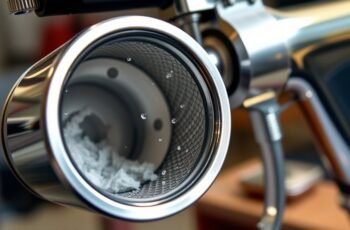
Have you considered how dirty or clogged air filters can compromise compressor efficiency? Air filter cleaning is essential to maintain ideal airflow and prevent strain on the system. When filters become saturated with dust and debris, airflow diminishes, causing the compressor to work harder and increasing energy consumption. Regular inspection helps identify when filter replacement is necessary; neglecting this can lead to overheating and component wear. We recommend scheduling filter replacement based on operating conditions and manufacturer guidelines—typically every 3 to 6 months. Proper maintenance of air filters ensures consistent performance, reduces downtime, and extends equipment lifespan. Prioritizing air filter cleaning and timely filter replacement is a cost-effective way to maximize compressor operation and prevent costly repairs.
Checking and Draining Moisture From the Compressor Tank
Moisture accumulation in the compressor tank can considerably impair system performance and cause damage if not properly managed. Excess moisture leads to moisture buildup, which promotes tank corrosion and reduces compressor efficiency. To prevent this, regular checking and draining are essential. Visual inspection involves looking for water at the tank’s drain valve, while manual draining releases accumulated moisture. During operation, condensate naturally forms due to temperature changes, necessitating routine removal to avoid corrosion.
- Visual inspection for water presence
- Manual draining through the drain valve
- Monitoring for signs of rust or corrosion inside the tank
Consistent moisture management minimizes tank corrosion risks and maintains ideal compressor performance, ensuring longevity and reliability of the system.
Lubricating Moving Parts to Reduce Wear and Tear
Selecting the appropriate lubricant is vital to guarantee ideal protection of compressor components, preventing excessive friction and heat buildup. Maintaining a strict lubrication schedule allows us to consistently minimize wear, while regular monitoring of oil levels helps detect potential issues before they escalate. Together, these practices form a critical foundation for extending compressor lifespan and maintaining reliable operation.
Proper Lubricant Selection
Choosing the correct lubricant is essential for minimizing wear and tear on compressor moving parts, as improper lubrication can lead to increased friction, overheating, and ultimately, premature component failure. To guarantee *lubricant compatibility* with compressor materials and *viscosity selection* suited to operational conditions, we focus on these factors. Proper viscosity allows for effective film formation, reducing metal-to-metal contact. Compatibility considerations prevent chemical reactions that could degrade seals or cause corrosion. Visualize the lubricant as a protective barrier, akin to:
- A viscous shield that cushions high-speed components,
- A thermal conductor dissipating heat efficiently,
- A chemical buffer preventing corrosion and oxidation.
Selecting the right lubricant, aligned with manufacturer specifications and environmental demands, directly impacts compressor longevity and reliability.
Regular Lubrication Schedule
Implementing a consistent lubrication schedule for compressor moving parts is essential to minimize mechanical wear and extend operational life. Effective lubrication techniques depend on selecting the appropriate oil viscosity, which guarantees maximum film strength under varying temperatures and loads. Regular application of the correct lubricant reduces friction and heat buildup, preventing premature component failure. Consistency in lubrication intervals allows for better monitoring of wear patterns and lubricant condition, facilitating timely adjustments. Proper lubrication also minimizes the risk of contamination and corrosion, preserving component integrity. By adhering to a precise schedule, we can maintain the compressor’s efficiency and reliability. Ultimately, disciplined lubrication practices form the foundation of preventive maintenance, safeguarding the equipment against avoidable breakdowns and costly repairs.
Monitoring Oil Levels
How can we guarantee the longevity of compressor components through proper lubrication? Monitoring oil levels is essential to maintain ideal performance and prevent wear. Consistently checking oil levels ensures the right oil viscosity, which minimizes friction and heat. It also helps detect oil contamination early, avoiding degradation that could impair lubrication. Visual inspection should reveal a clear, consistent oil level with no signs of sediment or discoloration. An accurate gauge reading, combined with a scheduled top-up, maintains proper lubrication. Key points include:
- Assuring oil viscosity matches manufacturer specifications for temperature ranges
- Detecting and preventing oil contamination to avoid abrasive particles
- Maintaining consistent oil levels to reduce metal-to-metal contact and wear
Monitoring Pressure Levels and System Settings
Have you ever wondered why consistent monitoring of pressure levels is essential for air compressor performance? Precise pressure regulation guarantees peak operation and prevents system overloads or failures. Regularly checking pressure gauges helps identify deviations from recommended settings, signaling the need for system calibration. Proper calibration aligns system components, maintaining accurate pressure control and efficiency. Monitoring system settings allows us to detect pressure drops or spikes that could indicate underlying issues, enabling prompt adjustments before equipment damage occurs. Maintaining ideal pressure levels reduces energy consumption and prolongs compressor lifespan. By systematically tracking pressure data and calibrating controls as needed, we guarantee the system operates within specified parameters, enhancing reliability and performance. This proactive approach minimizes downtime and maximizes operational efficiency.
Inspecting Hoses, Fittings, and Connections for Leaks
Building on pressure monitoring, inspecting hoses, fittings, and connections for leaks is a vital step in maintaining system integrity. Detecting leaks early prevents pressure loss, improves efficiency, and safeguards hose integrity and connection security. We focus on identifying signs of wear, such as cracks, bulges, or corrosion, which compromise these components. Regular visual inspections should include:
Regularly inspect hoses and fittings for leaks and signs of wear to ensure system safety and efficiency.
- Examining hose surfaces for abrasions or deterioration
- Checking fittings for tightness and corrosion
- Listening for hissing sounds indicating escaping air
These steps help guarantee that hoses remain flexible and secure, while fittings maintain proper sealing. Maintaining connection security minimizes the risk of sudden failures, reducing downtime and costly repairs. Consistent inspection is essential for reliable compressor operation and overall system longevity.
Scheduling Routine Maintenance and Keeping Records
Establishing consistent maintenance intervals guarantees ideal compressor performance and minimizes unexpected failures. Maintaining detailed service logs enables us to track patterns, identify recurring issues, and schedule proactive interventions. By systematically organizing these records, we can maximize maintenance cycles and extend equipment lifespan.
Set Regular Maintenance Intervals
How often should we perform routine maintenance on an air compressor to guarantee peak performance and longevity? Establishing consistent maintenance intervals is essential for ideal operation. Proper maintenance scheduling involves analyzing usage patterns, operating conditions, and manufacturer recommendations to determine appropriate interval adjustments. This proactive approach minimizes unexpected failures and extends equipment life. Visualize the process as:
- Regularly inspecting filters, belts, and lubricants to prevent blockages and wear
- Scheduling timely checks for pressure relief valves and safety components
- Adjusting maintenance frequency based on operational load and environmental factors
Maintain Detailed Service Logs
Maintaining detailed service logs is essential for guaranteeing that routine maintenance is performed consistently and accurately. A thorough service history enables us to track maintenance activities, identify recurring issues, and optimize scheduling. Utilizing a structured maintenance checklist helps ensure all critical tasks—such as filter replacements, oil changes, and inspections—are documented systematically. This record-keeping facilitates proactive troubleshooting and minimizes downtime by highlighting patterns that may indicate underlying problems. Accurate logs also support compliance with safety standards and warranty requirements. By consistently updating these logs, we can evaluate the effectiveness of maintenance procedures and adjust intervals accordingly. Ultimately, well-maintained service records enhance the reliability and longevity of the air compressor, making preventive maintenance more precise and effective.
Troubleshooting Common Issues During Preventive Checks
During preventive checks of an air compressor, identifying and addressing common issues quickly is essential to guarantee peak performance and avoid costly downtime. Sensor calibration often presents challenges; inaccurate sensor readings can lead to inefficient operation or safety risks. Regularly verifying calibration ensures reliable data, especially for pressure and temperature sensors. Noise troubleshooting is also critical; abnormal sounds like rattling or hissing indicate underlying problems such as loose fittings or worn-out components. Visualize the compressor with:
Regular checks for sensor calibration and noise issues keep your compressor running smoothly and prevent costly failures.
- Vibrating or irregular noises during operation
- Fluctuating pressure readings despite stable input
- Unusual sounds from the motor or valves
Addressing these issues methodically helps maintain ideal performance, reduce wear, and extend equipment lifespan. Quick detection and resolution prevent small problems from escalating into major failures.
Frequently Asked Questions
How Often Should I Replace the Compressor’s Air Filters?
We recommend replacing the air filter every 3 to 6 months, depending on usage and air filter lifespan. Regularly monitoring for dirt or reduced airflow helps determine the most suitable replacement frequency, ensuring compressor efficiency and preventing damage.
What Signs Indicate a Need for Compressor Parts Replacement?
We observe excessive vibration and unusual noise during operation, indicating potential component wear. Regular vibration analysis and noise diagnostics help us identify when parts need replacement, ensuring best compressor performance and preventing costly failures.
How Can I Prevent Corrosion Inside the Compressor Tank?
Imagine your tank’s interior as a shielded fortress; we prevent corrosion by applying protective coatings, controlling moisture, and performing regular inspections. Effective corrosion prevention guarantees the tank’s longevity and maintains ideal compressor performance over time.
Are There Specific Lubricants Recommended for Different Compressor Models?
We recommend selecting lubricants with compatible oil viscosity and proven lubricant compatibility for your compressor model. Proper oil viscosity guarantees ideal performance, while using manufacturer-approved lubricants minimizes wear and prevents potential damage, extending your compressor’s lifespan effectively.
What Safety Precautions Should I Follow During Maintenance Inspections?
Coincidentally, safety during maintenance hinges on strict adherence to lockout procedures and proper personal protective equipment; we guarantee that power is isolated, and gloves and eye protection are worn to minimize risks during inspections and repairs.
Conclusion
By adhering to these preventive maintenance tips, we can substantially reduce the risk of compressor failures and extend equipment lifespan. Regular inspections, timely replacements, and systematic monitoring are essential for peak performance. Remember, “A stitch in time saves nine”—addressing issues early prevents costly downtime. Consistent, disciplined maintenance not only enhances efficiency but also guarantees reliability, ultimately protecting your investment and maintaining operational continuity in the long run.