Maintaining stationary air compressors in a workshop is critical for ensuring consistent performance, safety, and cost efficiency. Proper upkeep reduces downtime and extends equipment lifespan, but it requires a systematic approach. By following established inspection and maintenance protocols, you can avoid unexpected failures and optimize operation. To implement an effective routine, understanding key tasks and monitoring techniques is essential. Let’s explore the essential maintenance practices that keep your compressor running reliably and efficiently.
Key Takeaways
- Perform daily inspections of filters, leaks, and noises to catch issues early and maintain optimal performance.
- Follow a regular maintenance schedule for oil changes, filter replacements, and condensate drain checks.
- Use manufacturer-recommended lubricants and monitor oil quality to reduce wear and heat buildup.
- Install gauges and sensors for continuous monitoring of pressure, temperature, and system conditions.
- Focus on leak detection, vibration, and noise levels to prevent failures and prolong compressor lifespan.
Why Regular Maintenance Matters for Stationary Air Compressors
Regular maintenance is essential for guaranteeing stationary air compressors operate at peak efficiency and reliability. Proper upkeep directly impacts energy efficiency by optimizing component performance, reducing power consumption, and preventing unnecessary strain on the system. Consistent maintenance also plays a critical role in noise reduction; well-maintained units run more smoothly and emit less operational noise, creating a safer and more comfortable work environment. By regularly inspecting and servicing key parts such as filters, belts, and valves, we prevent issues that could lead to increased energy use or excessive noise. This proactive approach not only extends the lifespan of the compressor but also guarantees it performs consistently, meeting operational demands without wasteful energy expenditure or disruptive noise levels.
How to Perform Daily Inspections and Basic Checks
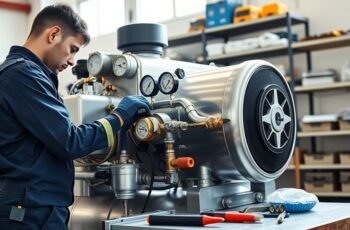
Performing daily inspections and basic checks is a straightforward yet essential step in maintaining the best performance of stationary air compressors. Begin by examining the air filter for dirt, debris, or blockages, guaranteeing unobstructed airflow. A clean air filter prevents strain on the compressor and maintains air quality. Next, check the condensate removal system for proper operation; ensure that condensate is draining correctly to prevent moisture buildup, which can cause corrosion and damage. Inspect for any leaks, unusual noises, or vibrations that could indicate component issues. Record any irregularities and address them promptly. Regularly verifying these fundamental elements helps optimize efficiency, prolongs equipment lifespan, and reduces downtime, making daily inspections a critical part of compressor maintenance.
Changing Air Filters and Removing Condensate Effectively
To guarantee peak compressor performance, it’s essential to regularly change air filters and remove condensate effectively. Air filter replacement prevents contamination and ensures ideal airflow, reducing strain on the compressor’s motor. When performing air filter replacement, inspect the filter element for dirt buildup and replace it with an exact match as specified by the manufacturer. Effective condensate removal is equally critical; accumulated condensate can cause corrosion and damage internal components. Use proper condensate drains—manual or automatic—to evacuate moisture from the compressor tank and lines. Regularly check these drains for proper operation and clear any blockages. Maintaining clean air filters and efficient condensate removal not only prolongs equipment lifespan but also sustains consistent, reliable compressor performance.
Lubrication and Oil Care: Keeping Moving Parts in Top Shape
Maintaining proper lubrication and oil levels is vital for guaranteeing the longevity and ideal performance of stationary air compressors. Selecting the correct lubricant involves considering viscosity, additive packages, and compatibility with compressor components. Using manufacturer-recommended lubricants prevents premature wear and reduces friction between moving parts. Regular oil analysis helps detect contamination or degradation, ensuring maximum viscosity and protection. When performing oil changes, proper oil disposal is imperative to prevent environmental harm; always follow local regulations and recycling protocols. Consistent lubrication minimizes metal-to-metal contact, reduces heat buildup, and extends component life. By prioritizing lubricant selection and responsible oil disposal, we guarantee our compressors operate efficiently, reliably, and with minimal downtime.
Monitoring Operating Pressure and Temperature for Safety and Efficiency
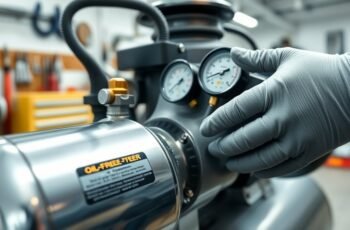
Monitoring operating pressure and temperature is essential for ensuring the safety and efficiency of stationary air compressors. Accurate pressure regulation prevents over-pressurization, reducing the risk of component failure and ensuring consistent airflow. We recommend installing reliable gauges and sensors to continuously track pressure levels, adjusting control valves as necessary. Temperature control is equally critical; excessive heat can lead to equipment damage and decreased lifespan. Using temperature sensors, we can detect abnormal rises and implement cooling measures promptly. Regularly checking these parameters allows us to maintain ideal operating conditions, prevent potential hazards, and enhance compressor performance. Precise monitoring of pressure and temperature is crucial for safe, efficient, and reliable compressor operation in any workshop setting.
Troubleshooting Common Compressor Issues Before They Escalate
Regularly monitoring compressor pressure levels helps detect performance deviations early. Inspecting for air leaks and ensuring oil and filter conditions are ideal prevents minor issues from worsening. Addressing these points promptly maintains system reliability and efficiency.
Monitoring Compressor Pressure Levels
By keeping a close eye on compressor pressure levels, we can identify potential problems before they develop into costly failures. Regular monitoring involves verifying the accuracy of pressure gauges through calibration, ensuring readings are precise. Accurate gauges prevent misinterpretation of system performance, allowing timely intervention. Additionally, routine safety valve testing is critical; it confirms that pressure relief devices activate at designated thresholds, protecting against over-pressurization. Consistent calibration and safety valve checks help maintain ideal operating conditions and extend compressor lifespan. We recommend establishing a maintenance schedule that includes these procedures, and documenting results for trend analysis. This proactive approach minimizes downtime, reduces repair costs, and safeguards personnel and equipment from pressure-related hazards.
Inspecting for Air Leaks
Detecting air leaks early is essential to maintaining compressor efficiency and preventing costly downtime. Air leak detection involves systematic inspection of all connections, fittings, and hoses for signs of seal integrity compromise. We recommend using soapy water applied to potential leak points; escaping bubbles indicate leaks. Listening carefully with a stethoscope can also reveal hissing sounds characteristic of escaping air. Maintaining seal integrity guarantees maximum pressure and reduces energy waste. Regularly inspecting joints, valves, and fittings for cracks or wear helps identify leaks before they escalate. Addressing leaks promptly not only restores system efficiency but also prolongs component lifespan. By integrating thorough air leak detection into your maintenance routine, you prevent pressure drops and safeguard against unexpected compressor failures.
Checking Oil and Filter Conditions
Monitoring oil and filter conditions is crucial for preventing compressor malfunctions and guaranteeing peak performance. Oil degradation occurs over time due to heat and contaminants, reducing lubrication effectiveness and increasing wear. Regularly checking oil levels and quality helps detect early signs of breakdown, preventing costly repairs. Filter clogging can restrict airflow, causing overheating and reducing efficiency. Visually inspect filters for dirt buildup and replace them if they appear clogged or dirty. Maintaining clean filters ensures proper filtration of airborne particles and lubrication oils, extending equipment lifespan. Precise monitoring of oil condition and filter integrity allows us to address issues proactively, avoiding unplanned downtime and optimizing compressor performance. Consistent checks are essential for the reliable operation of stationary air compressors in demanding workshop environments.
Creating a Maintenance Schedule to Prolong Your Compressor’s Lifespan
Establishing a detailed maintenance schedule guarantees consistent inspection routines and timely completion of scheduled tasks, minimizing unexpected failures. We recommend documenting each procedure and adhering to manufacturer guidelines to maximize compressor performance. Regularly reviewing and adjusting the schedule helps prolong the compressor’s operational lifespan and maintains peak efficiency.
Regular Inspection Routines
How can we guarantee our stationary air compressor remains reliable and efficient over time? Regular inspection routines are essential. We should routinely examine the air filter to verify it’s clean and unobstructed, as a clogged filter reduces airflow and strains the system. Additionally, inspecting condensate removal components is critical; proper condensate drainage prevents moisture buildup, which can corrode internal parts. We must check for leaks, unusual vibrations, and abnormal noise during each inspection. Monitoring these elements helps identify early signs of wear or failure, allowing timely intervention. Consistent inspections enable us to maintain peak performance, minimize downtime, and extend the compressor’s lifespan. Strict adherence to these routines ensures our equipment operates reliably under demanding workshop conditions.
Scheduled Maintenance Tasks
Creating a thorough maintenance schedule is crucial for maximizing the lifespan and reliability of your stationary air compressor. Regularly scheduled tasks guarantee ideal energy efficiency and noise reduction, preventing unexpected breakdowns. To achieve this, we recommend:
- Performing routine oil changes to maintain compressor efficiency and reduce operational noise
- Inspecting and replacing filters to improve airflow, energy consumption, and noise levels
- Checking for air leaks, which compromise energy efficiency and elevate noise output
- Monitoring pressure settings and safety valves to ensure consistent performance and safety standards
Implementing these tasks at specified intervals keeps the compressor running smoothly, reduces energy costs, and minimizes noise disturbances. A precise maintenance schedule is indispensable for long-term reliability and performance.
Frequently Asked Questions
How Do I Identify Early Signs of Compressor Wear and Tear?
We identify early signs of compressor wear by routinely checking lubrication levels and inspecting filters for clogging or debris, which can indicate impending issues. Prompt attention to these signs helps prevent costly repairs and maintains ideal compressor performance.
What Safety Precautions Should I Take During Maintenance?
We always wear appropriate safety gear, including gloves and eye protection, and strictly follow lockout procedures before maintenance. These precautions prevent accidental startup and guarantee safe handling of electrical and mechanical components during compressor upkeep.
Can I Perform Maintenance Tasks Myself or Should I Hire a Professional?
Back in the days of steam engines, hands-on work was common; today, we recommend evaluating your skills first. For critical tasks, prioritize professional assistance, but for basic DIY tips, careful maintenance can be managed safely.
What Are the Signs of Imminent Compressor Failure?
We notice that lubrication issues cause increased wear and noise anomalies, indicating imminent compressor failure. Pay attention to unusual sounds, inconsistent lubrication, or temperature fluctuations, as these signs signal urgent maintenance needs to prevent catastrophic breakdowns.
How Do Environmental Factors Affect Compressor Maintenance Needs?
Environmental impact dramatically accelerates compressor wear, demanding meticulous maintenance scheduling. We must monitor temperature, humidity, and dust levels diligently to prevent costly failures, ensuring ideal performance and longevity amidst fluctuating environmental conditions.
Conclusion
Regular maintenance is like fine-tuning a precision instrument—vital for peak performance and longevity. By adhering to daily inspections, timely filter changes, proper lubrication, and monitoring operating conditions, we guarantee your compressor runs smoothly and safely. Skipping these steps is akin to ignoring warning lights on a dashboard, risking costly failures. Consistent, detail-oriented care keeps your compressor reliable, efficient, and ready to meet your workshop’s demands with minimal downtime.