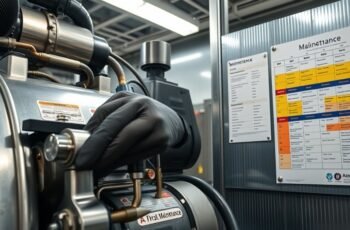
Some might think that maintaining an air compressor is complicated or time-consuming, but with proper technique, it becomes a straightforward part of responsible equipment management. Regular inspections, timely replacements, and simple checks are key to preventing costly repairs and ensuring safety. Understanding these routine tasks can considerably extend your compressor’s lifespan and reliability, but it’s essential to follow a systematic approach. Here’s how to start keeping your compressor in ideal condition.
Key Takeaways
- Regularly inspect and replace air filters, oil, and filters according to manufacturer-recommended schedules.
- Drain moisture from tanks weekly to prevent rust and ensure efficient operation.
- Check hose connections and tighten fittings to prevent leaks and maintain safety.
- Use vibration analysis and listen for abnormal sounds to detect internal wear early.
- Test safety features like pressure relief valves and emergency shutdowns for proper functioning.
How to Inspect Your Air Compressor for Basic Wear and Damage
Regularly inspecting your air compressor is essential to identify signs of wear or damage that could compromise its performance. We recommend employing vibration analysis to detect unusual vibrations indicating misalignment, imbalance, or bearing wear. Noise diagnostics also serve as a crucial tool; abnormal sounds such as knocking, rattling, or hissing may signal loose components or internal damage. During inspections, observe for excessive vibrations or irregular noise patterns, which often precede component failure. Use a stethoscope or contact sensors to pinpoint noise sources accurately. Consistent monitoring of vibration levels and acoustic signatures helps catch early warning signs, ensuring timely maintenance. This precise approach minimizes downtime and extends your compressor’s operational lifespan, maintaining peak performance through proactive, data-driven inspection methods.
How to Change and Clean Your Air Compressor’s Oil and Filters
Maintaining clean oil and filters is essential to ensuring your air compressor operates efficiently and reliably. Properly managing oil levels and performing filter replacement prevent damage and optimize performance. Here’s how to do it:
Keeping oil and filters clean ensures your air compressor runs smoothly and lasts longer.
- Check oil levels: Use the dipstick or sight glass to verify that oil levels are within the recommended range; top off if necessary.
- Drain old oil: Remove the drain plug and dispose of used oil according to local regulations, ensuring no contamination.
- Replace filters: Remove the existing filter and install a new one, ensuring proper fit and seal to prevent bypass.
- Clean filter housing: Wipe the filter housing with a clean cloth to remove debris before installing the new filter or reassembling.
How to Drain Condensation and Prevent Rust Build-Up
Since condensation naturally forms inside your air compressor during operation, it’s essential to regularly drain accumulated water to prevent corrosion and equipment damage. Effective moisture management involves opening the drain valve at the compressor’s lowest point, allowing water and moisture to escape. This practice reduces the risk of rust buildup inside the tank and components. To maximize rust prevention, perform drainage after each use or daily in high-humidity environments. Additionally, inspecting and cleaning the drain valve ensures unobstructed water release. Proper moisture management not only extends the lifespan of your compressor but also maintains peak performance. Consistent drainage and vigilant maintenance are critical for avoiding rust formation, preserving internal surfaces, and ensuring reliable operation over time.
How to Check and Tighten Hoses and Connections for Leaks
Regular inspection of hose connections is essential to identify potential leaks. We recommend tightening any loose fittings with appropriate tools to guarantee an airtight seal. Proper maintenance of these connections prevents pressure loss and maintains compressor efficiency.
Inspect Hose Connections Regularly
How often do we verify the integrity of our hose connections? Regular inspection is essential for maintaining hose durability and preventing leaks. To guarantee peak performance, follow these steps:
- Visually examine all connection points for signs of wear, cracks, or deterioration in connection materials.
- Check for corrosion or buildup that could compromise seal integrity.
- Test each connection by running the compressor and listening for hissing sounds indicating leaks.
- Feel for any excessive vibration or looseness at fittings, signaling potential connection issues.
Consistent inspection helps identify potential failure points early, allowing timely repairs. Proper maintenance of connection materials and routine checks preserve hose integrity, minimizing downtime and advancing safety.
Tighten Loose Fittings Properly
To guarantee our hose connections remain secure and leak-free, we need to verify and tighten fittings whenever necessary. Proper tightening fittings is essential for maintaining system integrity and preventing air loss. During fitting inspection, look for any signs of looseness or wear, such as cracks or corrosion. Use the appropriate tools—typically a wrench—to tighten fittings gradually, avoiding over-tightening which can damage threads or deform components. Conduct a thorough fitting inspection before and after tightening to ensure all connections are secure without excess strain. Remember, consistent checking and proper tightening fittings maintain ideal compressor performance and longevity. This process should be part of regular maintenance to prevent leaks and ensure safety during operation.
How to Test Compressor Safety Features and Ensure Proper Operation
To guarantee our compressor’s safety features are functioning correctly, we need to systematically test each component. We’ll verify the safety switch operation, inspect the pressure relief valve for proper release, and simulate emergency shutdown procedures. Accurate testing confirms the compressor’s safety systems are reliable during operation.
Check Safety Switch Function
Have you ever wondered if your compressor’s safety switch is functioning correctly? Safety switch testing is vital to verify the emergency shutoff feature. To do this accurately:
- Disconnect power and locate the safety switch on the compressor.
- Manually trigger the switch by pressing or bypassing it, then restore power.
- Observe if the compressor activates; it should not run if the switch is engaged.
- Reset the switch and confirm that the compressor resumes operation.
This process guarantees the safety switch responds properly, preventing operation during unsafe conditions. Proper testing verifies the emergency shutoff’s reliability, safeguarding users and equipment. Regular checks are essential for maintaining operational safety and ensuring the safety switch functions correctly under all circumstances.
Inspect Pressure Relief Valve
Wondering how to verify that your compressor’s pressure relief valve functions correctly? The key is a thorough valve inspection combined with a controlled test. Begin by ensuring the compressor is unplugged and depressurized. Locate the pressure relief valve, typically near the tank’s top or side. Carefully inspect it for signs of corrosion, debris, or damage. To test, lift the valve’s tab slightly—if it releases air, the valve is functioning properly. If it doesn’t, it may be stuck or faulty and requires replacement. Always perform this test with caution, avoiding excessive force. Regular pressure relief valve inspection guarantees it will activate at the designated pressure level, preventing over-pressurization and ensuring safe compressor operation.
Test Emergency Shutdown
After verifying the pressure relief valve, it’s important to confirm that the compressor’s safety features, such as the emergency shutdown system, are functioning correctly. This process is part of safety protocol verification and ensures reliable operation during emergencies. To test the emergency shutdown procedures:
- Disconnect the compressor from its power source.
- Simulate an overpressure condition or trigger the shutdown switch.
- Reconnect power and verify that the system automatically halts operation.
- Check system indicators or alarms for proper activation.
Performing these steps confirms that the emergency shutdown system responds promptly and correctly. Regular testing helps identify potential malfunctions, maintaining safety standards and preventing accidents during compressor use.
How to Schedule Routine Maintenance to Keep Your Compressor Running Smoothly
Scheduling routine maintenance for your air compressor is vital to guarantee peak performance and extend its lifespan. Consistent maintenance scheduling ensures timely inspections and replacements, preventing costly downtime. We recommend establishing a maintenance calendar based on operating hours and manufacturer guidelines. Use the following table to organize key tasks:
| Maintenance Task | Frequency |
|---|---|
| Inspect and replace air filters | Every 250 hours or monthly |
| Drain moisture from tanks | Weekly |
| Check belt tension | Monthly |
| Examine safety valves | Quarterly |
| Lubricate moving parts | As needed |
This structured approach helps identify potential issues early, optimizing compressor lifespan and maintaining operational efficiency. Proper scheduling minimizes unexpected failures and prolongs equipment life.
Frequently Asked Questions
How Often Should I Replace the Compressor’s Safety Valve?
We recommend inspecting the safety valve monthly and replacing it every 1-2 years, depending on usage and manufacturer’s guidelines. Regular safety valve inspection and understanding replacement frequency are essential for maintaining compressor safety and peak performance.
What’s the Best Way to Store My Air Compressor During Off-Season?
We recommend storing your air compressor in a clean, dry, and temperature-controlled environment, utilizing protective covers. Implement seasonal precautions by draining moisture and disconnecting power, ensuring the best performance and longevity during off-season storage.
Can I Use Regular Household Oil in My Air Compressor?
Using regular household oil in your air compressor isn’t recommended due to oil compatibility issues; always follow your maintenance schedule with compressor-specific oil to guarantee peak performance, longevity, and avoid potential damage or inefficiency.
How Do I Troubleshoot Unusual Noises During Operation?
Unusual noises signal a storm brewing in your compressor. We check for vibration causes and lubrication issues, tightening loose parts, and ensuring proper oil levels to silence the noise and keep your machine running smoothly.
Are There Specific Tips for Maintaining Portable Versus Stationary Compressors?
We emphasize portable versatility by regularly inspecting hoses and connections, ensuring ease of movement. For stationary stability, we focus on securing mounting bolts and leveling the unit, optimizing performance and safety in both compressor types.
Conclusion
Regular DIY maintenance is the heartbeat of a reliable air compressor, much like a well-oiled machine. By staying vigilant and following these steps, we guarantee it runs smoothly and safely for years to come. Think of it as tuning a fine instrument—each check and fix keeps the performance crisp and precise. Consistency is key; with careful attention, your compressor will perform at peak efficiency, delivering the power you need whenever you need it.