Did you know that the material composition of an air compressor tank—whether steel or aluminum—directly influences its durability and safety margins? Many overlook this factor, yet it’s critical for long-term performance and compliance with safety standards. Understanding how tank size, type, and features affect your work can prevent costly mistakes and ensure reliable operation. To make an informed choice, you need to consider more than just capacity; the nuances in design and safety certifications are equally vital.
Key Takeaways
- Consider tank material (steel or aluminum) for durability and corrosion resistance based on your environment.
- Ensure the tank’s pressure rating matches or exceeds your compressor’s maximum operational pressure.
- Evaluate size and capacity to balance air volume needs with noise levels and portability requirements.
- Check safety certifications, venting mechanisms, and perform regular maintenance for safe operation.
- Compare price versus durability to select a tank that offers long-term value and reliable performance.
What Are the Key Features to Consider in an Air Compressor Tank?
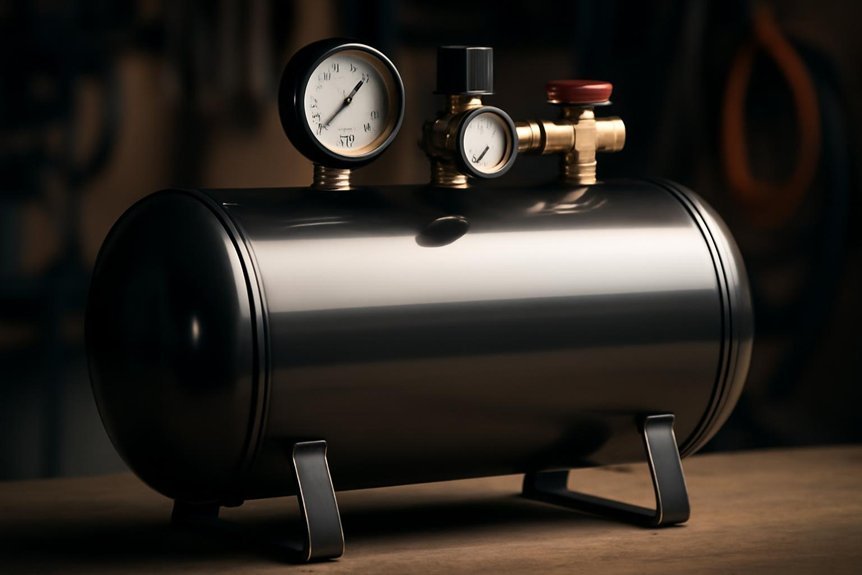
What are the essential features to evaluate in an air compressor tank? Primarily, we focus on material integrity, such as steel or aluminum construction, which impacts durability and corrosion resistance. The tank’s pressure rating is crucial, ensuring it can handle maximum operational pressures safely. We also consider the thickness of the tank walls—thicker walls generally provide higher safety margins. While some may mention irrelevant topics like aesthetic design, these are extraneous details that don’t affect performance. Instead, our attention remains on structural integrity, safety certifications, and venting mechanisms to prevent over-pressurization. These features collectively determine the tank’s reliability and longevity, allowing us to avoid potential failures. We avoid unnecessary distractions, honing in on technical specifications that directly influence operational safety and efficiency.
How Do Different Sizes and Capacities Impact Your Projects?
Choosing the appropriate tank size and capacity directly influences the efficiency and scope of your projects. Larger tanks provide a higher volume of compressed air, reducing the frequency of motor cycles and maintaining a steady bore size for specific tools. This stability minimizes fluctuations in pressure and optimizes performance for demanding tasks. However, increased capacity often correlates with higher noise levels, as larger tanks and motors tend to generate more sound. Conversely, smaller tanks are more portable and produce less noise, but they may require more frequent cycles, potentially decreasing efficiency for continuous operations. Understanding the relationship between tank size, bore size, and noise level helps ensure your compressor meets your project’s demands without unnecessary energy consumption or excessive noise pollution.
Which Types of Air Compressor Tanks Are Best for Your Needs?
When selecting the appropriate air compressor tank, identifying the tank type that aligns with your operational requirements is essential for optimizing performance and efficiency. For budget options, small horizontal tanks offer cost-effective solutions suitable for light-duty tasks, while larger vertical tanks provide greater capacity for continuous operation. If noise considerations are critical, consider tanks with sound attenuation features or quieter compressor models, such as oil-lubricated tanks, which tend to operate more quietly than reciprocating piston types. Aluminum tanks, although more expensive, also reduce noise and corrosion, making them ideal for sensitive environments. Ultimately, choosing between these tank types involves balancing budget constraints with operational noise levels and capacity demands, ensuring you select a solution that maximizes efficiency without compromising on noise control.
What Safety and Maintenance Tips Should You Follow?
Ensuring safety and proper maintenance of your air compressor tank is critical for reliable operation and personnel safety. Regular safety training ensures operators understand correct procedures, including inspection protocols and emergency responses. Implementing a strict maintenance scheduling system helps identify early signs of corrosion, wear, or pressure anomalies, preventing failures. Key safety tips include checking for leaks, ensuring pressure relief valves function correctly, and verifying tank integrity through periodic inspections. Maintenance should be performed according to manufacturer recommendations, with attention to draining moisture to prevent rust and corrosion. Document all safety checks and maintenance activities for accountability and trend analysis. Adhering to these practices minimizes risks, extends equipment lifespan, and maintains optimal compressor performance.
How to Choose the Right Air Compressor Tank Price and Value?
How do you determine the best balance between price and value when selecting an air compressor tank? We analyze price performance to ensure durability justifies the cost. A higher price often indicates better material quality and longer lifespan, influencing durability vs cost. To compare options objectively, consider this table:
| Price Range | Key Features & Value |
|---|---|
| Low | Basic durability, minimal features, shorter lifespan |
| Mid | Improved durability, better build quality, moderate cost |
| High | Superior durability, advanced features, maximum longevity |
Prioritizing durability vs cost ensures long-term savings. A higher initial investment may deliver better price performance over time, reducing maintenance and replacement costs.
Frequently Asked Questions
How Long Does an Air Compressor Tank Typically Last?
Typically, an air compressor tank’s lifespan ranges from 10 to 20 years, depending on usage and maintenance. Regular safety upgrades and inspections ensure durability, safety, and optimal performance, extending the tank’s effective lifespan significantly.
Can I Upgrade or Modify My Existing Air Compressor Tank?
We believe upgrading or modifying your existing air compressor tank is feasible if you consider upgrade options carefully and prioritize safety. Always evaluate modification considerations, such as pressure ratings and material integrity, to ensure system performance and safety.
What Are the Environmental Impacts of Different Tank Materials?
We find eco-friendly materials reduce manufacturing emissions and promote sustainability, yet recycling challenges persist. Innovation trends aim to improve material recyclability, but environmental impacts vary considerably across tank types, necessitating careful analysis of each material’s lifecycle and ecological footprint.
Are There Any Specific Certifications to Look for in a Tank?
We recommend checking for certifications to look for like ASME, ISO, and UL, ensuring safety and quality. Regular maintenance tips, such as inspection and pressure testing, help sustain compliance and prevent tank failures over its service life.
How Do I Properly Dispose of or Recycle an Old Tank?
We carefully drain residual pressure, then explore recycling options like metal scrap yards or certified disposal facilities. Proper disposal considerations insure environmental safety, preventing leaks or hazards, while maximizing material recovery and adhering to local regulations.
Conclusion
In choosing the right air compressor tank, we must balance safety with efficiency, capacity with portability, and cost with durability. We need to prioritize material integrity, guarantee proper sizing for our projects, and select tanks that meet safety standards. By analyzing these factors critically, we can optimize performance, extend equipment lifespan, and achieve reliable operation. Ultimately, informed decisions lead to smarter investments, better results, and a safer workspace—because precision in choice drives excellence in outcome.