When evaluating air compressors, understanding the distinctions between pancake and hot dog models is essential for making an informed choice. Each design offers specific advantages suited to different tasks, but selecting the right one depends on a careful analysis of performance, durability, and application needs. We’ll explore these differences in detail, helping you determine which compressor aligns best with your project requirements and operational expectations.
Key Takeaways
- Pancake compressors are more compact, lightweight, and quieter, ideal for small-scale tasks and DIY projects.
- Hot dog compressors offer higher airflow (CFM) and durability, suitable for continuous, heavy-duty use.
- Pancake models typically have lower upfront costs and easier maintenance, while hot dog units tend to be more robust and long-lasting.
- Noise levels are generally lower in pancake compressors, enhancing operating comfort during prolonged use.
- Hot dog compressors are better suited for demanding applications requiring sustained power and higher performance.
What Are Pancake and Hot Dog Air Compressors?
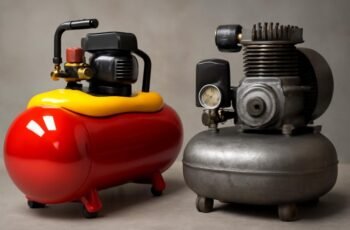
Have you ever wondered what distinguishes pancake and hot dog air compressors? Both designs emphasize compact efficiency, making them ideal for small-scale tasks. Pancake compressors feature a low-profile, circular tank, offering a lightweight, space-saving solution. Hot dog compressors, on the other hand, have a cylindrical shape with a longer profile, providing similar portability but sometimes more storage capacity. When choosing between oil vs. oil-free models, oil-free compressors are favored for maintenance ease and cleaner operation, especially in sensitive applications. Oil compressors, while potentially more durable, require regular lubrication and maintenance. Understanding these differences helps determine which compressor best suits your needs, balancing factors like size, efficiency, and maintenance requirements.
Key Differences in Size and Portability
When comparing pancake and hot dog air compressors, their size and portability are critical factors that influence suitability for specific applications. Pancake compressors typically feature a compact design, making them easy to store and transport in confined spaces. Their low profile and lightweight structure enhance user ergonomics, allowing for easier handling during setup and movement. Conversely, hot dog compressors tend to be slightly larger but maintain a portable profile, often with a streamlined shape that balances size with mobility. The design differences impact how users interact with each type; pancake models prioritize minimal footprint and ergonomic ease, ideal for quick, light-duty tasks. Hot dog compressors, while still portable, are better suited for applications requiring a bit more capacity without sacrificing ease of transport.
Comparing Power and Performance Capabilities
How do pancake and hot dog air compressors compare in terms of power output and performance? Generally, pancake compressors deliver moderate CFM and PSI, suitable for light to medium tasks, while hot dog models often provide higher CFM, making them better for continuous use. The durability debate centers on whether smaller pancake units can withstand prolonged operation, influencing brand loyalty among professionals. Hot dog compressors tend to have more robust components, enhancing longevity and consistent performance. Here’s a comparison:
| Feature | Pancake Compressor | Hot Dog Compressor |
|---|---|---|
| Power (HP) | 1-2 HP | 2-3 HP |
| CFM at 90 PSI | 2-4 CFM | 4-6 CFM |
| Durability | Moderate, depends on brand | Generally higher, robust build |
| Performance Consistency | Suitable for intermittent use | Better for continuous tasks |
Both types have distinct performance profiles influenced by build quality and brand reputation.
Ideal Use Cases for Each Compressor Type
Understanding the optimal applications for each compressor type helps in selecting the right tool for specific tasks. Pancake compressors excel in portability and quick, light repairs, while hot dog compressors are better suited for heavy-duty tasks requiring sustained power. Identifying these use cases ensures efficiency and effectiveness in various work environments.
Suitable For Heavy-Duty Tasks
Pancake air compressors excel in heavy-duty applications due to their high CFM ratings and ability to sustain continuous operation, making them ideal for tasks that demand substantial airflow and prolonged use. Their compact design allows for portability and space efficiency in demanding environments like construction sites or industrial settings. Although traditionally less powerful than hot dog models, modern pancake compressors offer sufficient airflow for powering heavy tools such as impact wrenches and sanders. Budget considerations also favor pancakes because they often come at a lower initial cost and require less maintenance, which is advantageous for ongoing operational expenses. Their durability and ability to handle continuous workloads make them suitable for sustained, intensive tasks where reliability and efficiency are critical.
Ideal For Light Repairs
Are pancake air compressors truly suited for light repairs? For such tasks, their compact size and lower CFM output generally suffice, but timing considerations are essential. These compressors deliver steady airflow for small-scale repairs like tire inflation or spray painting, where prolonged use isn’t necessary. However, their limited capacity means extended operation could strain the unit, risking overheating or wear. Warranty implications also matter; manufacturers often specify restrictions for frequent or intensive use, which could void coverage if exceeded. Consequently, while pancake compressors are ideal for occasional light repairs, understanding their operational limits and adhering to warranty conditions ensures longevity and reliable performance. They excel in controlled, short-term applications but aren’t designed for continuous, demanding repair work.
Best For Portable Use
When selecting a compressor for portable applications, the key consideration is how easily it can be transported and deployed in various work environments. Pancake compressors excel here due to their compact design, making them lightweight and easy to carry. Their oil-free operation minimizes maintenance and eliminates the need for additional oil handling, ideal for quick setup in diverse locations. Hot dog compressors, with their elongated shape, are also portable but tend to be bulkier, reducing maneuverability. For tasks requiring frequent movement or confined spaces, pancake compressors are the preferred choice because their small footprint and oil-free operation streamline transportation and reduce setup time. Overall, their design and maintenance advantages make pancake compressors more suitable for highly mobile applications.
Maintenance and Durability Considerations
When evaluating maintenance and durability, we consider how long each compressor type remains reliable under typical operating conditions. Ease of maintenance directly impacts operational uptime and long-term costs, making it a critical factor in decision-making. By analyzing these reliability factors, we can better understand which compressor offers superior durability and lower lifecycle maintenance.
Long-Term Reliability Factors
What factors most influence the long-term reliability of pancake and hot dog air compressors? Primarily, long-term durability depends on how well each unit manages component wear over time. Pancake compressors, with their simple design and fewer moving parts, typically experience less wear, enhancing their durability. Conversely, hot dog compressors often have more complex components, which can accelerate wear if not properly maintained. The quality of materials used also plays a critical role; high-grade components resist fatigue and corrosion better, extending operational lifespan. Additionally, consistent operating conditions and proper initial setup influence reliability. Ultimately, a compressor’s ability to withstand prolonged use without significant component deterioration determines its long-term durability, making component wear management essential for sustained performance.
Ease of Maintenance
The ease of maintenance considerably influences the overall durability and operational efficiency of pancake and hot dog air compressors. When evaluating maintenance, we consider factors like how quickly and effectively the units can be serviced, impacting efficiency vs. speed.
- Design simplicity: Pancake compressors generally feature fewer components, making routine checks and repairs faster, enhancing speed without sacrificing durability.
- Accessibility: Hot dog compressors often have more accessible internal parts, which improves compatibility with tools during maintenance, reducing downtime.
- Component durability: Both styles require durable parts for long-term reliability, but pancake models often facilitate easier replacement of key elements, supporting sustained performance and minimal disruption.
Ultimately, maintenance ease directly affects compressor lifespan and performance consistency, especially when balancing efficiency vs. speed.
Noise Levels and Operating Comfort
Pancake air compressors generally operate more quietly than hot dog air compressors, making them advantageous in environments where noise reduction is a priority. The noise comparison reveals that pancake models typically produce lower decibel levels due to their design and smaller motor size, which minimizes vibration and sound emission. This reduced noise level positively impacts operating comfort, especially during prolonged use or in noise-sensitive settings. Conversely, hot dog compressors tend to generate higher noise levels, which can lead to discomfort and fatigue over time. The comfort impact of quieter operation enhances user focus and reduces fatigue, making pancake compressors more suitable for indoor or shared workspaces. Overall, noise levels directly influence operator experience and workplace environment quality.
Cost and Budgeting for Your Compressor
When evaluating compressor options, understanding the initial purchase cost and long-term budgeting considerations is essential for making an informed decision. The durability comparison substantially impacts total ownership costs, as more durable models tend to require fewer repairs and replacements. Additionally, warranty implications influence financial planning; compressors with comprehensive warranties often reduce unexpected expenses. Consider these factors:
- Initial Cost: Pancake compressors usually have lower upfront prices but may have higher maintenance costs over time.
- Durability and Longevity: Hot dog compressors often feature more robust construction, leading to better durability and longer service life.
- Warranty Coverage: Longer or more inclusive warranties can mitigate repair expenses, affecting overall budget management.
Balancing these factors helps optimize investment, ensuring reliable performance within your financial parameters.
Which One Is Better for DIY Projects?
Are pancake or hot dog air compressors better suited for DIY projects? The answer hinges on their design and operational efficiency. The pancake design features a compact, flat profile that provides stability and ease of storage, making it ideal for small-scale tasks. Its lower weight and straightforward maintenance suit DIYers working on occasional projects. Conversely, the hot dog design offers a longer, cylindrical form, often with higher CFM ratings, which can support more demanding tasks but may sacrifice portability. For typical DIY applications—such as inflating tires, nailing, or light sanding—the pancake design’s simplicity and quick setup make it more practical. The hot dog design’s enhanced capacity might be overkill unless your projects consistently require higher airflow and longer run times.
Making the Right Choice: Factors to Consider
How do you determine which air compressor best suits your specific needs? Key factors include performance, portability, and cost-effectiveness. First, consider your budget planning, ensuring the compressor’s price aligns with your project scope and expected usage. Second, review user feedback to gauge reliability and real-world performance. Third, assess technical specifications such as CFM (cubic feet per minute) and PSI (pounds per square inch), which directly impact efficiency. For instance, pancake compressors typically excel in portability, while hot dog compressors offer higher CFM for demanding tasks. Analyzing these factors helps identify the most suitable model, balancing initial investment with long-term utility. Combining technical data with user reviews ensures an informed, strategic decision aligned with your project requirements.
Frequently Asked Questions
Can Pancake or Hot Dog Compressors Handle Continuous Heavy-Duty Tasks?
Both pancake and hot dog compressors struggle with continuous heavy-duty tasks due to limited durability and overheating risks. Pancakes are quieter but less durable; hot dogs handle more, yet produce more noise, making neither ideal for constant industrial use.
Which Compressor Type Offers Better Energy Efficiency?
We find hot dog compressors generally offer better energy efficiency due to higher duty cycles, enabling sustained operation with less energy waste, though pancake compressors excel in short bursts; consequently, choice depends on your specific heavy-duty, continuous use needs.
Are Pancake or Hot Dog Compressors Suitable for Industrial Use?
We believe pancake compressors excel in durability, making them suitable for repeated, demanding use, while hot dog compressors offer portability, but neither typically meets the robustness required for continuous industrial applications.
How Easy Is It to Find Replacement Parts for Each Compressor Type?
We find replacement parts for pancake compressors more readily due to their widespread popularity, but hot dog compressors also have ample maintenance options. Both types offer accessible replacement parts, though availability varies with brand and model specifics.
Do These Compressors Require Special Storage Conditions?
These compressors require standard storage conditions, avoiding extreme temperatures and moisture. Regular maintenance schedules ensure optimal performance; no special storage conditions are necessary, but protecting them from environmental damage prolongs their lifespan and ensures consistent operation.
Conclusion
Ultimately, choosing between a pancake and a hot dog air compressor depends on understanding your needs, evaluating your tasks, and balancing portability with power. Both offer distinct advantages—pancakes excel in convenience, hot dogs in endurance. By appraising your project demands, maintenance preferences, and budget constraints, you can make an informed decision. In doing so, you secure reliability, efficiency, and longevity—aligning your tool choice with your goals, your work, and your future projects.