Imagine your factory’s productivity halts because of an unexpected compressor failure—an issue that could have been prevented with proper maintenance. Consistent, systematic upkeep of a two-stage air compressor isn’t just routine; it’s essential for reliable operation and safety. By understanding the critical intervals and procedures involved, you can minimize downtime and extend equipment lifespan. The key to achieving this lies in an all-encompassing maintenance approach that anticipates problems before they escalate.
Key Takeaways
- Establish a regular maintenance schedule including daily, monthly, quarterly, and annual inspections to ensure optimal compressor performance.
- Monitor and maintain proper oil levels and quality to prevent wear and prolong compressor lifespan.
- Inspect and replace belts, hoses, and filters regularly to avoid system failures and inefficiencies.
- Check system parameters such as pressure, temperature, and vibrations to identify issues early.
- Conduct safety checks on gauges, valves, and drainage systems to ensure safe and reliable operation.
How Often Should You Perform Maintenance on a Two-Stage Air Compressor
Regular maintenance is essential to guarantee peak performance and longevity of a two-stage air compressor. Consistent upkeep ensures optimal efficiency upgrades and effective noise reduction, which are critical for operational stability. We recommend inspecting and servicing key components every 500 to 1,000 hours of operation, depending on usage intensity and environment. Routine checks include filters, belts, and cooling systems, which directly influence efficiency and noise levels. Addressing minor issues promptly prevents performance degradation and minimizes downtime. Regular maintenance also enhances energy efficiency, reducing operational costs over time. By adhering to a disciplined schedule, we can sustain the compressor’s performance, ensuring it operates quietly and efficiently—necessary for maintaining a productive and safe work environment.
Checking and Replacing Compressor Oil for Optimal Performance
Regularly inspecting the oil level guarantees proper lubrication and prevents operational issues, while evaluating oil quality helps identify contamination or degradation. Accurate oil replacement based on these evaluations maintains ideal compressor efficiency and longevity. Consistent monitoring and timely changes are essential to sustain peak performance of the two-stage compressor.
Oil Level Inspection
How often should we check the oil level in our air compressor to guarantee peak performance? Regular inspections are essential, ideally daily or before each shift. Proper oil level ensures optimal lubrication, reducing wear and preventing overheating. To accurately assess the oil level:
- Use the dipstick or sight glass to verify the oil is within the recommended range.
- Confirm the lubricant type matches the manufacturer’s specifications, considering suitable oil additives for enhanced performance.
- Check for signs of contamination or degradation, which can compromise lubrication.
- Replenish or replace oil as needed, ensuring the oil’s viscosity remains within acceptable limits.
Maintaining the correct oil level involves understanding lubricant types and oil additives, which influence viscosity and film strength. Consistent inspection ensures the compressor operates efficiently and prolongs component life.
Oil Quality Assessment
Have you ever considered that the quality of your compressor oil directly impacts the efficiency and longevity of your equipment? Regular oil quality assessment is vital for identifying issues like oil contamination, which can introduce particulates and moisture, impairing lubrication and cooling. Monitoring oil viscosity is equally important; deviations from the specified range indicate breakdown of oil properties, reducing its ability to protect internal components. Visual inspections for sludge, discoloration, or foaming are essential, alongside testing for contamination levels. Maintaining ideal oil quality prevents undue wear and minimizes downtime. By routinely analyzing these parameters, we can determine when oil degradation occurs and plan timely interventions, ensuring the compressor operates smoothly and efficiently over its service life.
Proper Oil Replacement
Ensuring ideal compressor performance hinges on timely and accurate oil checks, followed by proper replacement when necessary. Correct oil viscosity is critical for maintaining *best* lubrication and heat dissipation. To *guarantee* this, we recommend:
- Regularly verify oil levels with a dipstick or sight glass, ensuring the viscosity matches manufacturer specifications.
- Drain and replace the oil at scheduled intervals, avoiding overuse of recycled oil, which can impair performance.
- When replacing oil, consider recycling used oil responsibly by following environmental regulations, reducing waste.
- Use fresh, high-quality oil with appropriate viscosity to prevent wear, *assure* smooth operation, and extend component lifespan.
Consistent monitoring and precise oil management are essential for maintaining efficiency and preventing costly repairs.
Inspecting and Cleaning Air Intake Filters and Valves
Regular inspection and cleaning of air intake filters and valves are essential to maintaining ideal compressor performance. During air intake maintenance, we focus on removing dust, debris, and any buildup that could restrict airflow, which directly affects efficiency. Valve inspection ensures components are functioning correctly, preventing leaks or failures that compromise system pressure. To emphasize this, consider the following points:
| Key Aspect | Importance |
|---|---|
| Filter cleanliness | Maintains *effective* airflow and efficiency |
| Valve integrity | Prevents pressure loss and system failure |
| Scheduled inspections | Reduces downtime and costly repairs |
| Proper cleaning procedures | Extends component lifespan |
Consistent attention to these areas ensures reliable operation and prolongs equipment life, making air intake maintenance and valve inspection *crucial* to routine upkeep.
Draining Moisture and Condensate From the System
Since moisture and condensate can accumulate within the compressor system, it’s crucial to actively remove these contaminants to prevent corrosion, damage, and performance degradation. Proper condensate drainage and moisture removal are critical for maintaining system efficiency. We recommend the following steps:
- Regularly open drain valves to release accumulated condensate from tanks and separators.
- Use automatic drain systems where applicable to guarantee consistent moisture removal.
- Monitor pressure and temperature gauges to identify potential condensate buildup.
- Schedule routine inspections to verify drainage function and address blockages promptly.
Effective condensate drainage minimizes moisture-related issues, preserving compressor integrity and guaranteeing optimal operation. By systematically removing moisture and condensate, we reduce corrosion risks and extend the system’s lifespan.
Examining and Replacing Belts and Hoses for Wear and Tear
After addressing moisture buildup and condensate removal, it’s important to assess the condition of belts and hoses within the compressor system. Belt wear, such as cracks, fraying, or glazing, indicates tension issues or material fatigue, compromising efficiency. Similarly, hose deterioration—manifested as cracks, bulges, or leaks—can lead to pressure drops and system failure. We carefully inspect belts for signs of glazing or uneven wear, replacing them if any damage is present. For hoses, we look for softening, brittleness, or visible cracks that suggest deterioration. Proper tension adjustment and timely replacement prevent unexpected failures and maintain ideal system performance. Regular, detailed inspections of belts and hoses are essential for identifying early signs of wear and ensuring the longevity of the compressor system.
Monitoring Pressure Settings and Safety Relief Valves
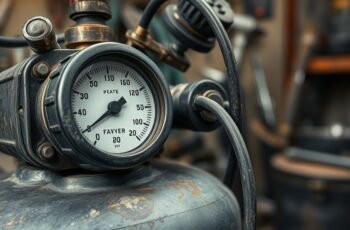
How do we guarantee that our compressor operates within safe and ideal pressure ranges? Continuous monitoring of pressure settings and safety relief valves is essential. First, we regularly verify pressure gauge calibration to ensure accurate readings, preventing over-pressurization. Second, we perform relief valve testing to confirm proper operation, avoiding dangerous pressure buildup. Third, we log pressure data systematically, identifying trends or deviations that could signal issues. Fourth, we adjust pressure controls precisely, maintaining peak efficiency while safeguarding equipment. By rigorously implementing these steps, we minimize risk and extend compressor lifespan. Accurate pressure gauge calibration and relief valve testing are critical, forming the backbone of a reliable safety protocol. Consistent attention to these parameters ensures safe, efficient operation within designated pressure thresholds.
Troubleshooting Common Issues During Maintenance
During maintenance, we often encounter issues that can compromise compressor performance or safety, making prompt troubleshooting essential. Vibration analysis helps identify imbalance, misalignment, or worn bearings by detecting abnormal vibration patterns, allowing targeted interventions. Noise diagnosis is equally critical, as unusual sounds—rattling, squealing, or hissing—often indicate underlying problems like loose components, airflow restrictions, or faulty valves. By systematically analyzing vibration data and noise sources, we can pinpoint specific issues before they escalate, minimizing downtime and preventing damage. Accurate diagnostics require careful observation and measurement, enabling us to develop effective repair strategies. Addressing these common issues promptly guarantees the compressor operates smoothly, efficiently, and safely, reducing the risk of costly failures and extending equipment lifespan.
Creating a Maintenance Schedule to Keep Your Compressor in Top Shape
Establishing a thorough maintenance schedule is essential for guaranteeing your air compressor operates at peak efficiency and reliability. Proper maintenance scheduling directly impacts air compressor efficiency by reducing downtime and preventing costly repairs. To optimize performance, we recommend:
- Conducting daily inspections of filters and lubricants for contamination or wear.
- Performing monthly checks on pressure settings and safety valves.
- Scheduling quarterly lubrication and component alignment to prevent mechanical issues.
- Implementing an annual exhaustive system audit to evaluate overall operational health.
Adhering to these steps helps maintain consistent airflow, minimizes energy consumption, and prolongs equipment lifespan. A disciplined maintenance schedule not only enhances efficiency but also ensures your compressor remains in top shape, reducing unexpected failures and operational costs.
Frequently Asked Questions
How Do I Identify Early Signs of Compressor Wear and Tear?
We identify early signs of compressor wear through vibration analysis, monitoring for unusual vibrations indicating imbalance or misalignment, and checking for oil degradation, which signals lubrication issues. These proactive measures help us prevent costly repairs and guarantee peak performance.
What Safety Precautions Should I Follow During Maintenance?
Safety’s our lighthouse in maintenance; we always wear personal protective equipment and strictly follow lockout procedures. These precautions keep hazards at bay, ensuring our work remains precise and safe, steering clear of accidents that could damage equipment or harm personnel.
Can I Perform Maintenance Tasks Myself or Need Professional Help?
We believe that while DIY tips can handle basic maintenance, complex tasks demand professional assistance to guarantee safety and proper function. Always assess the task’s complexity and adhere to safety protocols before attempting any maintenance yourself.
How Does Ambient Temperature Affect Compressor Maintenance Routines?
A stitch in time saves nine; ambient fluctuations considerably impact compressor maintenance routines. Temperature regulation becomes essential, as extreme variations demand more frequent inspections, ensuring ideal performance and preventing overheating or freezing issues that could lead to costly repairs.
What Are the Environmental Considerations for Compressor Maintenance Disposal?
We follow strict recycling guidelines for compressor parts and fluids, ensuring hazardous waste is properly contained and disposed of, minimizing environmental impact. Adhering to these protocols helps prevent pollution and complies with environmental regulations.
Conclusion
By adhering to a disciplined maintenance routine, we not only extend the lifespan of our two-stage air compressors but also uncover subtle signs of wear that might otherwise go unnoticed. It’s a precise balance—where proactive checks and timely interventions often coincide with operational efficiency and safety. In understanding these patterns, we transform routine upkeep into a strategic advantage, ensuring the compressor’s performance remains optimized, reliable, and cost-effective over its entire service life.