When it comes to spray painting, the quality of your finish heavily depends on the cleanliness of your compressed air. An effective air compressor filter removes oil, water, and particulates that can compromise adhesion and cause defects. Choosing the right filter and maintaining it properly are critical steps for achieving consistent, professional results. Understanding the different types and features of these filters can considerably impact your workflow and final outcome—something worth exploring in greater detail.
Key Takeaways
- Air compressor filters remove oil, water, dirt, and particulates to ensure clean, dry air for high-quality spray painting.
- Different filter types (coalescing, particulate, oil/vapor) work together to optimize air purity.
- Proper installation and regular maintenance prevent contamination and equipment damage.
- High-quality filters improve finish quality, reduce defects, and lower operational costs.
- Consistent filtration enhances spray consistency, surface finish, and environmental sustainability.
How Does an Air Compressor Filter Improve Spray Painting Results
Although an air compressor filter might seem like a minor component, it plays a critical role in enhancing spray painting results by removing contaminants from the compressed air supply. By filtering out oil, water, dirt, and other particulates, it guarantees a cleaner airflow, which directly improves paint adhesion and finish quality. This reduction in airborne impurities minimizes defects such as runs, sags, and uneven coats. From an environmental perspective, high-quality filters reduce the need for rework and waste, mitigating environmental impact. Cost considerations also favor proper filtration, as cleaner air decreases paint consumption and equipment wear, lowering maintenance expenses. Overall, the filter’s efficiency in maintaining air purity not only optimizes spray outcomes but also promotes sustainability and cost-effectiveness in spray painting operations.
Types of Air Compressor Filters for Spray Painting Applications
We focus on coalescing filters for their high efficiency in removing oil aerosols and vapor contaminants, which are critical for achieving a clean spray finish. Particulate removal efficiency varies among filter types, ensuring the elimination of dust, dirt, and moisture that can impair coating quality. Oil and vapor filters are specialized to target residual hydrocarbons, preventing defects caused by oil carryover in the compressed air.
Coalescing Filters Benefits
Coalescing filters offer considerable advantages in spray painting applications by efficiently removing fine oil aerosols, water vapor, and other airborne contaminants from compressed air streams. These filters utilize a dense fiber or membrane matrix to promote the coalescence of tiny liquid droplets into larger ones, which are then separated and drained. The primary benefit lies in their high filtration efficiency, particularly in eliminating microscopic oil vapors that can compromise paint quality. Unlike other filter types, coalescing filters excel at maintaining consistent air purity with minimal pressure drop, ensuring ideal spray performance. Their ability to reliably reduce residual oil content leads to smoother finishes and less contamination, making them essential for achieving professional-grade spray coatings. Overall, coalescing filters greatly enhance air purity and operational efficiency in spray painting setups.
Particulate Removal Efficiency
Understanding the particulate removal efficiency of various air compressor filters is essential for maximizing spray painting operations. Different filters target specific particle sizes, directly impacting paint finish quality and equipment longevity. High-efficiency particulate filters typically capture particles as small as 0.01 microns, improving surface smoothness. The particle size removed influences the filter’s lifespan, with finer filters requiring replacement more frequently due to clogging. Key factors include:
- Filter media density, which determines the smallest particle size captured.
- Micron rating, indicating the maximum particle size retained.
- Maintenance schedule, affecting overall filter lifespan and consistent removal efficiency.
Selecting filters with appropriate particle size ratings ensures maximum removal efficiency, reducing contamination risks and maintaining consistent spray quality over the filter’s operational life.
Oil and Vapor Filters
Have you considered how oil and vapor filters are essential for ensuring contaminant-free air in spray painting operations? These filters utilize advanced filtration technology and specialized filter materials, like activated carbon or coalescing elements, to remove oil vapors and odors effectively. They prevent moisture and hydrocarbon contaminants from reaching the spray gun, which is critical for a flawless finish. The table below compares common filter types:
| Filter Material | Filtration Technology | Primary Use |
|---|---|---|
| Coalescing elements | Coalescence | Oil vapor removal |
| Activated carbon | Adsorption | Odor and hydrocarbon vapor filtration |
| Desiccant | Absorption | Moisture removal in compressed air |
Choosing the right filter depends on the specific contaminants present and desired air quality.
Key Features to Consider When Choosing an Air Compressor Filter
When choosing an air compressor filter for spray painting, it’s vital to assess its key features to guarantee peak performance and air quality. First, consider the filter material, which determines filtration efficiency; high-quality media like cellulose or synthetic fibers effectively trap particles without restricting airflow. Second, evaluate airflow capacity, ensuring the filter supports your compressor’s CFM (cubic feet per minute) requirements to prevent pressure drops that compromise spray quality. Third, assess the filter’s durability and resistance to moisture and chemicals, which prolongs its lifespan and maintains consistent filtration. These features collectively influence the compressor’s ability to deliver clean, dry air essential for high-quality spray finishes. Prioritizing these technical aspects ensures maximum performance and consistent results in your spray painting projects.
Installing and Maintaining Your Spray Painting Air Filter
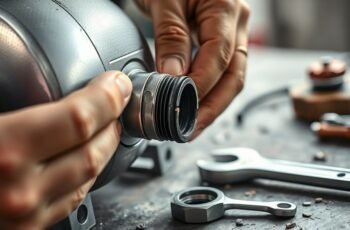
Proper installation of your spray painting air filter requires precise alignment with manufacturer specifications to guarantee ideal sealing and airflow. Regular inspection involves checking for dirt buildup, damage, or bypass issues that could compromise air quality. Consistent maintenance, including timely filter replacements and cleaning, is essential to sustain filtration efficiency and prevent equipment degradation.
Proper Installation Techniques
Installing and maintaining your spray painting air filter correctly is vital to guarantee ideal air quality and equipment performance. Proper installation ensures perfect filter material alignment for efficient airflow regulation and contaminant removal. First, verify that the filter material matches the specifications for your compressor model to prevent airflow restrictions. Second, securely position the filter to avoid leaks or bypasses, ensuring airtight seals around all connections. Third, confirm that airflow regulation components are properly calibrated during installation, maintaining consistent air pressure and flow rate. Accurate placement and secure fittings prevent pressure drops and contamination ingress, maximizing filter efficiency. Consistent attention to these steps ensures your air filter performs reliably, safeguarding your spray painting process from impurities and maintaining the longevity of your equipment.
Regular Filter Inspection
How often should we inspect our spray painting air filters to guarantee peak performance? Regular inspection is essential to assure the filter material remains effective. We recommend establishing an inspection schedule based on usage intensity and environmental conditions, typically every 100 to 200 hours of operation. During each check, we need to evaluate the filter material for dirt accumulation, tears, or clogging that could impede airflow. Visual assessment helps identify when the filter requires cleaning or replacement, preventing contaminants from bypassing the filter media. Maintaining a strict inspection schedule ensures consistent filtration efficiency, reduces compressor strain, and preserves air quality during spray painting. Consistent monitoring also helps extend the lifespan of both the filter and the compressor system.
Effective Maintenance Practices
To guarantee your spray painting air filter functions effectively, we need to focus on correct installation and ongoing maintenance practices. Proper installation ensures ideal airflow and prevents contaminants from bypassing the filter, which directly impacts air filter longevity. Additionally, adhering to a strict filter replacement schedule is essential; neglecting this can lead to increased pressure drops and reduced filtration efficiency.
Key practices include:
- Ensuring the filter is seated correctly without gaps or misalignments, which maintains its sealing integrity.
- Regularly inspecting the filter for dirt buildup or damage, enabling timely replacement before performance declines.
- Documenting replacement dates and adhering to manufacturer-recommended intervals to maximize filter longevity and maintain consistent spray quality.
Troubleshooting Common Issues With Air Compressor Filters
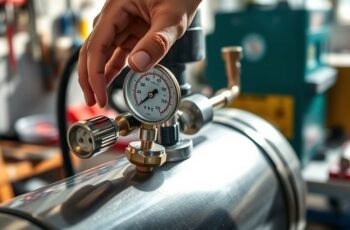
When an air compressor filter begins to malfunction, identifying the root cause is essential to maintaining ideal spray painting performance. Common issues often stem from filter contamination, such as dirt, oil, or debris buildup, which can lead to airflow restriction. This restriction diminishes the efficiency of the compressor, causing inconsistent spray patterns and surface defects. To troubleshoot, inspect the filter for visible contaminants and signs of clogging. If airflow appears restricted despite a clean exterior, the internal filter media may be clogged or deteriorated, necessitating replacement. Regularly monitoring pressure differentials across the filter can also help detect early signs of airflow restriction. Addressing these issues promptly ensures maximum filter performance, prevents damage to downstream equipment, and maintains high-quality spray finishes.
Why Investing in a Quality Filter Saves Time and Enhances Finish Quality
Investing in a high-quality air compressor filter greatly improves the efficiency of spray painting operations by consistently maintaining ideal airflow and filtration levels. Superior filters reduce downtime caused by clogs or contamination, leading to significant cost savings through decreased maintenance and fewer repainting cycles. Additionally, they guarantee a smoother, more uniform finish, minimizing material waste and rework.
Key benefits include:
- Enhanced filtration efficiency, safeguarding paint quality and reducing defects.
- Lower operational costs by extending filter lifespan and reducing energy consumption.
- Reduced environmental impact due to less waste and fewer emissions from equipment strain.
Frequently Asked Questions
How Often Should I Replace My Spray Painting Air Filter?
We suggest replacing your spray painting air filter every 300-500 hours of use or when filter maintenance reveals significant dirt buildup, to guarantee ideal air quality and prevent contamination, maintaining consistent spray finish quality and equipment longevity.
Can a Filter Prevent All Dust and Debris From Contaminating Paint?
Can a filter prevent all dust and debris from contaminating paint? Not entirely. Dust particles can bypass or accumulate in the filter, so regular filter maintenance is essential to minimize contamination, but it can’t guarantee absolute protection.
What’s the Ideal Pressure Level for a Spray Painting Air Filter?
We recommend maintaining an ideal pressure level around 60-70 PSI, ensuring proper filter performance. Regular filter maintenance and precise pressure calibration prevent contaminants and optimize spray quality, ensuring consistent, high-quality finishes in your painting projects.
Are There Eco-Friendly or Reusable Air Filters Available?
Like a boomerang returning, eco-friendly filters and reusable options keep waste minimal. We find these filters sustainable, offering technical efficiency, cost savings, and environmental benefits, making them ideal for eco-conscious spray painting setups.
How Do I Know if My Filter Is Effectively Improving Paint Adhesion?
We check filter maintenance regularly—if paint adhesion improves consistently and surface quality increases, it’s a sign your filter effectively reduces contaminants. Monitoring pressure drops and cleanliness also helps confirm ideal performance and enhanced paint adhesion.
Conclusion
In summary, investing in a high-quality air compressor filter is essential for achieving professional spray painting results. Proper filtration guarantees a clean, consistent airflow, reducing defects and improving finish quality. Regular maintenance and selecting the right filter type tailored to your needs can extend equipment life and save costs over time. Remember, “a stitch in time saves nine,” so prioritize ideal filtration to prevent costly issues and ensure flawless paint applications.