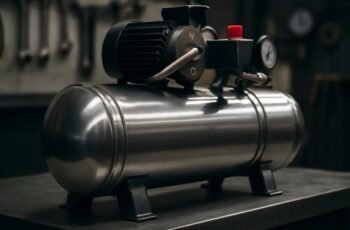
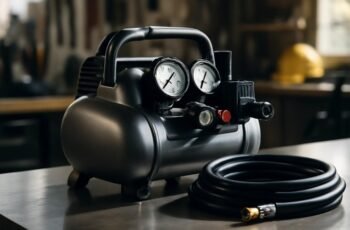
When selecting an air compressor, understanding the fundamental differences between oil-free and oil-lubricated models is essential for optimizing performance and cost-efficiency. Each type offers distinct advantages and limitations that can markedly impact your operation’s quality, maintenance, and environmental footprint. We’ll explore how these factors influence suitability across various applications, helping you make an informed choice that aligns with your specific needs and long-term goals.
Key Takeaways
- Oil-free compressors produce cleaner air with minimal contamination, ideal for industries requiring high air purity such as pharmaceuticals and food processing.
- Oil-lubricated compressors offer greater durability, efficiency, and are suitable for heavy-duty, continuous industrial applications.
- Oil-free units operate quieter, with lower noise levels, making them suitable for noise-sensitive environments.
- Oil-lubricated compressors generally have lower initial costs but higher maintenance expenses due to oil and filter requirements.
- Oil-free compressors have higher upfront prices but lower ongoing maintenance and filtration costs, offering better long-term savings.
What Are the Main Differences Between Oil-Free and Oil-Lubricated Compressors?
While both oil-free and oil-lubricated compressors serve the fundamental purpose of compressing air, they differ considerably in their design and operational mechanisms. Oil-free compressors operate without lubrication, resulting in fewer moving parts and reduced maintenance. This design generally produces lower compressor noise, making them suitable for noise-sensitive environments. In contrast, oil-lubricated models rely on oil to reduce friction, which can generate more noise during operation. Cooling methods also differ; oil-lubricated compressors often use oil-based cooling systems, while oil-free units typically employ air or advanced cooling techniques to manage heat. These differences influence overall efficiency, longevity, and application suitability, with oil-free compressors favored for cleaner, quieter environments, and oil-lubricated models preferred for heavy-duty, continuous use.
How Does Lubrication Impact Compressor Performance and Longevity?
Lubrication plays a crucial role in determining both the performance efficiency and lifespan of air compressors. Advanced lubrication technology reduces metal-to-metal contact, minimizing wear and preventing premature component failure. Proper lubrication guarantees smoother operation, which directly impacts compressor noise levels—oil-lubricated models tend to operate more quietly due to dampened vibrations. Conversely, inadequate or poor-quality lubrication can lead to increased friction, higher operating temperatures, and accelerated component degradation. Over time, this diminishes overall performance and shortens the compressor’s service life. Effective lubrication strategies also help maintain ideal pressure output and energy efficiency, making them indispensable for reliable, long-term operation. Consequently, selecting the right lubrication approach is critical for maximizing compressor performance and durability.
Which Air Quality Considerations Make Oil-Free Compressors a Better Choice?
Oil-free compressors are often preferred in environments where air purity is paramount, as they eliminate the risk of oil contamination in the compressed air stream. This advantage directly impacts air quality, especially in sensitive industries like pharmaceuticals, food processing, and electronics manufacturing. Without oil, the compressor’s filtration systems are simplified, reducing potential points of failure and contamination sources. Enhanced compressor filtration ensures that airborne particles, moisture, and oil vapors are minimized, resulting in cleaner, safer compressed air. This higher quality air minimizes the need for additional filtration downstream, improving overall process efficiency and product integrity. Consequently, oil-free compressors are better suited for applications demanding strict air quality standards, where maintaining contaminant-free air is critical for compliance, safety, and performance.
What Are the Typical Uses and Industries for Oil-Lubricated Compressors?
Oil-lubricated compressors are widely used across industries that require high durability, efficiency, and continuous operation. They are essential in manufacturing, automotive, and power generation sectors, where consistent performance outweighs concerns about oil carryover. The choice of oil quality directly impacts compressor reliability, as high-grade lubricants extend lubricant lifespan and reduce maintenance frequency. These compressors excel in applications demanding high pressure and volume, such as large-scale industrial processes and heavy-duty equipment. The ability to maintain superior lubrication under strenuous conditions ensures long-term operational stability. Additionally, their robustness makes them suitable for environments with continuous, demanding use, where replacing or repairing equipment frequently would be impractical or costly. This strategic application underscores their importance in sectors prioritizing longevity and efficiency.
How Do Maintenance Requirements and Costs Compare for Both Types?
We observe that oil-free compressors generally require less frequent and simpler maintenance due to fewer moving parts and no need for oil changes. In contrast, oil-lubricated units demand regular oil replacements and more extensive inspections, impacting long-term costs. Evaluating these differences helps determine overall maintenance efficiency and economic implications over the equipment’s lifespan.
Maintenance Frequency and Complexity
Because maintenance requirements directly impact operational costs and downtime, understanding the differences between oil-free and oil-lubricated air compressors is essential. Oil-free models generally demand less frequent maintenance, as they lack oil filters and regular lubrication schedules, resulting in lower maintenance complexity. This simplicity can enhance portability features, making these units easier to move and deploy across various sites. In contrast, oil-lubricated compressors require regular oil changes, filter replacements, and more detailed inspections, increasing maintenance frequency and complexity. These additional tasks may lead to higher ongoing costs. Additionally, oil-lubricated units tend to operate quieter due to better noise insulation, but their maintenance routines can be more disruptive. Overall, oil-free compressors offer a streamlined maintenance profile, while oil-lubricated models demand more diligent upkeep.
Long-Term Cost Implications
While both oil-free and oil-lubricated compressors entail ongoing maintenance costs, the long-term financial implications vary considerably due to their differing maintenance requirements. Oil-free units generally demand less maintenance, reducing expenses related to oil changes and filter replacements. However, they may require more frequent servicing of cooling systems to manage heat and minimize air compressor noise. Conversely, oil-lubricated compressors involve ongoing costs for oil, filters, and potential oil leaks, which can increase over time. Additionally, their more complex lubrication systems often lead to higher repair costs. The choice impacts operational expenses, especially in environments sensitive to air quality or noise levels. Ultimately, understanding these long-term costs helps optimize investment and operational efficiency in various industrial applications.
- Lower maintenance needs for oil-free units reduce long-term expenses
- Oil-lubricated compressors incur ongoing oil and filter costs
- Cooling system maintenance affects both types’ operational costs
- Air compressor noise considerations influence maintenance priorities
What Are the Advantages of Oil-Free Compressors for Commercial and Residential Applications?
Oil-free compressors provide significantly cleaner air output, reducing contamination risks in sensitive applications. They also require less maintenance, lowering operational downtime and costs over time. Additionally, their design promotes cost-effective operation, making them a practical choice for both commercial and residential settings.
Cleaner Air Quality
Have you considered how air quality impacts the performance and safety of your operations? Oil-free compressors provide cleaner air by eliminating oil contamination, which can compromise product quality and health standards. They produce consistent airflow patterns, reducing the risk of particulate and oil vapor infiltration into sensitive applications. Additionally, oil-free technology enhances noise reduction, creating a safer, more comfortable environment. The absence of oil residues minimizes the need for filtration and cleanup, ensuring higher purity and reducing potential equipment failures caused by oil residues. This makes them ideal for industries like food processing, pharmaceuticals, and electronics, where air purity is critical. Overall, the cleaner air quality from oil-free compressors supports compliance, operational efficiency, and safety for both commercial and residential applications.
Lower Maintenance Needs
The reduced risk of oil contamination in oil-free compressors translates into lower maintenance requirements, making them attractive options for both commercial and residential settings. Without the need for oil changes, these compressors eliminate routine tasks like oil filter replacements and lubrication checks, reducing downtime and operational costs. Additionally, their design results in quieter operation, lowering air compressor noise levels—an essential factor in noise-sensitive environments. The absence of oil also enhances compressor portability, as users face fewer concerns about oil spillage or leaks during transportation or installation. Overall, these features lead to simplified upkeep, increased reliability, and ease of use, making oil-free compressors a practical and efficient choice for varied applications where maintenance efficiency is paramount.
Cost-Effective Operation
Because they eliminate the need for oil-related maintenance, oil-free compressors offer significant cost savings over their oil-lubricated counterparts. They typically deliver enhanced energy efficiency, reducing operational costs over time. Additionally, their design minimizes noise, making them ideal for residential settings and noise-sensitive environments. The absence of oil also decreases the risk of contamination, lowering filtration and cleaning expenses. These factors contribute to more predictable, lower total cost of ownership.
- Reduced maintenance costs due to no oil changes
- Improved energy efficiency lowers electricity bills
- Noise reduction enhances suitability for residential use
- Less contamination risk diminishes filtration needs
When Should You Choose an Oil-Lubricated Compressor for Heavy-Duty Tasks?
When should you opt for an oil-lubricated compressor for heavy-duty tasks? Typically, these compressors excel in scenarios demanding sustained performance under high stress. They handle higher workloads more efficiently, with better heat dissipation and durability. However, considerations include increased oil consumption, which necessitates regular maintenance and oil changes, and elevated noise levels due to moving parts and lubrication. If your operations involve continuous, demanding tasks where reliability and longevity outweigh initial costs, an oil-lubricated unit is advantageous. The benefits of reduced wear and sustained performance often justify the ongoing maintenance, especially in industrial environments. Overall, when heavy-duty performance and equipment lifespan are priorities, selecting an oil-lubricated compressor aligns with operational efficiency and long-term cost-effectiveness.
How Do Initial Purchase Prices and Long-Term Costs Differ?
Initial purchase prices for oil-free compressors tend to be higher due to specialized components, whereas oil-lubricated models usually cost less upfront. However, maintenance expenses for oil-lubricated units are often higher over their lifespan because of oil changes and filter replacements, while oil-free systems typically require less ongoing upkeep. These cost differences markedly impact operational expenses, making a thorough analysis essential for informed decision-making.
Upfront Cost Comparison
The upfront costs of oil-free and oil-lubricated air compressors can vary considerably, influencing the overall investment decision. Oil-free models typically have a higher initial purchase price due to specialized components that guarantee energy efficiency and noise reduction without lubrication. Conversely, oil-lubricated compressors often cost less upfront but may incur higher long-term expenses. Factors affecting costs include:
- Initial purchase price differences driven by design complexity
- Energy efficiency features impacting operational startup costs
- Noise reduction technology influencing equipment price
- Long-term savings potential versus initial investment
While oil-free compressors may require a higher initial outlay, their enhanced energy efficiency and quieter operation can justify the expense, especially in noise-sensitive environments. These upfront considerations are essential in selecting the best compressor type for specific applications.
Maintenance Expenses Variance
While initial purchase prices set the stage for overall investment, maintenance expenses over the compressor’s lifespan substantially impact total ownership costs. Oil-free compressors typically require less maintenance due to fewer moving parts, leading to lower ongoing costs. Their design promotes higher energy efficiency, reducing operational power consumption and associated expenses. Additionally, oil-free units often produce less noise, decreasing the need for soundproofing or noise mitigation measures, which further cuts long-term costs. Conversely, oil-lubricated compressors demand regular oil changes, filter replacements, and potential downtime for lubrication system repairs—factors that inflate maintenance budgets. Over time, these expenses accumulate, making oil-free models potentially more cost-effective despite higher initial prices. Consequently, understanding maintenance expense variance helps in aligning long-term financial planning with performance benefits.
Operational Cost Differences
Although oil-free compressors often have a higher upfront purchase price, their long-term operational costs tend to be lower compared to oil-lubricated models. This is primarily due to their superior energy efficiency, which reduces electricity expenses over time. Additionally, oil-free units typically operate with lower noise levels, minimizing the need for soundproofing or additional noise mitigation measures. They also eliminate costs associated with oil filtering, disposal, and maintenance of lubrication systems. Conversely, oil-lubricated compressors may have lower initial costs but incur higher ongoing expenses due to oil replacement and increased energy consumption. Overall, when evaluating operational costs, oil-free compressors often prove more economical in the long run, especially in applications where energy efficiency and noise reduction are critical.
What Factors Should You Consider When Selecting the Right Compressor for Your Needs?
Selecting the right air compressor involves analyzing multiple technical and operational factors to guarantee peak performance and cost-efficiency. Key considerations include energy efficiency, noise reduction, and suitability for your application’s demands. We recommend evaluating compressor capacity relative to your workload, ensuring it matches peak and average demands. Noise levels impact work environment comfort, while energy consumption affects operational costs. Use the table below to compare critical features:
| Factor | Importance | Considerations |
|---|---|---|
| Energy Efficiency | Reduces operational costs | Look for models with high efficiency ratings |
| Noise Reduction | Improves workplace conditions | Opt for quieter units if noise is a concern |
| Capacity & Size | Ensures system reliability | Match compressor volume to demand |
Which Type Offers Better Sustainability and Environmental Benefits?
Oil-free compressors generally offer superior sustainability and environmental benefits compared to oil-lubricated models. They eliminate the risk of oil contamination in the compressed air, reducing environmental hazards and ensuring cleaner operation. These compressors often demonstrate better energy efficiency because of reduced maintenance requirements and optimized design, leading to lower operational costs and a smaller carbon footprint. Additionally, oil-free units tend to produce less noise, contributing to noise reduction and a safer, more comfortable work environment.
- Reduced risk of oil spills and contamination
- Lower energy consumption due to simpler design
- Minimized emissions and waste
- Enhanced noise control for eco-conscious workplaces
Frequently Asked Questions
Are Oil-Free Compressors Quieter Than Oil-Lubricated Ones?
Oil-free compressors are generally quieter due to fewer moving parts and minimal lubrication noise, resulting in lower noise levels and reduced maintenance frequency. We find them ideal where quieter operation and easier upkeep are priorities, enhancing efficiency and safety.
Can Oil-Free Compressors Handle High-Temperature Environments?
We believe oil-free compressors excel in high-temperature environments, showcasing impressive temperature resilience and material durability. Their design minimizes thermal degradation, ensuring consistent performance without lubrication-related concerns, making them suitable for demanding, heat-intensive applications.
How Do Oil-Free Compressors Perform in Continuous Operation?
We find oil-free compressors excel in continuous operation due to lower maintenance requirements, reducing downtime and operating costs. This enhances cost efficiency, making them ideal for long-term use despite potentially higher initial investments.
Are There Specific Certifications Required for Oil-Free Compressors?
Consider certifications as the safety net beneath a tightrope walker; oil-free compressors must meet specific standards like ISO 8573-1 for air purity and comply with environment regulations, ensuring safety, efficiency, and environmental responsibility in demanding industrial applications.
What Are the Typical Lifespan Differences Between Both Compressor Types?
We find oil-free compressors generally have shorter lifespans due to increased wear, requiring more frequent maintenance, but they offer better cost efficiency over time. Oil-lubricated units, while pricier upfront, tend to last longer with less maintenance.
Conclusion
In summary, choosing between oil-free and oil-lubricated compressors is like selecting the right tool for a precise job—each has its own strengths and nuances. By analyzing your application’s demands, air quality needs, and long-term operational costs, we can navigate this technical landscape with confidence. Ultimately, the ideal choice aligns with your specific performance requirements and sustainability goals, ensuring your compressed air system operates as a finely tuned engine—delivering efficiency and reliability in harmony.