Did you know that the material of a portable air compressor tank can substantially impact its performance and longevity? With options ranging from steel to aluminum and composites, each offers distinct advantages and trade-offs that directly influence usability, durability, and maintenance. Understanding these differences is essential for selecting the right tank for specific applications. As we explore these options, you’ll discover how material choice aligns with your workload, environment, and mobility requirements—key factors in optimizing compressor efficiency.
Key Takeaways
- Choose from steel, aluminum, or composite tanks based on durability, weight, and corrosion resistance needs.
- Consider tank size (6-10 gallons for portability, 20-30 gallons for heavy-duty use) to match workload demands.
- Evaluate material quality and construction to ensure long-term reliability and safety.
- Prioritize lightweight and handle design for easier transport and maneuverability.
- Assess noise levels and sound-dampening features for suitable operation in noise-sensitive environments.
What Are Portable Air Compressor Tanks and How Do They Work?
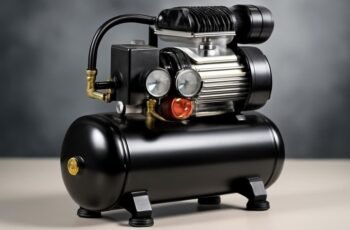
Portable air compressor tanks are self-contained units designed to store compressed air for various applications, offering mobility and convenience. Their portable tank design integrates a pressure vessel with an internal compressor or external source, enabling efficient air storage and supply. These tanks are engineered to minimize air compressor noise, often incorporating sound-dampening features to reduce operational sound levels, which is essential in noise-sensitive environments. The design focuses on optimizing airflow, pressure regulation, and durability while maintaining portability. By efficiently managing compressed air, these tanks provide consistent power for tools and equipment, reducing strain on the compressor unit itself. Their compact, lightweight construction ensures ease of transportation without sacrificing performance, making them ideal for on-site tasks and applications requiring mobility.
Different Types of Portable Air Compressor Tanks Explained
There are several types of portable air compressor tanks, each designed to meet specific operational needs and preferences. These tanks vary primarily in material composition and capacity, impacting air compressor maintenance requirements and durability. Steel tanks are the most common, offering strength and longevity, but they require regular inspection for rust and corrosion. Aluminum tanks, being lighter and more resistant to corrosion, simplify maintenance and are suited for portable applications. Composite tanks, made from reinforced plastics, provide lightweight options and resistance to corrosion, but may have limitations in high-pressure environments. Understanding tank material selection is essential for optimizing air compressor performance, ensuring safety, and minimizing maintenance issues. Different tank types cater to diverse operational demands, balancing weight, durability, and maintenance needs.
Factors to Consider When Choosing a Portable Air Compressor Tank
When selecting a portable air compressor tank, it’s essential to evaluate several key factors that directly influence performance, durability, and suitability for specific tasks. Energy efficiency is critical; choosing a tank with enhanced compression and minimal airflow loss reduces power consumption and operational costs. Noise levels also notably impact usability, especially in confined or noise-sensitive environments; quieter models improve safety and comfort. Material construction affects both durability and noise dampening, with steel tanks generally offering better longevity and sound absorption. Additionally, consider the tank’s size and pressure ratings to match your workload, ensuring the compressor can deliver consistent airflow without overworking. By analyzing these factors, we can select a tank that balances efficiency, noise suppression, and durability for ideal performance.
Best Small Portable Air Compressor Tanks for Home Use
For home use, selecting the best small air compressor tank involves balancing portability with sufficient capacity to handle typical tasks like inflating tires, powering pneumatic tools, or cleaning surfaces. Compact tanks, usually between 1-6 gallons, offer ease of transport without sacrificing performance. When choosing, consider features like integrated pressure gauges and compatible air compressor accessories to optimize functionality. Maintenance tips include regularly draining moisture to prevent corrosion and inspecting safety valves for proper operation. A well-maintained small tank ensures consistent performance and prolongs lifespan. These units excel in versatility, but understanding their capacity limits is essential for efficient use. By focusing on these technical aspects, homeowners can select a small compressor that meets their needs without unnecessary bulk or complexity.
Heavy-Duty Portable Air Compressor Tanks for Professional Tasks
Heavy-duty portable air compressor tanks are essential tools for professionals who require reliable, high-capacity performance in demanding environments. Designed for industrial applications, these tanks deliver consistent airflow, supporting heavy-duty tasks like power tool operation, spray painting, and pneumatic machinery. Their robust construction ensures durability under continuous use, often with features like reinforced steel cylinders and high-pressure valves. Proper maintenance procedures are critical to maintain peak performance and safety; regular inspection for corrosion, pressure testing, and valve checks prevent failures. These tanks are engineered to handle extended operational periods, making them indispensable for on-site repair, manufacturing, and construction tasks. Overall, heavy-duty portable air compressor tanks combine resilience with precision, meeting the rigorous demands of professional applications efficiently.
Comparing Vertical vs. Horizontal Portable Air Tanks
When comparing vertical and horizontal portable air tanks, considerations of space efficiency and ease of transport are critical, as each orientation offers distinct advantages. Vertical tanks typically occupy less floor space and are easier to carry or lift, while horizontal tanks provide greater stability during operation and placement. Evaluating stability and placement flexibility helps determine which orientation best suits specific work environments and mobility needs.
Space and Portability
Have you considered how the orientation of a portable air tank impacts its space requirements and ease of transport? Vertical tanks typically occupy less floor space and are easier to maneuver in tight environments, making them ideal for confined workspaces. Horizontal tanks, however, often provide a broader base, enhancing stability and allowing for creative design options that improve aesthetic appeal. When evaluating portability, vertical tanks are generally lighter and easier to lift or carry, while horizontal tanks may require more effort to transport due to their shape and size. Key considerations include:
- Space efficiency in storage and transport
- Impact on vehicle compatibility
- Design flexibility for aesthetic appeal
Understanding these factors helps optimize both the functional and visual aspects of portable air tanks.
Stability and Placement
Vertical and horizontal portable air tanks differ markedly in their stability and placement considerations. Vertical tanks often offer superior stability due to a lower center of gravity, reducing stability concerns during operation or transport. They are well-suited for fixed setups where space is limited, and their upright orientation facilitates easier access for maintenance and connections. Conversely, horizontal tanks present a broader footprint, which can enhance stability in stationary applications but may raise concerns on uneven surfaces or during movement. Placement strategies for horizontal tanks involve ensuring a level base to prevent tipping. Overall, selecting between vertical and horizontal tanks depends on the specific stability concerns and available space, with both orientations requiring careful assessment to optimize safety and functionality.
How to Maintain and Care for Your Portable Air Compressor Tank
Regular maintenance is crucial to guarantee the longevity and peak performance of your portable air compressor tank. To achieve this, focus on essential tasks such as cleaning filters, checking for leaks, and inspecting pressure relief valves. Regularly cleaning filters prevents dust and debris buildup that could impair airflow or cause overheating. Checking for leaks involves thoroughly inspecting hose connections and tank fittings to ensure airtight seals, preventing pressure loss and inefficiency. Additionally, monitoring pressure relief valves ensures safety during operation, avoiding over-pressurization.
- Clean filters periodically to prevent blockages and maintain airflow efficiency
- Inspect for leaks at all connections and fittings to prevent pressure loss
- Test pressure relief valves to ensure proper function and safety
Top Features to Look for in a Portable Air Compressor Tank
When selecting a portable air compressor tank, evaluating durability and material quality is essential to ensure long-term reliability under varying conditions. Portability and size directly impact ease of transport and workspace integration, making them critical factors in practical use. By focusing on these key features, users can optimize performance and convenience for their specific applications.
Durability and Material Quality
Because durability directly impacts the lifespan and reliability of a portable air compressor tank, selecting a unit made from high-quality materials is essential. Material strength ensures the tank withstands internal pressure without deformation, while corrosion resistance prolongs its operational life, especially in humid or corrosive environments. Key features to consider include:
- Use of high-grade steel or aluminum alloys for superior material strength
- Coatings or treatments that enhance corrosion resistance
- Construction that minimizes weak points and stress concentrations
A tank crafted from robust, corrosion-resistant materials maintains structural integrity over time, reducing maintenance costs and preventing failures. These qualities are critical to ensuring consistent performance and safety during operation, making material quality a top priority in your selection process.
Portability and Size
What makes a portable air compressor tank truly easy to transport and convenient to use? Primarily, size and weight determine mobility, but these factors also impact air quality and noise levels during operation. Compact tanks reduce air volume, enhancing portability, while lighter materials facilitate handling. Noise levels often correlate with tank size and insulation; smaller, well-insulated tanks tend to operate quieter.
| Feature | Impact on Portability | Effect on Air Quality & Noise |
|---|---|---|
| Size | Higher portability | Smaller tanks may produce less noise |
| Weight | Easier to carry | Lighter tanks may influence air quality |
| Handle Design | Simplifies transport | Affects noise insulation |
| Insulation | Minimal impact | Better insulation reduces noise |
Which Size Portable Air Compressor Tank Fits Your Needs?
Selecting the appropriate size of a portable air compressor tank hinges on understanding your specific application requirements and usage patterns. The ideal tank size directly influences air compressor capacity, ensuring consistent performance without frequent cycling. Larger tanks provide higher volume reserves, suitable for continuous or heavy-duty tasks, while smaller tanks are more portable and suitable for light, intermittent use. When choosing, consider the tank material, as it affects durability and weight—steel tanks are robust but heavier, whereas aluminum tanks are lighter but may be less durable.
- For frequent, high-demand tasks, opt for larger tanks (20-30 gallons)
- For portability and occasional use, smaller tanks (6-10 gallons) suffice
- Always assess your air compressor capacity needs against tank material and size to optimize efficiency
Tips for Using and Safety Precautions With Portable Air Compressor Tanks
Ensuring safe operation of portable air compressor tanks requires strict adherence to proper pressure settings, regular equipment inspections, and secure storage practices. Proper pressure regulation prevents equipment failure and safety hazards, while routine checks identify potential issues before they escalate. Implementing these precautions effectively minimizes risks and maintains peak performance.
Proper Pressure Settings
Maintaining proper pressure settings is essential for both the safety and efficiency of portable air compressor tanks. Proper pressure regulation ensures components operate within safe limits, preventing over-inflation and potential tank failure. When using the compressor for tire inflation, adhering to manufacturer-recommended PSI is crucial to avoid damage and guarantee peak performance.
Key considerations include:
- Monitoring pressure gauges regularly to prevent over-pressurization
- Adjusting compressor output to match specific tire or equipment requirements
- Using pressure relief valves as a safety measure during pressure regulation
Regular Equipment Checks
Regular equipment checks are critical to guaranteeing the safe and efficient operation of portable air compressor tanks. Routine inspections prevent failures and optimize performance by addressing key components like air filters and lubrication systems. Air filter maintenance involves inspecting and replacing filters to prevent dirt ingress, which can compromise compression efficiency. Compressor lubrication requires checking oil levels and quality to reduce wear and overheating.
| Inspection Focus | Action |
|---|---|
| Air filter condition | Clean or replace filters regularly |
| Lubrication system | Check oil levels, top up or change as needed |
| Pressure gauges | Verify accurate readings |
| Safety valves | Ensure proper operation and no leaks |
| Hoses and fittings | Inspect for cracks, leaks, or damage |
Safe Storage Practices
Proper storage of portable air compressor tanks is vital to prevent damage, guarantee safety, and extend equipment lifespan. Indoor storage is recommended to shield tanks from environmental factors that can cause corrosion or deterioration. Maintaining appropriate temperature control is essential; excessive heat can increase internal pressure and risk failure, while cold temperatures may reduce pressure efficiency. When storing, make sure tanks are placed on stable surfaces, away from direct sunlight, and in well-ventilated areas. Regularly inspect for signs of corrosion or leaks. Additionally, always depressurize tanks before storage and avoid stacking or placing heavy objects on them. Key practices include:
- Store indoors in temperature-controlled environments
- Conduct periodic inspections for safety and integrity
- Make certain tanks are fully depressurized and clean before storage
Frequently Asked Questions
What Is the Typical Lifespan of a Portable Air Compressor Tank?
A portable air compressor tank typically lasts 10 to 15 years, depending on tank material and lifespan factors like corrosion resistance and maintenance. Regular inspections and proper care can extend the lifespan, ensuring safety and peak performance.
Are Portable Air Compressor Tanks Suitable for Outdoor Use?
Like knights in shining armor, our portable air compressor tanks stand resilient against outdoor elements, thanks to superior weather resistance and outdoor durability. They’re designed to perform reliably in various weather conditions, ensuring consistent operation outside.
How Loud Are Portable Air Compressor Tanks During Operation?
Portable air compressor tanks generate noise levels ranging from 70 to 90 decibels, depending on design and power. Sound insulation features can substantially reduce operational noise, making them more suitable for quieter environments.
Can Portable Tanks Be Used With Different Types of Air Tools?
Think of our portable tanks as the Swiss Army knives of air systems; they support versatile tool compatibility, ensuring air tool efficiency across various applications, making them essential for maximizing performance and adaptability in diverse work environments.
What Are the Common Signs of a Failing or Damaged Tank?
We notice failing tanks often show corrosion, which weakens the structure, and pressure loss, indicating leaks or internal issues. Regular inspections help detect these signs early, ensuring safety and preventing potential tank failure.
Conclusion
In brief, selecting the right portable air compressor tank depends on understanding your specific workload and mobility needs. For instance, a professional contractor might opt for a durable steel tank for heavy-duty tasks, while a hobbyist could prefer a lightweight aluminum model for occasional use. Analyzing factors like size, material, and safety features guarantees peak performance and longevity. Making an informed choice ultimately enhances efficiency, safety, and convenience across various applications.