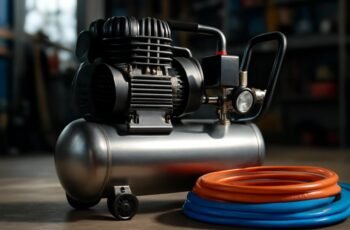
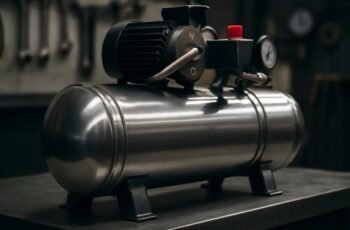
When selecting a pancake air compressor, it is essential to understand its core features, performance metrics, and intended applications. We’ll guide you through the critical specifications, from tank size to pressure output, helping you identify the most suitable model for your needs. Making an informed choice requires weighing factors like portability, capacity, and noise levels, which can substantially impact your workflow. Let’s explore what sets these compressors apart and how to choose the right one for your tasks.
Key Takeaways
- Determine the appropriate tank size (1-2 gallons for portability, 7+ gallons for longer runtime) based on your application needs.
- Check the CFM and PSI ratings to ensure compatibility with your pneumatic tools and tasks.
- Consider noise levels and user comfort, especially for enclosed workspace usage.
- Evaluate motor power and strength to match workload demands and ensure reliable startup.
- Balance budget and features by comparing build quality, durability, and safety features within your price range.
What Is a Pancake Air Compressor and How Does It Work?
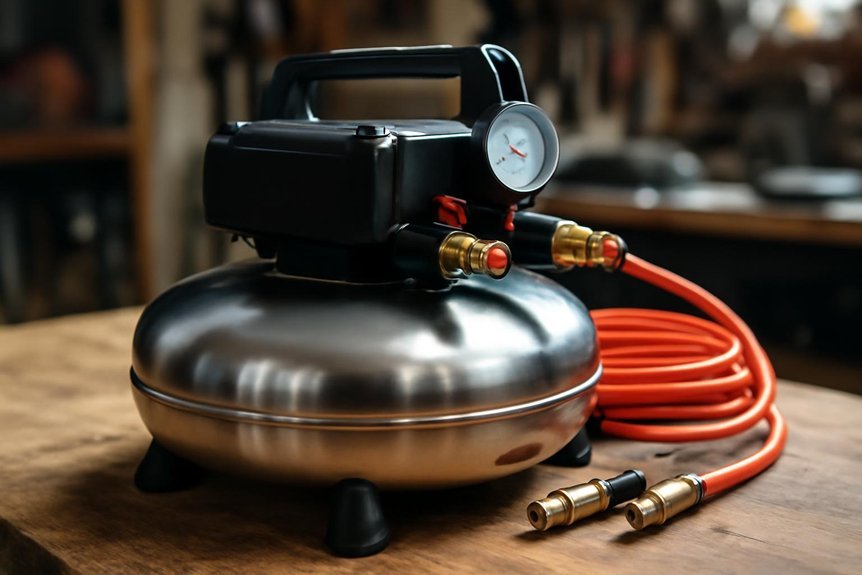
Have you ever wondered what exactly makes a pancake air compressor different from other types? Its flat, compact design allows for easy storage and portability, but what truly distinguishes it is its internal mechanism. These compressors operate using a single-stage pump that compresses air into a small, horizontal tank, making them suitable for light to medium tasks. When comparing prices, pancake models tend to be affordable, offering a good balance of cost and performance. Noise reduction is another key feature; their low-profile design and enclosed motor help minimize operational noise, making them suitable for indoor use. Overall, their simplicity in design and efficient noise control make pancake air compressors ideal for many small-scale applications.
Key Features to Consider When Choosing a Pancake Air Compressor
When selecting a pancake air compressor, we focus on tank size and capacity to ensure it meets your workload demands, while power and motor strength determine its efficiency. Portability and weight are essential for ease of transport and setup in different work environments. Evaluating these key features helps you choose a model optimized for performance and convenience.
Tank Size and Capacity
Why does tank size matter when selecting a pancake air compressor? It directly affects runtime and efficiency. Larger tanks hold more compressed air, reducing the frequency of compressor cycles and ensuring consistent pressure for demanding tasks. Smaller tanks are portable and suitable for light-duty applications but may require more frequent restarts. Consider your workload when choosing capacity.
| Tank Size (Gallons) | Typical Use | Pros |
|---|---|---|
| 1-2 gallons | Small projects | Portable, lightweight |
| 3-6 gallons | Medium tasks | Balance of size and capacity |
| 7+ gallons | Heavy-duty | Longer runtime, less cycling |
Power and Motor Strength
What determines a pancake air compressor’s ability to handle demanding tasks effectively is its power and motor strength. The power, measured in horsepower (HP), directly influences the compressor’s capacity to generate high airflow rates critical for continuous operation. Motor strength, typically rated in amps or horsepower, reflects the motor’s ability to sustain operational loads without overheating or stalling. A higher motor strength ensures reliable startup under load and maintains consistent pressure output during intensive use. Precise motor specifications also impact the compressor’s efficiency and longevity. When selecting a pancake air compressor, consider the balance between power and motor strength to match your specific workload requirements. Adequate power and robust motor strength are essential for optimal performance and durability in demanding applications.
Portability and Weight
How important is portability and weight when selecting a pancake air compressor? These factors directly impact ease of transportation and setup. A lightweight model, typically under 30 pounds, is easier to carry or move with minimal effort. Tiny wheels on some units facilitate mobility, especially on flat surfaces, reducing strain during relocation. Additionally, portability influences job site efficiency, allowing quick repositioning. Silent operation is often linked with compact designs, which tend to be lighter and quieter, minimizing noise pollution. For professionals or DIY users requiring frequent movement, a balance between weight and stability is essential. Ultimately, prioritizing models with manageable weight, tiny wheels, and noise reduction features ensures maximum convenience without sacrificing performance.
How Much Air Pressure and Capacity Do You Need?
Determining the appropriate air pressure and tank capacity depends on your specific application requirements. We evaluate ideal pressure levels for different tasks and match them with suitable tank sizes to ensure optimal performance. Understanding these factors helps you select a compressor that balances power and efficiency effectively.
Ideal Pressure Levels
When selecting an air compressor, understanding the appropriate pressure levels and capacity for your tasks is essential. The ideal pressure varies depending on the application, but most pneumatic tools operate efficiently between 90 and 120 PSI. The max PSI indicates the compressor’s maximum pressure capacity, which should comfortably exceed the required operating pressure of your tools to ensure safety and longevity. For example, if your tools demand 100 PSI, choosing a compressor with a max PSI of 125 or higher provides a safe margin. Maintaining the correct ideal pressure ensures optimal performance, prevents tool damage, and reduces compressor wear. Always verify that the compressor’s pressure ratings align with your specific requirements for consistent, reliable operation.
Suitable Tank Sizes
Choosing the right tank size for your air compressor depends on matching its capacity to your specific airflow demands. A larger tank provides a ripple effect, stabilizing air pressure and reducing compressor cycling, which improves efficiency. For light-duty tasks, a tank around 1 to 6 gallons generally suffices, while heavier applications may require 6 to 20 gallons or more. Capacity directly impacts how long you can operate tools without interruption. Additionally, tank size influences the color options available, as manufacturers often design models with different finishes for specific capacities. Precise sizing prevents pressure drops and ensures consistent performance. Understanding your airflow requirements and selecting an appropriately sized tank minimizes pressure fluctuations and enhances overall compressor effectiveness.
Application Requirements
How much air pressure and capacity do you need for your tools and applications? To determine this, review the CFM (cubic feet per minute) and PSI (pounds per square inch) requirements. Most pneumatic tools specify these metrics, which dictate compressor performance.
| Tool Type | Required PSI | Required CFM |
|---|---|---|
| Spray gun | 30-50 PSI | 5-10 CFM |
| Nail gun | 70-120 PSI | 1-2 CFM |
| Impact wrench | 90-120 PSI | 4-6 CFM |
Matching your compressor’s PSI and CFM ratings ensures optimal operation. Underpowered units cause delays, while overspec units increase energy consumption without added benefit.
Best Uses for Pancake Air Compressors: DIY, Professional, and Heavy-Duty Tasks
Are pancake air compressors versatile enough to meet a range of project demands? Absolutely. Their portability and quick recovery times make them suitable for various tasks across DIY, professional, and heavy-duty applications. For ideas about pancake air compressors, they excel in tasks like tire inflation, brad nailer operation, and spray painting. Their compact design makes them ideal for small workshops or on-site jobs, but they also serve as reliable tools for more demanding tasks when paired with appropriate accessories. Alternative uses include powering impact wrenches or blow guns, demonstrating their adaptability. These compressors are best for projects requiring short bursts of high-pressure air, rather than continuous operation. Overall, their versatility supports a broad spectrum of uses, from light repairs to demanding professional work.
Comparing Top Pancake Air Compressors: Pros, Cons, and Price Ranges
When evaluating pancake air compressors, it’s important to compare their key features, advantages, and limitations to identify models that best fit different project needs and budgets. Comparison considerations include tank size, CFM ratings, motor power, and noise level. Larger tanks provide longer operation times, while higher CFM ratings support more demanding tools. Noise level is crucial for reducing workspace disturbance, especially in enclosed environments. Prices vary from budget-friendly models around $100 to premium units exceeding $300, often reflecting build quality, durability, and additional features. Pros and cons differ: lower-priced models may lack longevity or power, whereas higher-end options deliver better performance but at increased cost. A thorough comparison ensures selecting a compressor aligned with your specific requirements and budget constraints.
Tips for Maintaining Your Pancake Air Compressor and Extending Its Lifespan
Maintaining your pancake air compressor regularly is essential to ensure optimal performance and extend its operational lifespan. Proper upkeep preserves key badging features, such as safety valves and pressure gauges, preventing potential malfunctions. Regularly check and drain the tank to prevent moisture buildup that can corrode internal components. Clean or replace air filters to maintain airflow efficiency, which influences compressor longevity. Additionally, adherence to manufacturer maintenance schedules can impact warranty implications; neglect may void coverage.
Regular maintenance ensures your pancake air compressor runs efficiently and lasts longer.
- Inspect and tighten hose connections to prevent leaks and maintain consistent pressure
- Lubricate moving parts as specified by the manufacturer to reduce wear
- Monitor pressure levels and perform routine safety checks to ensure compliance with safety standards
Frequently Asked Questions
How Loud Are Pancake Air Compressors During Operation?
We find pancake air compressors offer relatively quiet operation, typically producing 70-85 decibels. Noise reduction features, like mufflers and insulated motors, help minimize sound levels, making them suitable for noise-sensitive environments.
Can Pancake Air Compressors Run Multiple Tools Simultaneously?
Pancake air compressors generally can’t run multiple tools simultaneously due to their limited CFM output, but models with advanced efficiency features and higher CFM ratings may support multiple tools for short periods, enhancing versatility and productivity.
What Are Common Safety Precautions When Using a Pancake Air Compressor?
We prioritize safety training and PPE requirements, ensuring users wear eye protection, hearing protection, and gloves. Always inspect for damage, operate within pressure limits, and maintain proper ventilation to prevent accidents and ensure safe compressor operation.
How Long Does a Typical Pancake Air Compressor Last?
Ironically, we often expect our pancake air compressors to last forever, but with proper maintenance schedule and realistic expectations, their life expectancy typically spans 3 to 8 years, depending on usage and care.
Are There Eco-Friendly or Energy-Efficient Pancake Air Compressors Available?
Yes, there are eco-friendly, energy-efficient pancake air compressors designed with low power consumption and reduced emissions, making them ideal for sustainable operation. These models optimize energy use while maintaining reliable performance for various pneumatic tasks.
Conclusion
In conclusion, selecting the right pancake air compressor is like choosing the perfect tool for a precise task—every feature from tank size to CFM matters. When we match the compressor’s specifications with our specific needs, we guarantee smooth, reliable operation that stands the test of time. With proper maintenance, this compact powerhouse becomes an essential part of our workshop, transforming simple tasks into seamless, efficient work, and empowering us to achieve professional results every time.