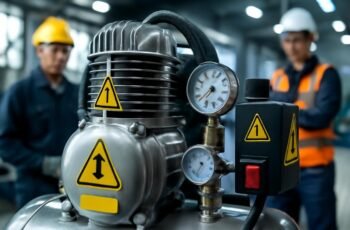
Operating a stationary air compressor safely requires your attention to detail and adherence to proper guidelines. From inspecting equipment regularly to using the right protective gear, each step plays a role in preventing accidents. Understanding the main risks and knowing how to respond in emergencies can make the difference between a safe work environment and a costly injury. To ensure you’re prepared, it’s important to follow these essential safety practices closely.
What Are the Main Safety Risks of Stationary Air Compressors?
Stationary air compressors can be incredibly useful, but they also pose several safety risks if not properly managed. One major hazard is the risk of accidental injury from moving parts or high-pressure components, which can cause cuts or crushing injuries.
Over-pressurization is another danger, potentially leading to tank rupture or explosions if safety valves fail. Additionally, leaks of compressed air or oil can cause slips or respiratory issues.
Electrical malfunctions pose risks of shocks or fires, especially if wiring isn’t maintained correctly. Noise is also a concern, as prolonged exposure can damage your hearing.
Lastly, improper handling or neglecting safety protocols increases the chance of accidents, emphasizing the importance of understanding these risks and managing them properly to keep everyone safe around stationary air compressors.
How Can You Properly Inspect and Maintain Your Air Compressor?
Regular inspection and maintenance are essential to keep your air compressor operating safely and efficiently. Start by checking for leaks in hoses, fittings, and connections, and repair any you find.
Keep the compressor clean and free of dust and debris, especially around vents and cooling fins.
Regularly inspect the belts for wear or cracks and replace them if needed.
Check oil levels daily if your compressor uses oil, and change the oil according to the manufacturer’s schedule.
Drain moisture from tanks and lines to prevent corrosion.
Examine safety valves to ensure they function correctly, and test pressure gauges for accuracy.
Following these steps helps prevent unexpected breakdowns, extends your compressor’s lifespan, and maintains safe operation.
What PPE Do You Need When Operating a Stationary Air Compressor?
When operating an air compressor, wearing the right personal protective equipment (PPE) is vital for your safety. You should always wear safety goggles or glasses to protect your eyes from flying debris and compressed air sprays.
Hearing protection, like earplugs or earmuffs, is essential to prevent hearing damage from loud compressor noises.
Gloves can shield your hands from hot surfaces and sharp edges, but ensure they’re suitable for handling compressed air equipment.
Additionally, wearing sturdy, non-slip footwear keeps you stable and protected from falling objects.
If there’s a risk of dust or fumes, don’t forget to use a dust mask or respirator.
Proper PPE minimizes injury risks, helping you operate the compressor safely and confidently.
What Are Best Practices for Safe Operation of Stationary Air Compressors?
To ensure safe operation of your air compressor, it’s essential to follow established best practices consistently. Always perform regular inspections before starting your equipment, checking for leaks, loose fittings, or damaged hoses.
Keep the compressor in a clean, dry, well-ventilated area to prevent overheating and ensure proper airflow. Use the correct pressure settings for your tools, and never exceed recommended limits.
Secure hoses and connections to avoid accidental disconnections or ruptures during operation. Stay alert and focused, avoiding distractions while operating the compressor.
Turn off and disconnect the unit before performing maintenance or adjustments. Properly drain moisture from the tank regularly to prevent corrosion.
Following these practices helps protect you and prolongs the life of your equipment.
How to Handle Compressor Emergencies and Troubleshoot Effectively?
Handling compressor emergencies promptly and troubleshooting effectively can prevent accidents and minimize downtime. First, stay calm and assess the situation quickly.
If there’s a leak, turn off the compressor and release pressure safely.
For unusual noises or vibrations, shut down immediately and inspect for loose parts or damage.
Always follow your safety protocols and use personal protective equipment.
Refer to your compressor’s manual for troubleshooting tips specific to your model.
Keep emergency contact numbers handy and ensure fire extinguishers are accessible.
Regularly inspect safety devices like pressure relief valves.
Document issues and repairs to track recurring problems.
Conclusion
Following these safety guidelines helps protect you from potential hazards associated with stationary air compressors. Regular inspections, proper maintenance, and wearing the right PPE are essential. Always operate within recommended pressure limits and stay vigilant for leaks or electrical issues. In emergencies, knowing how to shut down the compressor quickly and troubleshoot effectively can prevent serious injuries. Stay cautious, informed, and proactive to ensure a safe working environment every time you use your compressor.