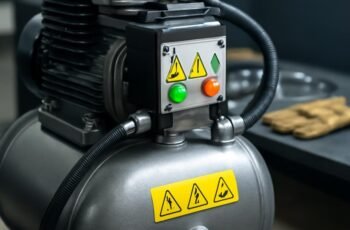
Maintaining proper air compressor pressure is essential for your safety and the longevity of your equipment. When pressure levels are off, it can lead to dangerous failures or costly repairs. Knowing how to monitor and adjust pressure correctly can prevent accidents and extend your compressor’s life. But ensuring safe operation involves more than just watching gauges—there are key practices you need to follow. Here’s what you should focus on to keep everything running smoothly.
Why Maintaining Air Compressor Pressure Safety Matters
Maintaining air compressor pressure safety is crucial because excessive pressure can lead to equipment failure, injuries, or even accidents. When pressure exceeds safe limits, components like valves and hoses may burst or malfunction, causing damage and downtime.
Overpressure can also lead to dangerous flying debris or sudden releases of compressed air, risking serious injuries. Consistently monitoring and controlling pressure ensures your compressor operates within its designed parameters, prolonging its lifespan.
It also helps prevent costly repairs and unplanned outages. By prioritizing safety, you protect yourself and others around you. Proper pressure maintenance isn’t just about avoiding damage; it’s about creating a safe work environment where everyone can operate confidently and efficiently.
How to Recognize Signs of Overpressure and Prevent Damage
Recognizing the signs of overpressure early can save your equipment from serious damage and prevent safety hazards. One key indicator is unusual noise, such as knocking or hissing sounds, which signal pressure issues.
You might also notice the relief valve frequently releasing air, indicating excessive pressure buildup. A sudden drop in performance or inconsistent operation can be a warning sign as well.
Check your pressure gauge regularly; if it reads above the recommended range, it’s a clear sign of overpressure.
Additionally, inspect for leaks, unusual vibrations, or hot surfaces on the compressor—these can signal strain from excessive pressure.
Address these signs immediately by releasing pressure, adjusting controls, or shutting down the system to prevent damage and maintain safe operation.
Simple Tips for Monitoring and Keeping Pressure Safe
To keep your air compressor operating safely, simple monitoring practices can make a big difference. Regularly check the pressure gauge to ensure it stays within the recommended range. Make it a habit to observe the gauge during operation and before use, catching any sudden or gradual pressure increases.
Always listen for unusual noises that could indicate pressure issues. Keep an eye on safety valves; ensure they release pressure properly when needed. Maintain a clean environment around your compressor to prevent dust or debris from affecting sensors.
Periodically inspect hoses and fittings for leaks or damage, which can cause pressure fluctuations. Consistent monitoring helps you catch problems early, preventing accidents and prolonging the lifespan of your equipment.
How to Use and Adjust Your Pressure Regulator Correctly
Using and adjusting your pressure regulator correctly is essential for maintaining safe and efficient operation of your air compressor.
First, ensure the compressor is off and depressurize the system before making adjustments.
Locate the pressure regulator, usually found near the tank, and turn the adjustment knob clockwise to increase pressure or counterclockwise to decrease it.
Set the regulator to the recommended pressure for your specific tool or application.
Turn the compressor back on and observe the pressure gauge.
When it reaches your target pressure, turn off the compressor.
Fine-tune the regulator as needed to maintain consistent pressure.
Always monitor the gauge during use to prevent over-pressurization, which can cause safety hazards or damage your equipment.
Proper adjustment ensures optimal performance and safety.
Troubleshooting Common Pressure Problems Safely
When your air compressor isn’t delivering consistent pressure, it’s important to troubleshoot the issue safely before attempting repairs. First, turn off the compressor and release any built-up pressure by opening the drain valve.
Check for air leaks around the hoses, fittings, and connections—tighten or replace parts as needed. Ensure the pressure regulator is set correctly and functioning properly.
If the pressure drops unexpectedly, inspect the safety release valve for proper operation. Also, verify the compressor’s intake filters are clean, as dirt can reduce efficiency.
Avoid opening or repairing internal components unless you’re qualified; always disconnect the power source first. By following these steps, you minimize risk and identify common pressure issues without risking injury or further damage.
Conclusion
Staying on top of your air compressor’s pressure is key to safe, efficient operation. Regularly check gauges, listen for unusual sounds, and ensure safety valves work properly. Use and adjust your pressure regulator carefully, and troubleshoot issues promptly. By following these simple steps, you’ll protect yourself, extend your equipment’s lifespan, and maintain a safe work environment. Remember, staying vigilant about pressure safety keeps everyone protected and your compressor running smoothly.