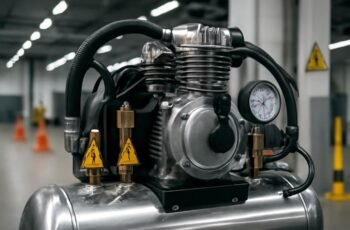
Ensuring safety while working with air compressors is essential to prevent injuries and keep operations running smoothly. You need to be aware of potential hazards, proper procedures, and safety protocols to protect yourself and your coworkers. Neglecting these precautions can lead to serious accidents or equipment damage. Understanding how to set up, operate, and maintain your compressor safely is key—so, what steps should you take to create a safer workplace environment?
What Are the Main Safety Risks of Using Air Compressors?
While air compressors are essential tools in many workplaces, they pose several safety risks if not used properly. One major danger is the risk of sudden releases of high-pressure air, which can cause injuries or damage nearby equipment.
Leaks or bursts in hoses and fittings increase the risk of flying debris or pressure-related accidents. Additionally, improper handling of the compressor can lead to burns from hot surfaces or moving parts.
Electrical hazards are another concern, especially if cords or plugs are damaged, potentially causing shocks or fires. Noise levels from compressors can also harm your hearing over time if you don’t wear proper protection.
Ensuring proper maintenance and following safety protocols helps minimize these risks and keeps everyone safe during operation.
How to Recognize and Prevent Common Air Compressor Hazards
Recognizing and preventing common air compressor hazards is essential for maintaining a safe work environment. Before operating, inspect the equipment for leaks, damaged hoses, or loose fittings, which can cause sudden failures. Always listen for unusual noises or vibrations, as these may indicate internal issues.
Ensure safety devices, like pressure relief valves, are functioning correctly to prevent over-pressurization. Keep your workspace clean and dry, avoiding clutter around the compressor to prevent tripping or damage. Regular maintenance, such as draining moisture from tanks and replacing worn parts, reduces risk.
Be alert to signs of overheating or corrosion, which can lead to malfunctions. Staying vigilant helps you spot hazards early and take preventative actions, keeping everyone safe and your equipment running smoothly.
What Safety Gear and Precautions Should I Use When Operating Compressors?
When operating an air compressor, wearing the right safety gear can significantly reduce the risk of injury. Always wear safety goggles or a face shield to protect your eyes from flying debris or accidental releases.
Hearing protection, like earplugs or earmuffs, is essential since compressors can be loud and cause hearing damage over time.
Use gloves if handling high-pressure hoses or parts, but avoid loose-fitting gloves that could get caught.
Steel-toed boots protect your feet from falling objects or accidental drops.
Ensure you’re wearing appropriate clothing—avoid loose sleeves or jewelry that could get caught in moving parts.
Before starting, inspect safety equipment for damage, and always follow manufacturer instructions and workplace safety protocols to minimize risks.
How to Set Up a Safe and Efficient Air Compressor Work Area
Creating a safe and efficient air compressor work area starts with thoughtful planning and organization. Choose a well-ventilated space away from high-traffic zones to reduce hazards.
Ensure the floor is flat, clean, and non-slip to support stable setup and prevent accidents.
Position the compressor near power sources and avoid clutter around the unit to facilitate easy access and maintenance.
Install proper drainage and moisture control measures to prevent water buildup, which can cause rust and damage.
Use wall mounts or supports to secure the compressor if space is limited.
Clearly mark the work area with safety signs and keep tools and supplies organized to minimize trip hazards.
A well-planned setup not only boosts efficiency but also helps you operate safely.
How to Inspect, Maintain, and Store Your Air Compressor Properly
Regular inspection, maintenance, and proper storage are essential to keep your air compressor operating safely and efficiently. Start by checking for leaks, corrosion, or damage to hoses, fittings, and the tank.
Clean or replace air filters regularly to prevent dust buildup that can cause overheating. Drain the moisture from the tank daily to avoid rust and pressure issues.
Lubricate moving parts as recommended by the manufacturer to reduce wear.
When storing, keep the compressor in a clean, dry area away from extreme temperatures and direct sunlight. Cover it with a protective shield if necessary.
Always disconnect power and release pressure before performing any maintenance or storage.
Proper care ensures your compressor runs smoothly, lasts longer, and minimizes safety risks.
What Training and Certifications Are Needed for Safe Operation?
To operate an air compressor safely, obtaining the appropriate training and certifications is essential. You should complete manufacturer-specific training to understand your compressor’s features, controls, and safety features.
OSHA (Occupational Safety and Health Administration) offers courses on compressed air safety, covering proper handling and hazard prevention.
Additionally, some workplaces require certification in electrical safety or lockout/tagout procedures, which ensure safe maintenance and operation.
You might also need to demonstrate knowledge of pressure regulation, leak detection, and personal protective equipment use.
Employers often provide or mandate specialized training programs.
Staying current with industry standards and your employer’s safety policies is critical.
Proper training not only protects you but also ensures compliance with workplace safety regulations, reducing the risk of accidents.
How to Respond to Air Compressor Emergencies Quickly and Effectively
When an air compressor emergency occurs, quick and decisive action can prevent injuries and minimize equipment damage. First, shut off the compressor immediately to stop the flow of compressed air.
If there’s a leak or a hose burst, use emergency shutoff valves or disconnect the power source if safe to do so. Stay calm and assess the situation before taking further steps.
If someone is injured, provide first aid and call for medical help. Keep clear of any moving or damaged parts, and avoid attempting repairs until the compressor is depressurized and safe.
Communicate with team members clearly to coordinate response efforts. Remember, acting swiftly and calmly is key to protecting yourself and others during an emergency.
What Workplace Policies Enhance Air Compressor Safety?
Implementing clear workplace policies plays a vital role in maintaining air compressor safety. You should establish guidelines that specify proper operation procedures, including startup, shutdown, and regular inspection routines.
Enforce strict lockout/tagout policies to prevent accidental activation during maintenance. Require all employees to complete safety training focused on compressor hazards and safe handling practices.
Make sure policies include regular maintenance schedules to prevent equipment failure. Clearly communicate the importance of wearing personal protective equipment, such as eye and ear protection, when working near compressors.
Additionally, set limits on compressor pressure levels and ensure safety devices, like pressure relief valves, are functioning correctly.
How to Conduct Safety Audits and Continuously Improve Compressor Use
Regular safety audits are essential for identifying potential hazards and ensuring that your compressor operations stay compliant with safety standards.
To conduct effective audits, start by reviewing your current procedures, safety equipment, and maintenance records.
Walk through the workspace, inspecting compressor areas for leaks, damaged hoses, or worn components.
Check that safety devices, like pressure relief valves and emergency shutoff switches, are in place and functional.
Engage your team for feedback on safety concerns or recent incidents.
Document findings and prioritize corrective actions.
After implementing improvements, schedule follow-up audits to monitor progress.
Continuous evaluation helps you catch issues early, reinforce good practices, and adapt safety measures as your operations evolve.
This proactive approach minimizes risks and promotes a safer work environment.
Conclusion
By staying vigilant, following safety protocols, and properly maintaining your air compressor, you can prevent accidents and keep your workplace safe. Always wear the right protective gear, recognize hazards early, and respond swiftly to emergencies. Regular training and safety audits help reinforce best practices. Remember, a safe work environment benefits everyone—so prioritize safety every step of the way to ensure smooth and accident-free compressor operation.