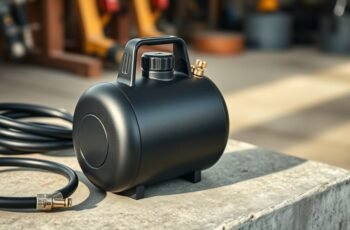
When selecting an air compressor tank, understanding the technical factors that influence performance, safety, and longevity is essential. From tank size and material choice to design orientation and safety features, each element impacts how well the system meets your project requirements. Evaluating these aspects carefully can prevent costly mistakes and guarantee reliable operation over time. As we explore these considerations, you’ll gain a clearer perspective on making an informed purchase that aligns with your needs.
Key Takeaways
- Determine appropriate tank size based on your air demand and project requirements to optimize performance and efficiency.
- Choose between steel and aluminum considering durability, weight, corrosion resistance, and environmental conditions.
- Prioritize safety features like pressure relief valves and ensure compliance with relevant standards for long-term safety.
- Consider tank orientation (vertical vs. horizontal) for space, stability, insulation, and application-specific needs.
- Avoid common pitfalls by verifying specifications, safety standards, and long-term suitability to ensure reliable operation.
How Do Air Compressor Tanks Work and Why Are They Important?
Air compressor tanks are integral components that store compressed air generated by the compressor, serving as reservoirs to maintain consistent air supply and pressure regulation. They play a vital role in improving air quality by allowing moisture and contaminants to settle, preventing them from reaching tools and equipment. Additionally, tanks contribute to noise reduction by dampening the pulsations created during compression cycles, resulting in quieter operation. This stabilization of airflow minimizes pressure fluctuations, enhancing the performance and longevity of connected tools. Properly functioning tanks guarantee a steady, clean air supply while reducing operational noise, which is essential for safety and efficiency. Understanding how tanks influence air quality and noise levels helps in selecting the right tank to optimize overall compressor system performance.
What Size Air Compressor Tank Do You Need for Your Projects?
Selecting the appropriate size of an air compressor tank is essential for guaranteeing maximum performance tailored to your project’s demands. Understanding capacity options helps optimize efficiency and tool compatibility. Larger tanks provide more stored air, reducing the frequency of compressor cycles, while smaller tanks offer portability and quicker startup times. Consider these key factors:
Choosing the right compressor tank size ensures optimal performance and efficiency for your project needs.
- Air demand of tools – higher demand requires larger capacity options.
- Continuous operation needs – prolonged use benefits from increased tank volume.
- Space constraints – smaller tanks fit better in tight environments.
- Power supply limitations – capacity influences compressor size and energy consumption.
Choosing the right tank size ensures consistent airflow, minimizes pressure drops, and enhances overall productivity for your specific applications.
Which Material Is Best for Your Compressor Tank: Steel or Aluminum?
When choosing between steel and aluminum for your compressor tank, it’s essential to understand how each material impacts durability, weight, and corrosion resistance. In a material comparison, steel offers superior strength and durability, making it ideal for heavy-duty applications, but it’s heavier and more prone to corrosion if not properly protected. Aluminum, on the other hand, provides a significant weight advantage, easing installation and transportation, while offering excellent corrosion resistance. Weight considerations are critical, especially if portability is a priority; aluminum tanks reduce overall weight without compromising performance. However, aluminum’s lower strength may limit its long-term durability under high-pressure conditions. Overall, selecting the best material depends on balancing these factors against your specific project demands.
What Safety Features Should You Look for in an Air Compressor Tank?
When selecting an air compressor tank, it’s vital to evaluate safety features like pressure relief valves, which prevent over-pressurization. The tank’s durability and material composition directly impact its ability to withstand operational stresses and guarantee long-term safety. A thorough understanding of these elements helps us choose a reliable, secure system.
Pressure Relief Valves
Pressure relief valves are critical safety components designed to prevent over-pressurization within an air compressor tank, which could otherwise lead to catastrophic failure or explosions. Confirming these valves meet safety regulations and adhere to proper installation guidelines is essential. Key considerations include:
- Pressure Rating: The valve must match the maximum working pressure of the tank.
- Compliance: Verify that the valve complies with relevant safety standards and certifications.
- Type of Valve: Choose between automatic and manual relief valves based on operational needs.
- Maintenance & Testing: Regular testing and maintenance are mandated by safety regulations to ensure reliable operation.
Proper selection and installation of pressure relief valves are crucial to safeguard personnel and equipment, aligning with industry safety standards.
Durability and Material
Selecting an air compressor tank with suitable durability and materials is crucial for guaranteeing safety and longevity under operational stresses. Material strength directly influences the tank’s ability to withstand internal pressure and external impacts, reducing failure risks. High-quality tanks typically feature corrosion-resistant materials, such as galvanized steel or aluminum, which inhibit tank corrosion over time. This corrosion resistance is essential for maintaining structural integrity, especially in humid or corrosive environments. Additionally, reinforced construction and quality welds contribute to overall durability, preventing leaks or rupture under high pressure. Evaluating the material composition and corrosion protection measures helps guarantee the tank endures repeated cycles of pressure and temperature fluctuations, safeguarding both the user and the equipment from catastrophic failures.
How Do You Choose Between Horizontal and Vertical Tank Designs?
When choosing between horizontal and vertical tank configurations, we consider factors like available space, ease of installation, and movement requirements. Horizontal tanks generally offer stability and larger capacity options, while vertical tanks are more suitable for constrained spaces and portability. Analyzing these design attributes against your specific setup guarantees ideal performance and durability.
Space Constraints and Setup
Choosing between horizontal and vertical tank designs hinges primarily on available space and setup requirements. Vertical tanks are ideal for limited floor space, fitting into tight corners, and minimizing footprint. Horizontal tanks, on the other hand, often provide better stability and can accommodate larger volumes in wider areas. When considering noise levels, vertical tanks may produce less noise due to their compact design and easier placement away from work zones. Energy efficiency can also be impacted, as vertical designs often have shorter air pathways, reducing compressor cycling. To optimize your setup, consider:
- Available vertical clearance
- Floor space constraints
- Noise mitigation strategies
- Long-term energy consumption and efficiency
These factors guarantee a balanced choice aligned with your space and operational needs.
Portability and Mobility Needs
Portability and mobility become key considerations when determining whether to opt for a horizontal or vertical air compressor tank. Horizontal tanks often provide better portability solutions for mobile applications, as their shape facilitates easier handling and transportation, especially when mounted on carts or trailers. Vertical tanks, on the other hand, are generally more space-efficient and easier to store in confined environments, but may require additional mobility enhancements such as wheels or lifting points for transport. When selecting between these designs, consider the frequency of movement and space constraints of your workspace. Horizontal tanks typically excel in dynamic work environments requiring frequent relocation, whereas vertical tanks suit stationary setups. Ultimately, your choice should align with your specific operational mobility needs and the configuration of your workspace.
Stability and Durability Factors
The decision between horizontal and vertical tank designs hinges considerably on their stability and durability under operational conditions. Horizontal tanks typically offer better corrosion resistance due to their accessible design for maintenance and easier application of protective coatings. Vertical tanks excel in insulation properties, maintaining consistent internal temperatures, which prolongs tank lifespan. To evaluate stability and durability, consider:
- Corrosion resistance of materials used, especially in corrosive environments
- Structural integrity under pressure fluctuations and physical impacts
- Insulation properties for temperature-sensitive applications
- Design stability on uneven surfaces, favoring horizontal tanks for rugged terrain
Choosing the most suitable design depends on balancing these factors to guarantee long-term performance and safety. Both configurations have unique advantages in durability, but understanding these key factors guides an informed decision.
What Factors Affect the Cost of an Air Compressor Tank?
Several key factors influence the cost of an air compressor tank, with material quality and construction standards playing a significant role. Pricing variations often stem from differences in material costs, such as steel versus aluminum, which directly impact manufacturing expenses. Higher-grade materials provide enhanced strength and corrosion resistance but increase overall costs. Construction standards, like adherence to industry certifications and safety protocols, also elevate prices due to more rigorous manufacturing processes. Additionally, specialized features—such as reinforced seams or thicker walls—add to the expense. Ultimately, these factors determine the initial investment, with premium materials and strict standards resulting in higher costs. Understanding how material costs and construction standards influence pricing helps us evaluate value and long-term durability effectively.
How Do You Maintain and Extend the Life of Your Compressor Tank?
Proper maintenance is crucial to guarantee the longevity and safe operation of your compressor tank. To extend its lifespan, focus on corrosion prevention and tank painting techniques that inhibit rust formation. Regular inspections identify early signs of corrosion, enabling timely intervention.
Key maintenance steps include:
- Applying protective tank painting to create a barrier against moisture and environmental elements.
- Draining moisture from the tank regularly to prevent internal corrosion.
- Checking for and repairing any paint chips or corrosion spots promptly.
- Using corrosion inhibitors or coatings designed specifically for compressed air tanks.
Consistent maintenance not only prolongs the tank’s service life but also ensures operational safety and efficiency. Proper corrosion prevention strategies are essential in preserving structural integrity over time.
What Are Common Mistakes to Avoid When Buying an Air Compressor Tank?
When purchasing an air compressor tank, overlooking key specifications or rushing the decision can lead to significant issues down the line. One common mistake is neglecting proper assessment of tank capacity; selecting a tank with insufficient capacity hampers performance, while oversized tanks can be unnecessarily costly and space-consuming. Additionally, failing to verify compliance with safety regulations can pose serious hazards, especially if the tank doesn’t meet pressure and durability standards. Ignoring these standards increases the risk of tank failure or accidents. It’s essential to evaluate both capacity needs based on your workload and confirm the tank adheres to relevant safety regulations. Making informed choices in these areas helps prevent costly upgrades or safety violations, guaranteeing reliable, compliant operation.
Frequently Asked Questions
How Do I Determine the Right Pressure Rating for My Compressor Tank?
We determine the right pressure rating by considering tank material and safety valves, ensuring compatibility with compressor specifications. We prioritize safety, selecting a rating 1.5 times the maximum operating pressure to prevent over-pressurization risks.
What Certifications Should I Look for When Purchasing a Tank?
Surprisingly, certifications like ASME and UL matter more than tank material alone, ensuring compliance with safety standards. We recommend verifying these certifications, as they guarantee your tank meets rigorous safety and quality benchmarks for reliable, safe operation.
Can I Replace My Compressor Tank Myself?
We believe replacing a compressor tank ourselves is risky; it requires understanding tank material, proper safety precautions, and technical expertise. Without proper knowledge, the potential hazards outweigh the benefits, so consulting a professional is highly recommended.
How Do Temperature Variations Affect Compressor Tank Performance?
Temperature variations act like a rollercoaster, impacting compressor tanks through material expansion and contraction. Proper temperature regulation guarantees consistent performance, preventing stress-induced damage and maintaining the integrity of the tank under fluctuating conditions.
What Are the Signs of a Failing or Damaged Air Compressor Tank?
We look for signs like corrosion inspection reveals rust or deterioration, leak detection uncovers hissing sounds or pressure drops, and physical damage indicates the tank’s integrity is compromised, all pointing to potential failure or damage needing immediate attention.
Conclusion
In the end, selecting the right air compressor tank is about understanding your specific needs and balancing safety, durability, and cost. Have you visualized the perfect setup—sturdy, efficient, and tailored to your workspace? By carefully analyzing size, material, design, and safety features, we can optimize performance and longevity. Making informed decisions guarantees your compressor operates reliably, saving time and resources. Isn’t it worth investing in a tank that supports your projects with precision and confidence?