When choosing between oil-free and oil-lubricated air compressors, we recognize that each type offers distinct advantages and limitations, depending on specific operational needs. Factors like purity standards, maintenance requirements, and total cost of ownership play critical roles in decision-making. Understanding these differences is essential for making an informed choice that aligns with safety, efficiency, and long-term performance. Let’s explore how these options compare across key aspects to determine which best fits your application.
Key Takeaways
- Oil-free compressors provide cleaner, contaminant-free air ideal for medical, food, and precision applications, while oil-lubricated units are suited for heavy-duty industrial use.
- Oil-free models typically have higher initial costs but lower ongoing maintenance, whereas oil-lubricated compressors have lower upfront costs but require regular oil changes.
- Oil-free compressors reduce environmental impact and safety risks associated with oil leaks and aerosols, unlike oil-lubricated types which need strict safety measures.
- Oil-lubricated compressors offer longer lifespan and better performance under heavy loads due to continuous lubrication and reduced wear.
- The choice depends on application purity requirements, maintenance capacity, and total cost of ownership, balancing initial investment versus operational costs.
How Do Oil-Free and Oil-Lubricated Compressors Differ in Design?
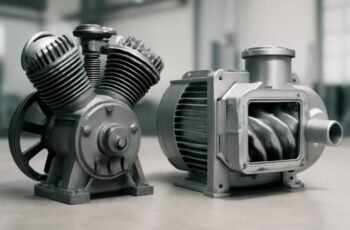
How do oil-free and oil-lubricated compressors differ fundamentally in their design? The primary distinction lies in their lubrication mechanisms, which directly influence their design differences. Oil-lubricated compressors utilize a dedicated oil system, incorporating oil reservoirs, pumps, and filters to reduce friction between moving parts, ensuring smooth operation and enhanced longevity. In contrast, oil-free compressors eliminate external oil components, relying instead on specialized materials like Teflon or other non-stick coatings to minimize wear. This design choice results in a simplified construction with fewer components, reducing maintenance needs. These differences in design affect performance, durability, and suitability for various applications, but the core divergence remains rooted in how each compressor manages lubrication to optimize mechanical efficiency.
Which Applications Are Best Suited for Oil-Free Compressors?
Oil-free compressors are most suitable for applications requiring contaminant-free air, such as medical and dental environments, food and beverage production, and precision instrument manufacturing. Their design minimizes the risk of oil contamination, ensuring compliance with strict cleanliness standards. Understanding these specific use cases helps determine when oil-free technology offers clear advantages.
Medical and Dental Environments
Is there a specific reason why medical and dental environments demand the highest standards of air purity? Yes, these settings require contaminant-free air to prevent infection and ensure patient safety. Oil-free compressors are ideal here due to their design contrasts, which eliminate the risk of oil contamination. While oil-lubricated systems may offer advantages in durability, they introduce maintenance tradeoffs, including oil filtration and potential contamination risks. In contrast, oil-free units typically feature simpler maintenance routines, reducing the chance of residual oil particles in the airflow. This makes them more reliable for sensitive applications. Ultimately, the choice hinges on balancing the need for consistent purity against considerations of maintenance complexity, with oil-free compressors providing a safer, cleaner option for medical and dental environments.
Food and Beverage Production
In food and beverage production, maintaining strict hygiene standards is essential to prevent product contamination and guarantee consumer safety. Oil-free compressors are ideal for applications like packaging, filling, and processing, where product purity is critical. They align with current technology trends emphasizing energy efficiency and reduced maintenance. These compressors eliminate the risk of oil contamination, ensuring compliance with health regulations.
| Application Area | Suitability of Oil-Free Compressors |
|---|---|
| Packaging | High, due to contamination-free environment |
| Filling and Bottling | Excellent, guarantees product purity |
| Processing | Suitable for sensitive ingredients |
| CIP (Clean-In-Place) | Optimal, prevents oil residue buildup |
Precision Instrument Manufacturing
Have you considered how critical air purity is in precision instrument manufacturing? Oil-free compressors are ideally suited for these applications due to their design differences, which eliminate oil contamination risks. The absence of oil ensures cleaner, inert air, essential for sensitive instruments like microscopes, sensors, and calibration equipment. Additionally, noise considerations favor oil-free models, as their design differences often result in quieter operation—crucial in controlled laboratory environments. These compressors provide consistent, high-quality airflow without the need for extensive filtration systems. Their reliability and minimal maintenance demands make them optimal for environments where even microscopic oil traces could compromise instrument accuracy. Overall, oil-free compressors are the preferred choice for precision instrument manufacturing, where air purity and operational stability are non-negotiable.
What Are the Main Benefits of Oil-Lubricated Air Compressors?
Oil-lubricated air compressors stand out in industrial applications for their proven ability to deliver consistent performance and durability over extended periods. The primary oil-lubricated benefits include reduced wear and friction, which extend equipment lifespan and ensure reliable operation. Lubrication longevity plays a crucial role in maintaining compressor efficiency by minimizing component degradation and preventing overheating. These compressors typically require less maintenance due to stable lubrication, leading to lower operational costs over time. Additionally, the presence of oil helps seal internal clearances, reducing air leaks and improving overall efficiency. This combination of durability, efficiency, and reduced downtime makes oil-lubricated compressors ideal for demanding industrial environments where performance consistency is paramount.
What Factors Should You Consider When Choosing Between the Two?
When selecting between oil-free and oil-lubricated compressors, we must evaluate maintenance demands and application requirements. Oil-lubricated units typically require more ongoing upkeep but offer durability for heavy-duty use, while oil-free options minimize maintenance for cleaner environments. Understanding the specific operational context helps determine which factors are most critical to your decision.
Maintenance Requirements
Considering maintenance requirements is essential when choosing between oil-free and oil-lubricated air compressors, as each type presents distinct operational demands. Oil-free compressors generally require less maintenance, with fewer parts prone to wear, which enhances noise reduction and simplifies routine checks. They typically exhibit higher startup reliability, especially in environments demanding consistent operation, due to the absence of oil-related components. Conversely, oil-lubricated units demand regular oil changes, filter replacements, and more frequent inspections to prevent component degradation. While they may involve higher ongoing maintenance costs, their lubrication system often results in longer service life and better performance under heavy loads. Evaluating these factors helps determine the most suitable compressor based on maintenance capacity, operational consistency, and noise considerations.
Application Suitability
Determining the most suitable air compressor hinges on analyzing specific application requirements and operational conditions. Factors like air purity, maintenance environment, and budget influence the choice between oil-free and oil-lubricated models. Oil-free compressors excel in applications demanding high air purity, such as pharmaceuticals or food processing, and prioritize cost efficiency and minimal maintenance. Conversely, oil-lubricated compressors offer superior power efficiency and durability in continuous or heavy-duty operations. The table below highlights key considerations:
| Application Type | Key Concerns | Recommended Compressor |
|---|---|---|
| Food & Pharmaceutical | Air purity, hygiene | Oil-free |
| Manufacturing | Power, durability | Oil-lubricated |
| Small-scale use | Cost, maintenance | Oil-free |
| Heavy-duty tasks | Power efficiency, longevity | Oil-lubricated |
How Do Maintenance and Operating Costs Compare?
How do maintenance and operating costs differ between oil-free and oil-lubricated air compressors? Oil-free models typically incur higher initial purchase costs but benefit from lower ongoing maintenance costs due to the absence of oil systems, filters, and related components. This enhances operating efficiency by reducing downtime and preventing oil-related contamination issues. Conversely, oil-lubricated compressors generally have lower upfront costs but require regular maintenance such as oil changes, filter replacements, and lubrication checks, which increase long-term expenses. The presence of lubricants often results in more complex maintenance routines, impacting overall operational costs. Consequently, while oil-free compressors optimize operating efficiency with minimal maintenance, the total costs over their lifespan are balanced against the more involved maintenance demands of oil-lubricated units.
Are There Environmental or Safety Concerns With Each Type?
Both oil-free and oil-lubricated compressors present distinct environmental and safety considerations that influence their suitability for various applications. Oil-free compressors generally have a lower environmental impact because they do not emit oil aerosols or contaminated condensate, reducing pollution risks. However, their components may be less durable, potentially leading to increased maintenance or early failure, which can have safety implications. Oil-lubricated compressors, on the other hand, pose safety concerns related to oil leaks, spills, and the disposal of used oil, which require careful handling to prevent environmental contamination. Additionally, the presence of oil increases fire hazards and necessitates strict safety protocols. Overall, both types demand tailored safety measures and environmental management to mitigate their respective risks effectively.
Which Air Compressor Type Offers Better Value for Your Specific Needs?
Choosing the right air compressor hinges on evaluating how each type aligns with your specific operational requirements and budget constraints. Oil-free compressors often present design tradeoffs, such as higher initial costs but lower ongoing maintenance, making them suitable for applications demanding ultra-pure air. Conversely, oil-lubricated models typically have lower upfront costs and proven durability but involve ongoing costs related to oil changes and filtration. When assessing value, consider the total cost of ownership, including energy efficiency, maintenance frequency, and lifespan. Oil-free units might be more cost-effective in environments where purity and safety are critical, despite higher purchase prices. Ultimately, matching the compressor’s design tradeoffs and associated cost considerations to your operational needs ensures optimal value and performance.
Frequently Asked Questions
How Long Is the Typical Lifespan of Oil-Free Versus Oil-Lubricated Compressors?
We find oil-free compressors typically last 10-15 years due to their increased durability and minimal lubrication requirements, whereas oil-lubricated models often reach 15-20 years, benefiting from proper lubrication but requiring more maintenance.
What Are the Noise Level Differences Between the Two Compressor Types?
We find oil-free compressors are typically quieter due to fewer moving parts, resulting in lower noise comparison; however, they often require more frequent maintenance, which can influence operational noise levels, unlike oil-lubricated models with steadier, quieter operation over time.
Can Oil-Free Compressors Handle High-Pressure Applications Effectively?
Oil-free compressors can handle high-pressure applications effectively due to their design, offering maintenance-free benefits and consistent performance under pressure. We find their reliability and lower upkeep ideal for demanding environments, ensuring operational efficiency and reduced downtime.
Are There Specific Industries That Prefer One Type Over the Other?
While some industries favor oil-free compressors for purity, others prefer oil-lubricated models for durability; we see oil-free in healthcare and food sectors, whereas manufacturing and heavy industry often choose oil-lubricated systems for their robustness.
How Do Startup Times Compare Between Oil-Free and Oil-Lubricated Compressors?
We find that oil-free compressors typically have shorter startup times due to simpler components, but require more frequent maintenance intervals. Oil-lubricated units may take longer initially, yet offer longer operational periods before maintenance is needed.
Conclusion
Ultimately, selecting between oil-free and oil-lubricated compressors hinges on our specific operational needs, much like choosing the right tool for a precise task. By weighing factors such as purity requirements, maintenance costs, and environmental safety, we can make an informed decision that balances performance and value. In this intricate dance of technology and necessity, understanding each type’s nuances ensures we don’t just operate — we optimize.