Imagine a professional mechanic choosing a portable air compressor to power pneumatic tools across multiple job sites. The decision hinges on precise specifications like CFM, PSI, and tank size, alongside considerations of portability and durability. Our guide aims to clarify these factors, ensuring you select a unit that balances performance with your budget. Understanding these technical details can be complex, but making informed choices is essential for reliable, efficient operation—so, let’s examine what truly matters.
Key Takeaways
- Assess your workload demands to choose a compressor with appropriate CFM and PSI ratings.
- Prioritize portability features like size, weight, handles, and wheels for easy transport.
- Match tank size and power capacity to your intended tasks for optimal performance.
- Consider noise reduction features and safety mechanisms for a quieter, safer operation.
- Balance budget with durability and maintenance needs to select a cost-effective, reliable unit.
How to Choose the Right Portable Air Compressor for Your Needs
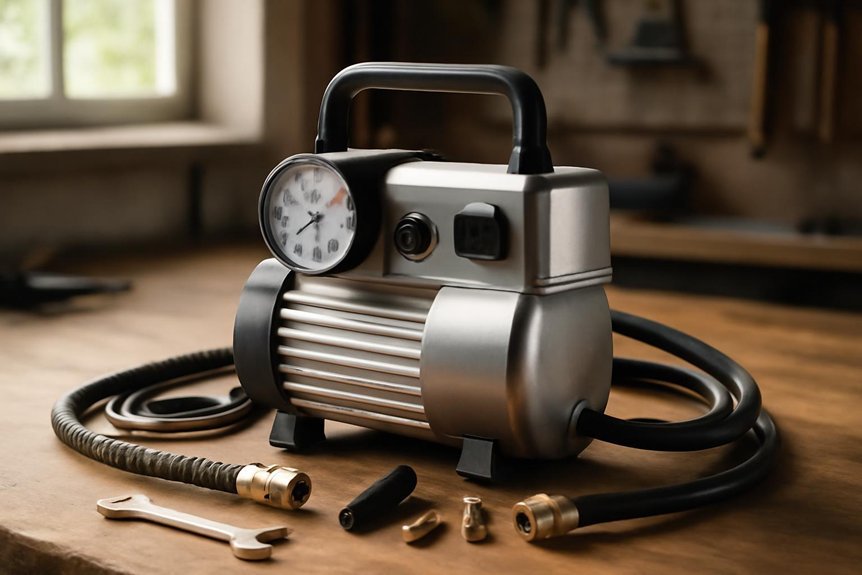
How do you determine which portable air compressor best suits your specific needs? First, consider your workload demands—larger projects require higher CFM and PSI, while light tasks need less power. Budget-friendly options often balance initial cost with durability, making them ideal for infrequent use. Noise reduction is crucial for environments where sound levels matter; look for models with sound attenuation features or noise-dampening enclosures. Precise assessment of these factors helps narrow your options, ensuring optimal performance without overspending. Evaluate compressor specifications against your operational requirements, avoiding underpowered units that hamper productivity or overpowered units that increase unnecessary costs. By focusing on these technical aspects—cost efficiency, noise reduction, and capacity—you can effectively select a portable air compressor tailored to your specific application.
Key Features to Look for in a Portable Air Compressor
When selecting a portable air compressor, we focus on portability and size to ensure it fits your workspace and transport needs. Power and capacity determine the device’s ability to handle tasks efficiently and consistently. Evaluating these key features helps optimize performance while maintaining ease of use.
Portability and Size
What makes a portable air compressor truly convenient is its size and weight, directly impacting ease of transport and storage. A well-designed portable unit features a compact, ergonomic form that enhances its portable design, allowing users to carry it effortlessly. When evaluating weight considerations, it’s essential to balance capacity with maneuverability; lighter models facilitate quick relocation but may compromise power. Key aspects include:
- Compact dimensions for easy storage in tight spaces
- Lightweight construction without sacrificing durability
- Handles or wheels for ergonomic transport
These factors ensure the compressor remains functional yet manageable, optimizing portability without sacrificing essential performance features. Prioritizing size and weight considerations helps users select a model suited for their mobility needs, making it a vital aspect of the selection process.
Power and Capacity
Determining the right power and capacity for a portable air compressor is essential to ensuring it meets your specific needs. Power, typically measured in PSI and CFM, directly impacts the compressor’s ability to deliver air efficiently for various tasks. Capacity, reflected in tank size, influences runtime considerations—larger tanks provide extended operation without frequent refills. When selecting a compressor, evaluate the required airflow for your applications, balancing power output with portability. For continuous or demanding tasks, prioritize models with higher CFM and larger tanks to avoid downtime. Conversely, for light, intermittent use, lower power and smaller capacities may suffice. Precise assessment of your workload ensures optimal performance, minimizes operational delays, and enhances overall efficiency.
Understanding Air Delivery, Pressure, and Tank Size
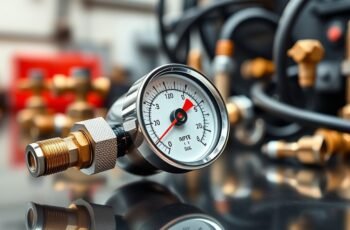
How do air delivery rate, pressure, and tank size interact to influence a portable air compressor’s performance? These factors collectively determine efficiency and suitability for specific tasks. Air delivery, measured in CFM, indicates how much air the compressor can supply per minute, impacting continuous operation. Tank size, in gallons, affects the compressor’s ability to store compressed air, influencing runtime and pressure stability. Pressure, measured in PSI, defines the maximum force exerted by the air, essential for tasks requiring specific power levels.
- Higher air delivery provides more consistent airflow for demanding applications
- Larger tank sizes reduce the frequency of compressor cycling, ensuring steady pressure
- Greater pressure ratings enable the compressor to handle tougher tasks efficiently
Comparing Portable Air Compressors by Use Case and Budget
When selecting a portable air compressor, it’s important to match the unit’s capabilities to your specific use case and budget constraints. For light tasks, alternatives to cordless models—such as corded electric compressors—offer consistent power and often lower costs, making them ideal for home repairs or inflating tires. Budget selections typically provide basic features with lower airflow rates and tank sizes, suitable for occasional use. In contrast, premium options incorporate advanced technology, higher durability, and increased airflow, catering to professional or heavy-duty applications. Evaluating these factors helps clarify whether to invest in a cost-effective model or a high-end unit. Ultimately, aligning your needs with the right compressor ensures optimal performance within your financial limits.
Tips for Maintaining and Using Your Portable Air Compressor Safely
Have you ever considered the importance of proper maintenance and safety practices when using your portable air compressor? Regular upkeep guarantees optimal performance and reduces risk of failure. Adhering to a strict maintenance schedule, which includes inspecting hoses, draining moisture traps, and checking safety valves, is essential. When operating the compressor, always wear appropriate safety gear, such as eye protection and hearing safeguards, to prevent injury from flying debris or noise. Additionally, ensure the compressor is placed on a stable surface and in a well-ventilated area.
Regular maintenance and safety checks keep your portable air compressor running safely and efficiently.
- Perform routine inspections before each use
- Replace worn or damaged components promptly
- Follow manufacturer guidelines for safety procedures and maintenance tasks
Common Mistakes to Avoid When Buying and Operating a Portable Air Compressor
Choosing and operating a portable air compressor without awareness of common pitfalls can lead to costly mistakes and safety hazards. A critical mistake is neglecting proper ventilation, which can result in dangerous fumes accumulating, especially in enclosed spaces. This poses health risks and potential violations of safety standards. Additionally, ignoring noise levels can lead to issues with noisy operation, affecting both user comfort and nearby environments. Selecting a compressor without verifying its noise emissions or safety certifications risks operational problems and health concerns. Overlooking these factors may also cause premature equipment failure due to inadequate cooling or ventilation. To prevent these issues, always prioritize models with proper safety features, ensure adequate ventilation, and verify noise levels to maintain a safe, efficient, and compliant operation.
Frequently Asked Questions
What Is the Typical Lifespan of a Portable Air Compressor?
Typically, portable air compressors last around 5 to 10 years, but durability myths often influence lifespan expectations. We recommend lifespan benchmarking based on usage, maintenance, and build quality to ensure accurate predictions and optimal performance.
How Noisy Are Different Portable Air Compressors During Operation?
Did you know some portable air compressors operate at decibel ratings below 70? We find that models with advanced noise reduction and sound dampening features offer quieter operation, essential for maintaining a peaceful workspace or environment.
Can Portable Air Compressors Run Multiple Tools Simultaneously?
Yes, portable air compressors can run multiple tools simultaneously if they have sufficient CFM and PSI ratings. We analyze tool requirements and compressor capacity to ensure effective, simultaneous operation without pressure drops or performance issues.
What Are the Best Storage Practices for Portable Air Compressors?
We recommend storing portable air compressors in a dry, ventilated area, regularly performing storage maintenance, and following disposal reminders; studies show proper storage extends unit lifespan by up to 30%, ensuring optimal performance and safety.
Are There Eco-Friendly or Energy-Efficient Portable Air Compressors Available?
Yes, eco-friendly and energy-efficient portable air compressors are available; they utilize advanced motor technology and variable speed drives, reducing energy consumption, emissions, and operational costs, making them suitable for environmentally conscious applications without compromising performance.
Conclusion
Choosing the right portable air compressor is like assembling a finely tuned machine—every component must align with your specific needs. By understanding key features and maintenance practices, we ensure optimal performance and safety. Investing time in research and careful selection transforms a simple tool into a reliable workhorse, much like a well-calibrated instrument that resonates with precision. With informed choices, your compressor becomes an extension of your craft, ready to perform when it matters most.