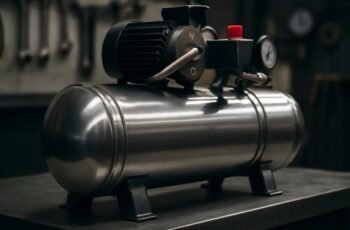
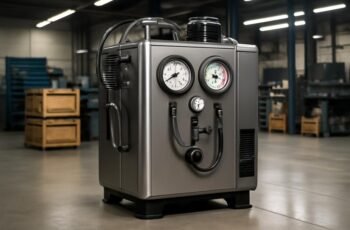
At the heart of any quiet workspace lies a delicate balance—like a finely tuned instrument—between noise reduction and reliable performance. Selecting the right silent air compressor requires careful analysis of features, noise mitigation strategies, and application demands. As we explore these factors, you’ll discover how to optimize your choice for both efficiency and tranquility, ensuring your equipment harmonizes with your environment. Yet, understanding the nuances of each model is essential before making that crucial decision.
Key Takeaways
- Assess noise levels (dB ratings) in real-world conditions, not just specifications, to ensure minimal disruption.
- Determine required airflow (CFM) and pressure for your tasks to select an appropriately sized compressor.
- Choose compressors with sound insulation, vibration dampening, and mufflers to maximize noise reduction.
- Consider compressor type (reciprocating, rotary screw, scroll) based on noise, capacity, and maintenance needs.
- Ensure compatibility with your workspace, focusing on portability, size, motor design, and durability for long-term efficiency.
What Is a Silent Air Compressor and Why Choose One?
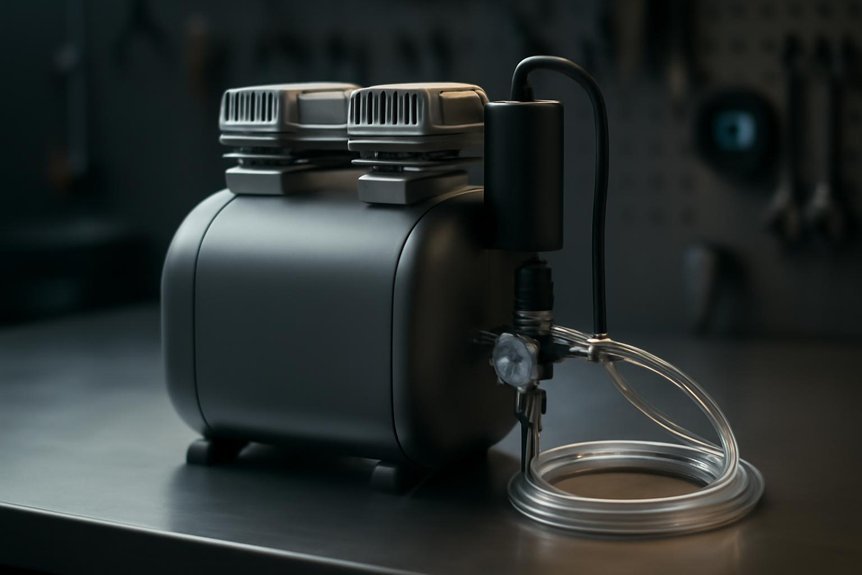
Have you ever considered how noise levels from air compressors impact your workspace or environment? Silent air compressors are designed to operate with significantly reduced noise, directly benefiting indoor air quality by minimizing acoustic pollution. These units utilize advanced noise reduction strategies, such as sound insulation and vibration dampening, which prevent excessive sound transmission. Choosing a silent compressor is crucial in environments where noise can interfere with productivity, communication, or concentration. Moreover, reduced noise levels contribute to a healthier workspace by lowering stress and fatigue among workers, while also complying with occupational safety standards. Overall, silent air compressors offer a technical advantage by combining efficient operation with superior noise control, making them an essential choice for environments demanding optimal indoor air quality and minimal noise disruption.
How Do Quiet Air Compressors Work to Minimize Noise?
How do quiet air compressors effectively reduce noise levels during operation? They leverage sound science principles and noise mapping techniques to control sound propagation. These compressors incorporate sound-dampening materials and vibration isolation to minimize noise emission at the source. Additionally, advanced engineering reduces mechanical noise from moving parts. Noise mapping helps identify high-noise zones, guiding design improvements. Key features include:
- Enclosed or insulated casings that contain sound within the unit
- Vibration pads and mounts to reduce structural noise transmission
- Low-noise motor and pump designs to limit operational sound
- Strategic placement of mufflers and silencers to absorb sound waves
Together, these elements work synergistically, ensuring noise is minimized without compromising performance. This analytical approach underscores the importance of sound science in designing effective silent compressor solutions.
Key Features to Look for in a Silent Air Compressor
When selecting a silent air compressor, identifying key features that minimize noise while maintaining performance is essential. Focus on silent efficiency, which involves advanced sound-dampening components like insulated enclosures and vibration isolation mounts. These features reduce operational noise without sacrificing airflow or pressure output. Additionally, consider compact portability—look for models with lightweight construction and ergonomic handles to facilitate easy transport and space-saving storage. A well-designed silent compressor balances noise reduction with durability, ensuring consistent performance in various environments. Analyzing motor design, noise insulation materials, and airflow optimization helps identify units that deliver quiet operation without compromising power. Ultimately, prioritizing these features ensures a reliable, user-friendly compressor suited for both professional and DIY applications.
Comparing Different Types of Quiet Air Compressors
What are the key differences among various types of quiet air compressors, and how do these distinctions impact performance and suitability? Different compressor types—such as reciprocating, rotary screw, and scroll—vary significantly in design, noise levels, and operational efficiency. Reciprocating models tend to be more affordable but generate more vibration. Rotary screw compressors offer continuous operation with lower noise, ideal for industrial use. Scroll compressors are compact and quiet but generally have lower capacity, making them suitable for light tasks.
- Noise reduction mechanisms differ, influencing suitability for noise-sensitive environments.
- Operational efficiency varies, affecting energy consumption and runtime.
- Maintenance requirements impact long-term costs and downtime.
- Unrelated topic comparisons highlight that performance isn’t just about noise but also application-specific features.
How to Determine the Right Size and Power for Your Needs
Determining the appropriate size and power for your quiet air compressor begins with a clear understanding of your specific application requirements. We analyze flow rate and pressure needs, ensuring the compressor can sustain consistent performance without overcapacity, which affects energy efficiency. Budget timing influences size selection—larger units may cost more upfront but offer longer durability and lower operational costs. Warranty coverage is essential; a comprehensive warranty can offset potential repair costs for larger, more powerful units. Consider the compressor’s duty cycle, matching it to your workload to avoid unnecessary wear. By balancing these factors—application demands, budget constraints, warranty terms—we can select an optimal compressor that delivers reliable performance, minimizes operational costs, and aligns with long-term project goals.
Benefits of Investing in a Low-Noise Air Compressor
Have you considered how the noise level of your air compressor impacts both operational efficiency and workplace safety? Low-noise compressors offer tangible benefits, especially in environments where concentration or comfort matters. They reduce auditory fatigue, which enhances productivity and minimizes errors during precision tasks. For businesses involved in budget travel or pet care, quieter operation ensures minimal disturbance, fostering better client experiences and safer environments. Additionally, low-noise compressors:
- Decrease noise pollution, promoting healthier workspaces
- Enable extended operation without causing fatigue or stress
- Lower the risk of hearing damage for operators
- Support compliance with safety regulations in noise-sensitive settings
Investing in a low-noise air compressor is not merely about comfort; it’s a strategic choice that enhances safety, efficiency, and professionalism across various applications.
Tips for Maintaining and Operating Your Silent Air Compressor
Maintaining optimal performance requires consistent checks of critical components such as filters and pressure gauges. Adopting proper operating practices, like avoiding overloading the compressor, minimizes wear and prolongs lifespan. Additionally, implementing effective storage techniques ensures the unit remains protected from environmental factors and maintains efficiency over time.
Regular Maintenance Checks
Regular maintenance checks are essential to ensure your silent air compressor operates efficiently and prolongs its lifespan. Consistent inspections prevent issues unrelated to the compressor itself, such as irrelevant topics like unrelated theme distractions, which can skew performance analysis. These checks should focus on key components:
- Monitoring and replacing air filters to prevent clogging.
- Draining moisture from the tank to avoid corrosion.
- Inspecting belts and pulleys for wear, ensuring smooth operation.
- Checking pressure settings and safety valves for proper calibration.
Proper Operating Practices
Effective operation of a silent air compressor depends heavily on adopting proper practices that optimize performance and prevent unnecessary wear. Consistent silent maintenance and disciplined operation ensure longevity and efficiency. To achieve workflow optimization, we recommend regular checks on oil levels, filter cleanliness, and pressure settings. Avoid sudden starts and stops, which strain components and reduce lifespan. Use appropriate accessories that complement your compressor’s specifications. Additionally, monitor ambient conditions, as excessive heat and humidity can impair operation.
| Practice | Purpose | Benefit |
|---|---|---|
| Regular inspection | Detect early issues | Prevents costly repairs |
| Maintain clean filters | Ensures airflow efficiency | Reduces energy consumption |
| Control pressure settings | Optimize compressor load | Enhances lifespan |
| Avoid rapid cycling | Minimize wear | Extends component life |
| Keep environment dry | Prevent corrosion and damage | Ensures reliable silent operation |
Optimal Storage Techniques
Have you considered how proper storage can extend the lifespan and ensure reliable performance of your silent air compressor? Effective storage minimizes exposure to moisture, dust, and temperature fluctuations, which can compromise internal components. To optimize storage:
- Keep the compressor in a clean, dry, and well-ventilated area to prevent corrosion.
- Drain moisture from the tank regularly to avoid internal rust and buildup.
- Cover the unit with a breathable cover to protect against dust while allowing airflow.
- Store it away from direct sunlight and extreme temperatures, which can affect seals and lubricants.
Proper storage supports consistent operation, making it easier to craft marketing copy that emphasizes reliability. Additionally, maintaining optimal conditions enhances social media engagement by demonstrating responsible equipment care.
Common Mistakes to Avoid When Buying a Quiet Air Compressor
When selecting a quiet air compressor, it’s crucial to accurately assess noise levels to ensure it meets your environment’s requirements. Overlooking power needs can lead to underperformance or equipment damage, especially if the compressor isn’t rated for your intended workload. Failing to consider these factors may compromise both efficiency and user comfort.
Overlooking Noise Levels
Do we often underestimate the importance of noise levels when selecting a quiet air compressor? Ignoring this factor can lead to discomfort and productivity loss. Noise levels impact not just comfort but also safety, as excessive sound can mask critical alerts or signals. It’s crucial to evaluate decibel ratings and consider testing products in real environments, rather than relying on irrelevant topic comparisons, like unrelated subject noise benchmarks.
- Decibel ratings should be verified in real-world conditions, not just specifications.
- Obsessing over irrelevant topic factors distracts from core performance metrics.
- Noise level differences of a few decibels can significantly affect long-term use.
- Overlooking noise can lead to unnecessary disturbances, especially in enclosed spaces.
Focusing solely on performance specs without considering noise levels risks overlooking a key comfort and safety factor.
Ignoring Power Needs
Many buyers focus heavily on noise levels and performance specs but overlook the importance of matching the compressor’s power requirements to their specific needs. Ignoring this aspect often leads to selecting units driven by irrelevant metrics or misleading marketing buzzwords. For instance, a compressor with a high horsepower rating might seem appealing, but if your application only demands low continuous airflow, such power is unnecessary and inefficient. Conversely, underestimating power needs can cause insufficient airflow, reducing productivity and increasing wear on the unit. It’s crucial to analyze real workload demands and match them with the compressor’s rated power and CFM output. This ensures optimal performance without overpaying for unnecessary capacity or risking operational failure due to inadequate power.
Best Quiet Air Compressors on the Market Today
Are there truly quiet air compressors that deliver reliable performance without generating disruptive noise levels? Yes, modern designs incorporate advanced noise analysis to minimize sound output while ensuring efficiency. These compressors often feature sound-absorbing enclosures and optimized motor placement, reducing noise emissions considerably. When evaluating the best quiet models, consider how altitude effects influence performance; higher elevations can impact internal pressure and noise levels.
- Low decibel ratings (below 70 dB) for minimal noise
- Enhanced insulation to dampen sound transmission
- Compact, vibration-isolated units for stability
- Performance consistency across various altitude conditions
How to Choose the Perfect Silent Air Compressor for Your Workspace
Selecting the ideal silent air compressor for your workspace involves evaluating several key factors to ensure it meets both your noise reduction needs and operational demands. First, consider airflow requirements; a compressor with inadequate CFM ratings leads to inefficiency, despite an irrelevant topic or unrelated focus. Next, assess the duty cycle—higher cycles improve continuous operation, crucial for demanding tasks. Noise level specifications should be prioritized, but don’t overlook compressor size and portability, which influence workspace integration. Additionally, examine the motor type and oil-free design, as these impact maintenance and longevity. Finally, avoid distractions by focusing on relevant features, steering clear of irrelevant topics that don’t contribute to performance assessments. This analytical approach ensures you select a silent air compressor optimized for precision, efficiency, and minimal disruption.
Frequently Asked Questions
How Long Do Silent Air Compressors Typically Last?
Silent air compressors generally last 8 to 15 years, depending on usage and maintenance. Their durability expectations are high, and the noise impact remains minimal over their lifespan, ensuring consistent performance and quieter operation throughout their service life.
Are There Specific Brands Known for Reliable Silent Compressors?
Surprisingly, brands like Makita, California Air Tools, and Ingersoll Rand are renowned for their reliable silent compressors, boasting a quiet operation reputation. We find their technical build quality and consistent performance make them top choices for noise-sensitive environments.
Can Silent Air Compressors Be Used for Industrial Applications?
Yes, silent air compressors can be used for industrial applications, especially when noise reduction and silent operation are priorities. Modern models deliver sufficient airflow and durability, making them suitable for many industrial tasks requiring quieter, more efficient compressed air solutions.
What Is the Average Maintenance Cost for a Quiet Air Compressor?
We find the average maintenance cost for a quiet air compressor ranges between $100 and $300 annually, influenced by parts replacement and service intervals, with warranty coverage often reducing long-term expenses and ensuring technical support for critical components.
Do Silent Air Compressors Require Special Electrical Outlets?
Silent air compressors generally don’t require special outlets, but we recommend checking electrical compatibility, especially if they demand silent outlets or specific voltage requirements, to guarantee safe operation and avoid electrical issues.
Conclusion
In summary, selecting the right silent air compressor involves understanding noise reduction technologies and matching specifications to your specific needs. While some believe quieter units compromise power, advanced sound-dampening features prove otherwise, offering both efficiency and comfort. By carefully analyzing your workload, maintenance requirements, and workspace constraints, we can optimize performance without sacrificing noise control. Ultimately, informed choices rooted in technical insight enable us to achieve reliable, low-noise operation—validating the theory that quieter doesn’t mean less capable.