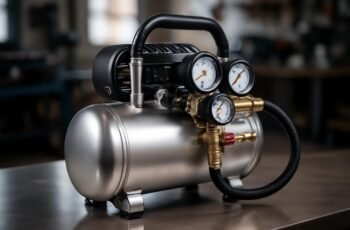
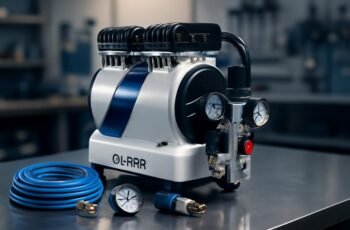
When selecting a mini air compressor, understanding the technical specifications and how they align with your specific tasks is crucial. We recognize that balancing power, portability, and reliability can be complex, especially with diverse models and features available. By examining key factors like CFM, PSI, tank capacity, and design type, we aim to provide you with a clear framework. This approach ensures you make an informed choice tailored to your needs, but knowing which features truly matter requires careful consideration.
Key Takeaways
- Assess your airflow (CFM) and pressure (PSI) needs based on intended tasks to select the appropriate model.
- Choose between portable and stationary designs considering workspace size and mobility requirements.
- Verify power source compatibility (battery or electric) to ensure seamless operation for your application.
- Prioritize safety features, brand reputation, and ease of maintenance for reliable and safe usage.
- Consider noise levels, energy efficiency, and additional features like safety valves or portability enhancements.
What Are Mini Air Compressors and How Do They Work?
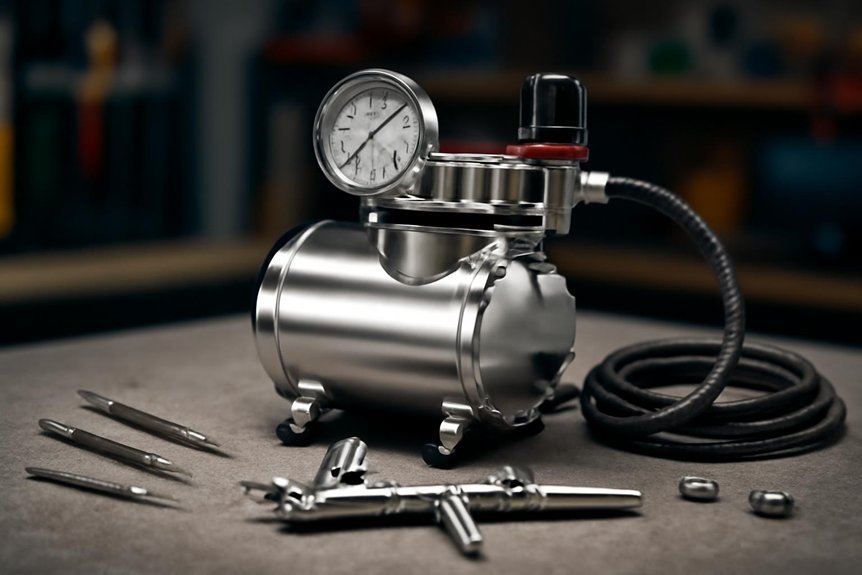
Have you ever wondered how mini air compressors operate? These devices rely on miniature pistons or micro pumps to generate compressed air efficiently in compact spaces. Micro pumps, often driven by electric motors, use reciprocating motion to compress air in a small cylinder, creating pressure that can be utilized for various applications. The pistons move within tight tolerances, ensuring minimal leakage and consistent output. This precise mechanism allows mini air compressors to deliver reliable airflow despite their size. The core principle involves converting electrical energy into mechanical motion, which then compresses the air. By focusing on the design of miniature pistons and micro pumps, manufacturers optimize performance, durability, and efficiency, making these compact devices suitable for tasks requiring portability and precision.
Key Features to Consider When Buying a Mini Air Compressor
When selecting a mini air compressor, understanding its key features is essential to ensure it meets your specific needs. Critical parameters include CFM (cubic feet per minute) for airflow, PSI (pounds per square inch) for pressure, and tank capacity for extended use. These features directly influence performance, durability, and suitability for various tasks. It’s important to evaluate power source compatibility, whether battery-powered or electric, and consider portability factors like weight and size. An unrelated topic, such as irrelevant discussion about unrelated equipment, can distract from core specifications and lead to poor decisions. Focusing on these technical details helps avoid irrelevant distractions, ensuring you choose a compressor that delivers reliable performance without compromise. Accurate assessment of key features guarantees optimal functionality tailored to your applications.
Comparing Different Types of Mini Air Compressors
When comparing mini air compressors, we evaluate portability versus stability, as portable models are lightweight but less capable for continuous use, while stationary units offer greater power at the cost of mobility. Additionally, choosing between oil-lubricated and oil-free designs impacts maintenance, lifespan, and air quality, influencing suitability for specific applications. Understanding these distinctions allows us to select the optimal compressor based on operational demands and environmental considerations.
Portable vs Stationary Models
What are the key differences between portable and stationary mini air compressors, and how do these distinctions impact their suitability for various tasks? Portable vs stationary models primarily differ in mobility, size, and power capacity. Portable models are compact, lightweight, and designed for easy transportation, making them ideal for on-the-go applications like tire inflating or small-scale tasks. Stationary models, however, are larger, heavier, and intended for fixed installation, offering higher airflow rates and continuous operation. The choice hinges on the task’s scope: portable models excel for intermittent, mobile needs, while stationary units suit demanding, consistent workloads. Understanding these differences enables precise matching of compressor type to specific use cases, optimizing performance and efficiency.
Oil-Lubricated vs Oil-Free
Choosing the right mini air compressor often depends on understanding the differences between oil-lubricated and oil-free models, as these impact maintenance, durability, and performance. Oil lubrication in compressors reduces wear on moving parts, extending lifespan and ensuring consistent operation under heavy use. However, oil-lubricated units typically require more maintenance, such as regular oil changes. In contrast, oil-free compressors eliminate the need for oil lubrication, making them more convenient and lower maintenance, but they may experience increased wear over time. Noise reduction is another factor; oil-free models tend to operate more quietly due to the absence of oil-related components, making them suitable for noise-sensitive environments. Evaluating these factors helps determine the best fit for specific applications.
How to Choose the Right Mini Air Compressor for Your Needs
How can we determine which mini air compressor best suits our specific requirements? First, we analyze the intended application—precision tasks demand different specs than general inflation. We must avoid selecting a model based on wrong genre assumptions or unrelated topics that may seem appealing but lack relevance. Key factors include airflow rate (CFM), pressure capacity (PSI), and power source compatibility. For example, a small hobbyist compressor might not meet the demands of a professional workshop, so understanding your actual needs prevents mismatched choices. We also consider size and portability, ensuring it fits your workspace. By focusing on technical specifications aligned with our tasks, we avoid unnecessary features and make informed, precise decisions rather than falling for superficial features or misconceptions.
Tips for Maintaining and Using Your Mini Air Compressor Safely
To guarantee safe and efficient operation, we must follow proper operation techniques and adhere to recommended safety precautions. Regular maintenance, including inspecting hoses and pressure valves, is essential to prevent malfunctions. By systematically applying these practices, we minimize risks and prolong the lifespan of your mini air compressor.
Proper Operation Techniques
Have you ever wondered about the best practices for operating your mini air compressor safely and efficiently? Proper operation techniques are essential to maximize performance and lifespan. Start by verifying that all connections are secure before powering on. Always monitor pressure gauges to prevent over-pressurization, which can damage the unit. Use appropriate safety gear and ensure proper ventilation. Avoid running the mini air continuously beyond manufacturer recommendations to prevent overheating.
| Step | Key Action | Purpose |
|---|---|---|
| Check connections | Ensure tight and secure | Prevent leaks and accidents |
| Monitor pressure levels | Maintain within specified range | Protect internal components |
| Allow cooling periods | Avoid continuous operation | Prevent overheating |
| Use safety gear | Wear protective equipment | Minimize injury risk |
Implementing these operation techniques guarantees safe, efficient use of your mini air compressor.
Regular Maintenance Practices
Regular maintenance is essential for ensuring the longevity and optimal performance of your mini air compressor. Effective maintenance scheduling involves routine inspections of components such as filters, hoses, and valves to prevent wear and failure. Regularly draining moisture from the tank reduces corrosion risk and maintains air quality. Storage considerations are equally critical; storing the compressor in a clean, dry environment prevents rust and contamination. When not in use, disconnecting power and relieving pressure minimizes stress on internal parts. Lubrication schedules should be adhered to, based on manufacturer recommendations, to ensure smooth operation. Consistent upkeep not only prolongs the unit’s lifespan but also guarantees safe, efficient performance during operation. Proper maintenance practices are a proactive approach to avoiding costly repairs and operational downtime.
Safety Precaution Tips
Ensuring safety when operating and maintaining your mini air compressor requires strict adherence to specific precautions designed to prevent accidents and equipment damage. Comprehensive safety training is essential, ensuring users understand proper procedures and potential hazards. Always inspect the compressor before use, checking for leaks, damaged hoses, or loose fittings. Properly securing the compressor and maintaining correct pressure levels mitigate risks of explosive failure. In case of an emergency, having an emergency response plan—such as immediate shutdown protocols—is critical. Regularly updating safety knowledge helps prevent mishandling. Personal protective equipment like safety goggles and ear protection should be worn at all times. By combining safety training with vigilant operation and preparedness, you safeguard both personnel and equipment from preventable incidents.
Best Brands and Models for Mini Air Compressors in 2023
Choosing the right mini air compressor in 2023 requires a careful evaluation of brand reputation and model performance, as these factors directly impact reliability and efficiency. Top compressor brands like Makita, DEWALT, and Ryobi consistently deliver high-quality mini air units known for durability and consistent performance.
Selecting quality brands like Makita, DEWALT, and Ryobi ensures durable, reliable mini air compressors with consistent performance.
Key considerations include:
- Brand reliability: Established compressor brands often provide better support and warranty services.
- Model efficiency: Look for models with optimized airflow and low power consumption.
- Technological features: Advanced safety features and portability enhancements are common in leading brands.
When selecting from the best models, focus on those that balance power, size, and longevity. Reliable compressor brands are essential for ensuring optimal performance and long-term value.
Frequently Asked Questions About Mini Air Compressors
Have questions about mini air compressors? Understanding their technical specs and market relevance requires examining economy trends and social media buzz. These trends influence consumer perception and product development, shaping demand for compact, efficient models. Many ask about efficiency, noise levels, and durability, especially as social media platforms highlight innovative features or common issues. From an analytical standpoint, mini air compressors with higher PSI and CFM ratings are favored for versatile tasks, but they must also align with current economy trends favoring energy efficiency to reduce operational costs. Social media buzz often reflects user experiences, helping us gauge real-world reliability. Addressing these FAQs enables consumers to make informed choices, ensuring their investment matches both technical needs and market dynamics.
Frequently Asked Questions
What Is the Average Lifespan of a Mini Air Compressor?
We find that the age expectancy of a mini air compressor typically ranges from 3 to 5 years, depending on maintenance needs. Regular upkeep, such as oil changes and filter checks, notably extends its lifespan and optimal performance.
Can Mini Air Compressors Be Used for Industrial Applications?
We’ve used mini air compressors in small-scale industrial tasks, and their industrial viability depends on maintenance versus reliability. Like a precision watch, they excel with proper upkeep but aren’t suited for heavy-duty, continuous use.
How Noisy Are Mini Air Compressors During Operation?
Mini air compressors typically produce noise levels around 60-70 decibels, resulting in relatively quiet operation. We find their noise levels manageable, although some models may exhibit noticeable noisy operation depending on their design and insulation.
Are There Eco-Friendly or Energy-Efficient Mini Air Compressors Available?
Like a gentle breeze through a forest, eco-friendly features and energy efficiency shine in modern mini air compressors. We see models crafted with sustainable materials and power-saving technology, ensuring efficient operation while minimizing environmental impact and reducing energy consumption.
What Accessories or Attachments Are Compatible With Mini Air Compressors?
We find that accessories compatibility varies with mini air compressor models, but generally, adapters, blow guns, tire inflators, and spray guns are compatible, provided the attachments match the compressor’s pressure output and connection fittings for optimal functionality.
Conclusion
In conclusion, selecting the right mini air compressor requires careful analysis of your specific needs, considering factors like CFM, PSI, and tank capacity. Did you know that the global portable compressor market is projected to grow at a CAGR of 6.5% through 2027? By understanding key features and maintaining your unit properly, you ensure optimal performance and longevity. Our guide equips you with the insights needed to make an informed, technically sound decision tailored to your tasks.