Did you know that choosing the wrong air compressor can lead to 30% inefficiency in tool performance and increased operational costs? We understand that selecting the right model isn’t straightforward, as it requires analyzing technical specifications against your specific tasks. From type to capacity and features, each decision impacts productivity and long-term expense. To ensure optimal performance and cost-effectiveness, it’s crucial to understand how these variables align with your workflow—so let’s explore how to make the best choice.
Key Takeaways
- Determine required airflow (CFM) and pressure (PSI) based on your specific tools and tasks.
- Choose the compressor type (reciprocating, rotary screw, or vane) suited for your workload and maintenance preferences.
- Match capacity and power efficiency to avoid undersizing, overspending, or excessive energy costs.
- Select features and accessories like filters, regulators, and durability options that enhance performance and longevity.
- Balance initial cost with long-term operational expenses, prioritizing reliability and efficiency for better value.
What Are the Different Types of Air Compressors and Which One Suits Your Needs?
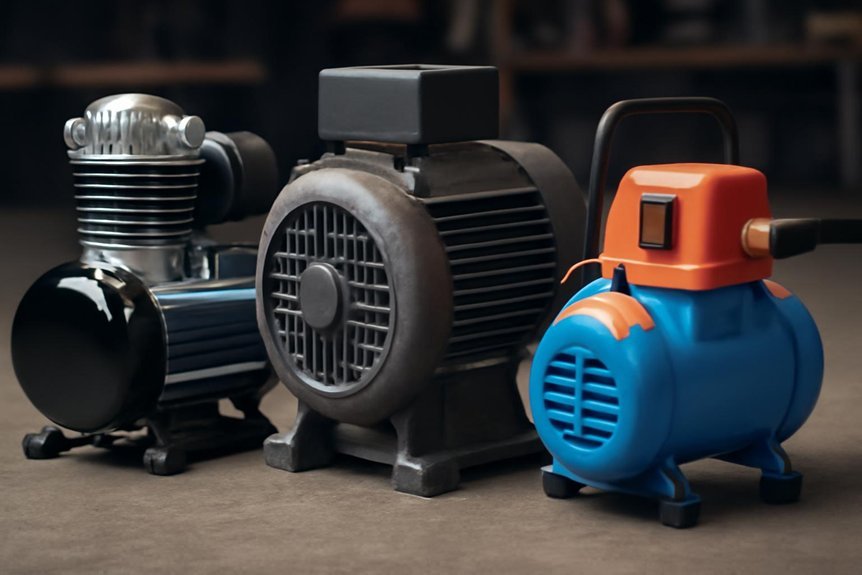
Understanding the various types of air compressors is essential for selecting the right equipment for your specific application. Choosing compressors involves analyzing operational needs, such as pressure requirements, air volume, and duty cycle. There are two primary categories: reciprocating (piston) compressors, which are suitable for small to medium tasks, and rotary screw or vane compressors, ideal for continuous, high-volume operations. Each type offers distinct advantages in efficiency and maintenance. Maintenance tips, like regular oil checks and filter replacements, are crucial for optimal performance and longevity. By understanding these differences, you ensure the compressor aligns with your project’s demands, reducing downtime and operational costs. Proper knowledge of compressor types guides effective selection, ensuring reliable, efficient, and safe operation.
How to Determine the Right Size and Capacity for Your Projects
Selecting the appropriate size and capacity for your air compressor begins with a precise assessment of your project’s demands. We analyze required airflow (CFM) and pressure (PSI) to match compressor specifications with task intensity, avoiding undersized units that hinder productivity or oversized models that inflate costs. Budget comparisons are essential, as larger capacity compressors often entail higher upfront costs but can provide better efficiency and longevity. Warranty considerations also influence decision-making; opting for reputable brands with comprehensive coverage ensures long-term reliability and reduces maintenance expenses. By calculating peak operational needs and evaluating long-term value, we can identify a compressor that balances capacity, budget, and warranty benefits, ensuring optimal performance aligned with project scope and economic constraints.
Key Factors to Consider When Choosing Power and Pressure Levels
What critical factors should we evaluate when determining the power and pressure levels required for an air compressor? We must consider power efficiency to ensure optimal energy use while meeting operational demands. Adequate pressure levels are essential for maintaining consistent airflow, but excessive pressure can lead to energy waste and increased wear. Air storage capacity influences the compressor’s ability to handle peak demands, reducing cycling frequency and improving overall performance. Additionally, the lubrication type affects both power efficiency and longevity; oil-lubricated compressors typically operate more smoothly and quietly, aiding noise reduction. Balancing these factors ensures the compressor provides reliable power and pressure while minimizing energy consumption, operational noise, and maintenance costs.
Additional Features and Accessories That Enhance Air Compressor Performance
Have you considered how additional features and accessories can optimize your air compressor’s performance? These enhancements serve as performance upgrades, improving efficiency, longevity, and functionality. For instance, moisture filters and dryers prevent corrosion and damage, maintaining consistent output quality. Pressure regulators and gauges enable precise control, reducing energy waste and ensuring safety. Quick-connect couplings facilitate faster tool changes, minimizing downtime. Some models include thermal overload protection, which shields the compressor from overheating and extends lifespan. Additionally, accessories like portable carts or sound enclosures improve usability and reduce noise pollution. Incorporating these additional features allows for better customization, enhancing overall performance, reliability, and operational efficiency. Carefully selecting suitable accessories ensures your air compressor meets specific application demands while maintaining optimal performance levels.
Tips for Budgeting and Finding the Best Value Air Compressor for Your Budget
When shopping for an air compressor within a set budget, understanding the balance between cost and performance becomes essential. Budgeting tips focus on identifying core features that meet your needs without overspending on unnecessary extras. We recommend value hunting by comparing units with similar specifications, paying attention to CFM and PSI ratings, rather than just upfront cost. Prioritize durability and efficiency, which often provide long-term savings despite higher initial investment. Consider second-tier brands with proven reliability, as they often offer better value than premium models. It’s crucial to analyze operating costs, such as energy consumption, to ensure you’re not sacrificing efficiency for initial savings. Ultimately, a strategic approach to budgeting ensures you find an air compressor that delivers optimal performance within your financial constraints.
Frequently Asked Questions
How Often Should I Perform Maintenance on My Air Compressor?
We recommend performing maintenance on your air compressor every 1,000 to 2,000 hours of operation or annually, whichever comes first, to optimize performance. Regular service scheduling guarantees reliability and prevents costly breakdowns, aligning with technical best practices.
What Safety Precautions Are Necessary When Using an Air Compressor?
Did you know 75% of compressor accidents involve inadequate safety measures? We emphasize safety training and PPE usage, ensuring proper handling, guarding moving parts, and adhering to pressure limits to prevent injuries and equipment damage.
Can I Use an Air Compressor for Painting or Cleaning?
Yes, we can use an air compressor for painting and cleaning, leveraging its versatility. Ensuring proper painting safety and selecting the right pressure and nozzle prevents damage, maximizes efficiency, and maintains safety during these applications.
How Noisy Are Different Types of Air Compressors?
Like a whispering breeze, rotary screw compressors are quieter, with noise comparisons showing they’re more suitable for noise-sensitive environments. Maintenance myths often exaggerate their noise, but understanding these differences helps us select the right compressor.
What Are the Environmental Impacts of Using Air Compressors?
We recognize that air compressors impact the environment primarily through energy consumption, affecting emissions. Choosing energy-efficient models reduces environmental impact, lowers operational costs, and promotes sustainable practices, making them essential for environmentally conscious operations.
Conclusion
Choosing the perfect air compressor isn’t just a task—it’s the key to unearthing unparalleled efficiency and precision in your projects. A misstep can lead to catastrophic failures, wasted resources, or equipment breakdowns that halt your workflow. By carefully analyzing your needs and matching them with the right specifications, you’re not just making a purchase—you’re investing in a powerhouse that will define your productivity and reliability for years to come.