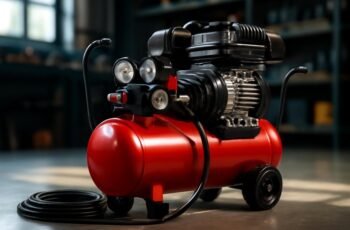
When we connect an air compressor to a pneumatic tool, the reliability of that connection hinges on choosing the right hose. Selecting a hose isn’t just about matching the fitting; it involves understanding material properties, diameter specifications, and safety standards that directly impact performance and durability. With so many options available, making an informed choice can seem complex, yet it’s essential for ensuring efficiency and safety in your workflows—something worth exploring carefully.
Key Takeaways
- Ensure the hose has appropriate pressure and burst ratings for safe, reliable operation under your compressor’s specifications.
- Choose the correct diameter to optimize airflow, tool performance, and reduce pressure loss.
- Select the right hose length to balance workspace reach and airflow efficiency, avoiding excessive pressure drops.
- Prioritize durable, flexible materials like rubber or polyurethane suited for your working environment.
- Verify hoses meet safety standards, feature color coding for easy identification, and are from reputable brands.
What Are the Key Factors to Consider When Choosing an Air Compressor Hose
When selecting an air compressor hose, understanding the key factors that influence performance and durability is essential. Hose color can serve practical purposes, such as color-coding for specific applications or pressure ratings, aiding in quick identification and safety compliance. Additionally, hose color choices may impact visibility in cluttered workspaces, enhancing safety protocols. Branding options are equally important, as they reflect quality assurance and manufacturer reliability; reputable brands often provide consistent performance and warranty support. Material compatibility, pressure ratings, and reinforcement levels should align with your specific operational demands. By considering hose color for identification and branding options for dependability, you guarantee excellent performance, safety, and ease of maintenance in your compressed air system.
Which Hose Materials Offer the Best Durability and Flexibility?
Choosing the right hose material is crucial for guaranteeing maximum durability and flexibility in compressed air systems. Materials like rubber, thermoplastic, and polyurethane excel due to their high material strength and resilience under repeated stress. Rubber hoses offer superior durability and excellent flexibility, making them ideal for demanding applications, but tend to be heavier. Thermoplastics, such as PVC, provide a good flexibility balance with enhanced chemical resistance and lighter weight, though they may compromise some abrasion resistance. Polyurethane hoses combine high elasticity with toughness, maintaining flexibility even at low temperatures. Selecting the best material depends on prioritizing material strength for longevity versus flexibility for ease of handling. Understanding these properties helps guarantee the hose withstands operational demands while maintaining maneuverability.
How Does Hose Diameter Affect Airflow and Tool Performance?
Hose diameter directly influences airflow rate, with larger diameters reducing pressure loss and maintaining ideal tool power. Selecting the appropriate size depends on tool requirements, as insufficient diameter can restrict airflow and diminish performance. Understanding these relationships guarantees compatibility and efficiency in air-powered applications.
Airflow Rate Impact
The diameter of an air compressor hose plays a crucial role in determining the airflow rate, which directly impacts tool performance. Larger diameters reduce pressure drop over distance, maintaining higher airflow rates essential for power tools requiring consistent airflow. Conversely, smaller diameters restrict airflow, causing performance loss and increased strain on the compressor. Hose insulation can influence heat retention, affecting airflow efficiency over extended use, while color coding helps identify ideal diameters for specific applications, ensuring correct airflow management. Proper selection of hose diameter, combined with insulated hoses and clear color coding, guarantees minimal airflow resistance and maximized tool efficiency. Understanding these factors allows for precise control over airflow rates, ensuring tools operate at peak performance without unnecessary pressure loss.
Tool Compatibility Factors
Hose diameter directly influences how well an air compressor setup meets the specific demands of various pneumatic tools. A larger diameter reduces resistance, allowing higher airflow rates essential for power-intensive tools like sanders or impact wrenches. Conversely, smaller diameters restrict airflow, which can hinder tool performance or cause pressure drops. When selecting hoses, consider attributes like hose color, which often indicates specifications or compatibility, and branding reputation, guaranteeing quality and durability. Reliable brands typically produce hoses with consistent diameter tolerances and reinforced construction, preventing leaks or bursts. Proper matching of hose diameter to tool requirements maximizes efficiency, minimizes wear, and maintains ideal airflow. This technical compatibility ensures tools operate at their intended performance levels, avoiding potential damage caused by inadequate airflow or pressure drops.
What Is the Ideal Length for Your Air Compressor Hose?
Choosing the correct length for your air compressor hose is vital to maximize performance and safety. Hose length variations considerably impact airflow efficiency, pressure stability, and maneuverability. Longer hoses provide increased reach for customized hose setups, reducing the need for excessive repositioning of the compressor. However, overly extended hoses can cause pressure drops, leading to reduced tool performance. Typically, a 25 to 50-foot hose balances flexibility with minimal pressure loss, but specific applications may require adjustments. When selecting length, consider workspace dimensions, tool mobility, and the necessity for stored slack. Properly calibrated hose length ensures consistent airflow, minimizes strain on connections, and enhances operational safety. Ultimately, tailoring hose length to your project and workspace ensures maximum functionality and minimizes potential operational issues.
How Important Is Compatibility With Your Air Compressor and Tools?
Selecting the right length for your air compressor hose directly influences compatibility with your tools and overall system performance. Proper compatibility guarantees ideal airflow, pressure maintenance, and efficient operation, reducing the risk of air compressor safety issues. Mismatched hoses can cause pressure drops or leaks, compromising safety and tool effectiveness. Additionally, hose color coding plays a vital role in identifying compatible hoses quickly, especially in complex setups or workplaces with multiple systems. Making sure your hose matches the specifications of your compressor and tools—such as diameter and pressure rating—is essential to prevent damage and maintain safe operation. Compatibility also minimizes the need for adapters or modifications, streamlining workflows and preventing potential safety hazards. Ultimately, precise compatibility supports both safety and efficiency in your air system.
What Are Common Types of Air Compressor Hoses and Their Use Cases?
Understanding the different types of air compressor hoses is essential for optimizing performance and ensuring safety in various applications. Each type varies in construction, hose color, and branding options, which influence their specific use cases.
- Rubber hoses: Highly flexible, durable, and resistant to abrasion, ideal for general industrial applications.
- Polyurethane hoses: Lightweight, with excellent elasticity, suitable for high-pressure tasks and longer reach.
- PVC hoses: Cost-effective, transparent, and chemical-resistant, perfect for light-duty operations.
- Hybrid hoses: Combine rubber and PVC properties, offering flexibility and durability, often branded with color coding for quick identification.
Choosing the right hose involves understanding these types’ technical features, hose color coding for quick visual cues, and branding options for quality assurance.
How to Assess the Safety and Pressure Ratings of Air Hoses?
Evaluating the safety and pressure ratings of air hoses is critical to guaranteeing reliable operation and preventing accidents. We must verify compliance with safety regulations and conduct pressure testing to confirm hose integrity under maximum operational pressures. Always check the manufacturer’s specified pressure rating—this guarantees the hose can withstand operating conditions safely. Additionally, review the hose’s burst pressure, which should be at least four times the working pressure, to provide a safety margin.
| Aspect | Importance |
|---|---|
| Safety Regulations | Ensures compliance with industry standards and legal codes. |
| Pressure Testing | Validates the hose’s ability to withstand specified pressures. |
| Pressure Ratings | Guides selection for safe, reliable use in specific applications. |
Tips for Maintaining and Extending the Life of Your Air Compressor Hose
Proper storage and regular inspections are critical to maintaining the integrity of your air compressor hose. Ensuring hoses are stored in a cool, dry environment and free from kinks or abrasions prevents premature failure. Consistent inspection of connections, fittings, and the hose itself helps identify signs of wear that could compromise safety or performance.
Proper Storage Techniques
To guarantee your air compressor hose remains durable and functions effectively over time, implementing proper storage techniques is essential. Proper storage prevents damage from environmental factors and maintains hose integrity. First, always coil hoses neatly to prevent kinks that can weaken the material; use a hose reel or storage container designed for flexible hoses. Second, store hoses in a cool, dry environment, away from direct sunlight, which can degrade the hose material, especially for hoses with bright or dark colors. Third, select storage containers that are airtight and resistant to temperature fluctuations to minimize moisture buildup. Fourth, consider color-coded hoses; storing different hose colors in designated areas aids quick identification and prevents unnecessary handling. These practices extend hose lifespan and ensure safe, reliable operation.
Regular Inspection Practices
Have you ever wondered how small cracks or wear spots can compromise the safety and efficiency of your air compressor hose? Regular inspection practices are essential for early detection of deterioration. We recommend establishing a strict inspection frequency—ideally before each use—to identify any signs of damage, such as abrasions, bulges, or leaks. During inspections, hose cleaning is vital; remove dirt, debris, and moisture that can accelerate wear. Pay close attention to coupling connections, as loose or damaged fittings can cause pressure drops or leaks. Using a systematic approach guarantees that potential issues are caught early, preventing failures that could lead to safety hazards or costly downtime. Consistent, detailed inspections greatly extend your hose’s service life and maintain peak performance.
Where to Find the Best Deals and Quality Air Compressor Hoses
Finding the best deals and guaranteeing top-quality air compressor hoses requires targeted research and an understanding of key purchasing factors. To optimize your investment, consider these steps:
To find top-quality air compressor hoses, conduct thorough research and compare prices, brands, and specifications carefully.
- Conduct thorough pricing comparisons across multiple vendors, including online retailers and local stores, to identify competitive rates without sacrificing quality.
- Evaluate brand reputation through customer reviews, industry ratings, and warranty policies to ensure reliability and durability.
- Prioritize suppliers with transparent specifications, such as pressure ratings and material standards, which directly impact hose performance.
- Seek out specialized stores or authorized distributors known for authentic products and expert guidance, reducing the risk of counterfeit or substandard hoses.
Frequently Asked Questions
Can I Connect Multiple Hoses for Longer Reach?
Yes, we can connect multiple hoses for extended reach if the hose material and connector compatibility are guaranteed; using appropriate couplers maintains air pressure and prevents leaks, making the setup both efficient and safe for prolonged use.
How Do Temperature Changes Affect Hose Performance?
Temperature changes impact hose performance considerably; hoses with superior hose material and high temperature resistance maintain flexibility and durability under extreme conditions, preventing cracking or degradation, ensuring consistent airflow and safety during varied environmental exposures.
Are There Hoses Suitable for Outdoor or Harsh Environments?
Yes, we recommend hoses made from durable materials like reinforced rubber or polyurethane, offering excellent chemical resistance and ruggedness for outdoor or harsh environments, ensuring reliable performance despite exposure to extreme temperatures, abrasions, and chemicals.
What Are the Signs of a Failing or Unsafe Air Hose?
We notice signs of a failing or unsafe air hose through cracks, leaks, or bulges, especially when hose material deteriorates or pressure rating drops below specifications, indicating compromised integrity and potential safety hazards requiring immediate inspection or replacement.
How Do I Properly Store My Air Compressor Hose?
We store our air compressor hoses by coiling them neatly, avoiding kinks, and using hose reels or hooks. We select durable hose material suited for our environment and follow proper storage techniques to prevent damage and guarantee longevity.
Conclusion
In summary, selecting the right air compressor hose is essential for peak performance and safety. Studies show that using properly rated hoses can reduce pressure-related failures by up to 30%, emphasizing the importance of thorough evaluation. By carefully considering material, diameter, length, and compatibility, and maintaining your hose properly, you guarantee reliable operation and extended lifespan. Making informed choices today assures safer, more efficient workflows tomorrow, maximizing your investment and productivity.