There’s a common assumption that choosing the most powerful, largest tank gas compressor always guarantees optimal performance, but this oversimplifies the decision. In reality, understanding the nuances of CFM, PSI, and compressor type often has a greater impact on your success. We can help clarify these technical considerations and guide you through selecting a model that balances capacity, portability, and cost. Exploring these factors ensures you make an informed choice capable of meeting your specific operational needs.
Key Takeaways
- Assess airflow needs (CFM) and pressure requirements (PSI) for your specific applications.
- Choose the appropriate engine type (two-stroke or four-stroke) and gas fuel for power and efficiency.
- Consider compressor type (reciprocating, rotary screw, vane) based on usage frequency and workload.
- Evaluate portability features, noise levels, and size to match work environment and transport needs.
- Factor in total ownership costs, including fuel consumption, maintenance, warranty, and long-term durability.
What Are Gas-Powered Air Compressors and How Do They Work?
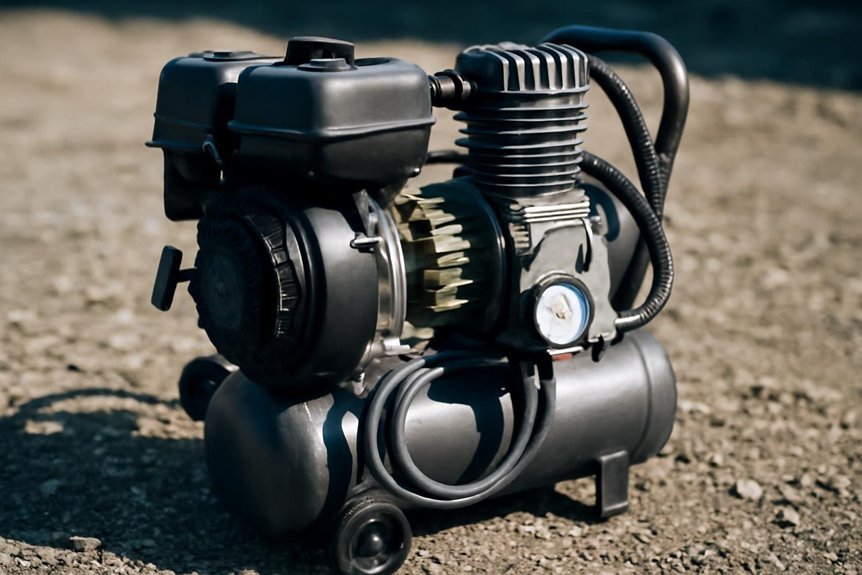
Have you ever wondered how gas-powered air compressors generate high-pressure airflow? They operate by converting the energy from internal combustion engines into compressed air through a piston or rotary screw mechanism. The gas capacity of these units determines how long they can operate before refueling, directly affecting productivity. Various engine types, including two-stroke and four-stroke engines, power the compressor, influencing efficiency and maintenance needs. Gas-powered compressors typically feature an internal combustion engine linked to a compressor pump; as the engine runs, it drives the piston or screw, compressing ambient air. This compressed air is stored in a tank for immediate use. Understanding engine types and gas capacity helps in selecting a compressor suited for specific operational demands, ensuring reliable performance in remote or mobile applications.
Key Features to Consider When Choosing a Gas-Powered Air Compressor
What critical features should we evaluate to guarantee we select the right gas-powered air compressor for our specific needs? First, we consider the gasoline engine’s power output, measured in horsepower or CFM, to match workload demands. Reliable engine performance depends on choosing the right oil types; synthetic oils offer better temperature stability, while conventional oils may suffice for lighter use. Oil capacity and the ease of oil changes are also essential, impacting maintenance and longevity. Additionally, compression ratio and tank size influence operational efficiency, while durability hinges on build quality and engine design. Ensuring the compressor’s components are compatible with specific gasoline engines is crucial for peak performance. Prioritizing these features guarantees a precise fit for our application and operational reliability.
Different Types of Gas-Powered Air Compressors and Which Is Right for You
Choosing the right type of gas-powered air compressor depends heavily on understanding the different configurations available and how each aligns with specific operational requirements. The primary types include reciprocating (piston) compressors, rotary screw compressors, and rotary vane models, each distinguished by unique gas engine designs and efficiencies. Reciprocating compressors are ideal for intermittent use and provide high-pressure output, but may have lower fuel efficiency. Rotary screw compressors deliver continuous operation with better fuel efficiency, making them suitable for extended tasks. Gas engine design impacts operational reliability and maintenance needs, while fuel efficiency determines operational costs over time. Selecting the appropriate configuration involves balancing power demands, operational duration, and efficiency goals to match your specific application.
How to Determine the Right Size and Power for Your Needs
Determining the appropriate size and power of a gas-powered air compressor requires careful assessment of your specific operational demands. We need to evaluate airflow requirements, measured in CFM, and pressure needs, in PSI, to guarantee optimal performance. For tasks like powering leaf blower hybrids, which often demand variable power, selecting a compressor with adjustable output can improve efficiency. Gas pricing factors into operational costs, so choosing a compressor with the right capacity prevents unnecessary fuel consumption. Larger compressors provide higher CFM and PSI, suitable for heavy-duty tasks, while smaller units suffice for lighter jobs. Accurately matching size and power to your workload minimizes energy waste and maximizes productivity, ensuring you invest in equipment that aligns with your operational scope and budget constraints.
Essential Maintenance Tips for Longevity and Performance
Maintaining your gas-powered air compressor properly is essential to guarantee it operates reliably and at peak performance over time. A thorough maintenance checklist ensures all critical components function optimally, directly impacting fuel efficiency and long-term durability.
- Regularly inspect and replace air filters to prevent debris buildup, maintaining compressor efficiency.
- Drain moisture from the tank and check for corrosion, which can impair performance and safety.
- Schedule routine spark plug and oil changes to optimize combustion and fuel efficiency, reducing unnecessary wear.
Adhering to these steps minimizes downtime and extends equipment lifespan. Proper maintenance not only preserves performance but also ensures operational safety and cost-effective use of fuel.
Safety Tips for Operating Gas-Powered Air Compressors
To ensure safe operation of gas-powered air compressors, we emphasize the importance of wearing appropriate protective gear, including eye and hearing protection. We also recommend verifying proper ventilation to prevent the buildup of hazardous fumes and following the manufacturer’s operating instructions meticulously. Adhering to these safety measures minimizes risk and maintains optimal equipment performance.
Wear Proper Protective Gear
Why is wearing proper protective gear essential when operating gas-powered air compressors? Ensuring gas safety depends heavily on PPE importance to prevent injury from high-pressure air, hot surfaces, and potential debris. Proper gear minimizes risk and maintains operational safety.
Key PPE items include:
- Safety goggles or face shields to protect against flying debris and pressurized spray.
- Ear protection to guard against noise levels that exceed safe thresholds.
- Heavy-duty gloves and durable clothing to prevent burns and cuts from hot components and moving parts.
Using the correct PPE enhances safety protocols, reduces injury risk, and ensures compliance with safety standards. Adhering to PPE importance is crucial for responsible operation and maintaining a secure working environment when handling gas-powered air compressors.
Check Ventilation Areas
Have we thoroughly assessed the ventilation of our operating area before starting the compressor? Conducting a proper ventilation assessment is critical to ensure safe operation, especially in enclosed or semi-enclosed spaces. Adequate airflow troubleshooting helps identify potential stagnation zones where heat and exhaust gases might accumulate. We should verify that ventilation outlets are unobstructed and that airflow patterns promote continuous removal of fumes and heat. Monitoring oxygen levels with a gas detector is essential to prevent hazardous atmospheres. Proper ventilation reduces the risk of carbon monoxide buildup and ensures that exhaust gases disperse efficiently. Before operation, inspect all ventilation pathways and consider supplemental fans if natural airflow is insufficient. This proactive approach minimizes health risks and maintains optimal compressor performance.
Follow Operating Instructions
Are we fully aware of the necessary safety procedures before operating a gas-powered air compressor? Proper adherence to operating instructions is crucial to prevent accidents involving gasoline fumes and spark risks. We must ensure the compressor is on stable, level ground and that all guards are in place. Before starting, verify there are no leaks or fuel spills. During operation, avoid open flames or sources of static electricity near the compressor, given the risk of igniting gasoline fumes.
Key safety steps include:
- Reading and understanding the manufacturer’s manual thoroughly.
- Ensuring adequate ventilation to disperse gasoline fumes.
- Regularly inspecting the unit for loose fittings or damaged components to prevent spark risks.
Strict compliance minimizes hazards and promotes safe, efficient use of the equipment.
Comparing Top Models: Pros, Cons, and Best Uses
When comparing top gas-powered air compressor models, we assess their performance and power output to meet specific workload demands. Portability and size influence ease of transport and storage, which are critical for on-site applications. Understanding the ideal applications for each model ensures optimal efficiency and equipment longevity.
Performance and Power
Selecting a gas-powered air compressor requires careful consideration of performance metrics such as CFM (cubic feet per minute) and PSI (pounds per square inch), which directly impact operational efficiency and suitability for specific tasks. Key factors include the gas type—gasoline or twin-cylinder engines—affecting power output and fuel consumption, and noise levels, which influence workplace comfort and compliance. When comparing top models, consider these aspects:
- CFM and PSI ratings: Higher values enable handling demanding applications like framing or industrial tasks.
- Gas type: Gasoline engines offer portability but typically generate more noise, while twin-cylinder models deliver greater power with smoother operation.
- Noise levels: Lower noise levels improve usability in noise-sensitive environments without compromising performance.
Portability and Size
Among the top gas-powered air compressors, portability and size are critical factors that influence ease of transportation and suitability for different job sites. Smaller models typically offer lightweight design, making them ideal for remote or on-site tasks where mobility is essential. Larger units, while more powerful, tend to be bulkier and less portable, requiring additional handling equipment. When considering portability, noise levels also play a role; quieter compressors are advantageous in confined or noise-sensitive environments. Additionally, fuel consumption impacts operational costs; models that run on cheap fuel reduce ongoing expenses and improve efficiency. Ultimately, selecting a compressor with the right balance of size, noise levels, and fuel economy ensures optimal performance tailored to specific job site demands.
Ideal Applications
Different gas-powered air compressors excel in specific applications, and understanding their strengths and limitations helps us choose the right model for the task at hand. For demanding, continuous operation, models with high gas engine reliability are essential, ensuring consistent performance over extended periods. When portability is less critical, larger units offer higher airflow capabilities suitable for industrial tasks. Fuel efficiency is a vital factor, especially for prolonged use, reducing operational costs.
- Construction sites benefit from rugged models with high airflow output and reliable gas engines.
- Automotive repair and maintenance require portable units with good fuel economy for quick, on-the-go tasks.
- Manufacturing environments demand high durability, consistent performance, and optimized fuel efficiency to sustain long shifts.
How to Budget for Your Gas-Powered Air Compressor Purchase
Have you established a clear budget before shopping for a gas-powered air compressor? Effective budget planning involves assessing both the purchase price and ongoing operational costs, such as fuel, maintenance, and potential repairs. Determine a maximum spending limit aligned with your project’s scope and frequency of use. Consider financing options, which can spread out costs and make higher-capacity models more accessible. Evaluate the total cost of ownership, including warranty coverage and long-term durability. Setting a realistic budget ensures you prioritize essential features without overspending. Consulting with suppliers about financing solutions can optimize affordability. By establishing a precise budget, you streamline your purchase process and make informed decisions, ensuring the compressor’s performance aligns with your operational needs and financial constraints.
Frequently Asked Questions
What Are the Most Common Issues With Gas-Powered Air Compressors?
We find that common issues with gas-powered air compressors include overheating, oil leaks, and pressure fluctuations, which raise safety concerns. Regular maintenance and proper operation help prevent these problems, ensuring safety and optimal performance.
How Long Do Gas-Powered Air Compressors Typically Last?
Gas-powered air compressors typically last 8-15 years with proper maintenance. Their durability hinges on a strict maintenance schedule, ensuring components like the piston and valves stay in prime condition, much like a finely tuned engine.
Can Gas-Powered Compressors Be Used Indoors Safely?
Gas-powered compressors are generally unsafe indoors due to exhaust emissions, which can cause carbon monoxide buildup. We recommend using them only in well-ventilated outdoor areas to ensure proper indoor safety and prevent health risks.
What Fuel Types Are Compatible With These Compressors?
Gas-powered compressors primarily use gasoline, offering pros like portability and quick refueling. Rental options are available for short-term use, but always ensure compatibility with your specific compressor model and follow safety guidelines for optimal operation.
Are There Environmentally Friendly Options for Gas-Powered Air Compressors?
Certainly, we consider environmentally friendly options by exploring alternative fuels, such as propane or bioethanol, aligning with environmental considerations. These fuels offer cleaner combustion, reducing emissions and environmental impact of gas-powered air compressors effectively and efficiently.
Conclusion
Choosing the right gas-powered air compressor demands precision and careful consideration. While the initial investment may seem significant, neglecting key features can lead to costly downtime and repairs. It’s about balancing power with portability, efficiency with durability. In this meticulous process, we safeguard our projects’ success and our tools’ longevity. When matched correctly, the compressor becomes not just a tool, but a reliable partner—empowering us to work smarter, safer, and more efficiently.