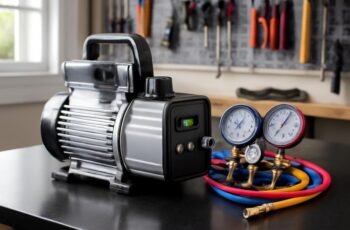
Picture a workshop where the hum of an air compressor echoes steadily, powering tools that demand precise airflow. Choosing the right unit isn’t just about capacity; it’s about matching specifications to your workload efficiently. Every detail—from power source to size—affects performance and cost. To make a truly informed decision, understanding these factors is essential; missing key elements could leave you stuck with an undersized or overly expensive system, so let’s explore what matters most.
Key Takeaways
- Determine your air demand by calculating peak and average CFM needs to select the right compressor size.
- Choose a power source suitable for your location, balancing efficiency and accessibility—electric for stable power, gas for remote sites.
- Consider portability and space constraints to find a unit that fits your workspace without sacrificing capacity.
- Evaluate key features like fluctuation tolerance, noise reduction, tank size, and pressure ratings for optimal performance.
- Balance upfront costs with long-term operational expenses by assessing energy efficiency, maintenance, warranty, and durability.
How to Determine Your Air Compressor’s Ideal Capacity
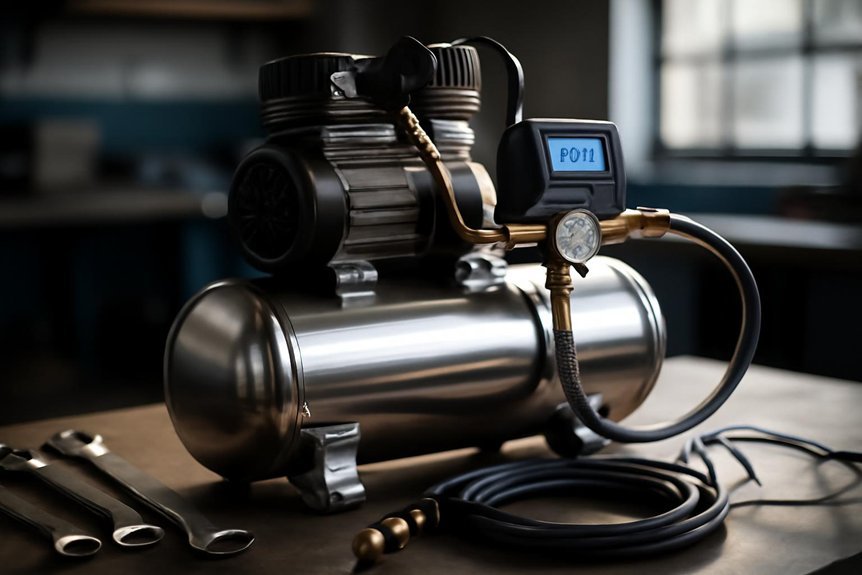
How can you accurately determine the ideal capacity for your air compressor? The key is evaluating your specific air demand by analyzing CFM (cubic feet per minute) and PSI (pounds per square inch) ratings, ensuring the compressor meets or exceeds these requirements. When selecting oil-free models, consider their decibel ratings, especially if noise levels impact your workspace. Accurate assessment involves calculating peak and average CFM needs based on your tools and applications, avoiding undersized units that can cause pressure drops or oversized units that waste energy. By carefully analyzing these technical specifications—CFM, PSI, and decibel ratings—you ensure optimal compressor performance, energy efficiency, and compliance with noise regulations. This precise approach guarantees the capacity aligns with your operational demands, preventing unnecessary wear or performance issues.
Choosing the Right Power Source for Your Needs
Selecting the appropriate power source for your air compressor directly impacts its operational efficiency, reliability, and suitability for your workspace. Electric motors generally offer higher motor efficiency, especially in stable power environments, translating to lower energy consumption. Conversely, gas-powered units excel in remote locations where electrical access is limited, though they typically have lower efficiency and produce more emissions. Air density variations, influenced by altitude and temperature, affect compressor performance by altering intake air volume and pressure. It’s essential to consider these environmental factors when choosing a power source, as they influence overall efficiency and equipment longevity. By analyzing your specific operational conditions, you can determine whether an electric or gas-powered compressor optimizes air density handling and maximizes motor efficiency, ensuring reliable, cost-effective performance.
Prioritizing Portability and Space Considerations
Have we adequately considered the physical constraints of our workspace when choosing an air compressor? Portability and space are critical factors. A lightweight, portable compressor with a low portable weight enhances maneuverability, especially in confined environments. Conversely, larger models with significant storage footprints may offer higher capacities but reduce flexibility. To optimize, we must balance these aspects:
| Feature | Impact | Consideration |
|---|---|---|
| Portable weight | Ease of transport | Select lighter units for mobility |
| Storage footprint | Spatial requirements | Measure available space before purchase |
| Maneuverability | Accessibility in tight areas | Opt for compact designs |
| Capacity vs. size | Performance vs. space limits | Match capacity to workspace size |
Understanding these trade-offs ensures effective space management without compromising functionality.
Understanding Key Features and Specifications to Compare
When comparing air compressors, understanding their key features and specifications allows us to make informed decisions that align with our workspace needs and operational demands. Critical parameters include fluctuation tolerance, which ensures consistent performance under variable load conditions, and noise reduction features that minimize operational disruption. Examining CFM ratings helps determine airflow capacity, while PSI ratings indicate maximum pressure output. Motor power affects durability and startup performance, and tank size influences runtime and recovery time. Additionally, considering build quality and durability ensures longevity. These specifications enable us to assess compressor stability, efficiency, and suitability for demanding tasks, ultimately guiding us toward models that balance reliability with performance.
Tips for Budgeting and Finding the Best Value
How can we guarantee we’re getting the best value for our investment in an air compressor? Effective budget allocation is crucial, requiring a detailed analysis of upfront costs versus long-term operational expenses. To optimize cost saving strategies, we should consider energy efficiency ratings and maintenance requirements, which directly impact total cost of ownership. By assessing performance specifications against our actual workload, we can avoid overspending on features we don’t need, thus maximizing value. Additionally, evaluating warranty coverage and parts availability can prevent unforeseen expenses. Prioritizing quality and durability within our budget ensures reliability and reduces replacement frequency. Ultimately, a balanced approach—combining initial affordability with ongoing efficiency—enables us to secure an air compressor that delivers the best overall value for our specific needs.
Frequently Asked Questions
How Often Should I Perform Maintenance on My Air Compressor?
We recommend performing maintenance on your air compressor every 1-3 months, depending on usage, to ensure optimal performance and tool compatibility. Regular inspections and part replacements help prevent breakdowns and extend the compressor’s lifespan efficiently.
What Safety Precautions Should I Take When Using an Air Compressor?
We prioritize safety procedures by wearing protective gear, including eye and ear protection, ensuring proper ventilation, and inspecting equipment regularly. These steps mitigate risks, prevent accidents, and promote safe operation of the air compressor in various work environments.
Can I Use an Air Compressor for Painting or Cleaning?
Yes, we can use an air compressor for painting or cleaning, but we analyze whether it suits airbrush techniques and paint sprayer compatibility, ensuring it provides consistent pressure and flow for precise, efficient results in both applications.
How Loud Are Different Types of Air Compressors?
Different air compressors vary in loudness, with piston types often louder than scroll or rotary screw models. We recommend noise reduction strategies like soundproof enclosures or mufflers to minimize noise, enabling safer, more comfortable operation in noise-sensitive environments.
What Are Common Signs of Air Compressor Failure?
We’ve found that 70% of compressor failures stem from improper maintenance scheduling. Common failure signs include unusual noises, overheating, pressure drops, or leaks, indicating the need for prompt inspection and preventive maintenance to avoid costly breakdowns.
Conclusion
Choosing the right air compressor is like tuning a precision instrument — every detail counts. By carefully matching capacity, power source, portability, and features to your specific needs, we ensure optimal performance and efficiency. This process is akin to assembling a complex puzzle, where each piece must fit perfectly for a seamless operation. When we make informed decisions, we maximize reliability and value, ultimately transforming a technical tool into a dependable asset for any project.