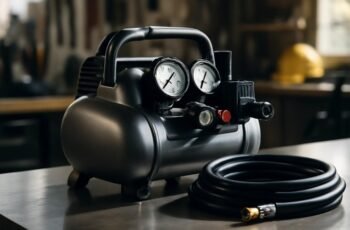
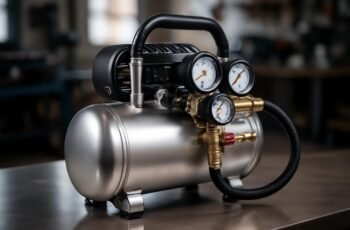
When choosing an air compressor, understanding its features is crucial to guarantee it meets your specific needs. From types and performance metrics like CFM and PSI to safety and durability aspects, each element plays a essential role. We’ll explore how these features influence usability and reliability, helping you make an informed decision. With so many options available, knowing what to prioritize can be complex—so let’s examine the key factors that determine a compressor’s overall effectiveness.
Key Takeaways
- Main compressor types include positive displacement and dynamic, each suitable for different pressure and volume requirements.
- CFM measures air volume flow, while PSI indicates pressure level; both must match application needs.
- Safety features like pressure relief valves and automatic shutoff prevent over-pressurization and ensure safe operation.
- Material quality, corrosion resistance, and durable welds are critical for long-term compressor reliability.
- Power options (electric, diesel, gas) and mobility features influence suitability for indoor, outdoor, or remote use.
What Are the Main Types of Air Compressors and How Do They Differ?
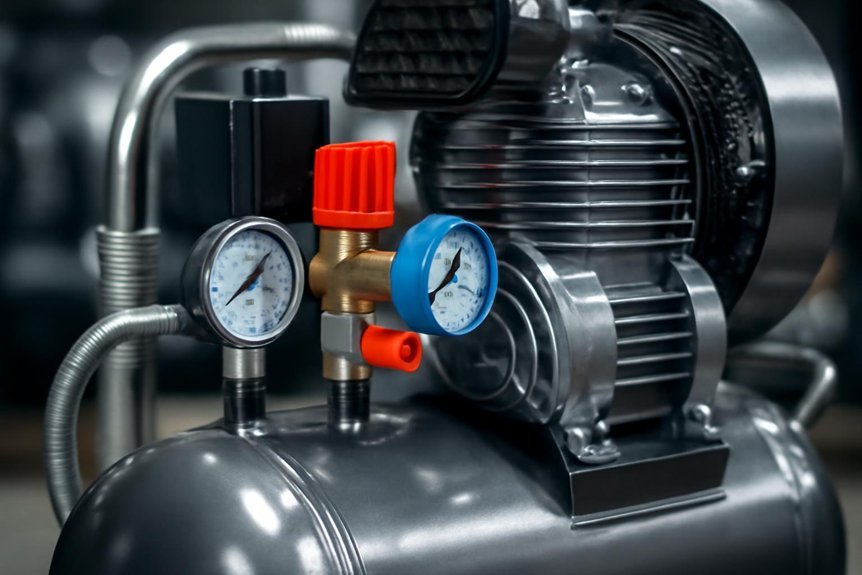
Have you ever wondered how different air compressors work and what sets them apart? The main types of air compressors are typically classified into two-word discussion ideas: positive displacement and dynamic. Positive displacement compressors include reciprocating and rotary screw models. They work by trapping a specific volume of air and then compressing it within a chamber, making them ideal for high-pressure applications. Dynamic compressors, such as centrifugal and axial types, operate by imparting velocity to the air through spinning impellers, then converting that velocity into pressure. They’re suited for large-volume, lower-pressure tasks. Each main type has distinct mechanisms, efficiencies, and use cases, which influence their selection based on the required pressure, volume, and operational environment.
How Do CFM and PSI Impact Air Compressor Performance?
Understanding how CFM (cubic feet per minute) and PSI (pounds per square inch) influence air compressor performance is essential for selecting the right equipment for your needs. CFM vs PSI determines how effectively an air compressor can deliver air under specific conditions. CFM measures the volume of air produced per minute, impacting how quickly tools operate; higher CFM supports continuous, high-demand tasks. PSI indicates the pressure level, affecting the force behind the air, which is critical for tasks requiring power. These two factors also influence air storage dynamics—higher PSI allows more compressed air in the tank, but sufficient CFM ensures consistent airflow. Balancing CFM and PSI ensures peak performance, preventing underperformance or equipment strain. Understanding these metrics helps match the compressor’s capabilities to your specific application needs.
What Features Make an Air Compressor Easy to Use and Maintain?
To ensure an air compressor is easy to operate and maintain, we focus on features like user-friendly controls that simplify adjustments, accessible panels for quick inspections, and a low-maintenance design that reduces downtime. These elements help users manage the compressor efficiently without extensive technical knowledge. By prioritizing these features, we make sure the compressor remains reliable and straightforward to care for.
User-Friendly Controls
What features make an air compressor easy to operate and maintain? User-friendly, intuitive controls are essential. These controls simplify operation, often featuring clearly labeled buttons, easy-to-read gauges, and straightforward adjustment knobs. Such design minimizes user error and speeds up setup and troubleshooting. Additionally, a durable build ensures controls remain responsive over time, reducing the need for frequent repairs. Many models include digital displays that provide real-time data, making it simple to monitor pressure levels and operational status. Smooth, ergonomic control layouts also help users operate the compressor confidently and efficiently. Overall, a combination of intuitive controls and a robust build enhances ease of use, ensuring the compressor remains reliable and simple to maintain throughout its lifespan.
Easy Access Panels
Easy access panels considerably improve how straightforward it is to service and maintain an air compressor. These panels enable quick inspections, repairs, and routine maintenance without dismantling large sections. When selecting compressors, look for features like:
- Simple, tool-less access: Panels that open easily without special tools save time and reduce frustration.
- Panels durability: High-quality materials ensure long-lasting performance, resisting wear and tear.
- Corrosion resistance: Coatings or materials that withstand moisture and environmental factors prolong panel life and keep the compressor operational in demanding conditions.
Low Maintenance Design
Have you ever struggled with maintaining an air compressor that requires extensive downtime and complex procedures? A low maintenance design ensures that upkeep is straightforward, minimizing service time and reducing operational disruptions. Features like easily accessible components, sealed bearings, and simplified cooling systems contribute significantly to design efficiency. These elements allow for quick inspections, simple part replacements, and less frequent lubrication, all of which save time and effort. Additionally, durable materials and quality construction reduce wear and tear, prolonging the compressor’s lifespan. By prioritizing low maintenance features, manufacturers create units that are easier to operate and sustain, ultimately leading to fewer breakdowns and lower maintenance costs. This focus on design efficiency helps users keep productivity high with minimal hassle.
Which Power Source Is Best for Your Needs: Electric, Gas, or Diesel?
Choosing the right power source for an air compressor depends largely on your specific application and operational environment. When comparing electric vs. diesel, electric models are ideal for indoor use, offering quiet operation and low emissions. Diesel compressors excel in remote locations, providing high power and durability for heavy-duty tasks. Here’s how to decide:
- Indoor vs. Outdoor Use: Electric compressors are best indoors due to limited emissions; diesel suits outdoor, rugged jobs.
- Power Needs: Gas vs. electric depends on required output; gas and diesel typically deliver higher horsepower.
- Mobility and Convenience: Electric models are portable and easy to start, whereas diesel and gas units are more suitable for remote or heavy-duty applications.
Your choice hinges on environment, power needs, and mobility requirements.
How Do Noise Levels and Portability Affect Your Choice?
How do noise levels and portability influence your decision when selecting an air compressor? Lower noise levels improve comfort, especially in enclosed or shared spaces, and reduce disturbance during operation. Portability affects ease of transport and setup, crucial for jobs requiring movement between sites. High-performance units may be larger and heavier, impacting portability, but often offer better performance and easier maintenance. To clarify, consider this comparison:
| Feature | Impact on Choice |
|---|---|
| Noise levels | Affects comfort and compliance |
| Portability | Influences convenience and mobility |
| Performance & Maintenance | Balance durability with ease of upkeep |
Choosing the right balance ensures your compressor fits your workspace needs without sacrificing efficiency or ease of use.
What Safety Features Should You Look for in an Air Compressor?
Safety features play a essential role in ensuring that air compressors operate reliably and minimize risks during use. When evaluating safety, look for features aligned with safety standards and effective hazard controls.
- Pressure Relief Valve: This prevents over-pressurization, reducing the risk of tank rupture or explosion. It’s a critical hazard control feature.
- Automatic Shutoff: This feature halts operation if the compressor overheats or reaches unsafe pressure levels, maintaining safe operation.
- Thermal Overload Protection: Protects the motor from overheating, preventing electrical hazards and prolonging equipment lifespan.
Prioritizing these safety features ensures compliance with safety standards and enhances overall user safety during operation.
How to Evaluate Durability and Build Quality for Long-Term Reliability?
To gauge a compressor’s durability, we focus on material quality and composition, ensuring strong, wear-resistant components. We also examine welds and joints for signs of robust construction, which prevents leaks and failures over time. Additionally, corrosion resistance features are essential for long-term reliability, especially in harsh environments.
Material Quality and Composition
When evaluating the durability of an air compressor, examining the material quality and composition becomes essential. High-quality materials ensure better material durability and coating integrity, which directly impact long-term performance. To assess this, consider these points:
- Material Composition: Look for compressors made with sturdy metals like cast iron or steel, which resist wear and corrosion.
- Surface Coatings: Ensure coatings are uniform and well-applied, providing protection against rust and corrosion.
- Build Quality: Check for consistent material thickness and absence of surface defects, indicating reliable manufacturing standards.
Welds and Joints Strength
The strength of welds and joints plays a critical role in ensuring an air compressor’s long-term durability and structural integrity. High welds strength minimizes the risk of failure under stress, while solid joints integrity maintains consistent performance over time. When evaluating an air compressor, inspect weld seams for uniformity, smoothness, and absence of cracks or porosity. Well-executed welds should show no signs of distortion or weak spots, indicating proper technique and quality control. Joints that are securely fused and free from gaps contribute to overall stability. Reliable welds and joints are essential for withstanding vibrations, pressure fluctuations, and operational wear, ensuring the compressor remains safe and functional over its lifespan.
Corrosion Resistance Features
How can we determine if an air compressor is built to withstand long-term exposure to harsh environments? First, examine the materials used—models with corrosion inhibitors and rust-resistant coatings are preferable. Second, assess the compressor’s construction, ensuring components like tanks and casings feature rust-resistant metals or protective finishes. Third, verify the inclusion of features like sealed joints or corrosion-resistant fittings, which help prevent moisture ingress. These attributes enhance durability and ensure long-term reliability. A compressor with superior rust resistance and corrosion inhibitors is less prone to deterioration, reducing maintenance costs and downtime. By focusing on these factors, we can confidently select a compressor designed for resilience against corrosion, ensuring consistent performance even in challenging environments.
Frequently Asked Questions
What Maintenance Tasks Are Essential for Prolonging an Air Compressor’s Lifespan?
We recommend regularly checking and replacing essential lubrication, draining moisture to prevent rust, and monitoring ambient humidity levels. These tasks help prolong your air compressor’s lifespan by maintaining optimal performance and preventing corrosion or component failure.
How Do Different Tank Sizes Affect Compressor Performance?
We find that larger tank sizes improve compressor performance impact by providing more stored air, enhancing efficiency during heavy-duty tasks, while smaller tanks boost portability. Regular maintenance ensures optimal lifespan, temperature regulation, and troubleshooting, maximizing overall compressor efficiency.
Can Portable Air Compressors Handle Heavy-Duty Tasks?
We believe portable air compressors generally struggle with heavy-duty feasibility due to limitations in power, tank size, and durability. They’re best suited for light to moderate tasks, but for heavy-duty jobs, larger stationary models are more reliable.
What Are the Common Troubleshooting Issues With Air Compressors?
We often troubleshoot air leaks and excessive oil usage in air compressors, checking hoses, fittings, and seals for leaks, and ensuring proper oil levels and quality to prevent operational issues and maintain optimum performance.
How Does Temperature Regulation Impact Compressor Efficiency?
Imagine a factory where poor temperature regulation causes overheating, reducing compressor efficiency. Proper maintenance tasks like cooling system checks optimize temperature regulation, preventing efficiency loss and prolonging equipment lifespan. We emphasize this for reliable operation.
Conclusion
Just like choosing the right tool for a job, selecting the perfect air compressor depends on understanding its features and how they fit your needs. By considering type, CFM, PSI, safety, and durability, you guarantee your compressor performs like a well-oiled machine—reliable and efficient. Think of it as planting a sturdy tree; with the right foundation, it’ll stand tall and serve you well for years to come.