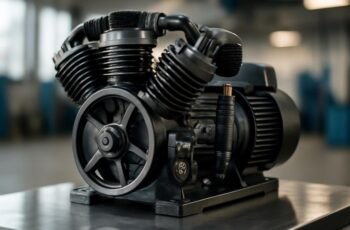
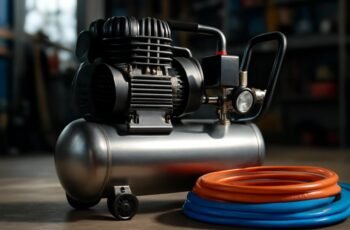
Imagine a car engine idling with the AC on—wasted fuel, unnecessary energy drain. That’s similar to how inefficient air compressor operation can inflate energy costs without adding value. By analyzing system performance and optimizing key factors like sizing, controls, and maintenance, we can substantially reduce waste. But to achieve real savings, it’s essential to understand the technical nuances that influence efficiency and how they interact within your specific setup.
Key Takeaways
- Regularly maintain filters, valves, and belts to ensure optimal airflow and reduce unnecessary energy consumption.
- Implement variable speed drives to match compressor output precisely with demand, minimizing energy waste.
- Properly size and install compressors to prevent short cycling and pressure drops, enhancing efficiency.
- Use control systems and sensors for real-time monitoring and dynamic adjustments to optimize operation.
- Conduct energy audits and analyze data to identify leaks, inefficiencies, and opportunities for targeted improvements.
How Do Air Compressors Consume Energy?
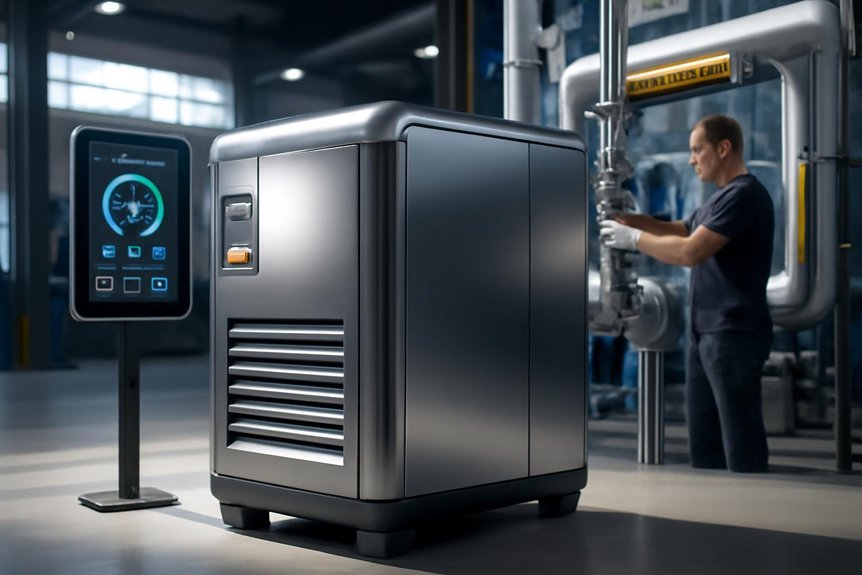
How do air compressors consume energy? To understand this, we first need to grasp the energy basics involved in compression processes. Air compressors convert electrical energy into mechanical energy, compressing air to store or use immediately. Most energy loss occurs during this conversion due to inefficiencies in motor operation, air leakage, and heat dissipation. Many compressor myths suggest that higher capacity always equals higher energy use, but operational efficiency depends on load management and proper sizing. Understanding these fundamentals helps clarify how energy is consumed and highlights the importance of optimizing compressor operation. By dispelling myths, we can focus on real factors influencing energy costs, such as maintenance, control systems, and system design, rather than misconceptions that lead to unnecessary energy waste.
How to Select Energy-Efficient Air Compressors
When selecting energy-efficient air compressors, we focus on efficiency ratings and adherence to industry standards to ensure optimal performance. Properly sizing the compressor to match actual demand prevents energy waste and enhances overall system efficiency. Analyzing these technical parameters allows us to make data-driven decisions that reduce operating costs effectively.
Efficiency Ratings and Standards
Selecting an energy-efficient air compressor requires a thorough understanding of its efficiency ratings and adherence to established standards. These ratings help dispel inefficiency myths and guide informed choices. Key aspects include:
- Energy Labeling – Certifications like CE or ISO ensure compliance with efficiency standards, reducing reliance on misleading labels.
- Efficiency Metrics – Understanding specific performance indicators, such as power consumption per cubic foot of air, helps evaluate true energy savings.
- Standardized Testing – Standards like ISO 1217 provide consistent benchmarks, enabling accurate comparison between models.
- Performance Certification – Verified efficiency ratings from recognized bodies validate claims and prevent overestimating compressor capabilities.
Right-Sized Compressor Selection
Choosing the right-sized air compressor is fundamental to optimizing energy efficiency and operational costs. Selecting a compressor with appropriately rated capacity ensures it operates closer to its optimal load, reducing energy waste. Incorporating efficient motors minimizes power consumption, especially during variable demand periods. Proper sizing prevents short cycling, which not only increases energy use but also accelerates equipment wear. Additionally, right-sized compressors contribute to noise reduction by limiting unnecessary operation of oversized units, creating a safer, more comfortable environment. By analyzing demand patterns and selecting equipment that matches peak and average loads, we can avoid excess energy costs and improve overall system reliability. Precise sizing, combined with efficient motors and noise mitigation strategies, delivers significant long-term savings and performance stability.
Why Proper Sizing and Installation Matter for Energy Savings
Proper compressor sizing ensures the system operates efficiently without unnecessary energy consumption, while correct installation practices prevent leaks and pressure drops. Both factors directly influence overall energy efficiency by optimizing performance and reducing waste. Addressing these elements is essential for achieving meaningful energy cost reductions.
Optimal Compressor Sizing
Why does compressor sizing greatly impact energy efficiency? Properly determining the optimal sizing of an air compressor is fundamental to energy optimization. An undersized compressor struggles to meet demand, causing frequent cycling and increased energy use. Conversely, an oversized unit runs inefficiently, consuming excess power during idle periods. To visualize this, consider:
- Matching compressor capacity closely with peak demand.
- Avoiding excessive startup/shutdown cycles.
- Reducing unnecessary energy consumption during low demand.
- Ensuring system components operate within their optimal range.
Achieving optimal sizing requires detailed load analysis and understanding system demands. This precision minimizes waste, enhances efficiency, and significantly reduces operational costs. Proper sizing is a cornerstone of energy optimization, ensuring the compressor operates at peak efficiency without wasteful overcapacity.
Correct Installation Practices
Accurate sizing must be complemented by correct installation practices to maximize energy savings. Proper installation ensures the compressor operates efficiently and reduces energy waste. An energy audit can identify installation issues, such as improper piping or inadequate ventilation, that compromise performance. Correct installation practices involve verifying the compressor’s alignment, securing proper electrical connections, and minimizing pressure drops through optimized piping layouts.
| Aspect | Impact on Energy Savings |
|---|---|
| Pipe Diameter | Reduces pressure loss, improves efficiency |
| Proper Mounting | Ensures vibration control, longevity |
| Electrical Connections | Prevents power surges, energy waste |
| Ventilation | Maintains optimal temperature, performance |
Impact on Energy Efficiency
Have you considered how the combination of correct sizing and precise installation directly influences an air compressor’s energy efficiency? Properly sized units operate closer to their optimal point, reducing energy waste linked to over- or under-capacity. Precise installation enhances system performance by minimizing pressure drops and ensuring effective energy storage, which stabilizes load fluctuations. Additionally, correct sizing and installation help in noise reduction, decreasing operational sound levels that often correlate with energy inefficiencies. Key factors include:
- Optimized Capacity – Avoids excessive energy consumption from oversized units.
- Enhanced Energy Storage – Stabilizes demand, reducing compressor cycling.
- Reduced Pressure Losses – Ensures efficient airflow, lowering power usage.
- Noise Reduction – Less energy lost through vibration and sound, indicating better system integrity.
Together, these aspects significantly boost energy efficiency and cost savings.
How Regular Maintenance Reduces Compressor Power Usage
Regular maintenance is essential for optimizing compressor performance and minimizing energy consumption. By consistently inspecting and servicing key components like filters, valves, and belts, we prevent inefficiencies that increase power usage. Dirty or clogged filters restrict airflow, forcing the compressor to work harder, thus elevating energy costs. Lubrication issues or worn-out parts can cause mechanical friction, further increasing power demands. Regular maintenance also ensures accurate calibration of pressure settings, preventing over-pressurization that wastes energy. Monitoring for leaks or pressure drops allows us to address issues before they escalate, maintaining optimal operating conditions. In sum, diligent maintenance reduces unnecessary strain on the compressor, directly lowering power usage and enhancing overall energy efficiency.
What Role Do Control Systems Play in Saving Energy?
How do modern control systems contribute to energy savings in air compressor operations? They optimize performance through advanced control strategies and accurate energy forecasting. These systems dynamically adjust compressor output based on real-time demand, preventing unnecessary energy use. Key functions include:
Modern control systems enhance energy efficiency by dynamically adjusting compressor output based on real-time demand.
- Implementing variable speed drives that modulate motor speed to match demand precisely.
- Utilizing predictive algorithms to forecast future load patterns, enabling proactive adjustments.
- Automating start/stop sequences to minimize compressor cycling and energy spikes.
- Integrating sensor data for real-time monitoring, ensuring optimal operation conditions.
How to Monitor and Analyze Compressor Performance
Monitoring and analyzing compressor performance is essential for identifying inefficiencies and optimizing energy use. We focus on monitoring metrics such as pressure, flow rate, power consumption, and temperature, which reveal operational patterns and potential issues. Utilizing data visualization tools allows us to interpret these metrics quickly, uncovering trends and anomalies that may indicate energy waste or equipment degradation. Precise analysis enables targeted interventions, reducing unnecessary power draw and extending compressor lifespan. By continuously tracking performance data, we can establish baselines, measure improvements, and verify the effectiveness of energy-saving strategies. This systematic approach ensures informed decision-making, helping us pinpoint inefficiencies and implement data-driven solutions to lower energy costs.
What Practical Steps Can You Take to Optimize Your System?
After analyzing compressor performance data, implementing practical steps to optimize the system becomes the next logical move. First, tune control systems to prevent unnecessary cycling, which reduces energy waste. Second, incorporate drone inspections to identify leaks or inefficiencies in hard-to-reach areas, improving overall system integrity. Third, consider integrating solar powered cooling to offset compressor heat loads, decreasing auxiliary energy demands. Fourth, schedule regular maintenance, including filter replacements and pressure adjustments, ensuring peak efficiency. These measures not only streamline operation but also support sustainable practices, like utilizing renewable energy sources. By systematically applying these steps, we can markedly lower energy costs while maintaining optimal compressor performance.
Frequently Asked Questions
How Can Ambient Temperature Affect Compressor Energy Efficiency?
Ambient temperature directly impacts compressor energy efficiency; higher temperatures increase energy consumption, while humidity impacts cooling efficiency, causing fluctuations. Monitoring and controlling ambient conditions optimize energy use, ensuring consistent compressor performance and reducing overall operational costs.
What Are the Signs of an Inefficient Air Compressor System?
We notice signs of inefficient leakage and wasted pressure, indicating a system isn’t operating optimally. These issues often lead to increased energy consumption, and addressing them promptly ensures better efficiency and cost savings in your compressor system.
How Does Humidity Impact Compressor Energy Consumption?
Humidity impact increases energy consumption by causing moisture buildup, which hampers compressor efficiency. Higher ambient temperatures exacerbate this effect, leading to more frequent system adjustments and higher operational costs, emphasizing the need for proper moisture control.
Can Software Solutions Improve Compressor Energy Management?
Imagine a facility using software optimization and energy analytics to monitor compressor loads, substantially reducing idle time. These solutions enable us to identify inefficiencies, optimize performance, and ultimately lower energy consumption through precise, data-driven management strategies.
What Are the Long-Term Cost Benefits of Upgrading to Modern Compressors?
Upgrading to modern compressors offers significant modernization ROI through improved efficiency and reliability, reducing maintenance costs and downtime. Enhanced maintenance scheduling optimizes performance, leading to long-term energy savings and lower operational expenses.
Conclusion
By integrating precise sizing, advanced control systems, and continuous monitoring, we can uncover inefficiencies that often go unnoticed. This holistic approach not only reduces energy costs but also enhances system reliability. Coincidentally, these improvements align with predictive maintenance and emerging technologies like drone inspections and renewable energy options, creating a resilient, cost-effective operation. Ultimately, optimizing air compressor performance is less about isolated tactics and more about orchestrating a data-driven, adaptive strategy.