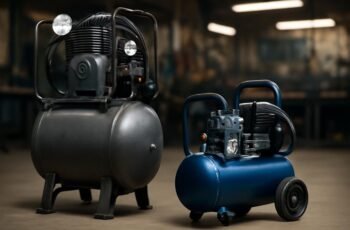
When choosing between mini and portable air compressors, it’s essential to consider their distinct designs and capabilities, as each serves different operational needs. While mini compressors excel in portability and quick, low-volume tasks, portable units offer greater versatility and sustained power for broader applications. Understanding these differences can significantly impact your efficiency and project outcomes, prompting a closer look into which type aligns best with your specific requirements and usage context.
Key Takeaways
- Mini air compressors are smaller, lightweight, and ideal for quick, low-volume tasks, while portable compressors offer higher power and capacity for demanding jobs.
- Mini units excel in ease of transport and simplicity, whereas portable compressors provide broader versatility and longer runtime.
- Mini compressors typically have lower PSI, airflow, and tank capacity, suitable for hobby or light professional use.
- Portable compressors often feature higher CFM and PSI ratings, better suited for extended or heavy-duty tasks.
- The choice depends on mobility needs, task complexity, and capacity requirements, balancing convenience with performance.
What Are Mini and Portable Air Compressors?
What exactly are mini and portable air compressors, and how do they differ from traditional models? These devices utilize miniature motors to deliver compressed air efficiently in compact formats. Their portable design enables easy transportation and on-the-spot use, making them ideal for quick repairs or fieldwork. Due to their smaller size, refill intervals are generally shorter, requiring more frequent but less time-consuming refills. This feature allows for continuous operation with minimal downtime. Additionally, their reduced complexity typically translates to lower maintenance costs, as fewer components need servicing. Unlike larger, stationary compressors, these units prioritize convenience and mobility over high capacity, making them suitable for light-duty tasks. Overall, mini and portable compressors are optimized for efficiency, simplicity, and ease of use in various applications.
Key Differences in Size, Power, and Capacity
How do mini air compressors differentiate themselves from larger models in terms of size, power output, and capacity? The mini differences primarily involve compact dimensions, lower power ratings, and reduced tank capacities, optimized for portable usage. These compact designs facilitate easy transport and storage but limit their airflow and continuous operation. While larger compressors provide higher PSI and volume, mini units prioritize portability and quick deployment for light tasks. The table below summarizes these distinctions:
| Feature | Mini Air Compressor | Larger Model |
|---|---|---|
| Size | Small, lightweight | Bulkier, heavier |
| Power Output | Lower, suitable for light tasks | Higher, for heavy-duty work |
| Capacity | Limited tank capacity | Larger tanks for extended use |
| Portable Usage | Designed for mobility | Less portable, stationary |
Which Compressor Is Better for DIY Projects?
Determining the ideal air compressor for DIY projects depends on balancing portability with sufficient power and capacity to handle common tasks. Mini reviews indicate that mini compressors excel in hobby maintenance due to their compact size and ease of use, making them suitable for light tasks like inflating tires or powering small tools. Portable air compressors, on the other hand, often provide higher CFM and PSI ratings, supporting more demanding DIY activities such as spray painting or operating larger pneumatic tools. For hobbyists focused on occasional, low-volume tasks, mini compressors deliver adequate performance and convenience. However, for broader versatility and longer project durations, a portable compressor’s increased capacity and power may be more appropriate. Ultimately, the best choice hinges on specific project requirements and desired mobility.
Professional Use: When to Choose Mini or Portable Compressors
When evaluating compressor options for professional settings, selecting between mini and portable units hinges on specific workload demands and operational efficiency. In professional use, the choice depends on application intensity, portability needs, and maintenance requirements.
- For tasks requiring precision and steady airflow, mini compressors offer consistent performance with lower noise levels.
- Portable compressors are advantageous when mobility is essential, such as on job sites with varied locations.
- Maintenance frequency and ease influence selection; mini units often require less upkeep, making them suitable for continuous operation.
Understanding the distinctions in mini vs portable compressors helps professionals optimize productivity and equipment longevity. The decision should align with project scope and logistical constraints to ensure operational efficiency.
Factors to Consider Before Buying: Budget, Portability, and Features
Considering the key factors before purchasing a mini air compressor is essential to ensure it meets both your operational needs and budget constraints. Budget considerations play a critical role, as initial costs vary based on power, capacity, and features. While lower-priced models may seem appealing, they often come with limited durability or fewer features, which can impact long-term value. Portability is another crucial factor; lightweight units enhance mobility, but may compromise capacity or power. Features like adjustable pressure settings and noise levels influence usability and should align with your tasks. Warranty implications are also vital; a comprehensive warranty can mitigate potential repair costs, ensuring reliable performance over time. Balancing these factors helps you select a unit that offers optimal performance within your financial and operational parameters.
Pros and Cons of Mini Air Compressors
The advantages of mini air compressors largely stem from their portability and compact size, making them ideal for quick, on-the-go tasks. However, their power and performance can be limited compared to larger units, affecting suitability for demanding applications. Additionally, noise levels and durability vary, which can influence long-term reliability and user comfort.
Portability and Size
Are mini air compressors truly as portable as they seem? Their compact design suggests high portability, but practical factors influence usability. First, their small size allows easy transport, especially models with battery operation, removing the need for external power sources. Second, portability is enhanced by lightweight construction, often under five pounds, facilitating one-handed operation or storage in tight spaces. Third, however, the limited capacity of mini units restricts prolonged use, requiring frequent recharging or refilling, which can hinder efficiency. While their size and battery operation make them ideal for quick, on-the-go tasks, they may fall short for sustained applications. Overall, mini air compressors excel in portability but must be evaluated against task-specific demands.
Power and Performance
Mini air compressors deliver quick bursts of compressed air, but their power and performance often come with notable limitations. Their smaller motors and reduced tank sizes restrict continuous operation and high-demand tasks. While they excel in portability, their performance diminishes during prolonged use, making long-term storage of compressed air inefficient. Oil lubrication is essential for maintaining optimal performance and minimizing wear, but it introduces maintenance complexity and potential contamination risks. These units generally provide lower CFM (cubic feet per minute) output compared to larger models, limiting their suitability for heavy-duty applications. Consequently, mini compressors are best suited for light, intermittent tasks rather than sustained, high-performance requirements. Their design inherently balances portability and convenience against overall power and performance capabilities.
Noise Levels and Durability
Although mini air compressors are valued for their portability, their noise levels can pose significant challenges, especially in quiet environments or shared workspaces. Typically, their small size contributes to lower noise levels, but this varies with build quality. Regarding durability, mini units often use lightweight components, which may compromise longevity under frequent or heavy use.
- Smaller size generally results in quieter operation but can limit airflow capacity and heat dissipation.
- Durability depends on construction; cheaper models may wear quickly, reducing overall lifespan.
- Portability enhances ease of transport but may sacrifice robustness, affecting long-term reliability.
Pros and Cons of Portable Air Compressors
What makes portable air compressors a practical choice for various tasks? Their mobility allows for on-the-go use in applications like miniature photography and airbrush setups, where consistent, high-quality airflow is essential. They offer quick setup and are generally lightweight, making them convenient for both professional and hobbyist use. However, they often have limited tank capacity, which can result in frequent cycling and reduced efficiency during prolonged use. Noise levels can vary, potentially affecting precision tasks. Durability depends on build quality, with some units prone to wear under constant use. While their versatility is a major advantage, users should weigh these pros against potential cons such as size limitations and maintenance needs to determine if they suit specific applications.
Frequently Asked Questions
How Long Do Mini and Portable Air Compressors Typically Last?
Mini compressors generally last around 1-3 years, depending on mini durability and usage, while portable compressors often last 3-5 years with proper maintenance, highlighting their superior portable longevity and resilience in various operational conditions.
Are There Noise Level Differences Between the Two Types?
They say “silence is golden,” and both compressors vary in noise levels based on Two Stage Noise and Duty Cycle. Mini compressors tend to be quieter, but duty cycle impacts overall noise; analysis reveals significant differences in operational sound profiles.
Can Mini or Portable Compressors Handle Tire Inflation?
Mini and portable compressors effectively handle tire inflation, leveraging their mini durability and portable power to deliver adequate airflow. They’re ideal for quick, on-the-go inflation needs, though larger tires may require more robust, specialized equipment for optimal performance.
What Maintenance Is Required for These Compressors?
Like tending a garden, maintaining these compressors involves a checklist: check for leaks, clean filters, lubricate moving parts, and ensure electrical connections. Durability considerations mean regular inspection prolongs lifespan, ensuring consistent, reliable performance over time.
Are There Specific Brands Known for Durability?
We find durability brands like Makita, DeWalt, and California Air Tools excel, thanks to robust build quality and high-quality components. Longevity factors include motor quality, thermal management, and maintenance practices, ensuring consistent performance over extended periods.
Conclusion
Ultimately, choosing between a mini and portable air compressor is like selecting the right tool for a specific job—precision matters. We’ve seen hobbyists rely on mini compressors for quick fixes, much like a surgeon’s scalpel, while professionals prefer portable units for sustained tasks, akin to a seasoned carpenter’s versatile saw. By analyzing your needs—budget, portability, and capacity—you guarantee optimal performance, much like tuning a finely calibrated instrument for perfect harmony.