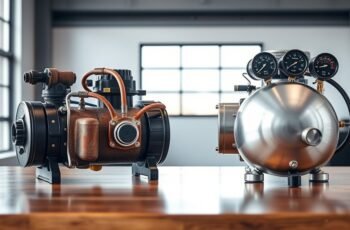
Studies show that up to 60% of air compressor failures are linked to inadequate accessories or poor maintenance. As professionals, we understand that selecting the right components can markedly impact equipment lifespan and safety. But with so many options—filters, hoses, moisture traps—it’s vital to determine which are truly essential for your specific applications. We’ll explore the core accessories that optimize performance and safeguard your investment, so you can make informed choices for your setup.
Key Takeaways
- Assess your work requirements to determine essential accessories like filters, moisture separators, and noise reducers.
- Choose hoses and fittings that match your compressor’s specifications for safety and efficiency.
- Use filters, regulators, and gauges to maintain air quality and consistent pressure.
- Select spray guns and nozzles compatible with your coating needs and compressor capacity.
- Prioritize durable, high-quality components and perform regular maintenance for long-term performance.
How to Identify Essential Air Compressor Accessories for Your Projects
How can we determine which air compressor accessories are essential for our specific projects? First, evaluate the scope of your work, focusing on required output and pressure levels. To optimize performance and longevity, prioritize accessories that support effective air compressor maintenance, such as filters and moisture separators, reducing wear and downtime. Noise reduction techniques are also critical; consider silencers or enclosures if operating in noise-sensitive environments. Identify accessories that enhance safety, efficiency, and durability, tailored to your project’s demands. Conduct a thorough assessment of your compressor’s specifications and operational environment, then select accessories that address these factors directly. This precise approach guarantees you invest in the most relevant accessories, streamlining maintenance and minimizing disruption during operation.
Understanding the Role of Hoses and Fittings in Your Setup
Hoses and fittings are critical components that guarantee efficient and safe transfer of compressed air within your system. Selecting the appropriate hose types and fittings impacts pressure handling, durability, and compatibility with your tools. Understanding these options allows for ideal setup and minimizes potential system failures.
Types of Hoses Available
What are the different types of hoses available for your air compressor setup, and how do they impact performance? Hose selection depends on factors like hose material and hose length, which influence durability, flexibility, and air pressure retention. Common hose materials include rubber, PVC, and polyurethane, each offering different resistance to abrasion and temperature extremes. The hose length affects pressure drop and mobility; longer hoses increase resistance but provide greater reach. Properly selecting a hose tailored to your application guarantees ideal airflow and minimizes pressure loss.
- Rubber hoses for durability and high-pressure applications
- PVC hoses for affordability and light-duty tasks
- Polyurethane hoses for flexibility and chemical resistance
- Reinforced hoses for increased pressure capacity
- Adjustable hose lengths for customized setup
Choosing Proper Fittings
Choosing the proper fittings is essential to guarantee a secure, leak-free connection between your air compressor, hoses, and tools. Proper fittings guarantee ideal airflow and prevent pressure drops that could compromise performance. When selecting fittings, consider compatibility with your hose diameter and material, as well as corrosion resistance for longevity. Additionally, using appropriate fittings can aid in air compressor storage, minimizing space and reducing clutter. High-quality fittings also contribute to noise reduction by maintaining airtight seals, decreasing vibration, and reducing compressor noise transmission. Ensuring an exact match between fittings and hoses enhances system efficiency and safety. Ultimately, precise fitting selection is critical for maintaining system integrity and maximizing your air compressor setup.
Why Filters and Regulators Are Key for Air Quality and Safety
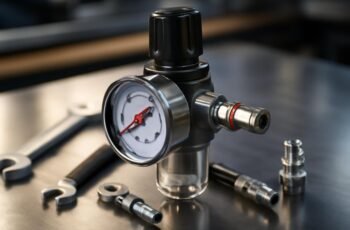
Filters and regulators play a essential role in maintaining ideal air quality and guaranteeing safety in compressed air systems. They remove contaminants and control pressure, adhering to safety standards critical for equipment longevity and operator health. Proper filtration eliminates particulates, oil, and moisture, preventing damage and ensuring high-quality air output. Regulators maintain consistent pressure, reducing system stress and preventing accidents.
Key components include:
- Particulate filters for dust and debris removal
- Coalescing filters to eliminate oil vapors
- Regulator valves for precise pressure control
- Moisture traps for water removal
- Pressure gauges for real-time monitoring
Using these accessories ensures compliance with safety standards, minimizes system failures, and enhances overall operational safety and air quality.
Choosing the Right Spray Guns and Nozzles for Your Tasks
Selecting the appropriate spray gun involves evaluating the type of coating and application speed required. Matching nozzle sizes to the material viscosity and desired finish guarantees ideal atomization and efficiency. Proper selection of these components directly impacts the quality and consistency of your work.
Selecting Appropriate Spray Guns
Have you considered how the specific spray gun and nozzle combination directly impacts the quality and efficiency of your painting or coating tasks? Proper selection is essential for optimal results, especially when considering paint mixing consistency and safety gear integration. Precise spray guns allow for controlled atomization, reducing overspray and ensuring even coverage. When choosing, consider these factors:
- Compatibility with your compressor’s pressure and flow rate
- Nozzle material suitable for your paint type
- Adjustable controls for spray pattern and volume
- Ergonomic design for prolonged use
- Compatibility with safety gear, including masks and gloves
Selecting the right equipment enhances paint application precision while maintaining safety standards. Properly matched spray guns and nozzles streamline your workflow, minimize waste, and improve finish quality.
Matching Nozzle Sizes
How do we determine the appropriate nozzle size for specific painting or coating tasks? Matching nozzle sizes is essential for achieving ideal spray pattern and material transfer efficiency. The correct nozzle diameter ensures suitable accessory compatibility with your spray gun and compressor, preventing issues like overspray or uneven coverage. We evaluate the viscosity of the material, spray pattern requirements, and desired finish quality to select the right nozzle size. Larger nozzles deliver higher flow rates suitable for thicker coatings, while smaller nozzles provide precision for fine detail work. Proper matching of nozzle sizes maximizes efficiency, reduces waste, and enhances finish quality. Ensuring compatibility between nozzle and spray gun components is critical to maintaining consistent performance and avoiding damage, ultimately maximizing your overall painting or coating process.
When and Why to Use Moisture Traps and Lubricators
Moisture traps and lubricators are vital components in maintaining ideal air compressor performance, especially when operating in environments with high humidity or extended run times. They play a key role in moisture management, preventing water from contaminating tools and equipment, which can cause corrosion or damage. Lubricators ensure proper lubrication essentials are delivered to pneumatic tools, reducing wear and extending lifespan. Proper use of these accessories optimizes compressor efficiency and reduces maintenance costs.
- Remove excess moisture to prevent rust and damage
- Maintain consistent lubrication for pneumatic tools
- Extend equipment lifespan through effective moisture management
- Improve air quality by eliminating water vapor
- Reduce downtime caused by water-related failures
Budget-Friendly vs. Professional-Grade Accessories: What Matters Most?
Choosing between budget-friendly and professional-grade accessories depends on the specific demands of your application. Cost comparison reveals that budget options are typically lower in upfront expense but may lack durability, while professional-grade tools often involve higher initial costs but offer enhanced longevity and reliability. Brand reputation plays a vital role; reputable brands generally guarantee consistent quality and performance, reducing long-term maintenance costs.
| Aspect | Budget-Friendly Accessories | Professional-Grade Accessories |
|---|---|---|
| Cost Comparison | Lower initial investment | Higher upfront investment |
| Durability & Reliability | Moderate | Superior |
| Brand Reputation | Varies | Generally established |
| Long-term Value | Potentially limited | Often more cost-effective over time |
Tips for Maintaining and Upgrading Your Air Compressor Accessories Over Time
Proper maintenance and timely upgrades of your air compressor accessories are essential to guaranteeing peak performance and extending their lifespan. Regular inspections help identify wear that could impair air compressor efficiency or compromise accessory compatibility. To optimize performance:
Regular maintenance and timely upgrades ensure peak performance and longevity of your air compressor accessories.
- Clean filters and replace them based on manufacturer recommendations
- Lubricate moving parts to prevent friction and wear
- Check for leaks or damage in hoses and fittings
- Upgrade to high-quality accessories compatible with your model
- Monitor pressure and temperature to anticipate necessary adjustments
Consistently maintaining accessories guarantees consistent airflow quality and maximum efficiency. Upgrading outdated components can improve performance and energy savings, while compatibility checks prevent malfunctions. Being proactive preserves your system’s integrity and extends its operational lifespan.
Frequently Asked Questions
How Do I Determine Compatible Accessories for My Specific Air Compressor Model?
We determine compatible accessories by checking our compressor’s model and specifications, then consulting manufacturer guidelines or product labels to guarantee accessory compatibility and compatible models, preventing damage and optimizing performance through precise, technical compatibility matching.
Are There Safety Certifications I Should Look for in Accessories?
Studies show 70% of accidents involve uncertified tools. We always check for safety standards and certification labels, ensuring accessories meet rigorous safety standards, which helps prevent accidents and guarantees reliable, compliant equipment operation.
What Are Common Mistakes to Avoid When Choosing Air Compressor Accessories?
We avoid common mistakes by guaranteeing proper air filter maintenance and verifying hose compatibility to prevent leaks or pressure issues, which assures ideal performance and safety when selecting air compressor accessories for your specific system needs.
How Often Should I Replace or Upgrade My Accessories?
We recommend replacing or upgrading accessories periodically, following a strict maintenance schedule aligned with accessory lifespan, to guarantee peak performance and safety. Regular inspections help identify wear and prevent unexpected failures, maximizing your compressor’s efficiency.
Can Accessories Improve My Compressor’s Energy Efficiency?
Accessories can enhance your compressor’s energy efficiency by enabling energy-saving tips like proper airflow regulation and leak detection, provided they’re compatible with your system. Ensuring accessory compatibility optimizes performance and reduces operational costs effectively.
Conclusion
In summary, choosing the right accessories guarantees peak compressor performance and safety. Studies show that proper maintenance can extend equipment lifespan by up to 50%, underscoring their importance. By focusing on essential components like filters, regulators, and moisture traps, we enhance air quality and system reliability. Prioritizing these critical accessories allows us to maximize efficiency, reduce downtime, and achieve professional results, making informed choices vital to long-term success in any project.