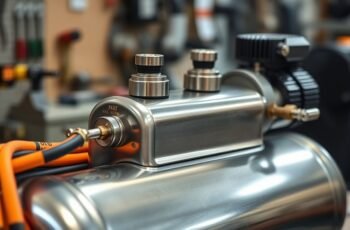
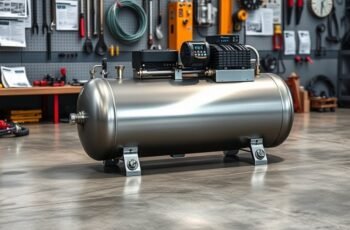
In our exploration of energy-saving air compressor systems, we recognize the importance of advanced control technologies like Variable Speed Drives and smart sensors that optimize performance by adapting to fluctuating demand. These innovations promise significant reductions in energy consumption and operational costs, but understanding their underlying mechanisms and implementation challenges requires a closer examination of the key technologies involved. Exploring these aspects can reveal how these systems truly enhance efficiency and reliability in industrial settings.
Key Takeaways
- Energy-saving air compressors adapt motor speed using Variable Speed Drives (VSDs) to match demand and reduce energy waste.
- Advanced control systems optimize performance by monitoring pressure, temperature, and vibration for real-time adjustments.
- Cooling techniques like water-cooled systems and finned heat exchangers improve thermal regulation and prolong equipment lifespan.
- Selecting systems with high efficiency ratings and certifications ensures optimal energy use and reduces operational costs.
- Regular maintenance and troubleshooting prevent leaks, pressure drops, and cycling issues, maintaining system efficiency.
How Do Energy-Saving Air Compressor Systems Work?
Although traditional air compressor systems operate continuously at fixed speeds, energy-saving variants utilize variable speed drives (VSDs) to optimize performance. By adjusting motor speed in real-time according to demand, VSDs reduce unnecessary energy consumption. This modulation not only enhances energy efficiency but also improves air quality by minimizing fluctuations and contaminants introduced during startup and shutdown cycles. Additionally, variable speed operation considerably reduces noise levels, as compressors run more smoothly and steadily, decreasing acoustic disturbances. This combination of optimized airflow, improved air quality, and noise reduction makes energy-saving compressor systems more sustainable and suitable for sensitive environments. Overall, VSD technology enables precise control, leading to better operational stability while simultaneously addressing environmental and worker comfort concerns.
Key Technologies Behind Energy Efficiency in Compressors
Variable Speed Drives and advanced control systems are fundamental technologies that optimize compressor performance and reduce energy consumption. By adjusting operational parameters in real-time, these innovations guarantee that energy use closely matches demand, minimizing waste. Analyzing their integration reveals how precise control enhances overall efficiency and system responsiveness.
Variable Speed Drives
In modern air compressor systems, variable speed drives (VSDs) serve as a critical technology for enhancing energy efficiency by dynamically adjusting motor speed to match air demand. This process enables variable optimization, where the compressor’s output precisely aligns with system requirements, minimizing waste. Through advanced speed regulation, VSDs modulate rotational speeds in real-time, reducing unnecessary energy consumption during low-demand periods. This precise control not only lowers power usage but also decreases wear and tear on components, extending equipment lifespan. By eliminating the inefficiencies associated with fixed-speed operation, VSDs optimize energy consumption across varying load conditions. Consequently, they play a pivotal role in achieving significant energy savings and operational cost reductions in modern compressed air systems.
Advanced Control Systems
Advanced control systems form the backbone of modern energy-efficient compressor operations by integrating real-time data acquisition, intelligent algorithms, and automated adjustments. Smart sensors continuously monitor parameters like pressure, temperature, and vibration, providing critical data for enhancing performance. These sensors enable the system to respond dynamically, adjusting operational variables to minimize energy waste. Predictive maintenance algorithms analyze sensor data to forecast component failures before they occur, reducing unplanned downtime and improving efficiency. Automated control modules process this information, fine-tuning compressor output and adjusting load conditions accordingly. This coordinated approach ensures ideal energy consumption while maintaining consistent output quality. By leveraging advanced control systems, facilities can considerably reduce operational costs, improve reliability, and advance toward more sustainable, energy-efficient compressing solutions.
How Variable Speed Drives Reduce Power Consumption
Since compressor loads often fluctuate during operation, employing variable speed drives (VSDs) enables us to precisely match motor speed to demand, considerably reducing energy consumption. VSDs optimize power use by adjusting motor speed in real-time, minimizing waste when full capacity isn’t required. This precise control enhances system efficiency and extends equipment lifespan. Additionally, VSDs facilitate renewable integration by allowing smoother operation with variable power sources, reducing grid dependency. Noise reduction is another benefit, as VSDs operate more quietly than fixed-speed counterparts. Key advantages include:
- Lower energy costs through demand-based operation
- Improved compatibility with renewable energy sources
- Reduced noise levels, contributing to a quieter work environment
- Enhanced control over compressor performance, ensuring ideal efficiency
The Role of Advanced Cooling Techniques in Efficiency
Effective cooling techniques are critical to maintaining compressor efficiency, as excessive heat buildup directly impairs performance and increases energy consumption. Advanced thermal regulation strategies optimize heat dissipation, ensuring components operate within safe temperature ranges. These methods include water-cooled systems, enhanced fin designs, and thermally conductive materials that facilitate rapid heat transfer. Proper heat dissipation reduces thermal stress, prolongs equipment lifespan, and sustains peak power use. The table below highlights key cooling approaches:
| Technique | Key Benefit |
|---|---|
| Water-cooling systems | Superior heat removal |
| Finned heat exchangers | Increased surface area for heat dissipation |
| Thermally conductive materials | Improved thermal regulation |
Benefits of Using Energy-Saving Air Compressor Systems
Implementing energy-saving air compressor systems offers substantial operational and financial advantages. These systems optimize energy conservation by utilizing variable speed drives and advanced control algorithms, reducing unnecessary power consumption. The result is significant cost savings, as energy efficiency directly impacts operational expenses. Additionally, these systems improve reliability and reduce maintenance needs through better load management. They also contribute to environmental sustainability by lowering carbon emissions associated with energy use.
- Enhanced energy efficiency minimizes operational costs over time
- Reduced downtime and maintenance expenses through advanced controls
- Lower carbon footprint supports corporate sustainability goals
- Improved system responsiveness ensures consistent air quality and pressure
How to Choose the Right Energy-Efficient Compressor for Your Business
To select an energy-efficient compressor suited to our operations, we must first accurately assess our specific airflow and pressure requirements. Comparing energy efficiency ratings across models enables us to identify options that deliver ideal performance with minimal energy consumption. This analytical approach ensures our choice aligns with both technical demands and long-term cost savings.
Assessing Your Business Needs
When selecting an energy-efficient air compressor, understanding your business’s operational demands is essential. Conducting detailed energy audits helps identify existing inefficiencies and peak usage periods, guiding best compressor sizing and type. A thorough cost analysis evaluates initial investment against long-term savings, factoring maintenance, energy consumption, and potential downtime. Key considerations include:
- Peak and average air demand to avoid oversizing or undersizing
- System pressure requirements influencing compressor selection
- Usage patterns affecting operational flexibility
- Potential for integration with existing infrastructure
Comparing Energy Efficiency Ratings
Evaluating energy efficiency ratings is essential for selecting an air compressor that aligns with your business’s operational goals and sustainability targets. Comparing these ratings involves analyzing technical metrics like power consumption relative to output, ensuring compatibility with renewable energy sources for reduced carbon footprint. Higher efficiency units often incorporate advanced control systems, optimizing performance and minimizing energy waste. Noise reduction features are also critical, as quieter compressors improve workplace safety and comfort. When assessing efficiency ratings, consider certifications such as ISO or CAGI, which verify performance claims. Selecting a compressor with superior efficiency not only decreases operational costs but also supports environmental initiatives. Ultimately, a thorough comparison enables informed decisions that balance energy savings, noise mitigation, and compatibility with renewable energy options.
Common Challenges and Troubleshooting Tips for Energy-Saving Systems
Despite the potential energy savings, implementing and maintaining efficient air compressor systems often presents several challenges. Common issues include system inefficiencies, improper sizing, and inadequate maintenance strategies that hinder peak performance. Troubleshooting begins with evaluating pressure drops, which often indicate leaks or blockages, reducing overall efficiency. Additionally, fluctuating load demands can cause compressor cycling inefficiencies, impacting cost reduction efforts. Ensuring proper filtration and moisture removal is vital to prevent equipment degradation. Regular maintenance, including sensor calibration and component inspections, helps detect early signs of wear that compromise system performance. Addressing these challenges proactively minimizes downtime and maximizes energy savings, ultimately supporting cost-effective operations and sustained system efficiency.
- Identifying leaks and blockages
- Enhancing compressor sizing
- Implementing predictive maintenance
- Managing load fluctuations
Future Trends in Energy-Saving Air Compressor Technology
Advancements in energy-saving air compressor technology are shaping the future of industrial efficiency by integrating innovative solutions that address current limitations. Emerging trends focus on renewable integration and smart grid connectivity, optimizing energy consumption and enabling dynamic demand response. These systems will leverage real-time data analytics to improve operational efficiency and reduce waste. Incorporating renewable energy sources, such as solar or wind, will decrease reliance on fossil fuels, further lowering emissions. Smart grid integration allows compressors to communicate with energy networks, adjusting operation based on grid demand and renewable availability.
| Trend | Impact |
|---|---|
| Renewable Integration | Reduces carbon footprint and operational costs |
| Smart Grid | Enhances responsiveness and energy optimization |
| Data Analytics | Improves predictive maintenance and efficiency |
Frequently Asked Questions
What Maintenance Practices Maximize Energy Savings in Compressor Systems?
We maximize energy savings through lubrication enhancement to reduce friction and wear, alongside regular leak detection to prevent pressure loss, ensuring compressor efficiency and minimizing energy consumption. These practices sustain ideal system performance and extend equipment lifespan.
How Do Compressor Size and Capacity Affect Energy Efficiency?
Proper compressor sizing guarantees capacity optimization, reducing energy waste by matching demand precisely. Oversized units consume unnecessary power, while undersized ones struggle under load, so selecting appropriately sized compressors enhances overall energy efficiency considerably.
Are There Environmental Benefits Beyond Energy Savings?
We believe energy-saving air compressor systems promote environmental benefits beyond energy savings by supporting recycling initiatives and reducing emissions, which aligns with our commitment to sustainable practices and minimizes ecological footprints through advanced, efficient technology.
Can Existing Compressors Be Retrofitted for Better Efficiency?
Yes, existing compressors can be retrofitted with advanced retrofit technologies and efficiency upgrades, allowing us to optimize performance, reduce energy consumption, and extend equipment lifespan without complete replacement, leading to significant operational cost savings.
How Do Operational Schedules Impact Overall Energy Consumption?
Operational timing acts like a symphony, orchestrating load management to optimize energy use. When scheduled precisely, it reduces unnecessary runtime, lowering overall consumption and enhancing efficiency, much like a conductor guiding an efficient, harmonious performance.
Conclusion
In essence, embracing energy-saving air compressor systems is akin to steering a well-charted map, where advanced technologies guide us toward optimal efficiency and sustainability. By leveraging VSDs, smart cooling, and predictive controls, we can minimize energy waste and extend equipment lifespan. As we continue to innovate, these systems will become even more integral—driving us closer to a future where industrial efficiency and environmental responsibility go hand in hand, much like a compass pointing true north.