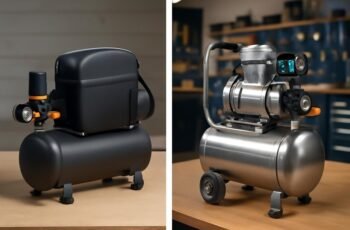
As industry professionals committed to sustainability, we recognize that eco-friendly air compressors are increasingly crucial for responsible operations. These systems incorporate advanced energy-saving features and low-emission designs that not only reduce environmental impact but also enhance operational efficiency. Understanding their key technologies and selecting the right model can considerably influence your business’s ecological footprint and cost savings, making it essential to contemplate their full potential before making a decision.
Key Takeaways
- Look for compressors with advanced energy-saving features like variable speed drives and intelligent control systems to reduce power consumption.
- Choose models with eco certifications that validate lower emissions and environmentally friendly operation.
- Prioritize compact, noise-reducing designs suitable for small workshops or portable applications.
- Opt for industrial-grade units built with sustainable materials and biodegradable lubricants for larger operations.
- Consider future-proof options integrating renewable energy compatibility and energy recovery technologies.
What Are Eco-Friendly Air Compressors and How Do They Work?
Eco-friendly air compressors are designed to reduce environmental impact by optimizing energy efficiency and minimizing emissions. These units often feature advanced technologies that lower power consumption and incorporate components that reduce noise and heat waste. They are typically part of recycling programs that promote sustainable disposal and reuse of parts, extending product lifespan. Eco label certifications validate their environmental claims, ensuring they meet strict standards for reduced emissions and energy use. By adhering to these certifications, manufacturers demonstrate commitment to sustainability and accountability. These compressors utilize intelligent control systems to optimize operation, further conserving energy. Overall, eco-friendly air compressors are integral to sustainable industrial practices, combining technical innovation with environmental responsibility through recycling initiatives and certifications that guarantee eco-conscious performance.
Key Features to Look for in Eco-Conscious Compressors
When selecting an eco-conscious air compressor, focusing on key features that enhance efficiency and reduce environmental impact is essential. Look for units with advanced energy-saving technology, such as variable speed drives, which optimize power use. Recycling initiatives in manufacturing reflect a commitment to sustainability, so choose brands that prioritize recyclable components. Noise reduction features, like sound enclosures or vibration isolators, minimize noise pollution and improve workplace safety. Additionally, compressors designed with oil-free or low-emission systems reduce pollutants. Indicators for maintenance and efficiency metrics help monitor performance, ensuring ideal operation. By prioritizing these features, we can support environmentally responsible practices while maintaining high performance standards.
Top Eco-Friendly Air Compressors for Small Workshops
When selecting eco-friendly air compressors for small workshops, energy efficiency features, compact design, and low emission technologies are vital. These factors guarantee reduced operational costs and lower environmental impact without sacrificing performance. By focusing on these technical aspects, we can identify models that support sustainable and efficient workshop operations.
Energy Efficiency Features
Have you considered how energy-efficient features can substantially reduce operational costs in small workshops? Modern eco-friendly air compressors incorporate advanced technologies to optimize performance and minimize energy consumption. Key features include:
- Utilization of renewable energy sources, such as solar-powered systems, reducing reliance on grid electricity.
- Variable speed drives that adjust motor output based on demand, enhancing efficiency.
- Intelligent controls for precise pressure regulation, preventing unnecessary compressor cycling.
- Noise reduction designs that lower energy waste and improve workplace safety.
- Enhanced insulation and soundproofing materials that support noise mitigation while conserving energy.
These features not only cut energy costs but also promote sustainable operations, aligning with eco-conscious practices and reducing environmental impact.
Compact and Portable Design
Building on the importance of energy-efficient features, selecting an air compressor that is both compact and portable can considerably benefit small workshops seeking sustainable solutions. A portable design minimizes spatial footprint, allowing for easy relocation and optimized workspace organization. The compact size reduces material usage and enhances energy efficiency by requiring less power to operate. These designs are typically lightweight and feature integrated handles or wheels, making them practical for dynamic work environments. furthermore, their size facilitates installation in tight spaces, reducing the need for extensive infrastructure. By choosing a compact and portable air compressor, small workshops can achieve operational flexibility, lower energy consumption, and a smaller environmental impact, aligning with broader sustainability goals while maintaining productivity.
Low Emission Technologies
How can small workshops minimize their environmental footprint while maintaining efficient operation? Low emission technologies play a vital role. By integrating compressors that utilize renewable sources of energy, we substantially reduce greenhouse gas emissions. These units often incorporate advanced variable speed drives, optimizing power consumption and lowering carbon output. Additionally, some models include built-in systems for carbon offset, further neutralizing their environmental impact.
- Use of renewable energy sources like solar or wind
- Variable speed drive technology for efficient operation
- Incorporation of advanced filtration to reduce emissions
- Integration of carbon offset programs
- Adoption of low-emission lubricants and materials
Together, these innovations enable small workshops to operate sustainably, aligning productivity with eco-conscious practices while minimizing their carbon footprint.
Industrial-Grade Green Compressors: Choices for Larger Operations
As industries scale their operations, the demand for robust, energy-efficient air compression solutions becomes critical. Industrial-grade green compressors are designed to meet this need, emphasizing sustainability and performance. These systems utilize biodegradable lubricants, reducing environmental impact and simplifying disposal processes. Additionally, advanced noise reduction technologies ensure quieter operation, which is essential for large facilities operating continuously. The integration of eco-friendly materials and design principles enhances overall efficiency, minimizing energy consumption while maintaining high output. These compressors are engineered to handle demanding workloads, making them ideal for large-scale applications where sustainability and reliability are paramount. By choosing industrial-grade green compressors, businesses can considerably reduce their carbon footprint without compromising operational capacity.
Comparing Energy Efficiency and Emissions Reductions
When comparing eco-friendly air compressors, we focus on their energy consumption and the potential for emissions reduction. Advances in technology allow some models to operate more efficiently, lowering overall energy use. Evaluating these factors helps us select systems that optimize sustainability without compromising performance.
Energy Consumption Differences
Are eco-friendly air compressors more efficient in energy use and emissions reduction compared to traditional models? Generally, yes. They leverage advanced motor designs and variable frequency drives that optimize energy consumption, especially when powered by renewable energy sources. These compressors often operate quieter, reducing compressor noise and enhancing sustainability. Key differences include:
- Lower overall energy consumption due to precision control systems
- Reduced reliance on fossil fuels by integrating renewable energy sources
- Improved operational efficiency with adaptive speed control
- Decreased energy waste, minimizing unnecessary compressor cycling
- Noise reduction contributes to less environmental disturbance
These factors collectively enhance energy efficiency, cutting emissions and aligning with sustainable practices. The focus on optimizing energy use underscores the importance of technological advancements for a greener industrial future.
Emissions Reduction Potential
Eco-friendly air compressors not only improve energy efficiency but also markedly enhance emissions reduction. By utilizing renewable sources of energy, such as solar or wind, these compressors substantially decrease reliance on fossil fuels, directly lowering greenhouse gas emissions. Additionally, their optimized design reduces energy waste, leading to fewer carbon offsets needed to achieve environmental goals. This integrated approach maximizes sustainability, as reduced operational emissions contribute to cleaner air and climate mitigation. Advanced models incorporate smart controls to further minimize energy consumption during fluctuating demand periods, amplifying their emissions reduction potential. Overall, these compressors represent a strategic investment in reducing carbon footprints, aligning industrial efficiency with environmental responsibility. They prove that technological innovation can effectively address emissions concerns while maintaining performance standards.
How to Choose the Right Eco-Friendly Air Compressor for Your Needs?
Selecting the right eco-friendly air compressor requires a clear understanding of your specific operational needs and energy efficiency goals. To optimize sustainability, consider models powered by renewable energy sources or those designed for energy recovery, which help reduce overall carbon footprint. Key factors include:
Choosing an eco-friendly air compressor depends on your operational needs and energy-saving goals for sustainable efficiency.
- Compressor capacity aligned with workload demands
- Energy efficiency ratings and power consumption metrics
- Compatibility with renewable energy integration
- Advanced controls for optimized operation and reduced energy waste
- Features supporting carbon offset initiatives, such as low-emission designs
Benefits of Using Eco-Friendly Compressors Beyond Sustainability
Adopting eco-friendly air compressors offers benefits that extend well beyond their environmental impact, particularly enhancing operational efficiency and cost savings. These systems often feature advanced technologies that improve air quality by reducing contaminants and moisture in the compressed air, which minimizes equipment wear and maintenance costs. Additionally, eco-friendly compressors typically operate more quietly, resulting in significant noise reduction—crucial for workplaces with strict noise regulations or close-quarter operations. Improved air quality ensures smoother, more reliable performance, while noise reduction enhances worker safety and comfort. These technical advantages contribute to a more sustainable operation overall, lowering energy consumption, decreasing downtime, and fostering a healthier work environment—benefits that are essential for long-term operational success.
Maintenance Tips to Maximize Efficiency and Longevity
Regular maintenance is key to guaranteeing that eco-friendly air compressors operate at peak efficiency and have a long service life. Proper upkeep enhances air quality, reducing contaminants that can impair performance and compromise output. It also plays a vital role in noise reduction, minimizing operational disturbances and promoting safer work environments. To maximize these benefits, consider the following:
- Regularly inspect and replace air filters to maintain the best air quality
- Lubricate moving parts to prevent wear and reduce noise levels
- Check for leaks to improve efficiency and prevent energy waste
- Clean cooling systems to ensure proper heat dissipation
- Monitor pressure levels to sustain consistent compressor performance
Adhering to these maintenance practices helps maximize efficiency, extend lifespan, and uphold the sustainable benefits of eco-friendly compressors.
Future Trends in Eco-Friendly Air Compression Technology
As advancements in sustainable technology continue to evolve, the future of eco-friendly air compression is poised to incorporate smarter, more energy-efficient systems. Innovations will leverage renewable energy sources like solar and wind to power compressors directly, reducing reliance on fossil fuels. Additionally, integrated energy recovery and adaptive control algorithms will optimize compressor operation, minimizing energy consumption and greenhouse gas emissions. Future designs will emphasize carbon offset strategies, such as utilizing excess renewable energy to generate green hydrogen or invest in reforestation projects. These developments aim to create a closed-loop system that actively reduces environmental impact. By aligning technological progress with renewable energy integration and carbon offset initiatives, next-generation air compressors will profoundly enhance sustainability while maintaining high performance standards.
Frequently Asked Questions
Are Eco-Friendly Air Compressors Cost-Effective Long-Term Investments?
Yes, eco-friendly air compressors are cost-effective long-term investments; they optimize energy savings and reduce maintenance costs, making them sustainable options that lower operational expenses while supporting environmentally responsible practices for industrial efficiency and durability.
What Are the Typical Initial Costs of Eco-Friendly Compressors?
Like planting seeds for a sustainable future, eco-friendly compressors typically start at higher costs—around $3,000 to $10,000—offering energy efficiency and noise reduction benefits that lower long-term operational expenses and environmental impact.
How Do Eco Compressors Impact Overall Workplace Safety?
Eco-friendly compressors enhance workplace safety through noise reduction and improved emission control, minimizing health risks and environmental impact. These sustainable features promote a safer, healthier environment, supporting compliance with safety standards and fostering worker well-being.
Can Eco-Friendly Compressors Be Used in Harsh or Outdoor Environments?
Absolutely, eco-friendly compressors excel in harsh environments due to their outdoor durability. Like sturdy trees weathering storms, these compressors are engineered for sustainability and resilience, making them ideal for outdoor, demanding applications while reducing environmental impact.
Are There Any Government Incentives for Purchasing Eco-Friendly Air Compressors?
Yes, government rebates and tax incentives often support purchasing eco-friendly air compressors, encouraging sustainable practices. We recommend researching local programs, as these incentives can considerably offset initial costs while promoting environmentally responsible equipment upgrades.
Conclusion
Choosing an eco-friendly air compressor is like planting a seed for sustainable growth—each choice nurtures a greener future. By prioritizing energy efficiency, low emissions, and recyclable components, we’re cultivating a cleaner environment and optimizing operational costs. These machines are not just tools, but catalysts for responsible industry—transforming the air we breathe into a legacy of innovation and sustainability. Let’s embrace these technological marvels and breathe new life into our practices.