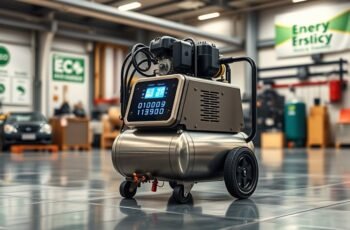
Choosing the right air compressor for automotive work requires a clear understanding of your specific tool requirements, workload, and workspace constraints. We need to evaluate factors like CFM output, tank capacity, and compressor type to guarantee continuous, efficient operation. As we consider these technical details, it becomes evident that making an informed choice involves balancing performance with durability and cost. Let’s explore these critical aspects to help you select the most suitable compressor for your automotive projects.
Key Takeaways
- Determine the required CFM and tank size based on the tools and tasks you plan to use regularly.
- Choose a compressor with appropriate power (HP) and pressure capacity for automotive applications.
- Prioritize portability features like wheels and handles for on-site convenience.
- Opt for durable materials and noise reduction features to ensure long-term performance and comfort.
- Regularly perform maintenance and consider cost-effectiveness to maximize lifespan and operational efficiency.
How to Assess Your Automotive Air Compression Needs
To accurately assess your automotive air compression needs, you first need to determine the specific tools and applications that will rely on compressed air. Precise evaluation involves analyzing requirements for air quality, ensuring the compressor can deliver clean, moisture-free air to prevent damage or corrosion. Additionally, noise levels are vital, especially in workshop environments where excessive sound can hinder productivity and safety. We must consider whether a quieter compressor suits your workspace or if higher noise levels are acceptable. By understanding these factors, we can select a compressor that meets your operational demands, balancing air quality and noise emissions. This careful assessment guarantees peak performance, longevity, and compliance with safety standards in your automotive applications.
What Size and Capacity Air Compressor Do You Require?
Determining the appropriate size and capacity of an air compressor hinges on accurately evaluating the volume of air your tools and applications require, as well as their operational demands. To do this effectively, consider these factors:
Choosing the right air compressor depends on your tools’ air volume needs and operational demands.
- CFM requirements of your tools, ensuring the compressor can sustain continuous use without pressure drops.
- Tank size, which influences air storage capacity and helps maintain consistent pressure during operation.
- Motor horsepower, impacting compressor efficiency and ability to handle high-demand tasks.
- Noise reduction features and maintenance accessibility, vital for prolonged use and minimizing operational disruptions.
Matching these specifications guarantees ideal air compressor performance, prolongs equipment lifespan through proper air compressor maintenance, and reduces noise levels for a safer, more comfortable workspace.
Which Types of Air Compressors Are Best for Automotive Tasks?
When selecting the right air compressor for automotive tasks, understanding the specific demands of these applications guides the choice of compressor type. For high-demand tasks like tire inflation, spray painting, or operating impact wrenches, rotary screw compressors are ideal due to their continuous operation and efficiency. Piston compressors, especially oil-lubricated models from trusted air compressor brands, offer reliable performance for intermittent use, such as brake servicing or light repairs. For maintenance tips, choose units with durable components and easy access for routine checks. Additionally, rotary vane compressors provide a balance between power and size, suitable for most automotive needs. Prioritizing compressor quality and proper maintenance guarantees consistent performance and longevity, making these types the best fit for automotive tasks.
How Important Is Portability and Storage When Choosing an Air Compressor?
Portability and storage are critical factors in selecting an air compressor, especially when work locations vary or space is limited. We evaluate ease of transportation, considering weight and handle design, alongside space-saving features that optimize storage efficiency. Prioritizing these aspects guarantees the compressor integrates seamlessly into your workflow without unnecessary constraints.
Ease of Transportation
How critical is the ease of transportation when selecting an air compressor? It significantly impacts operational efficiency and scheduling flexibility. Mobility considerations include:
- Weight and Portability: Lighter units facilitate quick relocation, reducing setup time.
- Handle and Wheel Design: Integrated handles and durable wheels enhance maneuverability over varied surfaces.
- Power Source Compatibility: Portable compressors with electric or gas options adapt to different job sites, influencing maintenance schedules.
- Noise levels: Compact, portable models often produce less noise, essential for environments requiring minimal disruption, especially during scheduled operations.
Ease of transportation directly affects maintenance routines, as easier access ensures timely inspections. Additionally, portable units tend to have optimized noise levels, contributing to safer, more comfortable working conditions.
Space-Saving Design
Is space-saving design a crucial factor in selecting an air compressor? Absolutely. A compact design minimizes the unit’s footprint, making it easier to fit into limited workshop spaces. The vertical orientation further enhances efficiency by reducing horizontal space requirements, allowing for more flexible placement. This design approach is especially advantageous in tight environments where mobility and accessibility are critical. A well-engineered vertical compressor maintains performance while occupying less room, streamlining workflow and reducing clutter. When choosing an air compressor for automotive work, prioritizing a compact form factor ensures easier installation, maintenance, and integration into existing setups. Overall, space-saving features are necessary for optimizing workspace efficiency without sacrificing compressor power or functionality.
Storage Convenience
Considering the demands of a dynamic workspace, the ease of storage and transportation considerably influences our choice of an air compressor. Portability affects not only workplace efficiency but also air compressor maintenance, as regular access is essential. Compact units facilitate noise reduction techniques by enabling placement closer to work areas, minimizing noise disruption. When evaluating storage convenience, we consider:
- Size and weight for easy maneuverability
- Built-in handles or wheels for transport
- Space-efficient design for tight storage areas
- Accessibility for routine maintenance checks
Prioritizing these factors ensures seamless integration into automotive tasks, reduces setup times, and maintains ideal operation. Proper storage contributes to prolonging equipment lifespan and supports noise management, crucial for maintaining a safe, efficient workspace.
What Features Should You Look for in a Reliable Automotive Air Compressor?
When selecting a reliable automotive air compressor, we focus on power and airflow capacity to guarantee it meets the demands of various tire and tool applications. Durability is essential for long-term performance, while portability influences ease of use in different work environments. Balancing these features helps us choose equipment that is efficient, resilient, and practical for automotive tasks.
Power and Airflow Capacity
What should we prioritize when evaluating an automotive air compressor’s power and airflow capacity? First, consider the compressor’s horsepower (HP), which directly influences airflow volume. Next, examine airflow rate, typically measured in CFM (cubic feet per minute), to guarantee it meets your tools’ demands. Third, assess oil lubrication systems, as they reduce wear and improve efficiency over time. Finally, noise reduction features are essential for a comfortable workspace, especially during prolonged use. Specifically:
- Adequate HP to match workload requirements
- Sufficient CFM for consistent tool performance
- Oil lubrication for durability and smooth operation
- Noise reduction technologies for quieter operation
Prioritizing these factors ensures reliable power and airflow capacity, supporting efficient and long-lasting automotive work.
Durability and Portability
Durability and portability are critical factors in selecting a reliable automotive air compressor because these features directly impact its long-term performance and ease of use in various work environments. A sturdy compressor withstands frequent use, with robust construction such as cast iron cylinders and corrosion-resistant tanks. Portability features like wheels, handles, and lightweight design facilitate on-site mobility.
| Feature | Benefits | Maintenance Tips |
|---|---|---|
| Heavy-duty build | Longer lifespan, withstands wear | Regularly check for leaks and rust |
| Compact size | Easy transport, space-efficient | Store in dry, secure area |
| Mobility accessories | Simplifies movement, reduces fatigue | Inspect wheels and handles periodically |
| Safety features | Prevents accidents, ensures safe operation | Follow safety precautions during operation |
| Material quality | Ensures structural integrity | Clean and lubricate regularly |
How to Budget and Find the Best Value Air Compressor for Your Garage
Setting a realistic budget is essential for selecting an air compressor that offers the best value for your garage. Effective pricing strategies involve balancing initial cost against long-term performance and maintenance expenses. To optimize value, consider:
A realistic budget balances upfront costs with long-term performance and maintenance for optimal garage air compressor value.
- Evaluating brand reputation, as established brands often ensure reliability and better customer support.
- Comparing initial costs with expected lifespan and operational efficiency.
- Analyzing warranty coverage to account for future repairs or replacements.
- Prioritizing features aligned with your specific automotive tasks, avoiding overinvestment in unnecessary capacity.
Frequently Asked Questions
How Often Should I Perform Maintenance on My Air Compressor?
We recommend following the manufacturer’s maintenance schedule, typically every 1-3 months, to maximize compressor lifespan. Regular inspections, oil changes, and filter replacements prevent wear and guarantee reliable, efficient performance for automotive tasks.
Can I Use a Home Compressor for Professional Automotive Work?
Did you know that only 30% of home compressors can handle continuous professional use? While some home compressors work for light automotive tasks, most lack the durability and capacity required for consistent, high-demand professional automotive work.
What Safety Precautions Are Necessary When Operating an Air Compressor?
We always wear protective gear like goggles and ear protection, guarantee proper ventilation, and regularly inspect hoses and connections. These safety precautions prevent accidents, protect our health, and maintain compressor efficiency during automotive work.
How Long Does It Typically Take to Fill a Standard Automotive Tire?
Tire inflation typically takes about 2-3 minutes per tire with a standard compressor, depending on its capacity and current pressure. We monitor the compressor’s PSI output to guarantee efficient inflation without overworking the unit.
Are There Noise Level Considerations for Indoor Garage Use?
Did you know indoor garage noise levels can reach 90 decibels? We recommend noise mitigation and soundproofing techniques to minimize disturbance, ensuring safer, quieter operation and compliance with local noise regulations for indoor compressor use.
Conclusion
Choosing the right air compressor is like finding the perfect tool to complete a complex puzzle; it guarantees efficiency, safety, and longevity in our automotive projects. By carefully evaluating your needs, considering size, type, portability, and features, we can optimize performance and avoid costly mistakes. Investing in the right compressor is not just about today’s tasks but building a reliable foundation for all your future automotive endeavors. Let’s choose wisely and keep our workshop running smoothly.