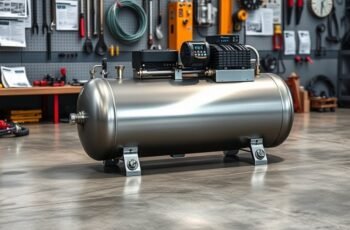
When selecting a reciprocating air compressor, understanding its operational principles and key specifications is critical to ensuring reliable performance. We recognize that factors like capacity, pressure, and configuration directly impact efficiency and suitability for various applications. Choosing the right options requires a careful balance of technical features and budget considerations. To make an informed choice, it’s essential to analyze these elements in relation to your specific operational demands. Let’s explore what determines the ideal compressor for your needs.
Key Takeaways
- Assess your required flow rate, pressure, and duty cycle to choose the right compressor capacity.
- Consider noise levels and look for models with soundproofing or noise reduction features.
- Determine portability needs—look for lightweight designs, handles, or casters for easy transport.
- Evaluate build quality and durability based on materials and component reliability.
- Set a budget aligned with your operational demands, ranging from affordable portable units to heavy-duty industrial models.
How Do Reciprocating Air Compressors Work?
Reciprocating air compressors operate on the fundamental principle of converting mechanical energy into compressed air through a reciprocating piston mechanism. The piston moves within a cylinder, drawing in air on the intake stroke and compressing it during the compression cycle. Effective lubrication techniques are essential to minimize wear, reduce friction, and guarantee smooth operation, which directly impacts compressor lifespan and efficiency. Noise reduction is also critical; using sound-absorbing materials and proper component design helps mitigate operational noise, making the compressor more suitable for various environments. Proper lubrication and noise control not only enhance performance but also reduce maintenance needs and improve safety. Understanding these aspects ensures peak compressor operation, longevity, and reliability in demanding applications.
What Key Features Should You Look for in a Reciprocating Air Compressor?
When selecting a reciprocating air compressor, it’s essential to evaluate several key features that directly influence performance, durability, and suitability for specific applications. Noise levels are critical; lower noise operation enhances safety and comfort, especially in enclosed or noise-sensitive environments. Look for compressors with noise reduction technologies or soundproofing features. Portability features are equally important; lightweight construction, integrated handles, and casters facilitate easy transportation and repositioning, increasing operational flexibility. Additionally, assess build quality—robust materials and reliable components guarantee longevity under demanding conditions. The combination of low noise levels and practical portability features enables efficient, adaptable use across diverse settings. Prioritizing these aspects helps assure the compressor meets both operational demands and user comfort.
How to Determine the Right Capacity and Power for Your Needs?
Selecting the appropriate capacity and power for your air compressor requires a careful assessment of your specific operational demands. Accurate sizing guarantees maximum energy efficiency and effective performance. To determine these parameters, consider your required flow rate, operating pressure, and duty cycle. These factors influence the compressor’s ability to meet workload without excess energy consumption or unnecessary noise.
- Visualize continuous operation, where undersized units struggle to keep pace, leading to pressure drops.
- Think of noise reduction, where oversized units generate unnecessary sound levels, impacting work environments.
- Imagine energy efficiency gains from properly matched capacity, minimizing power waste during idle periods.
What Are the Common Types and Configurations of Reciprocating Compressors?
Understanding the common types and configurations of reciprocating compressors is essential for selecting the right equipment for specific applications. These compressors vary primarily by piston configurations—single-acting, double-acting, and multi-stage designs—each optimizing airflow and pressure for different needs. The choice of compressor lubricants also influences performance and longevity, especially considering piston movement and cooling requirements. Common configurations include horizontal, vertical, and inline arrangements, impacting space and maintenance considerations. The table below summarizes key differences:
| Type | Piston Configuration | Typical Use Cases |
|---|---|---|
| Single-Acting | One side of piston | Small-scale, portable |
| Double-Acting | Both sides of piston | Continuous, high-volume |
| Multi-Stage | Multiple compression stages | High pressure, industrial |
| Horizontal | Horizontal piston axis | Space-efficient, versatile |
| Vertical | Vertical piston axis | Compact, easier maintenance |
Choosing the right configuration hinges on operational demands and lubricant compatibility.
How Much Should You Expect to Spend on a Quality Reciprocating Air Compressor?
How much should you expect to spend on a quality reciprocating air compressor? Pricing expectations vary based on capacity, build quality, and features, making budget considerations essential for informed decisions. Typically, small, portable models suitable for light tasks start around $300 to $700. Mid-range units, designed for more consistent industrial use, generally fall between $1,000 and $3,000. Heavy-duty, high-capacity compressors with enhanced durability and advanced controls can exceed $5,000.
- Compact units with basic features ideal for hobbyists
- Mid-tier models balancing performance and affordability
- Industrial-grade machines built for long-term, high-demand applications
Understanding these price ranges helps align your investment with operational needs and guarantees you select a compressor that offers reliable performance within your budget.
What Maintenance and Safety Considerations Are Important for Longevity?
Proper maintenance and safety practices are vital for extending the lifespan of your reciprocating air compressor and guaranteeing safe operation over time. Adhering to strict lubrication schedules minimizes wear on pistons, cylinders, and valves, reducing the risk of component failure. Regular inspection of lubrication levels and prompt oil changes are essential for maintaining peak performance. Additionally, implementing thorough emergency protocols enhances safety and mitigates potential hazards during operation, especially in unexpected failure scenarios. Routine checks for leaks, overheating, and abnormal vibrations help identify issues early, preventing costly damage and downtime. Effective safety measures, combined with diligent maintenance routines, ensure not only the longevity of the equipment but also the safety of personnel operating or servicing the compressor.
Frequently Asked Questions
How Energy-Efficient Are Reciprocating Air Compressors Compared to Other Types?
Reciprocating air compressors are generally less energy-efficient than rotary screw types, but our efficiency comparison shows they excel in cost analysis for small-scale operations. They offer reliable performance despite higher energy consumption.
What Are the Environmental Impacts of Using Reciprocating Air Compressors?
We recognize that reciprocating air compressors impact the environment through emissions and energy use, but adopting eco-friendly practices and emission reduction strategies can mitigate these effects, making their operation more sustainable and aligning with our commitment to environmental responsibility.
Can Reciprocating Compressors Handle Continuous Operation Effectively?
Reciprocating compressors can handle continuous operation effectively if proper lubrication is maintained and maintenance frequency is increased; neglecting these factors risks overheating, wear, and potential failure, emphasizing the importance of rigorous upkeep for sustained performance.
What Are the Common Troubleshooting Issues With Reciprocating Air Compressors?
We find that lubrication issues and valve malfunctions are common troubleshooting problems in reciprocating air compressors; regular maintenance and precise adjustments help prevent these issues, ensuring peak performance and reducing unexpected downtime.
How Do Noise Levels Vary Among Different Reciprocating Compressor Models?
We observe that noise levels vary considerably among reciprocating compressor models due to differences in design, noise mitigation strategies, and sound insulation. Advanced models incorporate enhanced sound insulation, reducing decibel output and improving operational quietness.
Conclusion
In steering the landscape of reciprocating air compressors, we’ve uncovered the intricate mechanics and critical features that define performance. By aligning capacity, power, and configuration with your specific needs, you can guarantee reliable operation and longevity. Remember, a well-chosen compressor is like a finely tuned engine—powerful, efficient, and built to withstand the test of time. With thorough knowledge and strategic selection, you’re equipped to make informed decisions that elevate your operations.