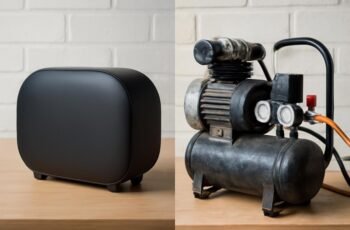
Did you know that rotary screw compressors often operate at over 90% efficiency, compared to piston models that typically range between 75-85%? This gap considerably impacts energy costs and long-term operational expenses. Understanding the fundamental differences in how these compressors work and their suitability for specific applications can be complex. Let’s explore which option aligns better with your operational demands and budget constraints to make an informed choice.
Key Takeaways
- Rotary screw compressors are ideal for continuous, high-volume operations, offering lower noise and maintenance compared to piston compressors.
- Piston compressors are suitable for intermittent use, high-pressure bursts, and portable applications with lower initial investment costs.
- Rotary screws operate more efficiently under steady loads and require less frequent maintenance, while pistons are better for short, high-pressure tasks.
- Rotary screw units typically run quieter and support long-term, high-demand environments, unlike noisier piston models.
- Choice depends on operational needs: continuous, high-volume use favors rotary screws; intermittent, high-pressure tasks suit piston compressors.
How Do Rotary Screw and Piston Compressors Work?
How do rotary screw and piston compressors operate fundamentally? Both types compress air through different mechanisms, impacting their suitability for various applications. Rotary screw compressors utilize two intermeshing helical screws within a sealed chamber, continuously drawing in and compressing air. They often feature an oil free design for clean, contaminant-free output, making them ideal for sensitive environments. Piston compressors operate via reciprocating pistons within cylinders, drawing in air during the intake stroke and compressing it during the compression stroke. These units can be portable, offering flexibility in deployment but may produce more vibration and noise. While rotary screw units excel in continuous, high-volume operations, piston compressors are better suited for intermittent tasks. Understanding these fundamental differences helps determine the most appropriate compressor for specific needs.
Comparing the Performance: Continuous Operation vs Intermittent Use
When evaluating compressor performance, understanding their suitability for continuous versus intermittent operation is crucial. Rotary screw compressors excel in continuous operation, offering consistent airflow and stable pressure, making them ideal for demanding, 24/7 applications. They maintain high altitude performance effectively due to their design, which ensures reliable operation in varying conditions. Conversely, piston compressors are better suited for intermittent use, providing high pressure in short bursts, but with less efficiency over prolonged periods. Oil-free operation is often a key factor; rotary screws can be configured for oil-free models, supporting applications requiring contaminant-free air. This distinction influences operational costs, maintenance, and application scope, emphasizing the importance of matching compressor type to operational demands for optimal performance and reliability.
Which Compressor Is More Efficient for High-Demand Applications?
When evaluating efficiency for high-demand applications, power consumption differences become critical, as rotary screw compressors generally operate more efficiently under continuous load. Additionally, maintenance and durability factors influence long-term operational costs, with rotary screws typically requiring less frequent service and offering greater longevity. Understanding these points helps determine which compressor best meets the demands of intensive, high-volume use.
Power Consumption Differences
Determining which compressor type consumes less power under high-demand conditions hinges on their operational efficiencies and load management capabilities. Rotary screw compressors generally exhibit higher efficiency during continuous operation, thanks to their ability to modulate output smoothly, reducing startup energy and minimizing reliability tradeoffs. Piston compressors, on the other hand, tend to require higher startup energy due to their cyclical operation, leading to increased power draw during initial start-up and potential fluctuations under fluctuating loads. While piston units may be less efficient at sustained high demand, their simpler design can sometimes offer advantages in reliability tradeoffs. Ultimately, rotary screw compressors are typically more energy-efficient for prolonged high-demand applications, but the specific operational context and load profile can influence the overall power consumption profile.
Maintenance and Durability
Which compressor type offers superior maintenance and durability in high-demand applications? Rotary screw compressors generally excel due to their continuous operation capabilities and fewer moving parts, reducing wear and tear. Their design simplifies maintenance, often only requiring periodic oil viscosity checks and filter replacements, unlike piston compressors that need more frequent tire replacement and detailed inspection of pistons and cylinders. The oil in screw compressors maintains consistent viscosity under high loads, ensuring stable lubrication and minimizing component stress. Conversely, piston compressors experience more frequent maintenance due to thermal expansion and higher vibrations, leading to increased wear and potential downtime. Overall, rotary screw units demonstrate greater resilience and lower maintenance costs in environments demanding constant, high-volume air supply.
Cost Considerations: Initial Investment and Long-Term Expenses
Have you considered how the initial costs and ongoing expenses differ between rotary screw and piston air compressors? Generally, rotary screw models involve higher upfront investments but benefit from lower operational costs over time. Piston compressors tend to be less expensive initially but incur higher energy and maintenance costs, affecting long-term expenses. Economic incentives, such as tax credits or rebates, may favor one type depending on efficiency. Brand loyalty can influence purchase decisions, often skewed toward established manufacturers with proven performance. To clarify, here’s a comparison:
| Aspect | Rotary Screw | Piston | Cost Impact |
|---|---|---|---|
| Initial Investment | Higher due to complex components | Lower, simpler design | Upfront cost can be a barrier or an advantage |
| Operating Expenses | Lower energy consumption, less maintenance | Higher energy use, frequent upkeep | Long-term savings favor screw compressors |
| Economic Incentives | Often eligible for efficiency rebates | Less likely to qualify | Incentives can offset initial costs |
Maintenance and Durability: Which Compressor Needs Less Upkeep?
When evaluating maintenance requirements and durability, it is essential to compare how rotary screw and piston compressors perform under typical operational stresses. Many maintenance myths suggest piston compressors require less upkeep, but in reality, their frequent part replacements and higher wear rates increase long-term costs. Rotary screw compressors, with fewer moving parts, demonstrate greater durability and lower maintenance intervals, especially in continuous operation. Although startup costs for rotary screw units tend to be higher, their overall reliability reduces downtime and maintenance expenses. Piston compressors may seem cheaper initially, yet their susceptibility to wear and the need for regular overhauls make them less suitable for demanding applications. Therefore, rotary screw compressors generally need less upkeep and offer enhanced durability over time.
Noise Levels and Suitability for Different Work Environments
The noise emissions of rotary screw and piston compressors significantly impact their suitability for various work environments. Rotary screw units generally operate more quietly, making them ideal for settings requiring minimal noise disruption, while piston compressors tend to be louder and more suited for industrial spaces with less acoustic sensitivity. Analyzing their operational quietness helps determine the optimal choice based on environmental noise constraints and worker comfort.
Noise Emission Differences
How do noise emissions differ between rotary screw and piston air compressors, and what implications does this have for their suitability in various work environments? Rotary screw compressors generally produce lower noise levels due to their continuous operation and smoother compression process, making them more suitable for noise-sensitive settings. Piston compressors, on the other hand, generate higher noise emissions from their reciprocating motion and periodic startup routines, often requiring soundproofing measures. This difference impacts energy efficiency, as quieter compressors tend to operate more efficiently over extended periods. Additionally, the noise profile influences maintenance routines and the overall acoustic environment. For environments demanding minimal disturbance, rotary screw compressors offer a significant advantage, whereas piston models may require additional sound attenuation strategies.
Ideal Work Environments
Are noise levels a critical factor in selecting the right air compressor for a specific work environment? Certainly, the environment determines compressor suitability, particularly regarding sound emissions and operational demands. Rotary screw compressors tend to operate more quietly, making them ideal for continuous use in noise-sensitive settings like hospitals or offices. Piston compressors, however, generate higher noise levels, limiting their use to industrial or outdoor sites where sound is less regulated. When assessing work environments, consider:
- Noise sensitivity: Enclosed spaces versus outdoor areas
- Operational duration: Continuous versus intermittent use
- Environmental constraints: Indoor air quality and safety regulations
Understanding these factors helps us make informed decisions, ensuring the compressor complements the work environment, much like choosing the right tools for unrelated topics such as gardening or electronics repair.
Operational Quietness
Does noise level considerably influence the suitability of an air compressor for specific work environments? Absolutely. Rotary screw compressors operate more quietly than piston models due to their continuous, smooth operation, making them better suited for environments requiring minimal disruption. This operational quietness enhances overall productivity and worker comfort, especially in settings like healthcare or electronics manufacturing. Moreover, quieter compressors often require less frequent maintenance, contributing to affordable maintenance costs over time. Their simplified startup procedures reduce initial noise during startup, further minimizing environmental impact. In contrast, piston compressors tend to be noisier during operation and startup, which can be disruptive in sensitive environments. Therefore, noise level is a critical factor when selecting an air compressor tailored to specific work environment needs.
Ideal Use Cases for Rotary Screw Compressors
What makes rotary screw compressors particularly suitable for certain applications? Their continuous operation, high efficiency, and durability make them ideal where consistent air supply is critical. They excel in environments requiring long operational hours, as their design minimizes issues like lubrication failure and belt tension problems that can cause downtime. These compressors maintain stable pressure levels, reducing the risk of fluctuations affecting process quality. Additionally, their sealed design and reliable components allow for less maintenance and higher uptime.
Rotary screw compressors offer reliable, efficient operation with minimal maintenance for continuous, high-volume industrial applications.
Key use cases include:
- Continuous manufacturing processes demanding steady air flow
- Large-scale industrial facilities with high-volume needs
- Environments where operational quietness complements mechanical reliability for prolonged use
When Are Piston Compressors the Better Choice?
Piston compressors become the preferable choice when applications demand intermittent operation or require high-pressure output over short durations. Their design allows rapid start-up and shut-down cycles, making them suitable for tasks like spray painting or small-scale manufacturing where continuous airflow isn’t necessary. Although piston compressors often have higher maintenance costs due to their more complex components, their energy efficiency excels during short, high-pressure tasks, minimizing overall operational costs. When precision and quick bursts of compressed air are needed, piston models outperform rotary screw compressors, which are optimized for continuous, high-volume operation. Hence, in scenarios emphasizing short-term, high-pressure output with less concern for long-term operational costs, piston compressors provide a more effective and efficient solution.
Key Factors to Consider When Choosing Between the Two
When evaluating which compressor best suits your needs, several key factors must be carefully weighed to make an informed decision. Critical considerations include operational environment, maintenance requirements, and specific application demands. For instance, oil free compatibility is essential when air purity is non-negotiable, favoring oil-free models for sensitive processes. Vertical orientation can optimize space efficiency, especially in limited or confined areas. Additionally, understanding the long-term costs associated with each compressor type—such as energy consumption and upkeep—is vital.
Choosing the right compressor involves considering environment, maintenance, space, and long-term costs.
- Compatibility with your operational environment (oil free or oil-lubricated)
- Space constraints and the benefits of vertical orientation
- Maintenance complexity and long-term operational costs
How to Decide Which Air Compressor Fits Your Business Needs
Determining the right air compressor for your business begins with a thorough assessment of your operational requirements and workload demands. We analyze factors like required airflow, pressure stability, and duty cycle to identify whether a rotary screw or piston compressor offers superior performance. An irrelevant topic, such as aesthetic design, should be disregarded, as it doesn’t impact functionality. Considering potential growth and future demand helps avoid unnecessary upgrades. It’s essential to evaluate energy efficiency and maintenance costs, which directly influence total cost of ownership. While some may suggest examining unrelated angles, focusing on core operational needs ensures an informed decision. Ultimately, aligning compressor specifications with your specific application minimizes downtime and maximizes productivity, ensuring you select the model that best fits your business’s technical and economic realities.
Frequently Asked Questions
What Are the Environmental Impacts of Each Compressor Type?
We analyze that rotary screw compressors generally meet stricter environmental regulations due to higher energy efficiency, reducing emissions. Piston compressors, while less efficient, often have a smaller environmental footprint during manufacturing but may consume more energy.
How Do Startup Times Differ Between Rotary Screw and Piston Compressors?
Like a sprinter out of the blocks, rotary screw compressors start faster than piston models, reducing startup times and easing maintenance routines. This efficiency benefits continuous operation, making rotary screws more reliable for demanding industrial applications.
Can Both Compressor Types Handle Variable Airflow Demands Effectively?
Both compressor types handle variable airflow effectively; rotary screws excel with variable flow, maintaining efficiency under load versus idle, while piston compressors suit constant flow demands but struggle with efficiency during fluctuating loads.
What Safety Considerations Are Specific to Each Compressor Type?
Like a knight preparing for battle, we prioritize safety training and regular maintenance for each compressor type. Piston compressors demand caution around high-pressure components, while rotary screws require attention to oil levels, ensuring safe, reliable operation.
How Do Warranty and Support Options Compare for Rotary Screw and Piston Compressors?
We find warranty coverage and support responsiveness often favor rotary screw compressors due to their consistent startup reliability and environmental considerations, while piston compressors typically have limited coverage; quick, expert support remains essential for minimizing downtime across both types.
Conclusion
Ultimately, choosing between a rotary screw and piston compressor isn’t just about technical specs—it’s about recognizing the irony that what’s perfect for one operation might be utterly inefficient for another. While rotary screws promise continuous reliability, piston units offer fleeting convenience. It’s a reminder that no single compressor is universally ideal; the real challenge lies in aligning your business’s true demands with the nuanced strengths of each. Sometimes, the best choice is knowing when to compromise.